
Infant Cloth Books: Why Indian Pediatricians Recommend Them for 0–3 Month Olds
Indian pediatricians recommend cloth books for 0–3 month olds because they provide a unique combination of visual and tactile stimulation that supports early brain development. The Indian Academy of Pediatrics (IAP) suggests that high-contrast images and textures are essential for newborns' visual development. According to the IAP, newborns can see clearly only within 20–30 cm at birth, and high-contrast images activate 2x more neural connections in the visual cortex than color-based alternatives.
In this post, we will explore the benefits of cloth books for newborns, discuss the science behind their effectiveness, and provide tips for Indian parents on how to choose the right cloth books for their little ones. We will also examine the features of a good cloth book, including high-contrast images, tactile textures, and durability. Additionally, we will compare different types of cloth books available in the market and discuss how to incorporate them into a baby's daily routine.
Introduction to Cloth Books
Cloth books are a type of book made from fabric, designed for newborns and infants. They are usually made from 100% cotton, saliva-resistant inks, and are designed to be safe for babies to mouth and touch. Cloth books are an excellent way to introduce babies to the world of reading, as they provide a tactile and visual experience that is both soothing and stimulating.
The Science Behind Cloth Books
The science behind cloth books lies in their ability to provide high-contrast images and textures that stimulate a baby's visual and tactile senses. According to the IAP, high-contrast images are essential for newborns' visual development, as they help to stimulate the growth of neural connections in the brain. The WHO also emphasizes the importance of early sensory experiences in shaping a child's cognitive and motor skills.
Choosing the Right Cloth Book
When choosing a cloth book for your baby, there are several factors to consider. First, look for books with high-contrast images and textures that will stimulate your baby's senses. Second, choose books made from 100% cotton and saliva-resistant inks that are safe for your baby to mouth and touch. Finally, consider the durability of the book, as it will be subject to frequent washing and handling.
Incorporating Cloth Books into Daily Routine
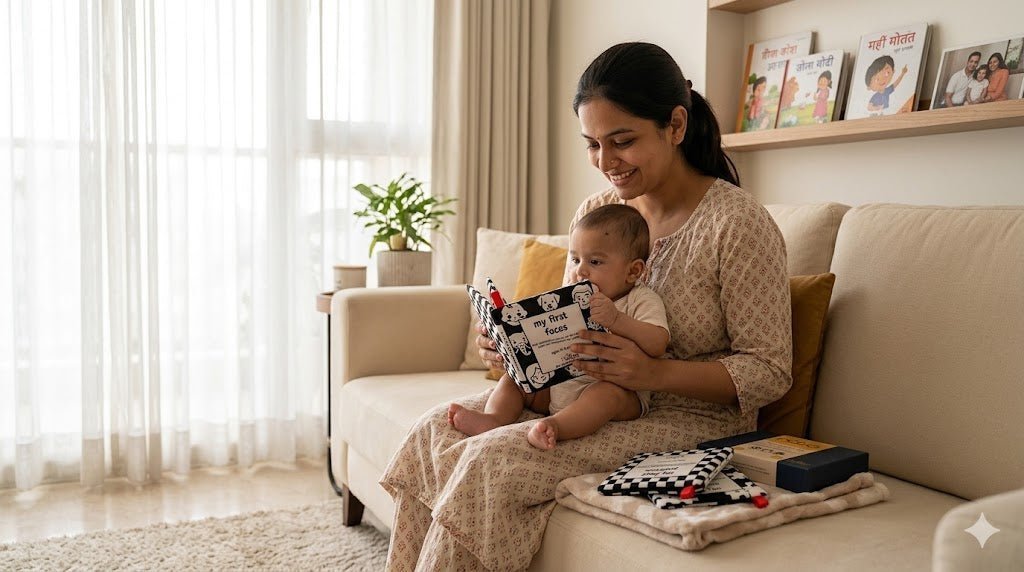
Incorporating cloth books into your baby's daily routine can be easy and fun. Start by reading the book to your baby during feeding or playtime, and gradually increase the frequency and duration of the readings. You can also use the book as a prop during tummy time, or as a toy to stimulate your baby's senses.
Nubokind My First Book Set Recommendation
The Nubokind My First Book Set is an excellent choice for Indian parents looking for a high-quality cloth book for their baby. The set includes 3 cloth books (My First Faces, My First Patterns, My First Puzzles) made from 100% cotton and saliva-resistant inks. The books are designed to be safe for babies to mouth and touch, and are perfect for introducing your baby to the world of reading. You can purchase the Nubokind My First Book Set from the Nubokind website.
Frequently Asked Questions
What is the recommended age range for cloth books?
Cloth books are suitable for newborns and infants up to 6 months old. According to the IAP, high-contrast images and textures are essential for newborns' visual development, and cloth books provide a unique combination of visual and tactile stimulation.
How often should I read cloth books to my baby?
You can read cloth books to your baby as often as you like, but it's recommended to start with short sessions (5-10 minutes) and gradually increase the duration and frequency. The WHO suggests that early sensory experiences, including reading, can shape a child's cognitive and motor skills.
Can I make my own cloth book at home?
Yes, you can make your own cloth book at home using fabric, scissors, and a sewing machine. However, it's essential to ensure that the materials used are safe for your baby to mouth and touch. The NICHD recommends using 100% cotton and saliva-resistant inks to minimize the risk of allergic reactions or choking hazards.
How do I clean and maintain my cloth book?
Cloth books can be washed and dried like regular clothes. It's recommended to wash them in cold water and dry them on a low heat setting to prevent shrinkage and damage. The IAP suggests that regular cleaning and maintenance can help prevent the growth of bacteria and other microorganisms that can harm your baby.
Can I use cloth books during tummy time?
Yes, cloth books can be used during tummy time to provide a stimulating and engaging experience for your baby. The WHO recommends using toys and props, including cloth books, to encourage tummy time and support cognitive and motor development.
Related reads:
- 5 Ways to Use a Cloth Book During Tummy Time
- Best High Contrast Cloth Books for Newborns India 2026
- How Cloth Books Boost Baby Brain Development in the First 6 Months
- Newborn Visual Development: Why High Contrast Images Matter in the First 3 Months
- 7 Reasons High-Contrast Visuals Accelerate Brain Development


leave a comment
This site is protected by hCaptcha and the hCaptcha Privacy Policy and Terms of Service apply.