
The Science of Reflection: 4 Ways Mirrors Jumpstart Your Baby’s Social-Emotional Wiring
The Parent's Quick Answer:
Mirrors are far more than cute photo opportunities; they are powerful scientific tools for building your baby’s social and emotional brain during the first 24 months. What begins as fascination with a “mystery friend” gradually develops into self-recognition. This journey is essential for nurturing self-awareness, empathy, and emotional regulation — skills that develop alongside early visual learning supported by high contrast images for newborns and black and white visual tools.
At birth, babies do not yet understand themselves as separate individuals. Much of early development is centered around forming a sense of self. While milestones like rolling and crawling are visible, an equally important transformation occurs internally each time a baby sees their reflection.
From a developmental neurology perspective, mirrors function as feedback loops for the brain. Below are four science-backed ways mirror play supports early social and emotional intelligence, especially when combined with newborn tummy time and high-contrast visual experiences.
1. The Ultimate High-Contrast Visual Focus (0–4 Months)
In the first months of life, your baby’s vision is still blurry. Their brain seeks high contrast visual input to organize the visual cortex effectively.
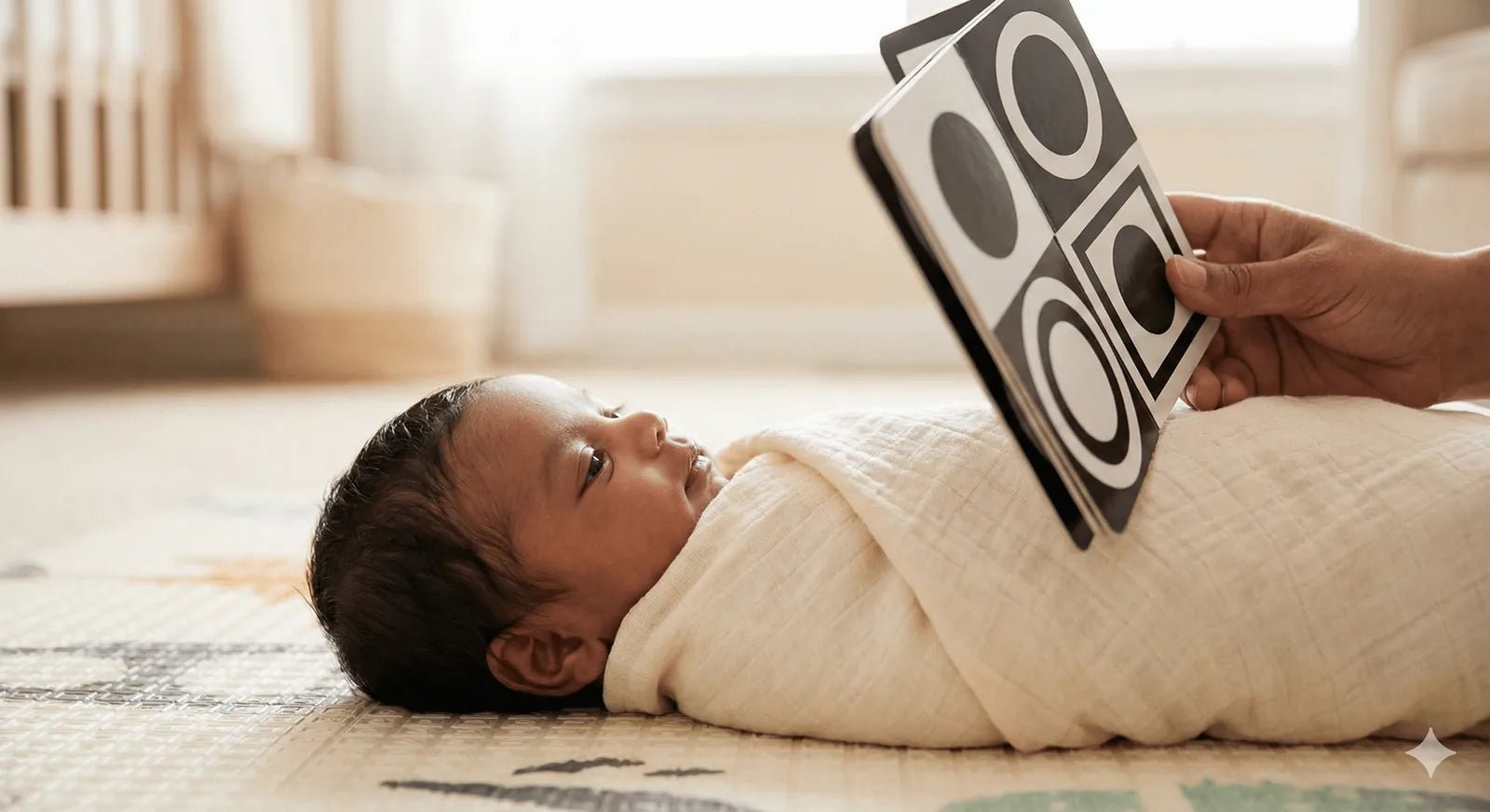
Movement is especially stimulating to newborns. A mirror provides a dynamic, responsive image that changes with every movement. Although babies do not yet recognize themselves, they are captivated by the “baby” who moves in perfect synchrony. This strengthens visual tracking, focus, and early attention — the same skills supported by black and white flash cards and high contrast flash cards.
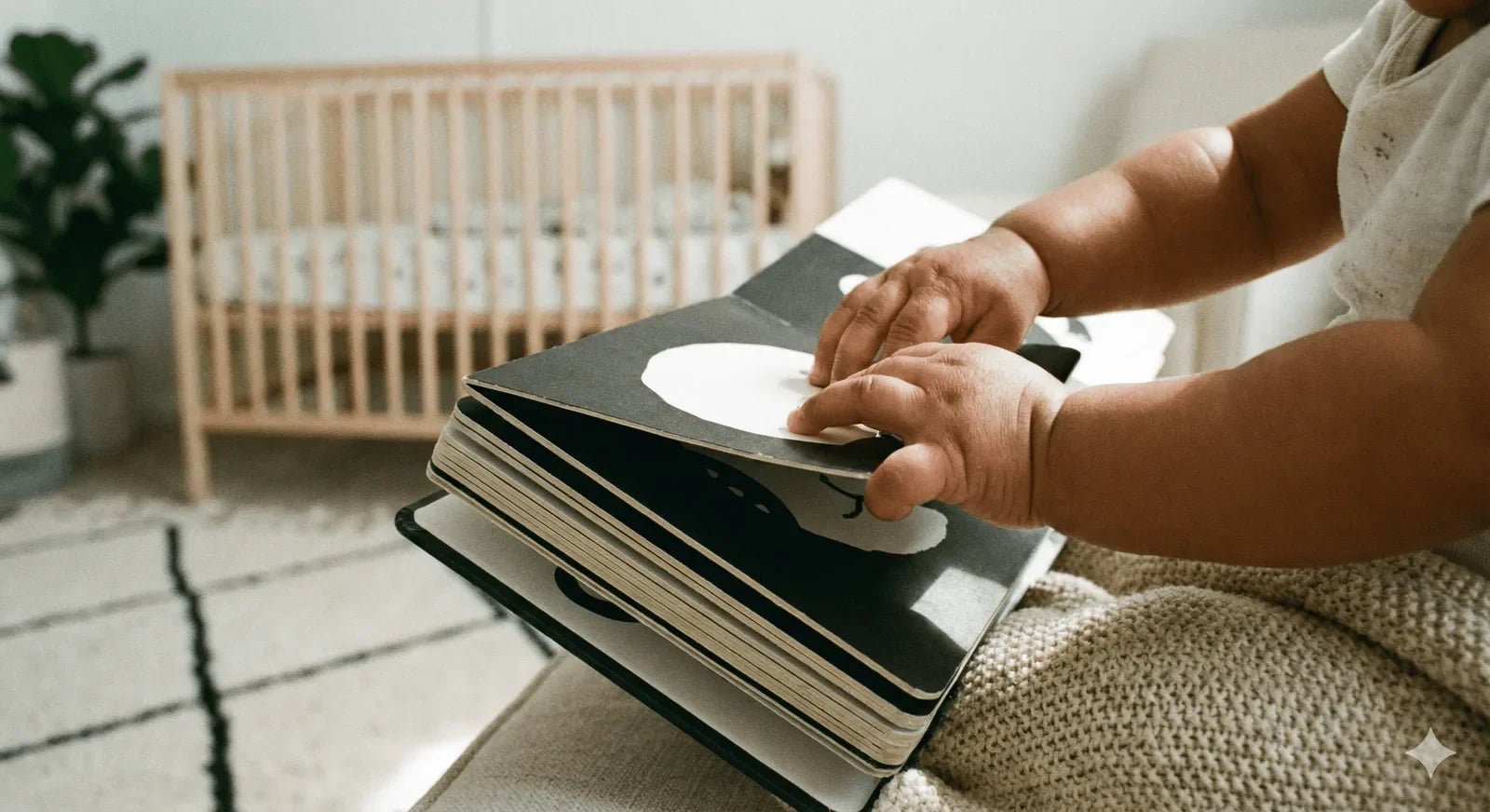
The nübo Connection: Just as babies are drawn to the bold patterns in nübo's My First Book Set, they are naturally attracted to high-contrast movement in a mirror. Both serve as essential tools for early visual wiring and are commonly recommended as essentials for newborn development.
2. Activating Mirror Neurons (4–12 Months)
Around four months, babies become more socially aware. Mirror play now stimulates mirror neurons — specialized brain cells that fire both when an action is performed and when it is observed.
When a baby smiles at the mirror and sees the smile reflected instantly, these neurons activate rapidly. This neural mirroring forms the biological foundation of empathy and social understanding. These skills develop alongside visual discrimination trained through black and white books for infants and infant contrast cards.
3. The Rouge Test and Self-Recognition (15–24 Months)
For much of the first year, babies believe the reflection is another child. They may babble, touch the mirror, or look behind it to find the “other baby.”
Between 15 and 24 months, a major cognitive shift occurs. Babies realize the reflection is themselves. Scientists demonstrate this using the “Rouge Test,” where a small mark is placed on the child’s face. If the child touches their own face instead of the mirror, self-recognition has emerged — a profound milestone in identity development.
4. The Emotional Regulation Laboratory (Toddlerhood)
Once self-recognition develops, the mirror becomes a space for emotional learning.
Toddlers often observe themselves while experiencing big emotions such as frustration or sadness. By watching their own facial expressions, they begin to understand what emotions look like and how they change. This reflective observation supports early emotional regulation — the ability to recognize and eventually manage feelings.
Practical Home Tips for Mirror Play
- Tummy Time Reflections: Place a shatterproof mirror in front of your baby during infant tummy time. The visual reward encourages longer head lifting, similar to using a tummy time fold-out book.
- The Emotion Game: Sit with your baby in front of a mirror and model exaggerated expressions. Naming emotions aloud supports emotional vocabulary and social awareness.
- Post-Bath Ritual: During post-bath massage, position your baby near a mirror. Pointing to body parts in the reflection helps connect visual input with physical sensation, reinforcing body awareness.
Scientific FAQ
1. Is it bad if my baby kisses or hits the mirror?
Not at all. Before 15–18 months, babies perceive the reflection as a peer. Touching, kissing, or hitting the mirror is normal exploratory behavior.
2. What if my baby seems afraid of the mirror?
Occasionally, mirrors can feel overwhelming due to sudden movement. If your baby turns away or fusses, remove the mirror and try again later.
3. Do I need a special baby mirror?
Safety matters most. Any mirror used during floor play should be shatterproof with soft edges. Wall-mounted mirrors are safe when the baby is securely held.

leave a comment
This site is protected by hCaptcha and the hCaptcha Privacy Policy and Terms of Service apply.