
Your baby isn't just copying your facial expressions—they're performing "social rehearsals" that wire their brain for empathy and problem-solving. Discover how mirror neurons work from birth and why Montessori-inspired toys activate this neural superpower earlier than you'd expect.
The Surprising Truth About Baby Mimicry
Here's something that might shift how you think about your baby's "cute" imitations: when your 3-month-old sticks their tongue out because you did, they're not just playing. They're activating mirror neurons—specialized brain cells that fire both when your baby acts and when they observe you acting. This neural mirroring is one of the most important learning systems in the developing brain.
For decades, scientists thought this capacity emerged around 12–18 months. Recent research published in developmental journals has pushed that timeline much earlier. Newborns and young infants show signs of mirror neuron activation within the first weeks of life. This discovery fundamentally changes how we understand early play, bonding, and learning.
What this means for your baby: Every interaction you have—feeding, talking, playing—is literally shaping neural pathways for social understanding, empathy, and motor control. Your baby isn't just watching; they're learning to be human through observation and imitation.
What the Research Says About Mirror Neurons
Mirror neurons were first identified in primates and have since been mapped extensively in humans. These neurons create a direct link between perception and action—they're why yawning is contagious and why watching someone in pain activates the same brain regions as experiencing pain yourself.
In infants aged 0–24 months, mirror neuron systems are hyperactive and highly plastic (meaning they're easily shaped by experience). Research shows that:
- Newborns demonstrate mouth and tongue imitation within hours of birth
- By 6 months, babies show neural activation when watching adults use tools or objects purposefully
- Infants who engage in more varied social interactions develop stronger neural connections for executive function and impulse control by age 2
- Early mimicry of adult-like actions correlates with stronger social-emotional skills later in childhood
Why this matters: Mirror neurons are the brain's foundation for synaptic pruning—the process where the brain strengthens connections it uses frequently and weakens those it doesn't. If your baby spends time imitating purposeful, real-world actions (like an adult using a spoon or opening a book), those neural pathways strengthen. If they're passively watching screens, different pathways activate.
How Montessori Principles Activate Mirror Neurons
Montessori education is built on a deceptively simple principle: show the child a real-world action, and they will internalize and imitate it. This isn't just philosophy—it's neuroscience in action.
Montessori environments prioritize purposeful play with real-world tools. A baby sees an adult using a cloth book, turns pages deliberately, and engages with images. They watch a caregiver place a teether in their mouth during teething discomfort. Over time, the baby internalizes these actions as meaningful and reproducible.
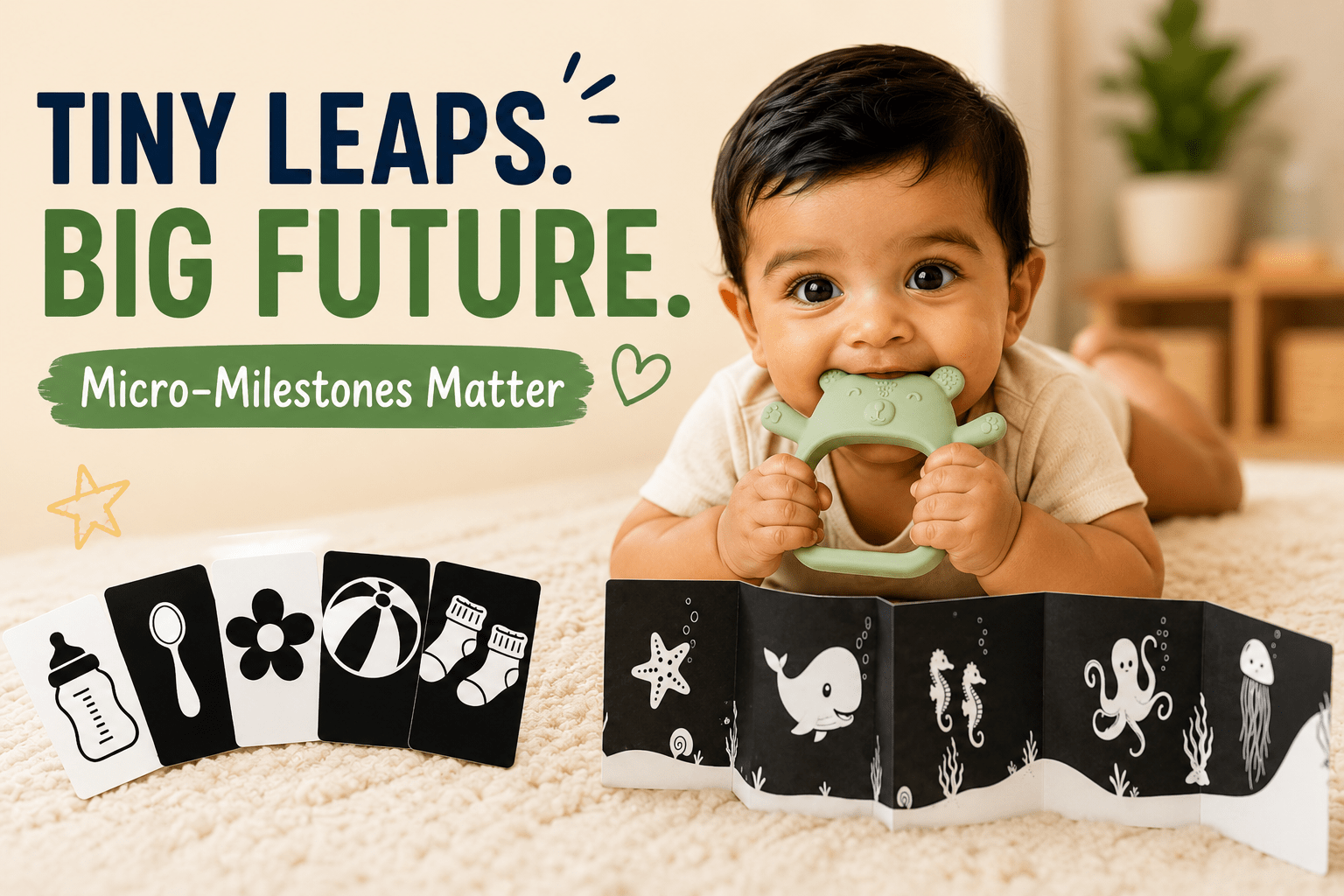
This is fundamentally different from toys designed purely for entertainment. Entertainment toys (bright spinners, loud buttons) overstimulate but don't create the neural framework for intentional, purposeful action. Montessori-inspired tools—cloth books, sensory teethers, high-contrast flashcards—are designed to mirror what adults actually do in the world.
What this means for your baby: When your baby plays with tools that resemble real adult objects, their mirror neuron system strengthens pathways for complex problem-solving, self-regulation, and social understanding. They're not just playing; they're rehearsing real life.
This is why cloth books designed with high-contrast images and teethers that support natural oral motor development are more than cute—they're developmentally strategic.
Mirror Neurons & Sensory Play: The Tummy Time Connection
Let's bring this home to one of the most important early activities: tummy time. During tummy time for newborns and infants, your baby isn't just strengthening neck and core muscles. They're in a unique position to observe your face, your hands, and your movements at close range.
When you place high-contrast flashcards or cloth books near your baby during tummy time, you're activating multiple learning systems simultaneously:
| What's Happening | Neural System at Work |
|---|---|
| Baby watches you turn pages slowly | Mirror neurons fire; baby encodes page-turning as a meaningful action |
| Baby's eyes track your hand movements | Visual cortex + motor planning regions activate (supporting eye-hand coordination) |
| Baby notices your facial expression while looking at images | Social cognition networks activate; baby links objects with emotional meaning |
| Baby reaches for the book or flashcard | Motor execution + spatial reasoning strengthen (proprioception develops) |
What this means for your baby: Tummy time isn't just physical. Pair it with purposeful, real-world objects, and you're creating the conditions for integrated brain development. Your baby is learning vision, motor control, and social meaning all at once.
What Parents Can Do: Practical Strategies for Mirror Neuron Development
Now that you understand the science, here's how to support mirror neuron activation in your baby's daily life:
1. Slow Down Your Actions & Narrate Them
When you pick up a toy, book, or teether, move deliberately and slowly. Say out loud: "I'm opening this book. Now I'm turning the page." Your baby's mirror neurons fire most strongly when they see intentional, purposeful movement paired with language. This creates stronger neural encoding than fast or random movements.
2. Choose Tools That Mirror Real Life
Babies' mirror neurons are specialized to respond to objects and actions they see adults actually use. Cloth books that feel like real books, teethers shaped to fit naturally in the mouth, and sensory kits that introduce real-world textures and contrasts—these activate mirror neurons far more powerfully than generic "baby toys."
3. Use High-Contrast Images During Early Visual Development
Newborns and young infants (0–6 months) have limited visual acuity. High-contrast black and white images activate the visual cortex more effectively than soft pastels. When your baby can see clearly, their mirror neuron system has clearer "models" to imitate. High-contrast cloth books and flashcards are designed exactly for this developmental window.
4. Create "Social Rehearsal" Moments
Mirror neurons strengthen when babies see adults solving simple problems with tools. During tummy time, show your baby how you gently grip and release a teether. Let them watch you trace a finger along the pages of a cloth book. These aren't "lessons"—they're performances, and your baby's brain is encoding them as important life skills.
5. Vary the Sensory Input
Proprioception (awareness of where the body is in space) and tactile feedback strengthen mirror neuron circuits. Textured teethers with varying grips and surfaces engage different sensory pathways, creating richer neural models for motor control and object manipulation.
6. Prioritize Face-to-Face Interaction
Your face is your baby's first and most powerful learning tool. Mirror neurons fire most intensely when infants observe facial expressions, mouth movements, and eye contact. Reading cloth books together, making exaggerated expressions, and mirroring your baby's vocalizations all activate these neural networks. Screens cannot replicate this.
The Table: Tummy Time Activities That Support Mirror Neuron Development
Here's a quick reference for activities you can do right now:
| Age Range | Tummy Time Activity | What Mirror Neurons Learn |
|---|---|---|
| Newborn to 3 months | Show high-contrast flashcards 8–12 inches from baby's face; move slowly side to side | Visual tracking + intentional object observation |
| 3 to 6 months | Open a cloth book slowly; let baby watch your fingers turn pages; let them reach and grab | Page-turning as meaningful action; object persistence; reaching coordination |
| 6 months + | Hand your baby a soft cloth book or textured teether; watch them imitate your manipulation of it | Object exploration; fine motor planning; problem-solving through observation |
Frequently Asked Questions
Q: At what age do mirror neurons actually activate?
A: Research shows signs of mirror neuron activation from birth, with robust evidence by 6 weeks. However, the system continues developing through age 2–3. Newborns show immediate imitation of facial expressions (tongue protrusion, mouth opening), while older infants imitate increasingly complex actions. The key is that mirror neurons are active much earlier than previously believed—this is why early sensory play and intentional modeling matter so much.
Q: Does my baby really learn anything from watching me use a cloth book, or is it just play?
A: It's both—and that's the point. When you model purposeful, slow interaction with a cloth book, your baby's mirror neuron system encodes that as important behavior. They internalize the idea that books are objects to be handled carefully, pages turn in sequences, and exploring images is a valued activity. This isn't explicit "teaching"; it's neural encoding. Over time, this becomes part of how your baby understands the world.
Q: Why are high-contrast flashcards better than colorful toys for newborn visual development?
A: Newborns have underdeveloped visual systems. Their eyes can only focus clearly at 8–12 inches, and they see colors poorly initially. High-contrast black and white images activate the visual cortex more effectively because the contrast is easier to process. Once your baby's visual system is stimulated and strengthened (around 3–4 months), you can introduce colors. High-contrast tools also activate mirror neurons more powerfully because your baby can actually *see* what's happening, allowing them to imitate more accurately.
Q: Is tummy time essential for mirror neuron development?
A: Tummy time is particularly valuable because it positions your baby to observe your face, hands, and movements at the optimal viewing distance. However, any face-to-face interaction—holding your baby at feeding time, making expressions during contact, showing them objects slowly—activates mirror neurons. Tummy time with purposeful play objects just concentrates these benefits in one activity. If your baby resists tummy time, don't stress; varied interactive play throughout the day works too.
Q: Will expensive "brain-boosting" toys actually enhance my baby's mirror neuron system?
A: Not necessarily. What matters is how you interact with the toy, not the toy's price tag. A simple cloth book used with slow, deliberate, narrated movements activates mirror neurons more powerfully than an expensive electronic toy used passively. The best tools are ones that mimic real-world objects and encourage you to interact slowly and intentionally. Nubokind's designs—cloth books, teethers, and flashcards—are rooted in Montessori principles specifically because they invite this kind of purposeful, developmental play.
Q: Can mirror neurons be damaged, or is there a "right" way to optimize them?
A: Mirror neurons aren't fragile, but they do respond to experience. If a baby spends months passively watching screens or receiving little face-to-face interaction, those neural pathways won't strengthen as robustly. Conversely, consistent, intentional interaction—even simple activities like talking, making faces, and playing with real-world objects—naturally optimizes mirror neuron development. There's no special "hack." The optimization is built into responsive, present caregiving.
Product Spotlight: Tools Designed for Mirror Neuron Activation
If you're ready to support your baby's mirror neuron development with intentionally designed tools, here are some products that align with the science we've discussed:
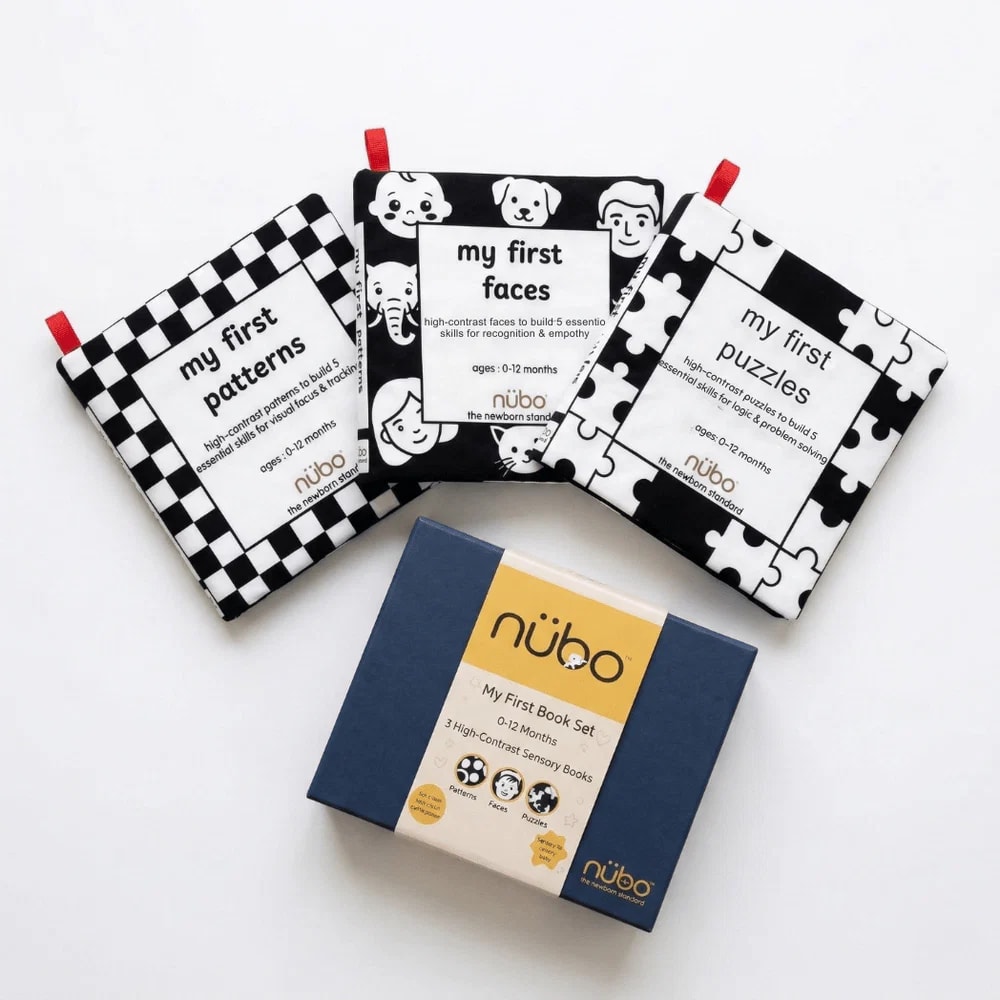
High Contrast Cloth Book Set
BIS Certified | Perfect for newborn to 6 months | Supports visual development & page-turning imitation
₹549
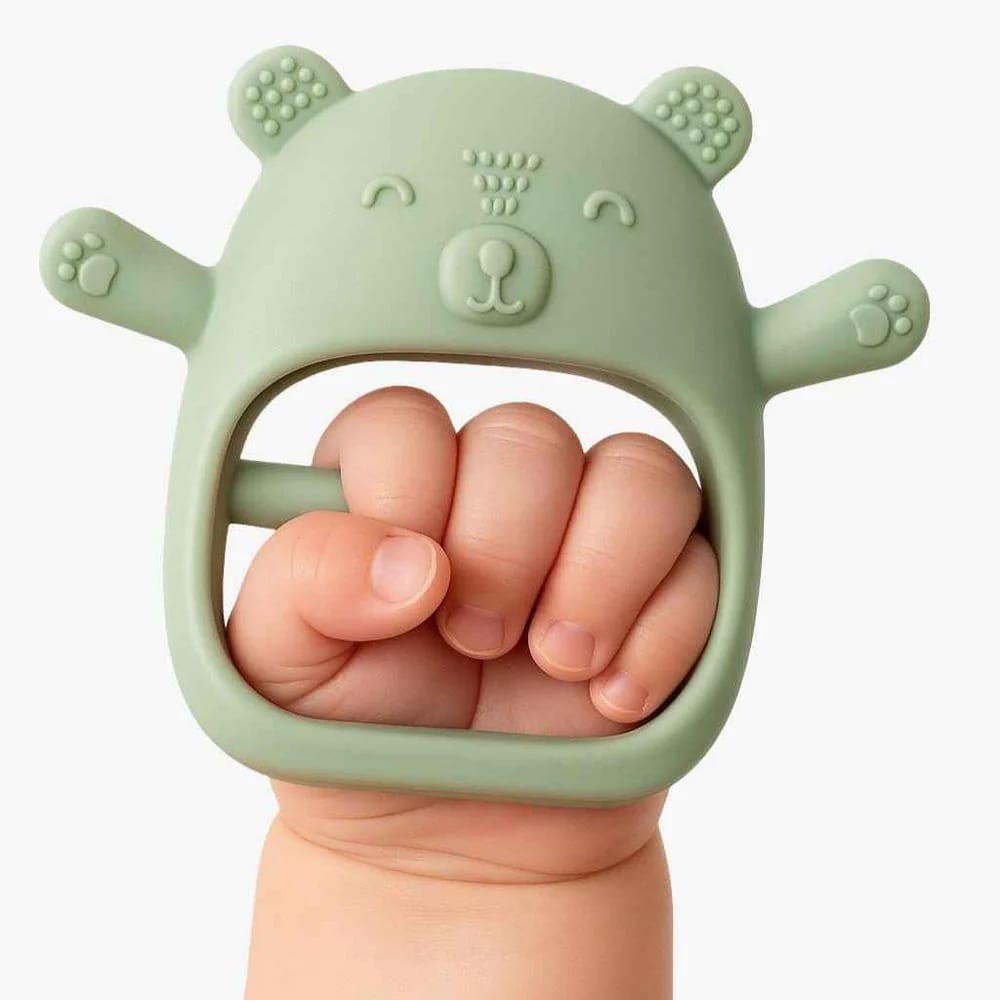
Kiko No-Drop Newborn Teether
BIS Certified | 0–6 months | Natural rubber, supports oral motor development
₹649
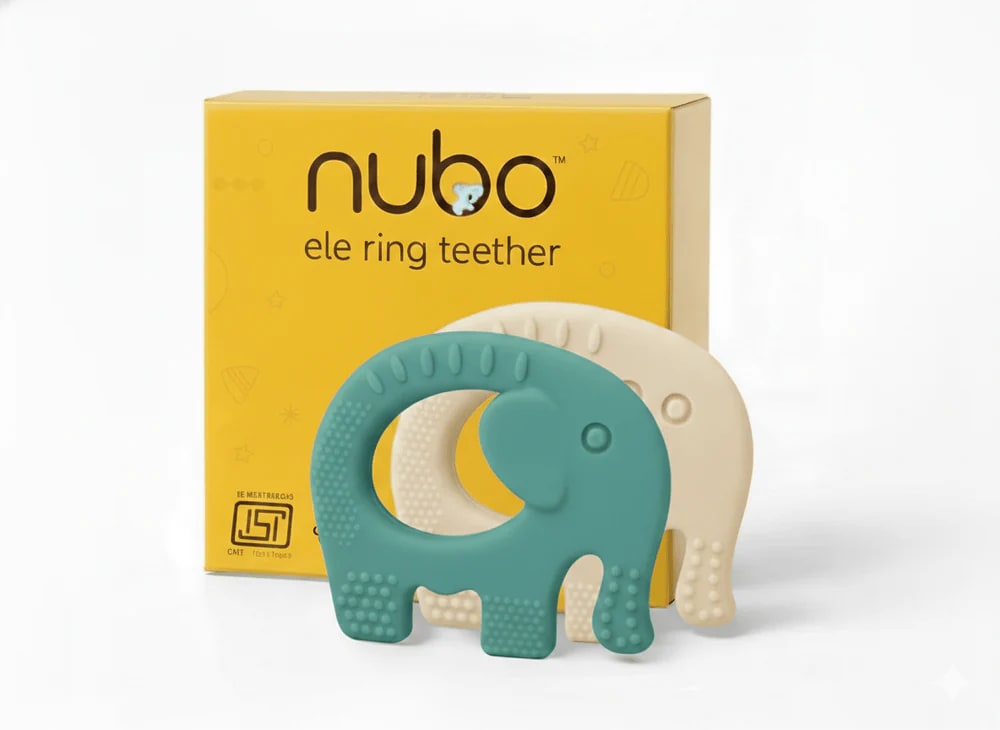
ELE Ring Teether Set
BIS Certified | Varied textures | Supports sensory exploration & fine motor coordination
₹599
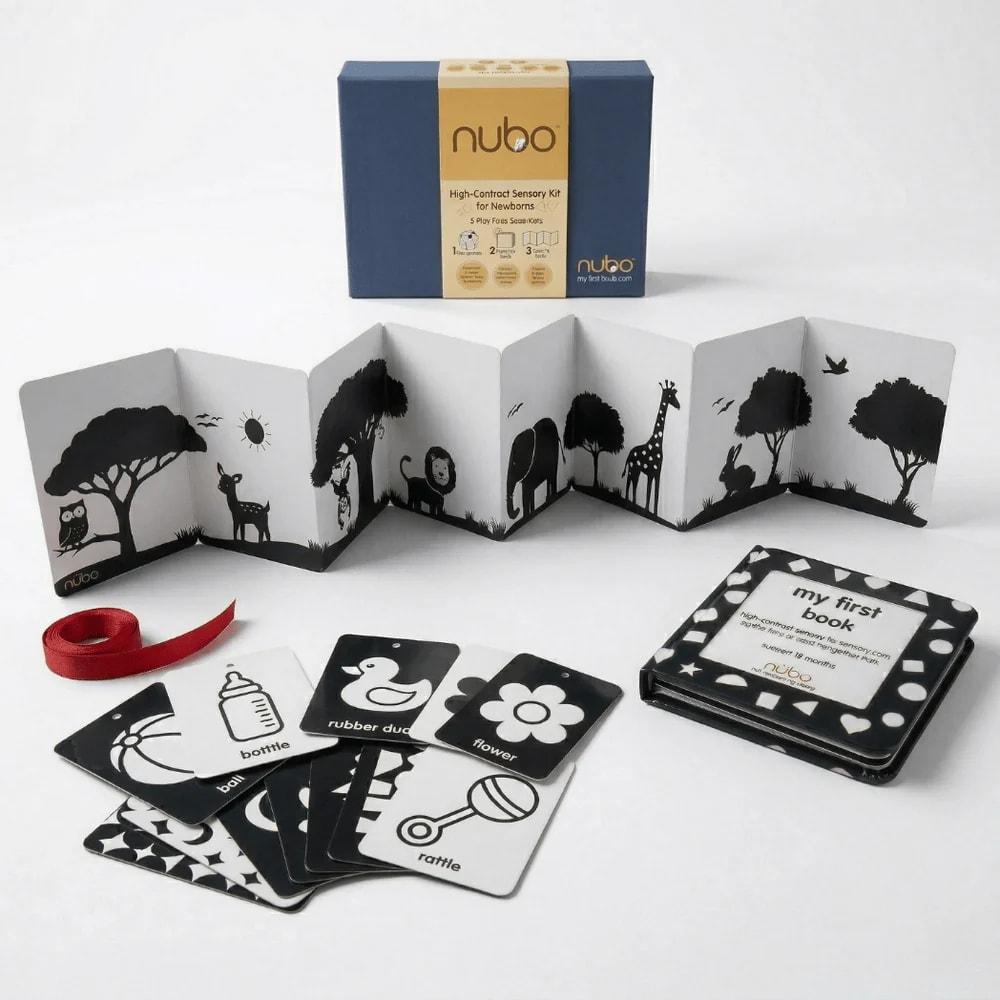
High Contrast Newborn Essential Kit
Complete starter kit | Includes cloth book, flashcards, teether | Perfect newborn gift
₹549
Conclusion
Your baby's mimicry isn't just adorable—it's a window into one of the brain's most powerful learning systems. Mirror neurons are the neural foundation for empathy, problem-solving, and social understanding, and they're most plastic (most easily shaped) during the first 24 months of life.
By choosing tools and interactions that mirror real-world adult actions—reading cloth books together, watching you use textured teethers, observing high-contrast images paired with your intentional movements—you're literally wiring your baby's brain for complex thinking and emotional intelligence.
The good news? You don't need expensive gadgets or complicated routines. You just need presence, intention, and the right tools—ones designed to invite slow, purposeful play. Every time you sit down with a cloth book during tummy time, every moment you narrate your actions as your baby watches, every calm interaction with a teether, you're activating neural pathways that will shape how your child learns, relates, and solves problems for years to come.
Start small. Pick one activity—maybe tummy time with a cloth book—and do it with full presence. Watch your baby's eyes light up. Their mirror neurons are learning. And so are you.


leave a comment
This site is protected by hCaptcha and the hCaptcha Privacy Policy and Terms of Service apply.