
Your mother-in-law says your baby needs ghee on the gums. Your neighbor insists teething starts at 6 months. Your pediatrician says something completely different. It's confusing. Here's what the science actually tells us—and what you can safely ignore.
WHY MYTHS ABOUT BABY DEVELOPMENT SPREAD (AND WHY THEY STICK)
If you're a new parent in India, you've probably heard advice from everyone—grandmothers, aunts, neighbors, random uncles at the grocery store. And here's the thing: they genuinely mean well. They're sharing what worked for their own children, often decades ago.
But babies haven't changed much. What has changed is our understanding of how they grow, learn, and develop. Research in child development, pediatric neuroscience, and early childhood education has evolved dramatically over the last 20 years. Many traditional practices were based on observation without the tools we have now to understand what's actually happening in a baby's brain and body.
The goal of this guide isn't to shame traditional wisdom. It's to give you accurate, research-backed information so you can make confident decisions about your baby's development—and respond with kindness when well-meaning relatives offer advice that doesn't align with what we now know works best.
MYTH #1: BABIES CAN'T SEE AT BIRTH AND DON'T NEED STIMULATION EARLY ON
The reality: Newborns can see from day one—just not the way you do. Their vision is blurry, and they see best at a distance of about 20–30 cm (roughly the distance from their face to yours when you're holding them). They're also highly sensitive to contrast and movement, which means they're already learning from their environment.
Research indicates that babies' brains develop rapidly in response to sensory input. When you show your newborn high-contrast images, make eye contact, or move colorful objects slowly in front of them, you're literally building neural pathways. This is why experts suggest introducing sensory play early—not flashy toys, but simple, age-appropriate materials that respond to what newborns actually see and perceive.
Many Indian parents worry that "overstimulation" will harm their baby. The opposite is usually true: gentle, consistent sensory engagement supports healthy brain development. Just keep it calm, predictable, and responsive to your baby's cues.
MYTH #2: TEETHING STARTS AT 6 MONTHS AND CAUSES ALL ILLNESS
The reality: Teething doesn't follow a fixed schedule. Some babies begin teething as early as 3 months; others don't show teeth until 12+ months. All of this is completely normal. The "average" is around 6 months, but there's huge variation.
Here's what experts consistently agree on: teething does not cause fever, diarrhea, or serious illness. Yes, babies may drool more, chew on their fingers, or have swollen gums. You might see a slight rise in temperature (under 100.4°F / 38°C). But high fever, severe diarrhea, or vomiting during this period is not caused by teething—it's a sign of something else that needs attention.
The confusion happens because teething coincides with the time babies are exploring objects and putting everything in their mouths, which is also when they're exposed to more germs. That's why illness seems to "happen with" teething, but it's actually a coincidence.
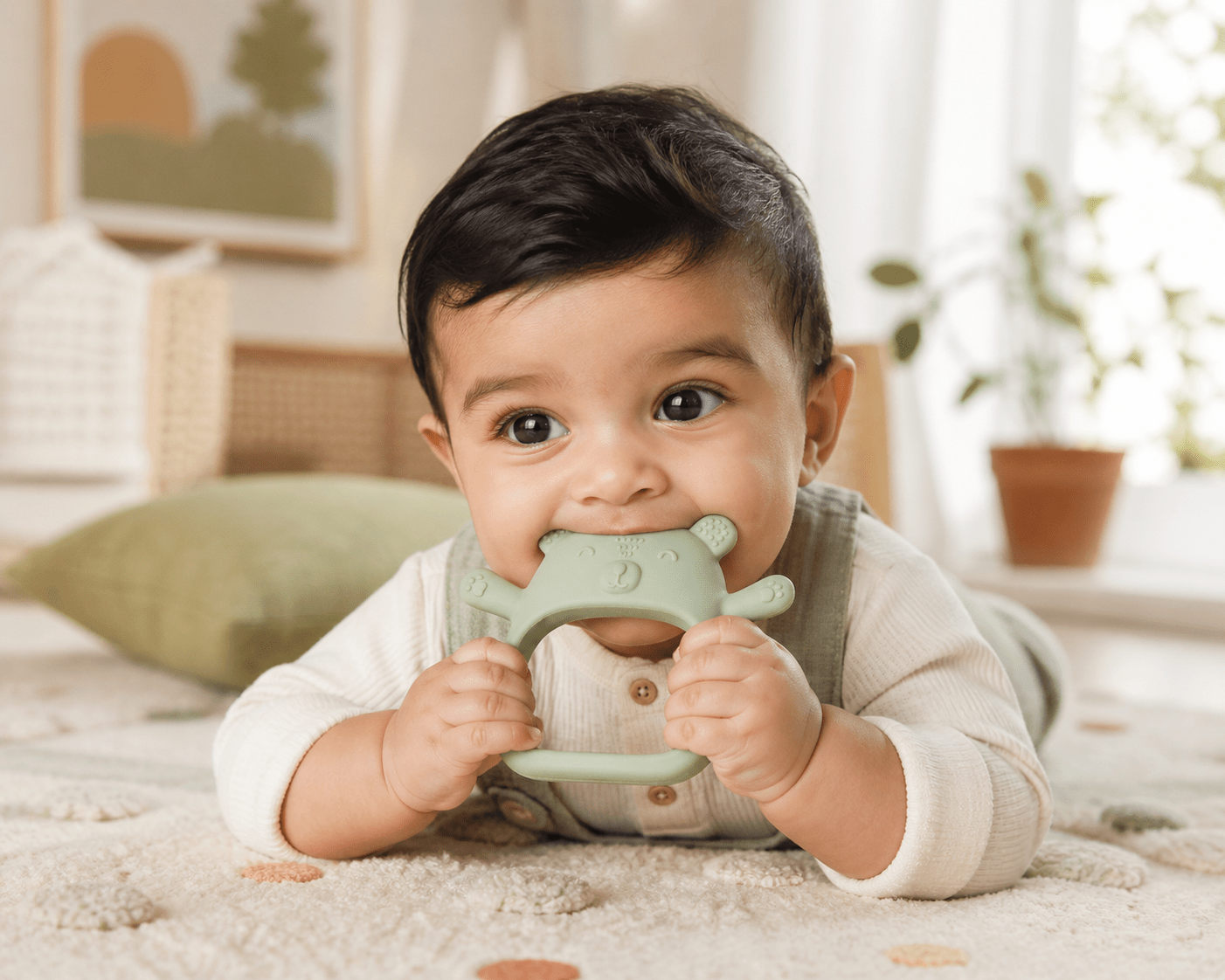
For infant teething relief, research supports cool (not cold) silicone teethers, clean wet cloths to chew on, and gentle gum massage. Avoid numbing gels with benzocaine and hard objects that could damage emerging teeth.
MYTH #3: YOU SHOULDN'T USE PACIFIERS—THEY RUIN TEETH AND ATTACHMENT
The reality: Pacifiers don't harm teeth when used appropriately in infancy. Short-term pacifier use (especially in the first 6 months) has no lasting impact on dental development. Attachment issues are also not caused by pacifier use—babies form secure attachments through responsive caregiving, not the absence of a pacifier.
What matters: don't introduce pacifiers before breastfeeding is established (usually around 3–4 weeks), and limit use after age 2–3 to avoid potential bite changes. But for a fussy newborn or to support independent sleep, pacifiers are safe and often helpful.
The goal is responsive parenting—meeting your baby's needs whether that's through a pacifier, your comfort, or other soothing methods. There's no single "right" way.
MYTH #4: BABIES SHOULD SLEEP FLAT ON THEIR BACKS WITHOUT ANYTHING NEARBY (INCLUDING CAREGIVERS)
The reality: Back sleeping is the safest position and is recommended for reducing the risk of Sudden Infant Death Syndrome (SIDS). That part is true and supported by decades of research.
What's not true: your baby doesn't need absolute isolation. Safe co-sleeping (following guidelines like firm surface, no pillows or blankets) is practiced in many cultures, including across India, and can be safe when done intentionally. Room-sharing without bed-sharing (baby sleeping on a separate surface in your room) is actually recommended by pediatric organizations for at least 6 months, ideally a year.
The key is informed choice. If you're co-sleeping, know the safe practices. If you're room-sharing separately, that's equally safe. Isolated crib sleeping is safe too. What matters most is your baby sleeping on their back on a firm surface, free of loose blankets and pillows—and parents knowing their chosen method well enough to practice it safely.
MYTH #5: EARLY DEVELOPMENT FOLLOWS A RIGID TIMELINE—IF YOUR BABY ISN'T DOING THINGS "ON SCHEDULE," SOMETHING'S WRONG
The reality: Developmental milestones exist on a range, not a deadline. A baby who rolls over at 4 months isn't smarter than one who does at 6 months. Both are normal. The differences in timing reflect genetics, temperament, opportunity to practice, and individual neurodevelopment.
Research on early development shows that wide variation is the norm, not the exception. Babies develop in their own rhythm. What matters is that your baby is making progress—not that they're racing ahead. Watch for the overall trajectory, not isolated dates.
That said, if your pediatrician flags a concern after 6 months (like not tracking objects, not responding to their name by 12 months, or no words by 18 months), it's worth exploring. But early variation? Completely normal.
Supporting healthy development doesn't require expensive classes or structured programs. It requires responsive caregiving, safe exploration, and age-appropriate play—which you're likely already doing.
MYTH #6: YOU NEED TO TRAIN YOUR BABY TO SLEEP ALONE AND CRY IT OUT FROM THE START
The reality: Newborns (0–3 months) cannot self-soothe and have legitimate needs that require your response. Ignoring a newborn's cries isn't harmful in the sense that one night won't cause lasting damage, but it's also not necessary. Newborns cry to communicate, not to manipulate.
Responsive parenting in infancy builds secure attachment and healthy stress regulation. You can absolutely have boundaries (like safe sleep practices) while also being responsive. These aren't mutually exclusive.
As babies get older (4–6 months+), gentler sleep training methods like gradual withdrawal or positive reinforcement work for many families. But the hard-line "cry it out" approach isn't the only way—and many research-informed approaches are gentler while still being effective.
THE TRUTH ABOUT TRADITIONAL PRACTICES
Some traditional Indian practices—like oil massage, tummy time, and exposure to natural light—are actually supported by modern research. Baby massage improves circulation, supports bonding, and helps regulate the nervous system. Gentle tummy time builds strength and motor skills. Natural light exposure helps regulate sleep-wake cycles.
Other practices—like applying kajal (kohl) to a baby's eyes, or offering honey before 6 months—aren't supported and can be risky. The key is not dismissing tradition, but evaluating each practice individually based on safety and evidence.
You can honor your family's culture while also making informed choices about your baby's health and development. These aren't opposing forces.
QUICK TIPS FOR PARENTS: CUTTING THROUGH THE NOISE
4 Ways to Evaluate Parenting Advice
- Check the source. Is this coming from a pediatrician, a peer-reviewed study, or a relative's memory of 30 years ago? All have value, but they're not equal.
- Ask: Does this feel safe? If advice contradicts safe sleep guidelines, proper feeding, or your baby's basic needs, it's worth questioning—kindly.
- Look for patterns. If multiple sources (your pediatrician, research, parenting experts) align, you probably have solid information.
- Trust your instincts. You know your baby best. If something feels off, it's okay to ask a professional, even if others say "don't worry."
- Remember: "It worked for us" isn't the same as "it's what's best." Your mother-in-law's advice worked for her child in her context. Your baby is different, and times have changed.
- Give yourself grace. You don't need to do everything "perfectly" to raise a healthy, happy baby. Good-enough parenting, done with love and responsiveness, is more than enough.
SUPPORTING HEALTHY DEVELOPMENT: WHAT ACTUALLY MATTERS
After cutting through the myths, here's what research consistently shows matters most for baby development:
| What Matters | Why It Matters | What You Can Do |
|---|---|---|
| Responsive caregiving | Babies' brains develop in response to consistent, caring attention | Respond to cues, make eye contact, talk and sing to your baby |
| Safe sleep | Reduces SIDS risk; allows healthy neurological development during rest | Back sleeping, firm surface, no loose blankets; room-sharing when possible |
| Sensory engagement | Supports neural development and learning from birth | Offer safe sensory play, high-contrast images, age-appropriate toys |
| Movement & play | Builds motor skills, strength, and body awareness | Tummy time, safe floor play, movement-based games as baby grows |
| Feeding on cues | Supports healthy appetite regulation and bonding | Breastfeed or bottle-feed responsively; follow baby's hunger signals |
| Comfort & soothing | Helps regulate nervous system and build emotional resilience | Hold your baby, use pacifiers if helpful, create calm routines |
Notice what's not on this list: rigid schedules, "training," expensive equipment, or doing everything perfectly. Your presence, attention, and love are the most powerful tools you have.
SUPPORTING TEETHING AND EARLY SENSORY PLAY WITH INTENTION
As your baby moves into the teething phase, having the right tools on hand makes a real difference. While you're navigating myths and advice, remember that simple, thoughtfully designed products support development without any need for complexity.
Quality silicone teethers that are safe, durable, and designed specifically for infant hands—like the Kiko No-Drop Newborn Teether or ELE Ring Teether Set—give your baby something safe to explore and chew on during this phase. Similarly, early sensory materials like high-contrast books support the visual development we talked about earlier.
These tools work best when paired with responsive caregiving: letting your baby choose when to use them, following their cues, and using playtime as connection rather than distraction.
FREQUENTLY ASKED QUESTIONS
Q: At what age should I introduce a newborn teether?
A: Newborn teethers can be introduced from birth, even though teeth won't arrive for months. Babies naturally want to chew and explore objects with their mouths, and having a safe silicone teether available supports this instinct. Some babies show more interest earlier than others—follow your baby's lead. By 3–4 months, many babies are actively interested in chewing toys.
Q: How do I know if my baby's teething symptoms are real or if it's something else?
A: Real teething signs include: drooling, chewing on fingers or objects, swollen gums, and possibly a slight temperature (under 100.4°F). High fever, diarrhea, rashes, or difficulty swallowing are not caused by teething—contact your pediatrician. The easiest way to distinguish: if the symptom would concern you on any other day, it should concern you now too, even if teething is happening.
Q: What's the difference between a "best infant teether" and just any toy?
A: A thoughtfully designed infant teether is sized safely for your baby's hands, made from food-safe, non-toxic materials (like BIS certified silicone), and designed with your baby's developmental stage in mind. It won't have small parts that detach, won't harbor bacteria, and can handle the force of baby chewing without breaking. Toys designed for older children may not be safe for babies who put everything in their mouths.
Q: How can I respectfully push back on advice that contradicts what my pediatrician says?
A: You don't have to argue. Try: "Thank you for looking out for us. Our pediatrician mentioned something different, and I'm going to follow their guidance for now." Or: "I know that worked well for you. We're trying [different approach] this time." Most people respond well to gratitude + calm confidence. If you're unsure about your pediatrician's advice, ask them to explain the reasoning—that clarity helps you feel confident when explaining it to others.
Q: Is there a "best teether for babies in India" specifically, or does it depend on the baby?
A: It depends on your baby. Some babies prefer ring teethers, others prefer textured silicone toys. What matters: BIS certification (India's safety standard), food-grade silicone, and a design you trust. Nubokind products, for example, are made in India and meet safety standards—and parents can feel confident that the materials are safe if chewed or placed in the mouth repeatedly.
Q: How do I know if my baby is developing normally if there's so much variation?
A: Look for overall progress and responsiveness rather than fixed timelines. Is your baby making sounds? Engaging with you? Trying new movements? Showing curiosity? These matter more than specific age-linked milestones. Your pediatrician screens for development at checkups—they're trained to spot patterns that suggest support is needed. Trust their assessment, and don't hesitate to ask questions if you notice something that concerns you.
CONCLUSION
Baby development myths persist because they come from a place of love and real experience. But love + outdated information doesn't always equal the best outcome. Your job as a parent isn't to know everything—it's to stay curious, ask questions, and make informed choices based on the best available evidence.
You don't need to follow every piece of advice you're given. You don't need to do everything "by the book." What you need is to be responsive, keep your baby safe, and trust that your instincts—combined with guidance from people you trust—will guide you well.
Teething will happen on its own timeline. Your baby will develop at their own pace. And you'll figure this out, one day at a time, with more confidence than you probably feel right now. That's what every parent before you has done, myths and all.
You're doing better than you think.


leave a comment
This site is protected by hCaptcha and the hCaptcha Privacy Policy and Terms of Service apply.