
Teething isn't just about teeth breaking through gums. It's a critical window for oral motor development and sensory learning. Here's what the science actually says—and why most myths miss the mark.
The Surprising Truth: Teething Isn't Just About Teeth
Here's what catches most new parents off guard: teething isn't primarily a pain response—it's a neurological milestone. When your baby starts chewing on their fists around 3–4 months, they're not necessarily sprouting teeth. They're actually building neural pathways in their mouth.
The oral region in your baby's brain is disproportionately large compared to other body parts. This is called a sensory homunculus—essentially a map of the body in the brain's motor cortex. The mouth takes up about 25% of this space, even though it's only a small part of the body. This means chewing, sucking, and exploring textures are foundational sensory experiences that literally wire the developing brain.
When a newborn or young infant mouths objects—your finger, a teether, a cloth—they're not just soothing sore gums. They're developing fine motor control, proprioception (body awareness), and oral motor skills that will eventually support speech, eating, and coordination.
What this means for your baby: Teething support—especially through safe, varied textures like silicone teethers—isn't optional comfort. It's developmental nutrition for the nervous system.
What the Research Says About Oral Motor Development
Developmental psychology journals consistently show that oral exploration in the first 6–12 months is a critical phase for sensory integration. During this window, babies are calibrating how their mouth feels, how different textures respond to pressure, and how to coordinate mouth movements with hand movements.
Research in pediatric development journals demonstrates that infants with access to varied, safe chewing objects show earlier gains in:
- Oral motor strength and coordination
- Self-soothing ability
- Sensory discrimination (understanding texture, firmness, temperature)
- Reduced stress responses during teething (lower cortisol levels)
One consistent finding: the type of teether matters. Soft silicone with varied surface textures (bumps, ridges, rings) engages more sensory receptors than a flat, smooth object. This richer sensory input strengthens neural connections in areas responsible for oral motor planning and sensation.
Additionally, research on Montessori-inspired learning shows that babies learn through multi-sensory exploration. A teether that can be held in different ways, rotated, and mouthed from multiple angles provides more developmental input than a single-purpose tool.
What this means for your baby: Choose teethers with texture variation and multiple grip points. A simple silicone ring teether with varied surface patterns offers more developmental benefit than you might expect.
The Role of Sensory Teethers in Brain Development
Let's dig into *why* texture matters so much. Your baby's mouth has a higher density of sensory receptors (mechanoreceptors) than almost any other part of their body. When a baby mouths a textured object, they're activating multiple sensory pathways simultaneously: pressure, texture, temperature, and proprioception.
In neuroscience, this is called multi-modal sensory integration—the brain's ability to combine information from multiple senses into a unified perception. This process strengthens synaptic connections (the bridges between brain cells) and supports what's called neural plasticity—the brain's ability to adapt and learn.
Bumped, ridged, or varied-texture teethers are more effective than smooth ones because they:
- Activate more sensory receptors, sending richer information to the brain
- Encourage active exploration (baby has to adjust their mouth and hands to explore different textures)
- Provide proprioceptive feedback (the pressure receptors tell the brain about body position and force)
- Support oral motor planning (the coordination needed for chewing, swallowing, and later speech)
This is exactly why Montessori-inspired teethers are designed the way they are. The Kiko No-Drop Newborn Teether, for example, offers multiple grip points and surface variations—not as a gimmick, but as deliberate sensory scaffolding for early development.
What this means for your baby: Your baby isn't just chewing for comfort—they're building brain architecture. Invest in teethers with intentional texture design.
Common Teething Myths vs. What Science Actually Shows
Indian parenting culture has some deeply rooted beliefs about teething. Let's separate fact from myth using what developmental science actually tells us.
| Common Myth | What Science Actually Shows |
|---|---|
| "Teething causes high fever" | Low-grade temp (up to 38°C) may correlate with teething inflammation, but high fever (>38.5°C) is a separate infection—not teething. |
| "Babies must chew on hard objects to cut teeth faster" | Tooth eruption timing is genetically determined. Hard objects can damage emerging teeth and gums. Soft, textured teethers are safer and provide better sensory input. |
| "Teething causes diarrhea" | Teething increases drool, which can loosen stools, but actual diarrhea is usually a separate illness. Don't dismiss GI symptoms as teething alone. |
| "Numbing gels are the best solution" | Topical numbing agents provide brief relief but don't address the underlying sensory/developmental need. Multi-sensory teethers offer longer-term comfort and brain development. |
| "The earlier a baby teethes, the smarter they are" | Tooth eruption timing has no correlation with intelligence or development. It's purely genetic and varies widely (4–12 months is all normal). |
What this means for your baby: Trust developmental science over generational myths. If your baby has a high fever, unexplained diarrhea, or severe distress, it's worth checking with your pediatrician—these aren't always teething.
What Parents Can Do: A Science-Backed Teething Toolkit
Now that you understand the neuroscience, here's how to support your baby's teething journey practically:
1. Offer Varied Textures Regularly
Rotate between different teethers—silicone rings, cloth teethers, and textured toys. This variation maximizes sensory input and keeps your baby engaged. A ring teether set with multiple textures means you're not limited to one sensory experience.
2. Keep Teethers Clean & Safe
BIS-certified silicone teethers are your safest bet. They're non-toxic, easy to clean, and designed with safety standards in mind. Avoid anything with small detachable parts or hard plastic edges.
3. Offer Temperature Variety (Safely)
A room-temperature teether and a refrigerated (not frozen) one offer different sensory feedback. Cold can reduce inflammation and numb mild discomfort, while room-temperature teethers support texture exploration. Never freeze a teether solid—this can damage gums.
4. Support Self-Soothing Through Multiple Modalities
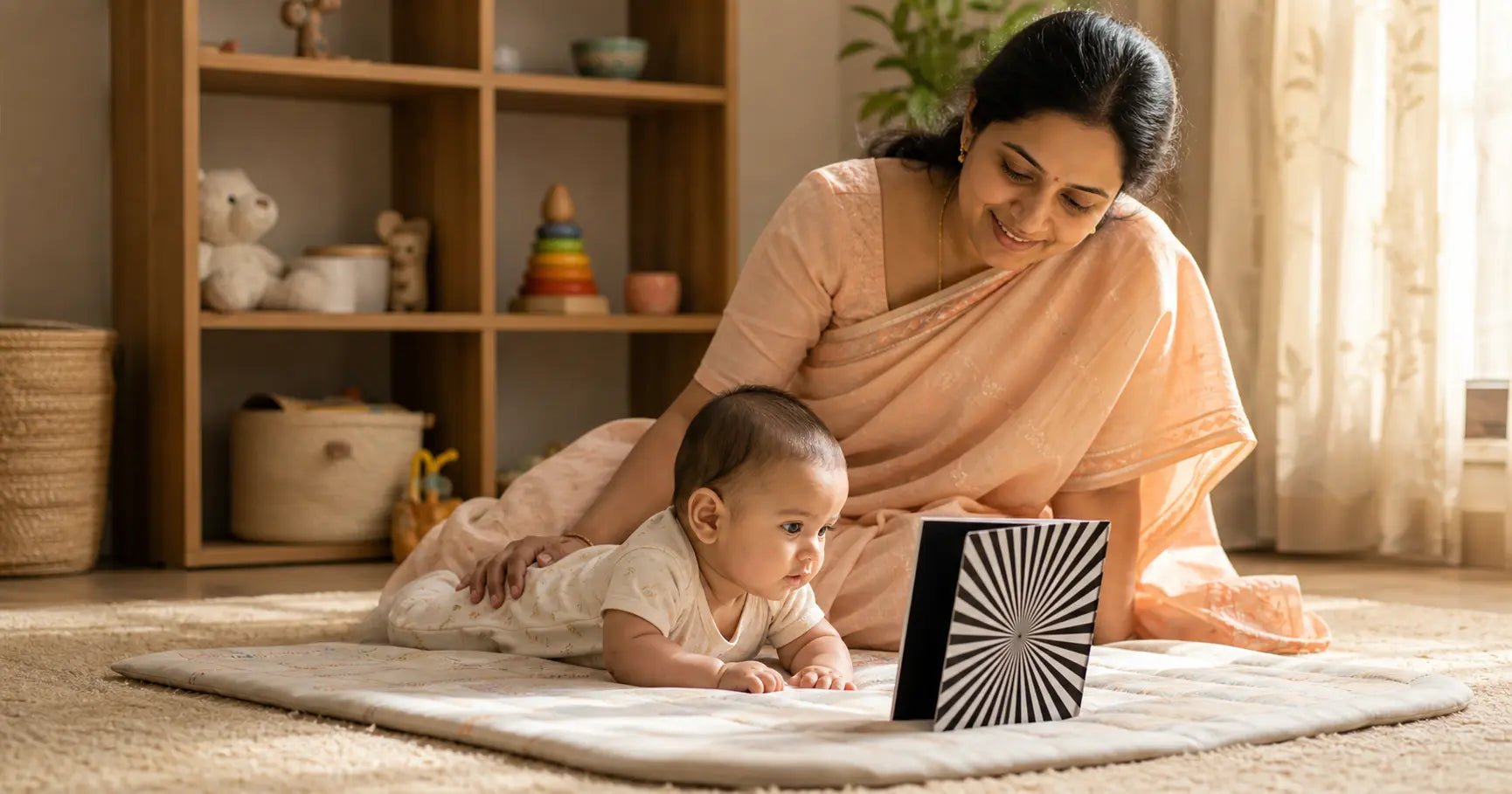
Teething comfort isn't only about chewing. Soft cloth books, like the High Contrast Cloth Book Set, provide tactile input while also engaging visual and cognitive development. Multi-sensory engagement reduces stress more effectively than single-focus teethers.
5. Watch for Readiness Cues, Not Just Age
Some babies start mouthing objects at 8 weeks; others at 5 months. Watch for hand-to-mouth exploration, increased drooling, and chewing on fingers rather than relying on age alone. This is when teething tools become most beneficial.
6. Combine Teething Support with Early Play Routines
Use teething time as an opportunity for sensory play. Offer teethers during tummy time, in water play (supervised), or as part of a calm wind-down routine. This frames teething as exploration, not just pain relief.
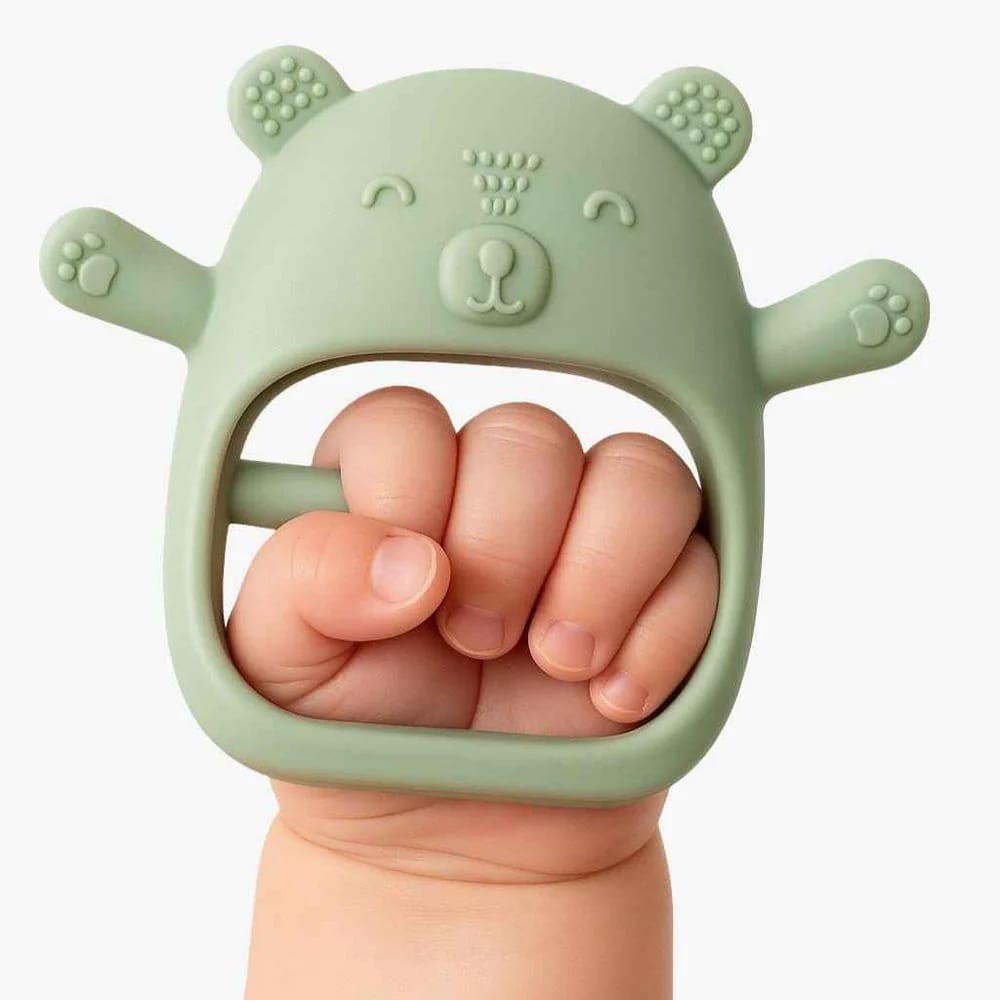
Kiko No-Drop Newborn Teether
BIS Certified | Multiple grip points | Varied textures | Age: 3+ months
₹649
What this means for your baby: Teething isn't something to "get through." It's a developmental window worth supporting with intention.
FREQUENTLY ASKED QUESTIONS
When should I introduce a newborn teether?
Most babies show readiness for teething toys between 3–4 months, though some may start earlier or later. Look for signs like hand-to-mouth exploration, increased drooling, and chewing on fingers. Even before teeth erupt, these sensory tools support brain development, so there's no harm in offering safe teethers once your baby can grasp and bring objects to their mouth (usually by 3+ months).
Are silicone teethers safe for newborns?
Yes, BIS-certified silicone teethers are specifically designed and tested for baby safety. Look for products marked "BIS Certified" or equivalent safety standards in India. Silicone is non-toxic, free from BPA and harmful plasticizers, and specifically chosen for oral exploration. Always choose teethers with no small detachable parts and supervise use.
Should I refrigerate or freeze teethers?
Refrigerated teethers (cold, but not frozen solid) can provide soothing sensory input and mild numbing for inflamed gums. Never freeze a teether completely solid, as this can cause harm to emerging teeth and gums. A 1–2 hour refrigerator chill is ideal. Always check the temperature before offering to your baby.
Can teething cause high fever or diarrhea?
Teething can cause mild inflammation and increased drooling, which may lead to low-grade fever (up to 38°C) and slightly loose stools. However, high fever (>38.5°C) or actual diarrhea suggests a separate infection and warrants a pediatrician visit. Don't assume all fevers or digestive changes during the teething period are teething-related.
What's the difference between a teething ring and other teething toys?
A ring teether is designed specifically for grasping and mouthing from multiple angles. Its compact size makes it easy for small hands to hold, and the varied textures maximize sensory input. Other teething toys (like cloth teethers or textured wands) offer different grip options and sensory experiences. Variety is beneficial—different tools engage different aspects of oral motor development.
Can I make teething worse by offering too many teethers?
No. Offering varied, safe teethers actually supports better sensory development. The key is that all teethers should be clean, BIS-certified, and age-appropriate. Rotating between different textures and types (silicone rings, cloth books, textured toys) provides richer sensory input than relying on a single tool. Think of it like offering different foods to develop taste—variety is developmentally beneficial.
CONCLUSION
Teething is far more than discomfort—it's a critical phase of sensory and neural development. When you choose a safe, textured infant teether, you're not just soothing gums; you're building brain pathways, supporting oral motor coordination, and providing the sensory input your baby's developing nervous system craves.
The science is clear: babies need multi-sensory, varied teething experiences. Texture matters. Safety matters. And understanding the "why" behind teething transforms how you approach this milestone—from a problem to solve to an opportunity to nurture.
Whether you choose a silicone ring teether set, a no-drop newborn teether, or a combination of tools, remember: you're not just soothing your baby. You're wiring their brain.
For a complete sensory toolkit, explore the Newborn Gift Kit, which combines teething support with early visual and tactile development—all grounded in Montessori principles and designed for Indian babies.
Trust the science. Choose safe, intentional tools. And know that every texture your baby explores is a small victory for their developing mind.


leave a comment
This site is protected by hCaptcha and the hCaptcha Privacy Policy and Terms of Service apply.