
You've probably checked off the usual milestones—crawling, sitting, first words. But modern infant neuroscience has quietly rewritten the playbook. We're now tracking something far more revealing: micro-milestones. These are the tiny, invisible neural leaps happening in your baby's brain every single day.
Hook: The Moment That Changed Everything
Last week, a parent from Bangalore sent us a message. Her 3-month-old had been lying on her tummy with a high contrast cloth book nearby. The baby's eyes suddenly locked onto the black-and-white pattern, followed it across the page, and—here's what amazed mom—switched her gaze from the book to the rattle sound happening at the same time.
"I realized I was watching something bigger than a reflex," she wrote. "My baby was literally building neural pathways in real time."
That's exactly what micro-milestones are. And it changed how she approached tummy time forever.
Here's what actually helped her—and thousands of Indian parents like you:
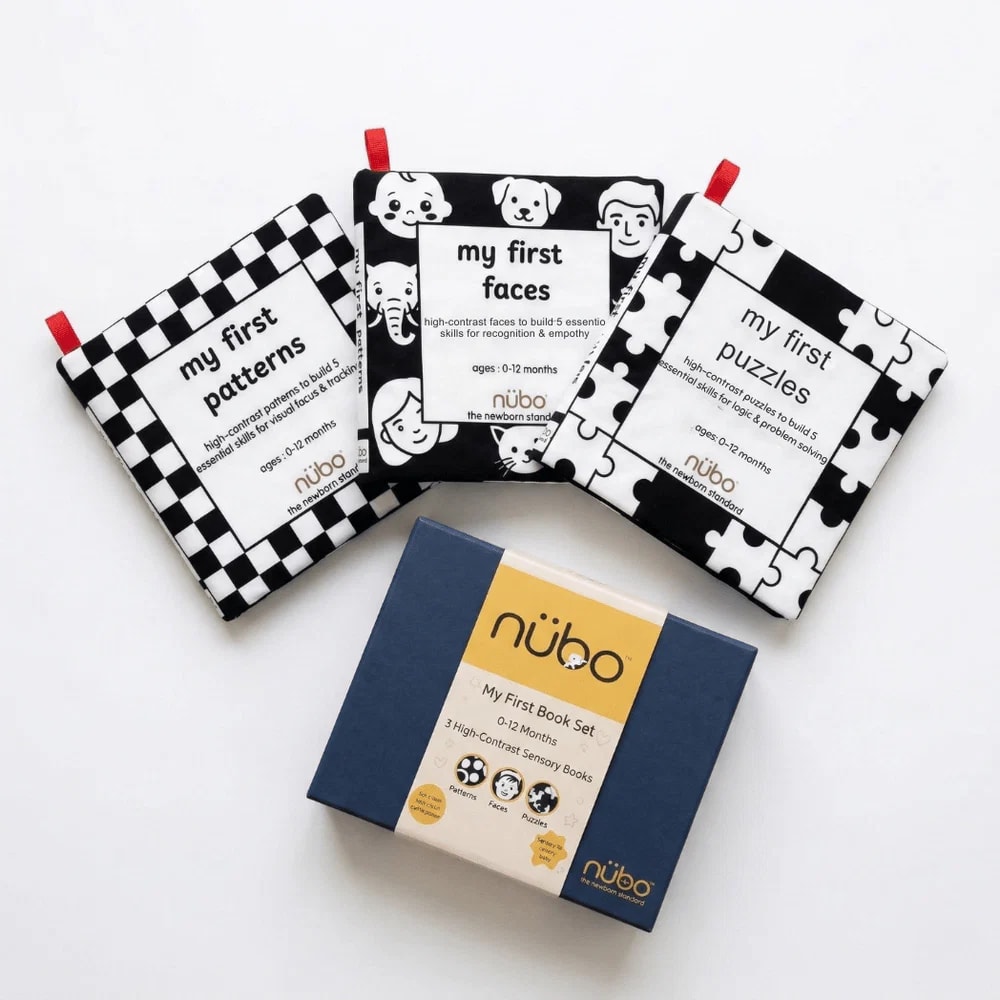
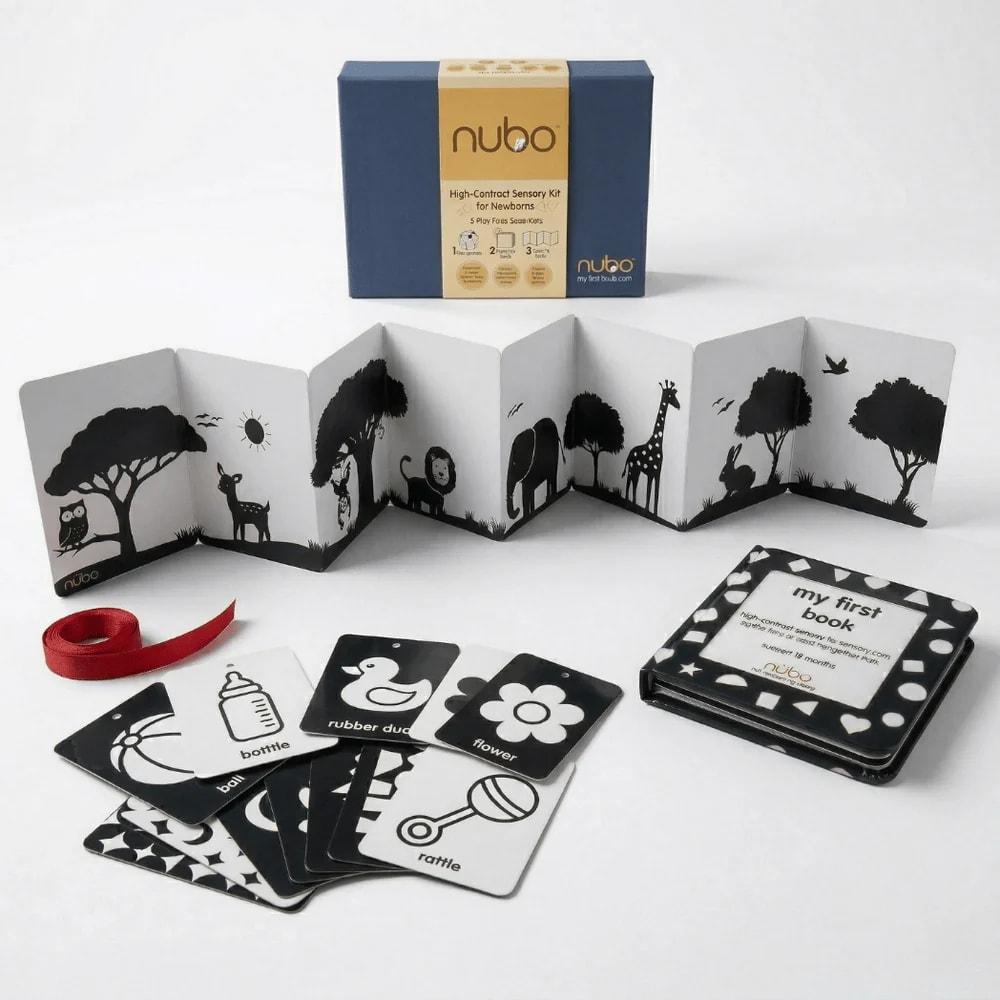
Newborn Gift Kit
Complete Montessori starter kit | High contrast flashcards included | Birth to 6 months
₹449
Why Micro-Milestones Matter More Than You Think
For decades, pediatricians asked one question: "Is your baby crawling yet?" or "Is she sitting up?" These are important gross motor milestones, and they absolutely matter. But they're only part of the story.
Modern neuroscience has discovered that long before your baby crawls, their brain is performing extraordinary feats. Between birth and 12 months, your infant's neural connections are tripling. Not incrementally—tripling. And most of this happens silently, invisibly, while your baby lies on a mat watching a high-contrast pattern or listening to a gentle sound paired with a visual object.
These silent moments of development—what we now call micro-milestones—are where the real magic happens. They include visual tracking speed (how smoothly your baby follows an object), cross-modal perception (linking a sound to a shape), and sustained attention (how long she can focus). These micro-skills are early predictors of cognitive development, language acquisition, and even learning capacity later on.
And here's the thing: you can observe and nurture them at home—if you know what to look for.
What to Look for: The Micro-Milestone Checklist
Stop waiting for the big, obvious moments. Start noticing the quiet ones. Here's what healthy micro-milestone development looks like:
| Micro-Milestone | What It Looks Like | Why It Matters |
|---|---|---|
| Visual Tracking | Baby's eyes follow a moving object smoothly (not jerky). Especially strong when tracking high-contrast patterns. | Foundation for all visual learning, reading readiness, and spatial awareness. |
| Cross-Modal Linking | Baby hears a sound and looks toward it. Or sees a shape and reaches for it when it makes a noise. | Shows the brain is connecting different sensory inputs—critical for language and memory. |
| Sustained Focus | Baby looks at an object, pattern, or book for 30+ seconds without losing interest. | Builds concentration and attention span—fundamental to all learning. |
| Fine Motor Precision | Baby reaches for objects with intention (not random flailing). Brings hand to mouth with control. | Early sign of motor control and hand-eye coordination needed for future skills like writing and feeding. |
| Sensory Discrimination | Baby reacts differently to soft vs. bumpy textures. Turns toward familiar vs. new sounds. | Shows developing sensory processing and cognitive differentiation—the brain learning to categorize. |
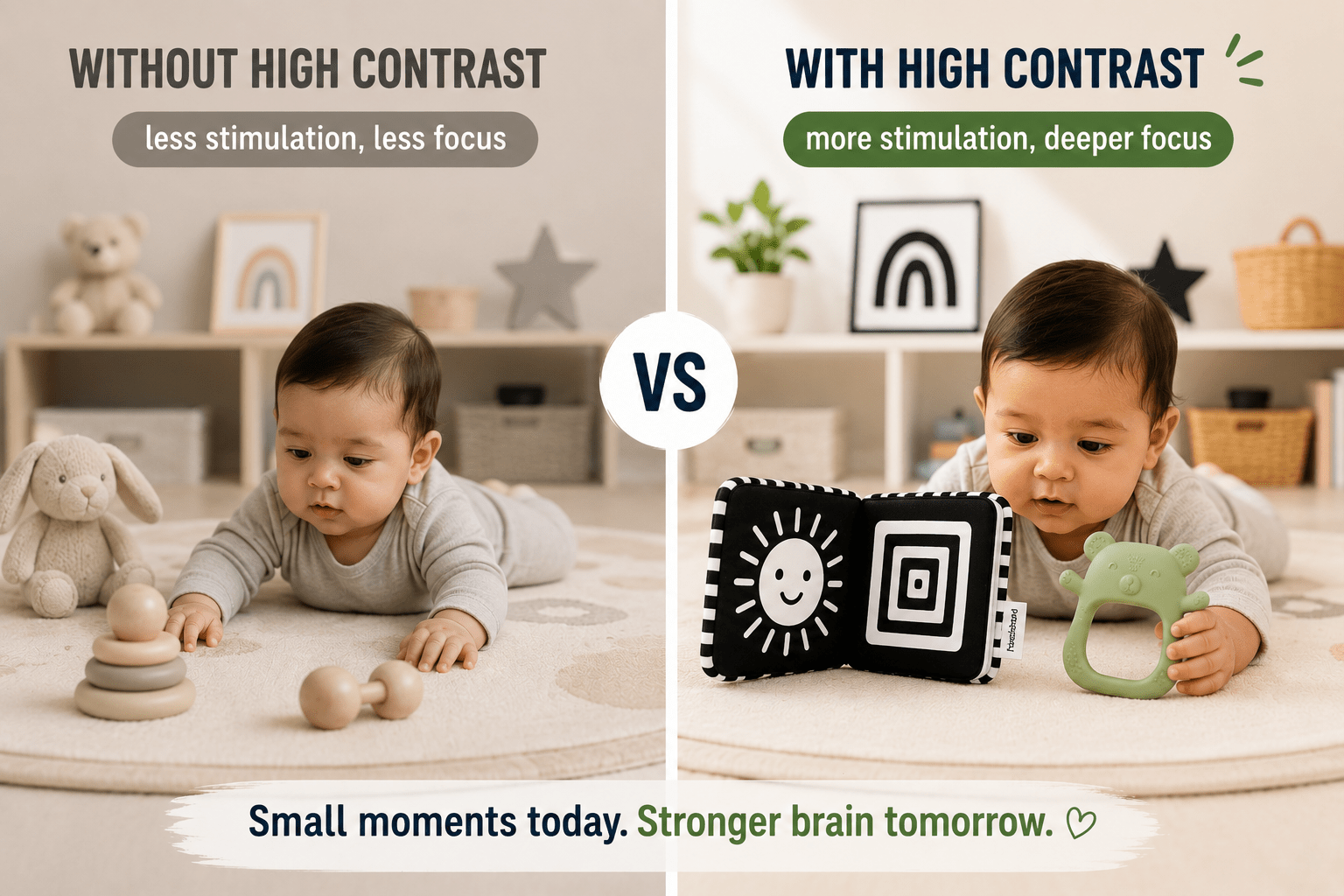
The products that help you observe these micro-milestones are specifically designed around Montessori principles: low stimulation, high observation, and sensory clarity. High-contrast flashcards and cloth books work because they isolate one sensory input at a time—allowing your baby's brain to focus deeply rather than get overwhelmed.
When you use quality sensory toys for newborns and cloth books for infants during tummy time, you're not just entertained your baby. You're creating the optimal environment for micro-milestone observation and neural development.
Why Nubokind's Approach Works
Nubokind's sensory kits and cloth books are built around one core principle: clarity over chaos. Each product isolates a specific sensory input—whether it's high contrast for visual development, varied textures for tactile learning, or paired sound-and-sight combinations for cross-modal development.
When you're doing tummy time for newborn or infant cloth book sessions, you're not just passing time. You're creating conditions where you can actually observe micro-milestones in action. Your baby's visual tracking sharpens. Their attention span deepens. Their cross-modal perception strengthens.
And because these products follow low-stimulation Montessori design, they don't overstimulate. Your baby can focus. Your brain can rest. You both win.
What Parents Are Saying
Subhrajyoti Rout
Very Beautifully Design High Contrast Infant Cloth Books
Very Beautifully Design High Contrast Infant Cloth Books. Because they help kids navigate "thinking, feeling, and doing" through relatable characters and fun activities. Highly recommended for Kids.
Ruchika
Beautiful gift
I bought this for a cousin's baby shower and it was the highlight of gifts. The packaging is beautiful and it feels like a very thoughtful, high-end product. It’s a unique alternative to the standard plastic toys you see everywhere.
Quick Guide: Using Tummy Time to Track Micro-Milestones
- Start simple. Use high contrast black and white photos or infant cloth books. One visual input at a time. Avoid multi-colored, busy toys during intentional observation time.
- Watch for the pause. When your baby suddenly stops moving and focuses on something—that pause is a micro-milestone. They're learning to sustain attention. Note the moment and duration.
- Pair sensory inputs. Place a high contrast flashcard where baby can see it, then make a soft sound. Can your baby link the sound to the visual? This is cross-modal perception forming in real time.
- Respect the pace. Montessori-designed toys work because they let babies control the intensity and duration of play. Don't interrupt when your baby is deeply focused. That focus is building neural pathways.
- Journal micro-moments. Once a week, spend 10 minutes watching your baby during tummy time with a sensory toy or cloth book. Write down one thing you observed—a new eye movement, a sustained focus moment, a texture response. Over 12 weeks, you'll see a portfolio of micro-milestone growth that no pediatrician's checklist can capture.
- Trust your observation. You don't need a degree in neuroscience. You're watching your baby with intention—that's all you need to become a micro-milestone spotter.
Frequently Asked Questions
Q: Isn't newborn to 6 months too early to worry about micro-milestones?
A: Actually, this is the most critical window. Your baby's brain is building the foundational neural architecture during this period. Observing micro-milestones now helps you understand how your baby is wiring sensory processing, attention, and learning capacity—the building blocks for everything that follows. High contrast flashcards and cloth books are specifically designed to support this early window. Start noticing now, and you'll see growth that others miss entirely.
Q: How is tracking micro-milestones different from traditional tummy time toys?
A: Traditional tummy time toys are often designed for entertainment and gross motor stimulation—building neck and arm strength. Micro-milestone tracking requires sensory clarity and low stimulation. High-contrast cloth books and flashcards isolate visual input so your baby can focus deeply. You're not just helping baby's muscles develop; you're creating conditions for neural observation. The difference is like the difference between background music and focused listening.
Q: What if my baby doesn't seem to track high contrast images right away?
A: All babies develop at their own pace, and visual tracking matures over weeks and months—not days. What you're doing by showing high contrast cloth books and flashcards is providing the stimulus. Your baby's visual system will track it when she's neurologically ready. Keep offering the opportunity without pressure. Over time, you'll notice the tracking becoming smoother, faster, and more sustained. That's the micro-milestone in action. If you have concerns, always check with your pediatrician.
Q: Are Montessori sensory toys really worth the investment?
A: Montessori-designed toys cost a bit more because they prioritize sensory clarity over flashiness. Cheap toys often overstimulate or bore babies quickly. Quality sensory kits like Nubokind's grow with your baby and hold attention over months—not days. Plus, when you understand what you're observing (micro-milestones), the investment shifts from "toy purchase" to "development observation tool." Many parents find that one well-chosen cloth book or high contrast set replaces five inferior alternatives.
Q: Can I observe micro-milestones without special products?
A: You can try, but high contrast flashcards and infant cloth books are designed specifically to isolate sensory input and hold attention. A random toy or household object might work occasionally, but it won't consistently create the conditions for deep focus. Nubokind's kits are thoughtfully designed so you spend less time digging through a toy box and more time actually observing. The clarity helps both you and your baby.
Q: When should I stop focusing on micro-milestones?
A: Micro-milestones are most pronounced from birth to 12 months, with heightened observation windows from 0–6 months. After 12 months, your baby will start showing more obvious milestone behaviors (walking, first words), and observation naturally shifts. But the foundation you build by understanding micro-milestones during the first year shapes your entire approach to supporting development. You're learning to observe, not just to wait.
Conclusion
The checklist has changed. It's no longer about waiting for crawling or sitting or first words. Modern parents who understand micro-milestones are seeing development in real time—the tiny neural leaps that happen every single day when you create the right conditions and watch with intention.
High contrast cloth books, flashcards, and sensory kits aren't luxuries. They're observation tools that help you become a partner in your baby's development rather than a bystander waiting for the next milestone. When you combine these tools with intentional tummy time for newborn sessions and quiet observation, you're building a foundation of understanding that will serve you through every stage of parenting.
Your baby's brain is doing extraordinary things right now. The question isn't whether development is happening—it's whether you're paying attention to it.
Ready to start observing micro-milestones at home? Explore Nubokind's Newborn Gift Kit—it includes everything you need to begin: high contrast flashcards, cloth books, and a guide to understanding what you're actually observing. Or start with the High Contrast Cloth Book Set and transform your tummy time sessions.
Browse Nubokind's complete collection of Montessori-inspired sensory toys and learn the language of micro-milestones.


leave a comment
This site is protected by hCaptcha and the hCaptcha Privacy Policy and Terms of Service apply.