
Your newborn's brain is wired to seek contrast and visual stimulation—not neutral tones. Learn why minimalist gray nurseries may actually limit sensory development, and how high-contrast toys and books better support your baby's learning journey.
WHAT YOUR NEWBORN'S EYES ARE REALLY SEEING
When your baby is born, their vision is fuzzy. Newborns can't see clearly beyond 8–12 inches—roughly the distance between their face and yours during feeding. But what they can see, they see in sharp contrast.
Babies are naturally drawn to bold patterns, stripes, and high-contrast shapes. This isn't just preference—it's neurobiology. Research indicates that infants' visual cortex develops faster when exposed to distinct contrasts, particularly black-and-white and primary color combinations. This visual engagement literally helps wire their developing brain.
A soft sage wall or creamy off-white nursery might look calming to you. But to your newborn, it's visually flat—almost invisible. Think of it as the difference between a blank page and one filled with defined shapes. Your baby's brain is hungry for the latter.
THE PROBLEM WITH MONOCHROME NURSERY DESIGN
The "Millennial Gray" or minimalist nursery trend—soft grays, whites, beiges, and pastels—has become the go-to aesthetic for modern parents. It looks serene in Instagram photos. It feels intentional and design-conscious. But here's the catch: it's not designed for your baby's visual development.
When a nursery relies heavily on neutral tones, infants receive minimal visual stimulation during the hours they spend there. This isn't cause for alarm, but it does mean you're missing a golden opportunity. The first 6 months of life are a critical window for visual pathways to form. Many experts suggest that deliberate, varied visual input during this period supports faster processing speed and better focus later on.
The solution isn't to paint your walls neon. Instead, introduce high-contrast elements strategically—through toys, books, and visual play items—so your baby gets the stimulation they need without compromising your home's aesthetic.
HOW HIGH-CONTRAST TOYS SUPPORT EARLY BRAIN DEVELOPMENT
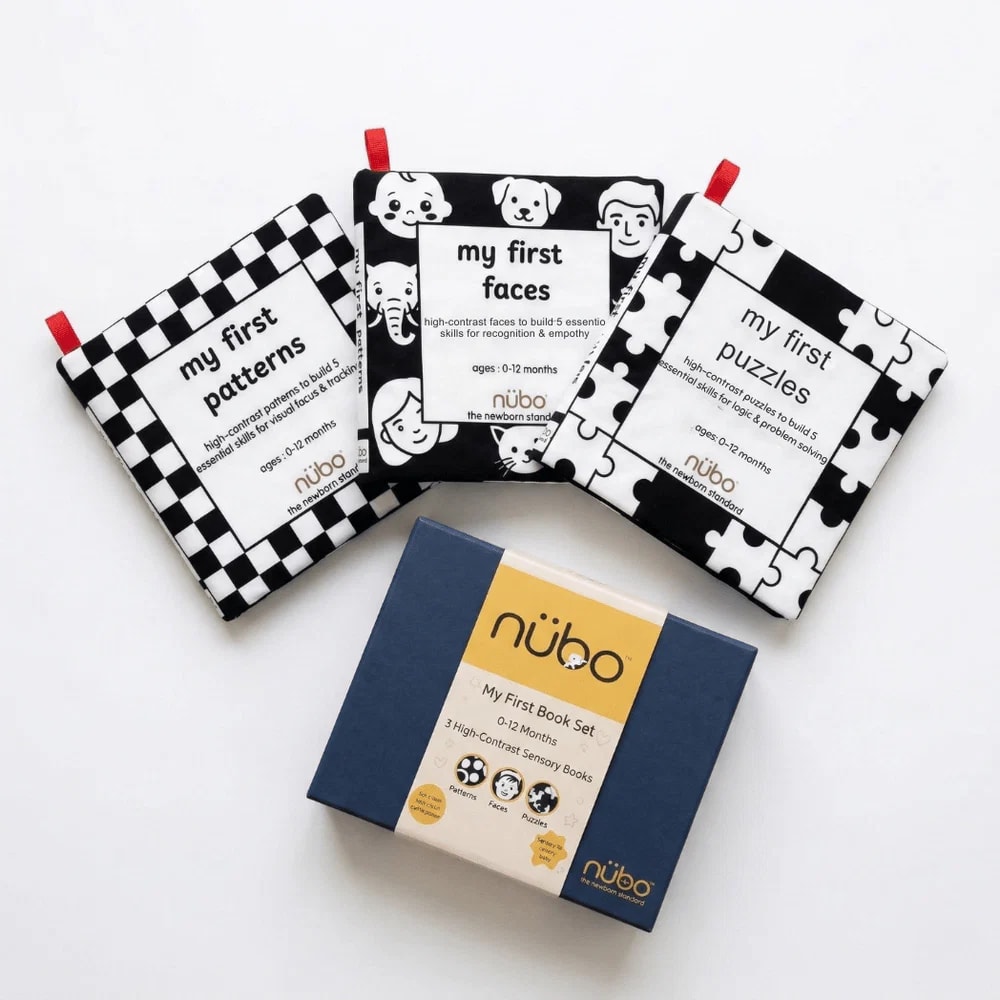
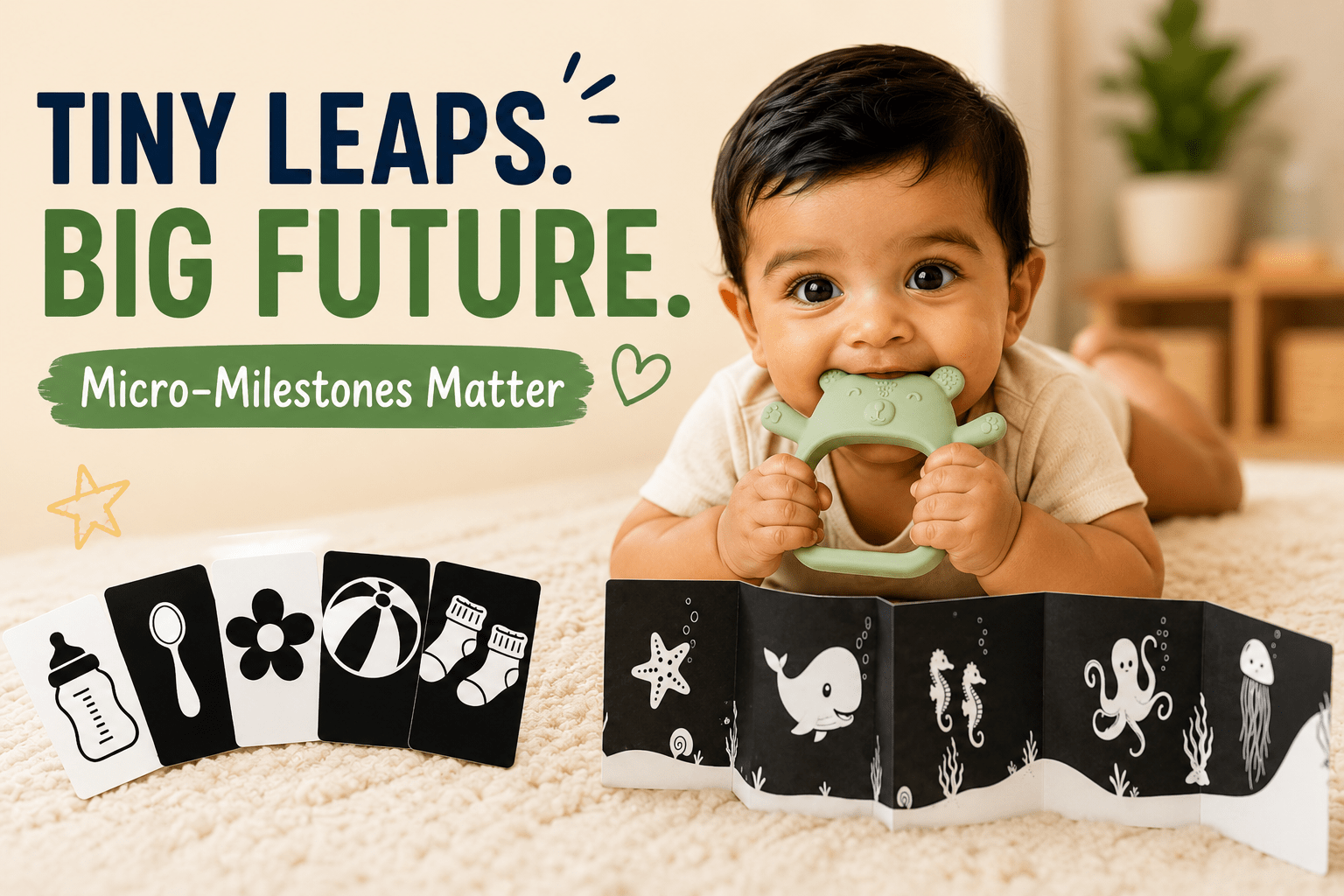
High-contrast newborn toys aren't a gimmick—they're tools designed to match what your baby's developing brain needs. When you offer your baby a black-and-white patterned teether or a bold cloth book, you're activating their visual attention system and encouraging focus.
As your baby tracks patterns, reaches for objects, or follows shapes with their eyes, they're engaging multiple developmental pathways at once: visual processing, motor planning, and sensory awareness. Research indicates this kind of targeted play supports better eye-hand coordination and faster visual acuity development.
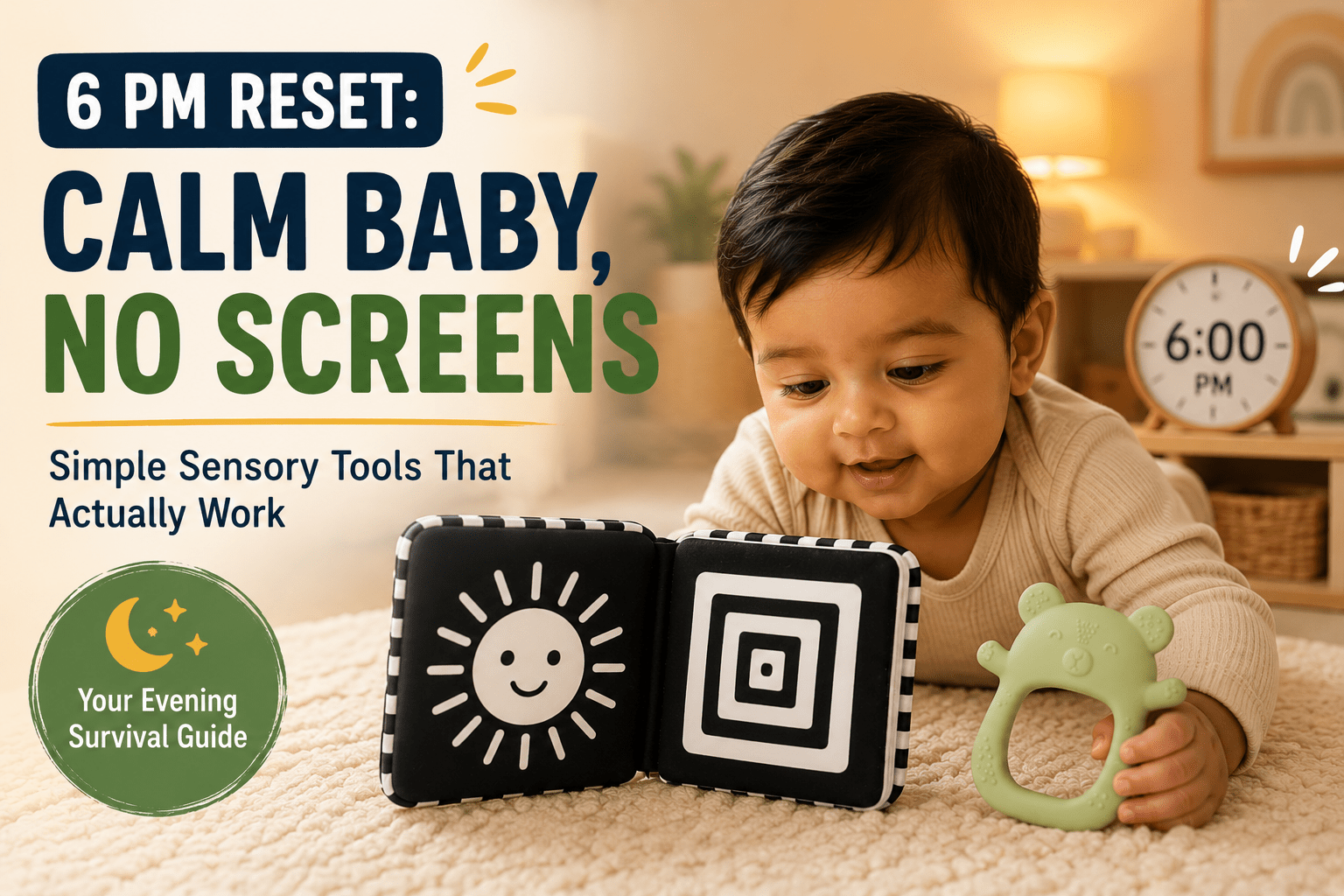
The best part? High-contrast toys are equally useful for soothing. A baby mesmerized by a bold pattern is often a calmer, more focused baby. It's a win for development and for your peace of mind.
| Newborn Stage | Visual Capability | Ideal Contrast Type |
|---|---|---|
| 0–2 months | Can see bold patterns up to 12 inches | Black & white stripes, faces, simple shapes |
| 3–4 months | Beginning to track movement, depth improving | Bold primary colors + black/white combinations |
| 5–6 months | Color vision sharper, longer focus spans | Complex patterns, varied textures, primary colors |
HIGH-CONTRAST CLOTH BOOKS: MEETING YOUR BABY WHERE THEY ARE
Cloth books designed with high-contrast patterns serve a triple purpose: they're safe for teething mouths, they hold visual attention, and they introduce early literacy concepts. Unlike board books, cloth books won't hurt when your teething baby inevitably uses them as a chew toy.
Many parents worry books are "too early" for newborns. They're not. At 2–3 months, your baby won't understand words, but they'll be captivated by the visual patterns. By 4–6 months, you might notice them reaching toward the pages or trying to grasp shapes. This tactile + visual combination is exactly how early learning happens.
High-contrast cloth books inspired by Montessori principles allow you to follow your baby's natural curiosity while supporting their sensory development. They fit easily into your bag, wash without fuss, and can turn even a neutral gray nursery into a learning space.
SENSORY TOYS BEYOND THE CRIB: CREATING A RESPONSIVE ENVIRONMENT
Your baby's visual development doesn't only happen in the nursery. Every moment of wakefulness is an opportunity for learning. Offering varied sensory toys throughout your home—during tummy time, in the living room, during travel—extends these developmental windows.
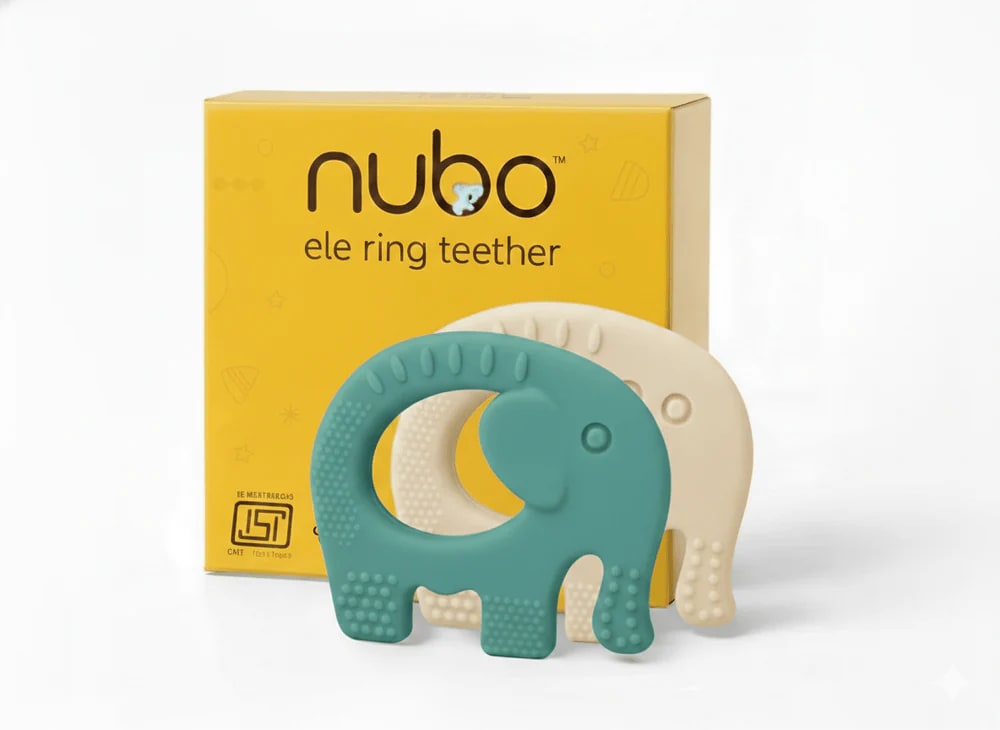
The best newborn toys combine visual interest with tactile feedback. A silicone teether with bold geometric patterns gives your baby something to look at while they're teething. A high-contrast ring teether offers the same visual engagement plus the relief they need when their gums start to hurt.
This isn't about overstimulation or cluttering your space. It's about being intentional. A few carefully chosen, high-contrast toys placed where your baby spends time will do far more for their development than a full room of neutral items.
| Toy Type | Visual Benefit | Sensory Benefit |
|---|---|---|
| High-contrast teethers | Bold patterns engage attention | Silicone texture soothes gums |
| Cloth books with patterns | Complex shapes build focus | Soft fabric, safe for gums |
| Ring toys with contrast | Geometric designs track eye movement | Lightweight, easy to grasp |
QUICK TIPS FOR PARENTS
- Introduce at least 2–3 high-contrast items into spaces where your baby spends awake time. A cloth book, a teether, and a ring toy covers the basics.
- Rotate toys weekly. Newborns respond to novelty. What was fascinating last week becomes part of the background. Rotation keeps engagement high.
- Use high-contrast toys during tummy time. Place a patterned book or teether at eye level. This encourages your baby to lift their head, building neck strength while they're visually engaged.
- Pair contrast with connection. Sit with your baby while they explore a cloth book. Your narration ("Look at those stripes!") pairs visual input with language development.
- Don't abandon your aesthetic. One or two high-contrast items won't overwhelm a neutral nursery. A bold cloth book on a soft gray shelf actually stands out beautifully.
- Trust the science over trends. Your instinct to create a calm, beautiful space is valid. Adding purposeful visual stimulation doesn't contradict that—it enhances it.
RECOMMENDED PRODUCTS FOR VISUAL DEVELOPMENT
If you're ready to introduce high-contrast elements into your baby's environment, these products are designed specifically to support the sensory and developmental needs we've discussed:
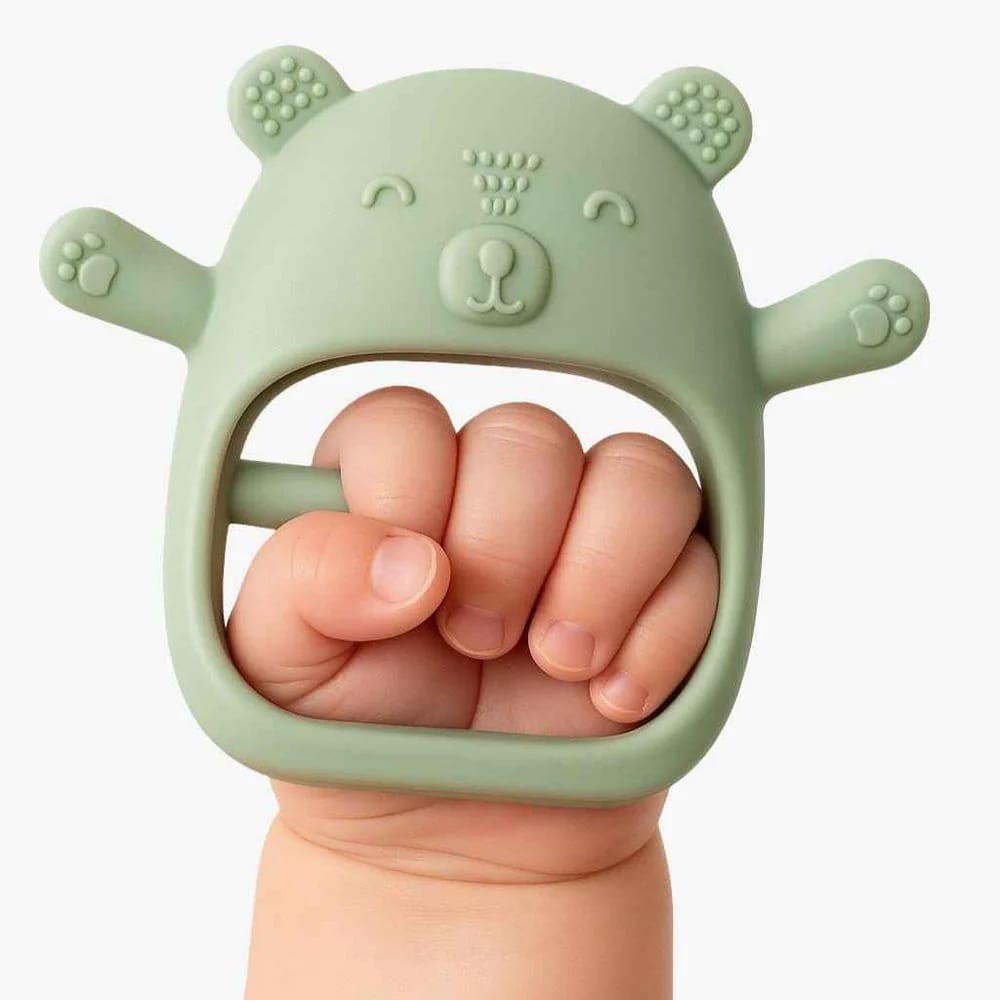
Kiko No-Drop Newborn Teether
Food-grade silicone | BIS Certified | Ages 0+ months | Tether attachment
₹649
FREQUENTLY ASKED QUESTIONS
Q: Is high-contrast stimulation the same as overstimulation?
A: No. Overstimulation happens when a baby is exposed to too much input at once—loud sounds, rapid movement, and visual chaos all simultaneously. A single high-contrast toy is not overstimulation. In fact, a focused toy helps your baby develop the ability to concentrate. Newborns naturally look away when they've had enough, so trust their cues.
Q: Can I use high-contrast toys for newborn teethers, even though my baby is only 2 months old?
A: Absolutely. Teething can begin as early as 2 months for some babies, and high-contrast teethers serve a dual purpose: visual engagement and gum relief. Even if your baby isn't actively teething yet, they're still benefiting from the visual stimulation. Holding or gazing at a high-contrast teether supports early motor and visual development.
Q: Will adding one high-contrast book or toy to my gray nursery really make a difference?
A: Yes. Research indicates that even brief, focused visual engagement supports neural development. A single high-contrast cloth book placed where your baby has awake time can meaningfully contribute to visual acuity and attention span development. Combined with your natural interactions and other play, it's part of the complete picture—not the whole thing.
Q: What are the best newborn toys to start with if I'm just beginning?
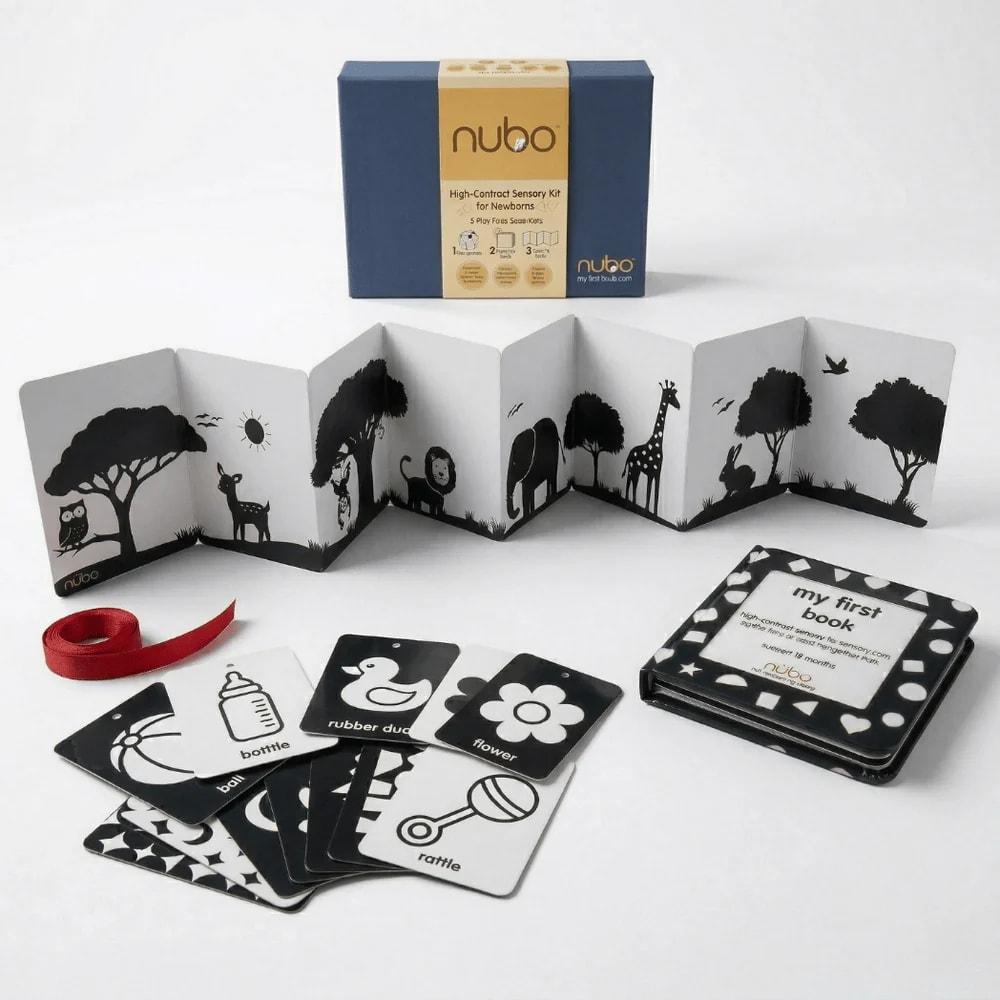
A: Start with one high-contrast cloth book and one silicone teether or ring toy. These cover visual development and sensory/tactile needs. As your baby grows (around 3 months), you can add more variety. Many parents find it helpful to rotate toys weekly to maintain novelty and engagement. A kit designed for newborns takes the guesswork out of what to choose.
Q: Are there any safety concerns with high-contrast toys?
A: High-quality high-contrast toys designed specifically for newborns and made from food-grade silicone or soft cloth are very safe. Always look for BIS certification and ensure toys don't have small detachable parts. If a toy is designed for your baby's age and stage, it's been tested for safety. Avoid toys with loose buttons, small beads, or toxic dyes.
Q: Will my baby's nursery look "busy" if I add high-contrast elements?
A: Not necessarily. Thoughtful placement of one or two high-contrast pieces can actually enhance a minimalist aesthetic. A bold black-and-white cloth book on a soft beige shelf, or a geometric teether placed on a changing table, adds visual interest without clutter. The key is intention, not quantity. Your aesthetic and your baby's developmental needs aren't mutually exclusive.
CONCLUSION
The soft gray nursery trend has given modern parents permission to create calm, beautiful spaces. That's genuinely a good thing. But it doesn't have to come at the expense of your baby's visual development. High-contrast toys, cloth books, and sensory items aren't competing with your aesthetic—they're complementing it while supporting critical brain development.
Your newborn isn't looking for minimalism. They're looking for contrast, novelty, and visual engagement. By thoughtfully introducing high-contrast toys and books alongside your carefully curated neutral space, you're honoring both your design instincts and your baby's biological needs.
The window for visual development is brief and precious. Start early, observe your baby's response, and trust that you're giving them exactly what their developing brain needs to thrive.

leave a comment
This site is protected by hCaptcha and the hCaptcha Privacy Policy and Terms of Service apply.