
That frantic hour between 6 and 7 PM feels endless. Your baby is fussy, you're exhausted, and the phone feels like the easiest answer. But what if there was something better—something that actually calms babies *and* builds their brain?
What Actually Works When Your Baby Needs Calm
You know the moment: your newborn is overtired, that magical "witching hour" has arrived, and your partner just walked in from work asking what's for dinner. Silence feels impossible. A screen feels inevitable.
Here's what actually works—and what thousands of Indian parents have discovered: structured sensory play. Not screens. Not overstimulation. Just the right tools, used the right way.
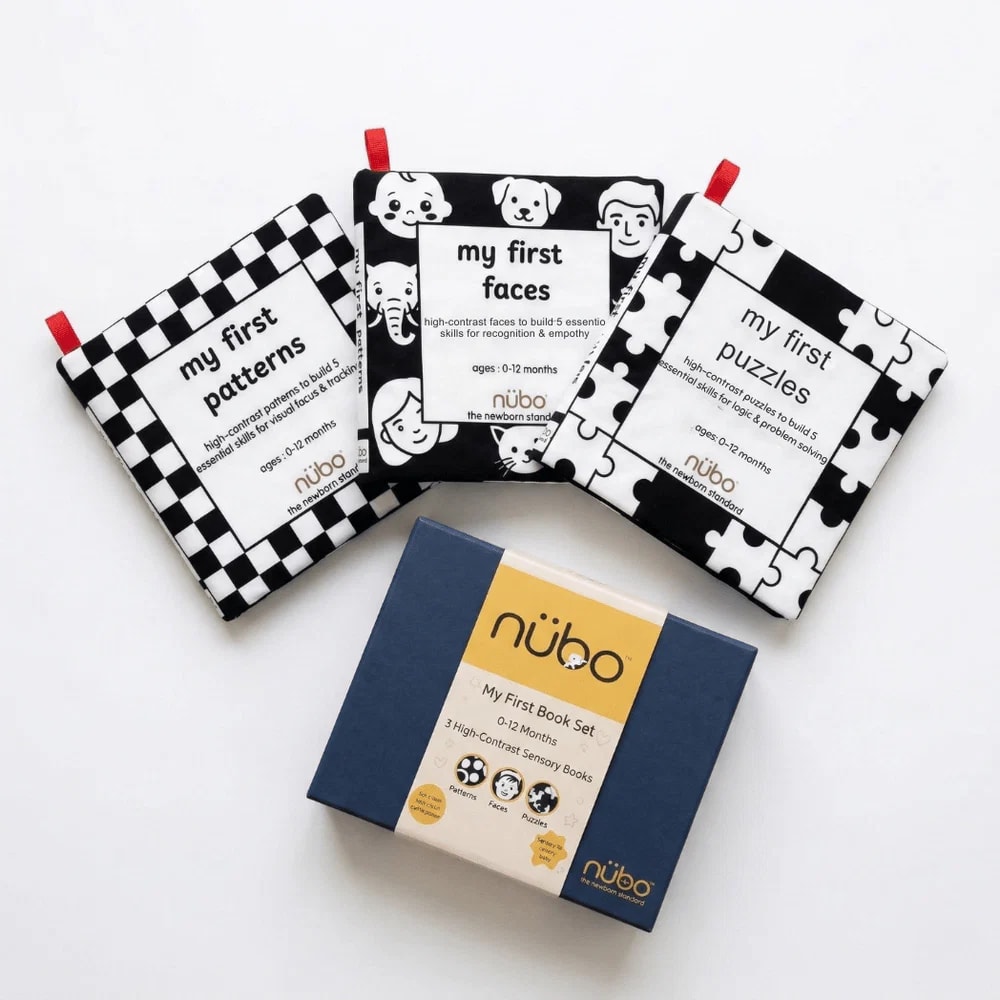
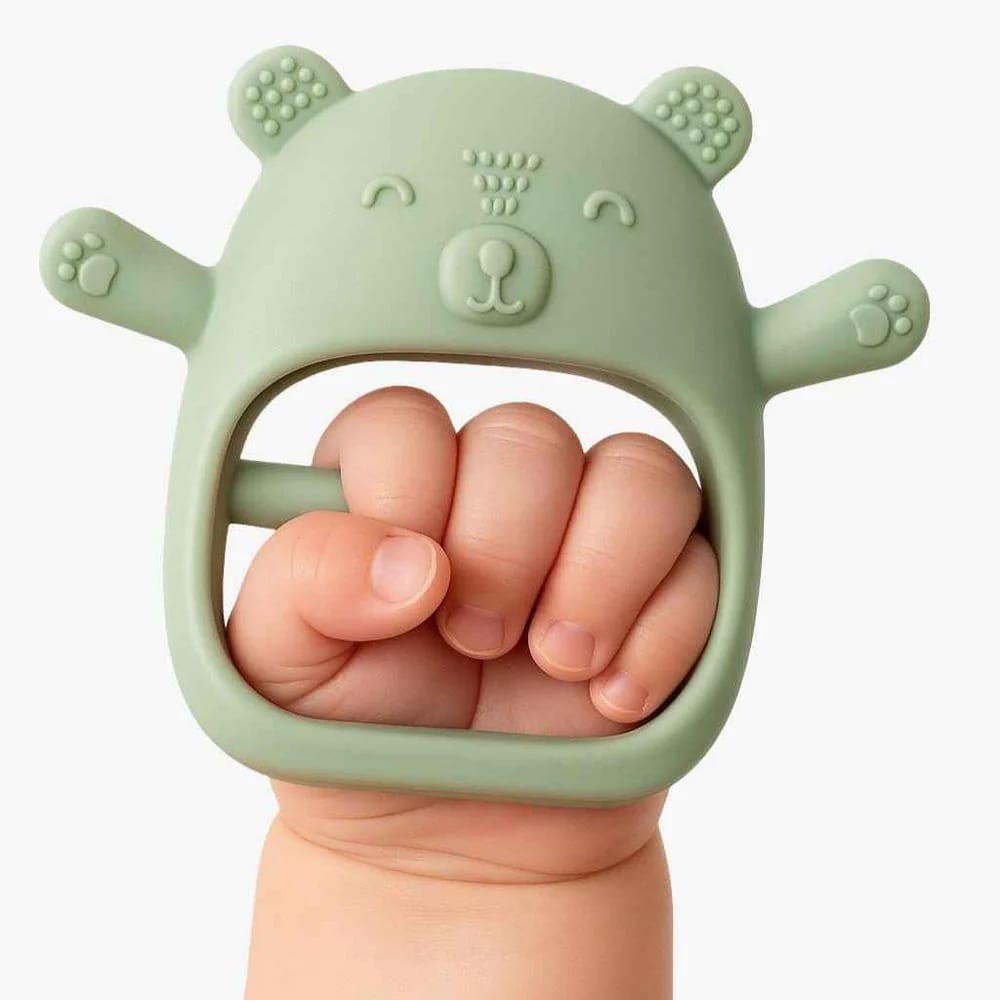
These aren't just toys. They're tools designed to activate your baby's parasympathetic nervous system—the calming part of their brain. When used during those critical late-afternoon hours, they replace the urge for screens with something that actually satisfies your baby's neurological needs.
Why The 6 PM Hour Matters (And Why Screens Aren't The Answer)
Between 4 and 8 PM, your baby's nervous system hits what researchers call a "developmental overtired window." Their cortisol (stress hormone) peaks, their ability to self-soothe drops, and their sensory systems are exhausted from processing the entire day.
Most parents reach for screens because they work—instantly. But here's what happens: passive screen stimulation bypasses your baby's natural sensory regulation pathways. It doesn't teach their brain to calm itself. In fact, it does the opposite. Rapid cuts, bright light, and unpredictable sounds actually *increase* overstimulation over time.
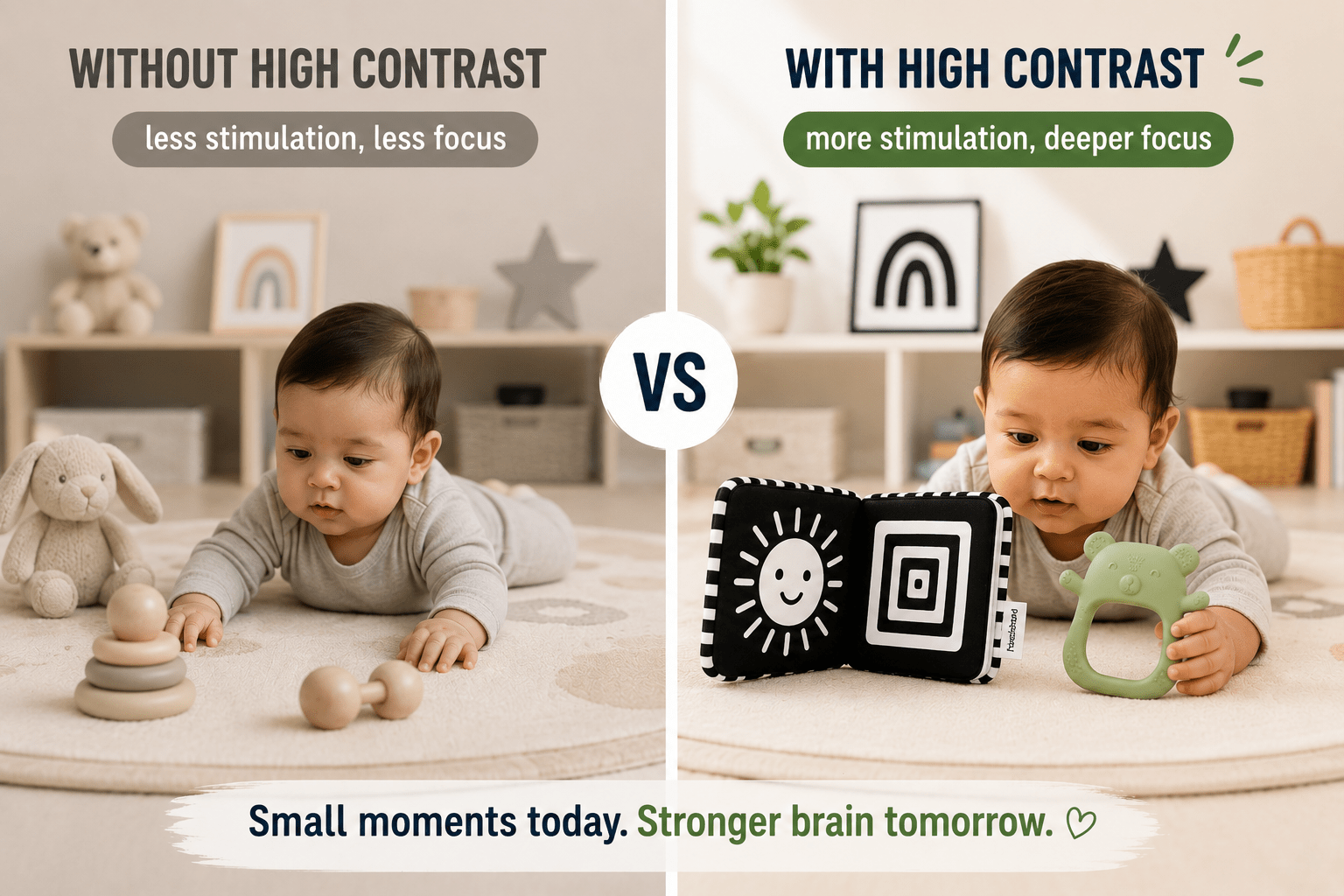
What your baby actually needs during this hour is active sensory engagement. When a newborn grips a textured teether or focuses on high-contrast black-and-white shapes, their brain activates the same calming mechanisms that lead to better sleep, improved focus, and a stronger foundation for learning. This is why Montessori educators have used these principles for over a century.
What Makes A Sensory Tool Actually Work
Not all teethers and books are created equal. When you're choosing products for this critical developmental window, what matters isn't the color or the price—it's whether the product actually engages your baby's nervous system.
| What to Look For | Poor Quality Products | Quality Sensory Tools |
|---|---|---|
| Visual Design | Pastel colors, gradual patterns, cluttered images | High contrast black & white, clear geometric shapes, minimal visual noise |
| Texture | Smooth plastic, one texture throughout, generic feel | Multiple textured zones, food-grade silicone, variety to explore |
| Safety Standards | No certifications, unclear materials, rough edges | BIS Certified, medical-grade materials, smooth rounded design |
| Engagement Duration | Baby loses interest in 2–3 minutes | 15–20 minutes of focused, independent exploration |
| Developmental Fit | One-size-fits-all approach, doesn't match age | Designed for specific sensory stages (newborn, teething, tummy time) |
Nubokind's High Contrast Cloth Book Set and Kiko No-Drop Newborn Teether meet every single criterion above. Each is tested to BIS standards, designed by child development experts, and built to activate real calm—not just distract.
What Indian Parents Are Saying
Kumari Adarsha
Totally worth it
My daughter is just 1.5 months old , and I'm using this flashcards and cloth book for her tummy time and it is a perfect product for newborn.
Jenivi Chishi
Lovely Product!
I use the flashcards and the cloth book regularly during my baby’s tummy time in the evenings, and my baby absolutely loves looking through them. Highly recommended for babies!
How To Use Sensory Tools To Replace The 6 PM Screen Habit
- Start 15 minutes before your usual screen time. Don't wait until your baby is overtired. Introduce the teether or cloth book while they still have energy to engage.
- Keep it simple. One toy per session. Too many options create overstimulation, not calm. Rotate teethers every 2–3 days.
- Use high-contrast flashcards or cloth books during tummy time activities. Position them 20–25 cm from your baby's face. Their visual tracking system will activate naturally.
- Make teething part of the routine. A cool textured teether at 5:45 PM signals to your baby's body that the fussy hour is a time for self-soothing, not stimulation.
- Watch your baby's cues. Engaged focus and relaxed shoulders = working. Arching back or looking away = overstimulated. Stop and try again in 10 minutes.
- Pair sensory play with minimal parent interaction. The goal is independence. Sit nearby, but let your baby explore without constant narration or engagement.
Frequently Asked Questions
Q: At what age can I start using high-contrast flashcards and cloth books?
A: Newborns can focus on high contrast black and white images from birth, though their visual tracking really strengthens around 4–6 weeks. Our High Contrast Cloth Book Set is designed for newborn to 6 months, with images positioned and sized to match your baby's developing visual range. Many parents start using them during tummy time from week 2 onwards.
Q: Can tummy time activities include sensory toys, or should they be separate?
A: Absolutely combine them. In fact, Montessori teaching toys and tummy time toys work beautifully together. Position a high-contrast cloth book or teether in front of your baby during tummy time—this encourages head lifting, neck strengthening, *and* sensory engagement all at once. It turns a potentially frustrating activity into something genuinely interesting for your baby.
Q: How long should my baby play with these toys before I expect calm?
A: Most babies show signs of focus and relaxation within 5–10 minutes of focused sensory play. However, building a habit takes consistency. If you replace screen time with sensory tools for a full week at the same time each day, you'll notice a real shift in your baby's behavior during that hour. The key is repetition—your baby's nervous system learns routines.
Q: Are high-contrast images and infant cloth books really better than colorful toys?
A: Yes, for newborns and young infants specifically. A newborn's visual system is still developing, and they can't yet perceive fine color detail. High-contrast black and white patterns activate their visual cortex much more effectively than pastels. Think of it like this: colorful toys are great at 6+ months. High contrast is the right tool for 0–6 months. Our Newborn Gift Kit includes both, so you can use what's developmentally appropriate at each stage.
Q: Will sensory toys help with teething pain?
A: Textured teethers like our Kiko No-Drop Newborn Teether provide gentle counter-pressure and texture that soothes sore gums. They don't eliminate pain, but they redirect your baby's focus and provide relief. The sensory input also activates calming pathways in the brain, which can reduce overall fussiness during the witching hour. Many parents also refrigerate silicone teethers (never freeze) for added relief.
Q: How do I know if my baby is actually developing better with sensory play, or if I'm just noticing because I feel less stressed?
A: Both matter, actually. When you're less stressed, your baby is calmer too—that's neurobiology, not imagination. But you'll also notice real developmental markers: longer focus periods, better sleep, reduced evening fussiness, improved tummy time strength, and earlier visual tracking. Keep a simple log for two weeks before and two weeks after introducing sensory tools. The difference becomes obvious.
Conclusion
The 6 PM witching hour doesn't have to mean screens. Your baby's nervous system has real neurological needs during that window—and sensory play, not passive stimulation, is what truly satisfies them. When you replace screen time with high-contrast cloth books, textured teethers, and focused sensory exploration, you're not just getting through the hour. You're building stronger visual development, better self-regulation, and the foundation for longer attention spans—without early digital overstimulation.
Start small. Pick one tool—either a high-contrast cloth book for visual engagement or a textured teether for tactile soothing. Use it at the same time every evening for one week. You'll feel the difference before your baby does.
Explore Nubokind's High Contrast Cloth Book Set or discover the Kiko No-Drop Newborn Teether to begin. If you're not sure where to start, our Newborn Gift Kit includes everything you need for sensory play across the first six months.


leave a comment
This site is protected by hCaptcha and the hCaptcha Privacy Policy and Terms of Service apply.