
You bring your newborn home and suddenly wonder: Am I doing this right? Should I be teaching her something? This guide walks you through what your baby is ready to learn at each stage—and how simple toys, books, and sensory play can support their natural development journey.
THE HONEST QUESTION EVERY NEW PARENT ASKS
It's 3 a.m., your baby is finally asleep, and your mind won't quiet down. Is she developing normally? Should I be doing more? Are these toys actually helping, or am I just buying things?
If you've felt this flutter of uncertainty, you're not alone. The pressure to "optimize" your baby's development can feel overwhelming, especially when you're already sleep-deprived and adjusting to parenthood. Every Instagram post, every parenting article, every grandparent's suggestion adds another layer of doubt.
WHY THIS MATTERS (AND WHY YOU'RE RIGHT TO WONDER)
Here's what the research actually shows: the first two years of your baby's life are when their brain develops fastest. By age 2, your baby's brain has formed roughly 1 trillion connections. That's not to pressure you—it's to reassure you that what you're instinctively doing (talking, playing, responding to cries) is profoundly important.
The real insight? You don't need fancy programs or expensive interventions. You need the right activities at the right time—ones that match what your baby's brain is ready to do. A newborn can't learn to clap. A 9-month-old won't understand cause-and-effect yet. And a 12-month-old's teething needs are different from a 6-month-old's.
That's why this guide exists: to show you what to focus on each month, so you can relax knowing you're exactly where you need to be.
MONTHS 0–3: THE SENSORY AWAKENING
What's Happening: Your newborn is waking up to the world. Their vision is blurry (they see best at 20-30 cm away—about the distance of your face). Their hearing is acute. They're learning to focus, track movement, and begin to distinguish between objects.
| Month | Developmental Focus | What to Offer |
|---|---|---|
| 0–1 | Sensory input, bonding, sleep | High contrast patterns, gentle touch, your voice |
| 1–2 | Visual tracking, listening | Moving objects, varied sounds, face time |
| 2–3 | Hand awareness, grasping | Soft toys, textures, objects to hold |
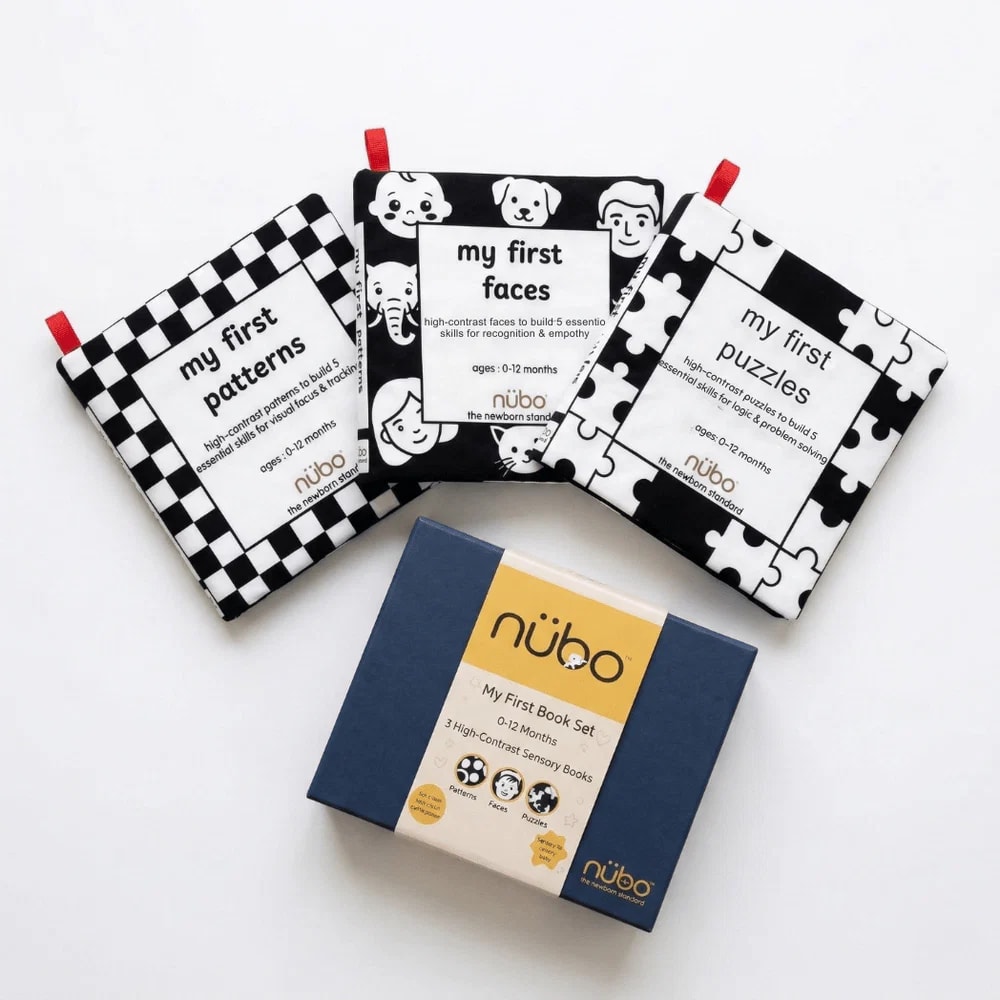
What This Means: Forget flashy toys. Newborns are drawn to stark contrasts—black and white patterns, simple shapes. This isn't just cute; it's developmental. High-contrast images help build neural pathways for vision. Your voice, your face, and gentle skin-to-skin contact are the best toys you have.
By 3 months, your baby might start bringing their hands to their mouth. This isn't random—it's the beginning of self-soothing and object exploration. Safe, textured objects become valuable here.
MONTHS 4–6: REACHING AND GRASPING
What's Happening: Your baby's vision has sharpened. They can now follow objects across their field of vision and are becoming intentional about reaching. The teething process may begin. Hand-to-mouth exploration intensifies.
What This Means: This is when safe toys for grasping and mouthing become essential. Your baby is learning cause-and-effect in a basic way: when I grab this, it feels interesting. When I chew on this, my gums feel better. Soft silicone teethers, high-contrast toys with different textures, and lightweight objects they can hold become valuable.
Start introducing toys with varied textures—bumpy, smooth, crinkly. Your baby's sensory system is rapidly developing, and these contrasts build neural connections. Sit them in front of you with colorful toys spaced just out of reach. Watch them problem-solve: how do I get that? This is the beginning of motor planning.
- Reaching toys: Lightweight, easy to grasp
- Textured teethers: Safe silicone with varied bumps and ridges
- Sound toys: Soft rattles that respond to movement
- Crinkly toys: Cloth books or sensory toys with crinkle inserts
MONTHS 7–9: SITTING, TRANSFERRING, AND INTENTION
What's Happening: Your baby is sitting independently (or close to it) and developing finer motor control. They can now transfer objects from one hand to another. Teething intensifies. They're beginning to understand object permanence—things still exist even when hidden.
What This Means: This is peak exploration mode. Your baby wants to grab, mouth, and examine everything. They're understanding cause-and-effect more clearly: I pushed this toy, it rolled. I chewed this teether, my gums feel better. Hide-and-seek games begin to make sense.
Teething is often in full swing now, and a good teether becomes more than a toy—it's a tool for sensory relief and gum stimulation. Look for teethers with varied textures (bumpy ridges, smooth surfaces) that can be safely chilled. The act of gnawing builds jaw strength and provides comfort.
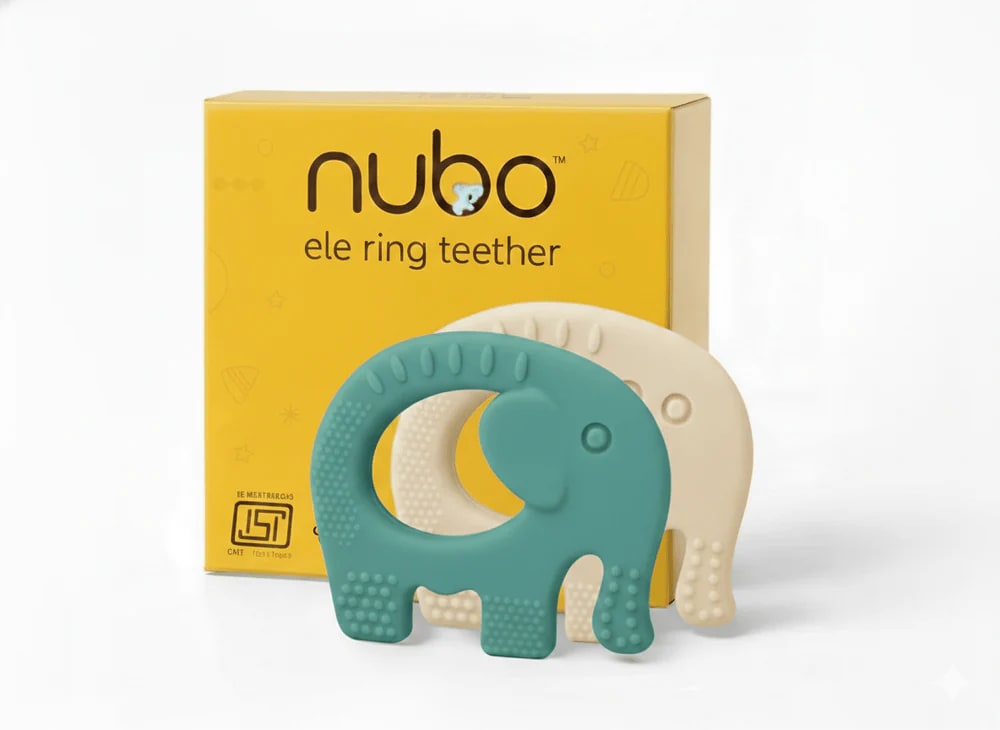
Introduce simple sensory kits with toys that offer different textures, weights, and sounds. Your baby is building a library of sensory experiences, and each one strengthens neural pathways.
MONTHS 10–12: CRAWLING, POINTING, AND LANGUAGE EXPLOSION
What's Happening: Many babies crawl around this time (though not all—some skip straight to walking). Fine motor skills improve dramatically. Your baby begins pointing and understanding simple words. Language comprehension leaps forward—they know their name, understand "no," and may say their first words.
What This Means: Language input becomes critical now. Narrate everything. Talk about what you're doing, what your baby is touching, what you see. This builds vocabulary and strengthens the connection between words and objects.
Toys become tools for learning. A simple ring stacker teaches object placement. A toy with buttons to press teaches cause-and-effect. Cloth books with pictures help you name objects and build language together. Teething continues, so reliable teethers remain essential companions.
| Learning Type | Activity | Benefit |
|---|---|---|
| Language | Narrate daily activities, read cloth books together | Vocabulary building, sound recognition |
| Motor | Crawling through safe spaces, reaching for toys | Gross motor strength, coordination |
| Problem-solving | Toys with buttons, peekaboo, hiding games | Cause-and-effect, object permanence |
| Sensory | Varied textures, teethers, crinkly toys | Sensory integration, teething relief |
MONTHS 13–18: WALKING, NAMING, AND INDEPENDENCE
What's Happening: Your baby is likely walking or very close. They're becoming a tiny explorer, testing boundaries, showing preferences. Language accelerates—many children say 10–20+ words by 18 months. They're beginning pretend play (feeding a doll, talking on a toy phone).
What This Means: Language and pretend play are your focus now. Read books with simple text and point to pictures. Act out daily routines with toys. Your baby is learning that objects represent real things—a toy cup is like a real cup.
Teething may still be ongoing. Continue offering safe teethers and cold, textured toys for relief. Simultaneously, introduce more interactive toys: stacking games, shape sorters (not yet perfect, but they're trying), and toys that make sounds when you press them.
- Picture books: Simple, durable cloth books with one object per page
- Pretend play toys: Toy kitchen items, phones, dolls
- Movement toys: Push/pull toys as they walk
- Sensory exploration: Safe containers, textures, varied toys
MONTHS 19–24: PLAY, LANGUAGE EXPLOSION, AND LEARNING THROUGH DOING
What's Happening: Your toddler is walking confidently, running, climbing. Language is exploding—from 20 words to 100+. They understand simple instructions. They're playing alongside other children (not yet sharing). Pretend play deepens. Teething is often complete, though some molars may still emerge.
What This Means: Independent exploration and language-rich play are your tools now. Your toddler learns through doing. Let them help in the kitchen (with safe, appropriate tasks). Read books and ask questions about pictures. Create sensory activities: water play, sand play, texture exploration.
Montessori principles shine here—order, choice, and real-world connection. Toys that mirror adult life (toy kitchen, broom, dustpan) are deeply engaging. So are puzzles with large pieces, stacking games, and books that tell simple stories.
WHY NUBOKIND EXISTS: BORN FROM THIS UNDERSTANDING
When we created Nubokind, we started with one question: What if products could be designed around actual developmental stages, not just cuteness?
Our high-contrast cloth books, teethers with varied textures, and sensory kits are built on Montessori principles and developmental research. We know that a newborn needs stark contrast to build vision. We know that a 7-month-old needs textured teethers for gum relief and sensory development. We know that a 14-month-old benefits from durable cloth books that can be mouthed, washed, and read 100 times without falling apart.
Every product is BIS certified and rigorously tested for safety. They're designed to grow with your baby—the same teether works at 6 months and 12 months. The cloth books work for a newborn's vision and a toddler's language development.
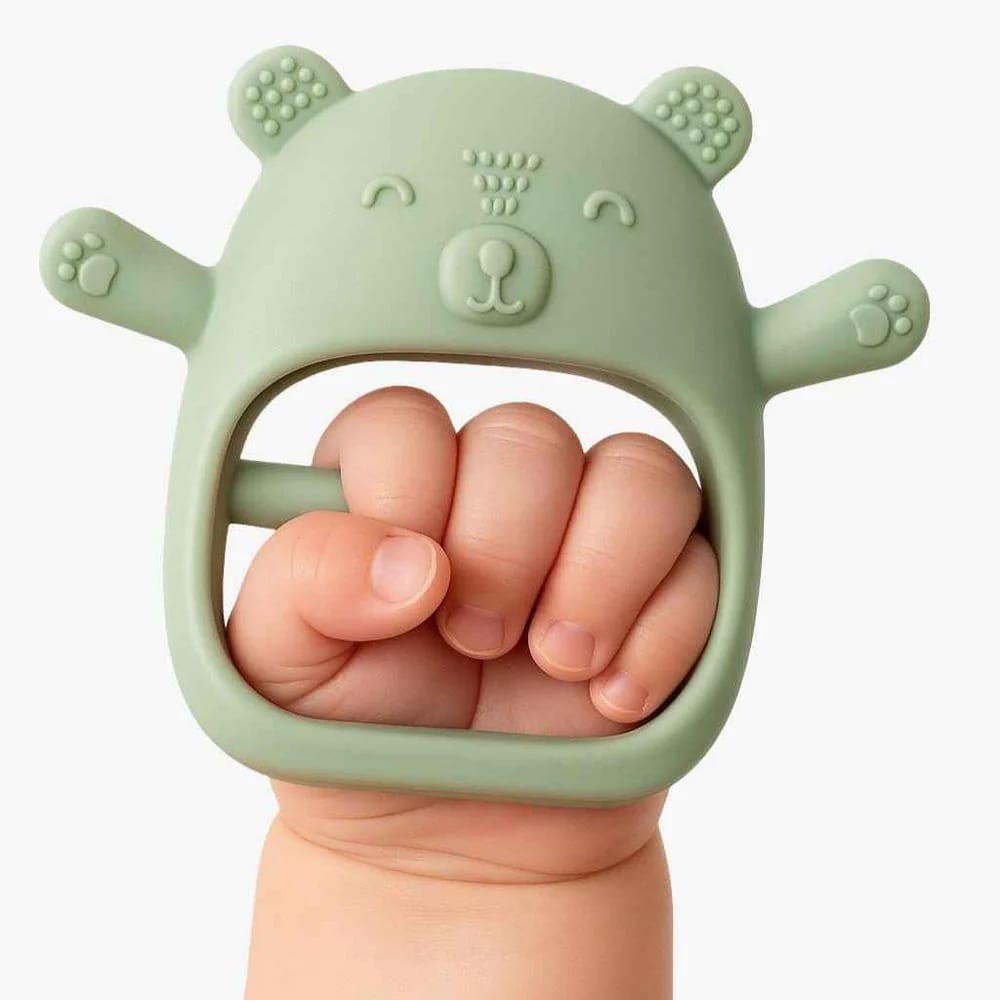
But here's what matters most: products are only part of the story. The real magic happens when you sit with your baby, talk to them, let them explore, and trust their natural curiosity. The best teether in the world doesn't replace your face, your voice, and your presence. Our products are here to support that journey—to make teething more comfortable, to give your eyes something interesting to look at while reading, to provide sensory input that builds neural connections.
WHAT PARENTS ARE SAYING
Cindrella
Multiple textures
The teethers have multiple textures which found to be stand out and perfect for my baby
Divya Dasari
Best and safest Teether
My baby boy loves chewing on this teether, and the quality is excellent, We absolutely love it.
FREQUENTLY ASKED QUESTIONS
Q: When should I start using newborn toys, and are they really necessary?
A: You can introduce high-contrast items (like books or visual patterns) from birth. Newborns are naturally drawn to contrast and movement—it's how their vision develops. That said, your face is still the best toy. Real necessity kicks in around 4–5 months when babies become more intentional about reaching and mouthing. From there, safe, textured toys support teething and sensory development beautifully.
Q: How do I know if my baby is developing on track with these milestones?
A: This guide shows typical ranges, but babies vary widely. Some crawl at 6 months; others at 11 months. Both are normal. The key is steady progress—your baby should show consistent growth in each area, not perfection at the listed month. Your pediatrician is your best guide for concerns. Trust your instinct, but also trust that your baby's timeline is their own.
Q: Are silicone teethers safe for my baby? What about BIS certification?
A: High-quality silicone is safe when it's food-grade and free of BPA and harmful chemicals. BIS (Bureau of Indian Standards) certification means the product has been tested and meets strict safety guidelines set for Indian markets. When a teether is BIS certified, you know it's been vetted for durability, non-toxicity, and safety. Always check for this mark when buying teethers or toys your baby will mouth.
Q: My baby isn't hitting these milestones. Should I worry?
A: Variation is normal. Developmental ranges are wide—a 6-month range for crawling is typical. However, if you notice your baby isn't making progress in any area for 2+ months, or shows a regression, talk to your pediatrician. Early intervention (if needed) is incredibly effective. But also remember: comparison to other babies is the thief of joy. Your baby's progress matters more than anyone else's timeline.
Q: How many toys does my baby actually need? I'm drowning in stuff.
A: Quality over quantity wins here. A few well-designed, age-appropriate toys are far better than bins of plastic. Think: one good cloth book, one textured teether, a couple of crinkly toys, and toys that match their current developmental stage. Rotate toys monthly so they stay fresh. This also means less clutter and easier cleanup—and your baby can actually focus on the toy in front of them.
Q: What makes Nubokind products different from other baby toys?
A: Nubokind products are designed specifically around developmental stages—not just cuteness. Our high-contrast books support newborn vision. Our teethers have varied textures for sensory development and teething relief. Everything is BIS certified, meaning it meets rigorous safety standards. And we're rooted in Montessori principles: order, natural development, and child-led exploration. You're not paying for a brand; you're investing in products built for your baby's brain growth.
CONCLUSION: TRUST THE PROCESS, SUPPORT THE JOURNEY
Your baby's development isn't a checklist. It's a beautiful, unfolding process of growth, curiosity, and connection. What you do in these first two years—talking, playing, responding, exploring together—is literally building their brain. The toys and books you choose matter, but only because they support you and your baby spending quality time together.
This guide gives you a roadmap so you can relax. You don't need to guess what comes next. You don't need to wonder if your baby is "on track." You simply need to offer the right kind of play, talk, and safe exploration at each stage—and let their natural development unfold.
When you're ready to support that journey with thoughtfully designed products, Nubokind's collections are here. From high-contrast cloth books that grow with your baby's vision, to teethers designed for comfort and sensory development, every product is built on the same principle: supporting your baby's natural growth with safety, intention, and love.
Explore Nubokind's Newborn Gift Kit—a thoughtfully curated collection for the first months—or browse our full range of developmental toys and books to find what matches your baby's current stage. You've got this, parent. And we're here to support you every step of the way.



leave a comment
This site is protected by hCaptcha and the hCaptcha Privacy Policy and Terms of Service apply.