
Your baby is crying—again. Is it hunger? Discomfort? Gas? This guide walks you through the 10 most common reasons babies cry and exactly what to do about each one. Plus, discover how the right sensory tools can actually help soothe your baby and support their development.
The Cry That Never Ends: Why New Parents Feel Lost
It's 3 a.m., your baby has been crying for 20 minutes, and you've checked everything: diaper? Clean. Temperature? Just right. Fed two hours ago? Yes. And yet—the crying continues.
If you've been there, you're not alone. Newborns cry an average of 1–3 hours a day, and it's one of the most stressful experiences for first-time parents. The problem isn't that your baby is crying—it's that babies can't tell you *why*, so you're left guessing, exhausted, and second-guessing yourself.
The good news? Most baby crying follows a pattern, and once you learn to decode it, you'll feel infinitely more confident. And as your baby grows into the teething and sensory-exploration phase, the right tools—like thoughtfully designed teethers and sensory toys—can transform crying moments into learning opportunities.
Why Understanding Baby Crying Matters for Development
Crying isn't just noise—it's your baby's *only* language. Every cry is your baby communicating a need: "I'm hungry," "I'm uncomfortable," "I'm overstimulated." Learning to respond to those cries builds trust, security, and a strong parent-baby bond.
From a developmental perspective, when you respond to your baby's cries with care and consistency, you're building their sense of safety. This foundation is crucial for emotional development, language acquisition, and even cognitive growth. Babies whose cries are responded to develop secure attachment, which sets them up for better relationships, learning, and resilience later in life.
Additionally, certain types of crying—especially during teething—signal important developmental milestones. When you can identify what's happening and respond with age-appropriate tools, you're not just soothing discomfort; you're actively supporting their growth.
The 10 Most Common Reasons Babies Cry (And What to Do)
1. Hunger
Signs: Rooting reflex (turning head toward your hand), sucking on fist, increased alertness, then escalating cries.
What to do: Offer a feed. Newborns typically eat every 2–3 hours. If you've just fed them, the crying might be a sign of a growth spurt (babies can cluster-feed) or discomfort from feeding position.
2. Dirty or Uncomfortable Diaper
Signs: Sudden crying right after a poop or wee, fussiness that stops once you change them.
What to do: Check and change the diaper. Some babies are more sensitive to wetness than others—if yours fusses frequently, you might need to change more often.
3. Tiredness or Overstimulation
Signs: Fussiness even after feeding, yawning, eye-rubbing, arching back, increased sensitivity to light or sound.
What to do: Create a calm environment. Dim lights, soft sounds, gentle swaddling, or a warm bath can help. Overtired babies cry harder, so catching the early signs of tiredness prevents escalation.
4. Gas, Reflux, or Digestive Discomfort
Signs: Crying after feeds, pulling legs up toward the chest, arching back, visible discomfort.
What to do: Try gentle burping during and after feeds, baby massage on the belly (clockwise motion), or bicycle leg movements. If it's frequent, talk to your pediatrician about reflux.
5. Teething (4 Months and Beyond)
Signs: Excessive drooling, swollen gums, wanting to chew everything, pulling at ears, swollen cheeks.
What to do: Offer a clean, cool teether for relief. A high-quality teether isn't just soothing—it provides sensory feedback that helps babies learn about their bodies and the world. Many parents find that a silicone teether specifically designed for baby safety becomes a game-changer during this phase.
6. Too Hot or Too Cold
Signs: Excessive sweating or cold skin, flushed face, rapid breathing.
What to do: Check baby's neck or back (not hands or feet—they're naturally cooler). Adjust clothing or room temperature. Aim for a room temperature of 68–72°F.
7. Colic (Persistent, Unexplained Crying)
Signs: Long periods of inconsolable crying (often in the evening), nothing obvious causing it, otherwise healthy baby.
What to do: Colic is frustrating because there's no single "cure," but gentle rocking, white noise, a pacifier, or a car ride sometimes helps. Talk to your doctor to rule out other issues. Colic typically subsides by 3–4 months.
8. Needing Contact or Comfort
Signs: Stops crying when held, wants to be close to you, fusses when put down.
What to do: This is normal! Babies are wired for closeness. Hold them, use a baby wrap or sling, or co-sleep safely. There's no such thing as "spoiling" a newborn with contact.
9. Illness or Pain
Signs: High fever, unusual lethargy, rash, difficulty breathing, or a cry that sounds different from normal.
What to do: Contact your pediatrician immediately. Trust your instinct—if something feels wrong, it's worth checking.
10. Overstimulation or Sensory Overload
Signs: Crying after visitors, loud environments, or too much handling; jerky movements; difficulty focusing.
What to do: Reduce stimulation. Move to a quieter, dimmer space. Babies need calm periods to process the world. This is also why introducing age-appropriate sensory toys—like high-contrast cloth books or gentle teethers—on *your* terms rather than random stimulation helps regulate their nervous system.
Quick Reference: Crying Triggers and Responses
| Crying Pattern | Likely Cause | Quick Fix | When to Call Doctor |
|---|---|---|---|
| Rhythmic, building intensity | Hunger | Offer feed immediately | If baby refuses to feed |
| Sudden, sharp cry | Pain or discomfort | Check diaper, position, temperature | If accompanied by fever |
| Fussy, whiny, restless | Tiredness/overstimulation | Calm environment, dim lights, soothe | If baby can't sleep despite exhaustion |
| Persistent (3+ hours) | Colic or reflux | Gentle movement, contact, white noise | If baby loses weight or seems in pain |
| Intense chewing, drooling | Teething (4+ months) | Offer silicone teether or cloth to chew | If baby has fever above 38°C |
How Sensory Tools Support Your Baby Through Crying Phases
Here's something most new parents don't realize: crying, especially during teething and development, is often a sign your baby's nervous system is working hard to process new sensations. Instead of just soothing, you can actually *support* that development with the right tools.
When a baby is teething or learning about textures and sensations, providing a safe, thoughtfully designed teether or sensory toy gives them a healthy outlet for exploration. Silicone teethers, for example, offer gentle pressure relief on sore gums while being completely safe for baby's mouth. Similarly, high-contrast cloth books engage visual development during moments when your baby is alert and curious.
At Nubokind, every product is built with Montessori principles and early development in mind. That means when you hand your baby a teether or cloth book, you're not just giving them something to stop crying—you're giving them a tool that supports learning, sensory awareness, and motor skill development. And honestly? That's a mindset shift that helps parents feel less like they're "just surviving" and more like they're actively nurturing growth.
Meet Your New Parenting Allies: Nubokind Teethers
When your baby starts teething (usually around 4–6 months, though it varies), a quality teether becomes non-negotiable. Not all teethers are created equal. You want something that's safe, designed for developing hands, and actually effective at soothing sore gums.
That's exactly what Nubokind creates. Our teethers are BIS certified, made in India, and crafted from food-grade silicone that's soft enough for delicate gums but durable enough for serious chewers. Whether you're looking for a ring teether for tiny hands or a no-drop design that stays attached to your baby's wrist, there's a Nubokind option built for your baby's developmental stage.
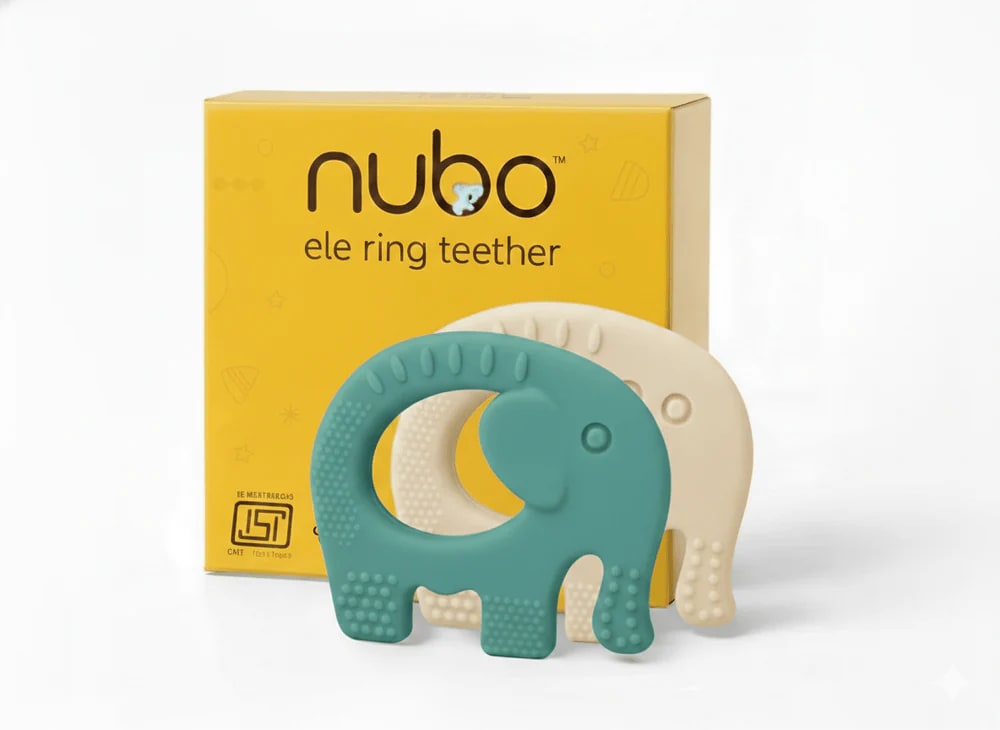
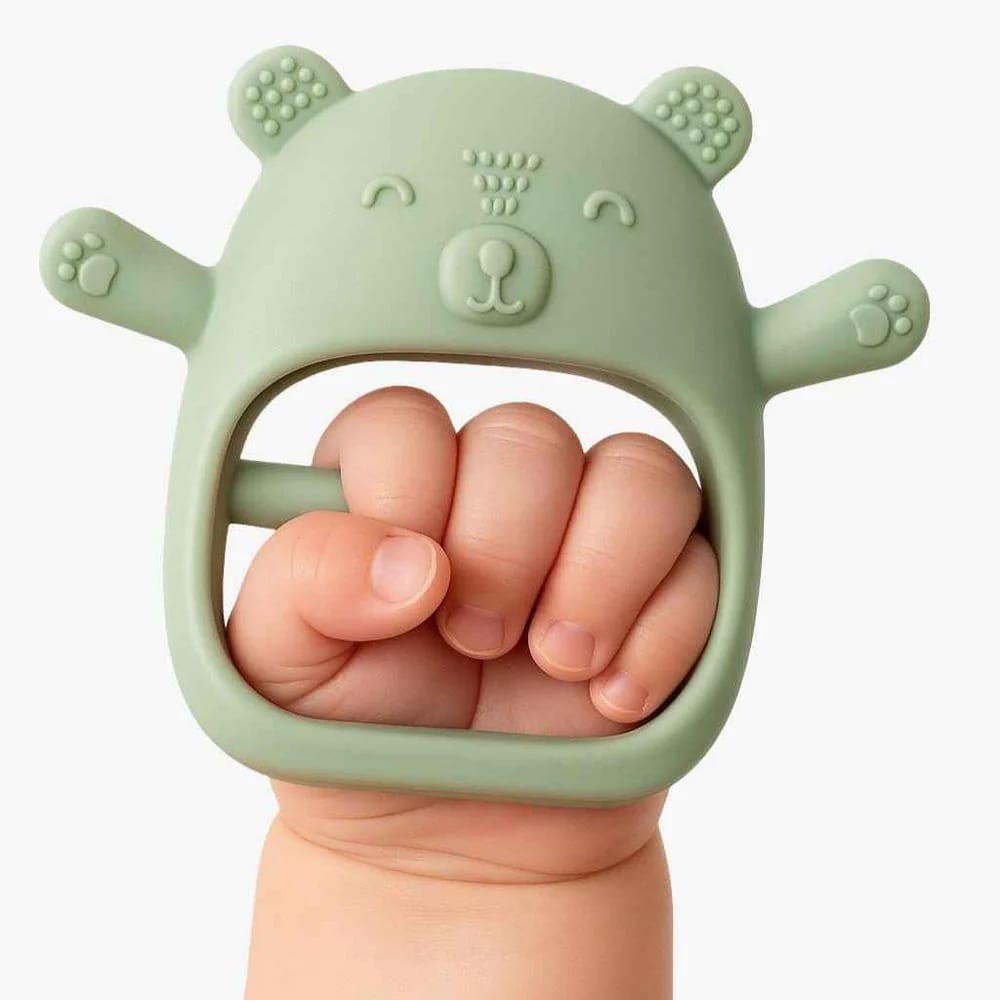
Both are designed with small, easy-to-grasp shapes that encourage motor development while doing exactly what your teething baby needs: providing relief and a safe outlet for chewing.
Beyond Teething: Sensory Play for Calm, Development, and Connection
Teething is just one phase. As your baby grows, sensory play becomes crucial for brain development, visual tracking, and engagement. High-contrast visuals, different textures, and opportunities to explore all support cognitive growth.
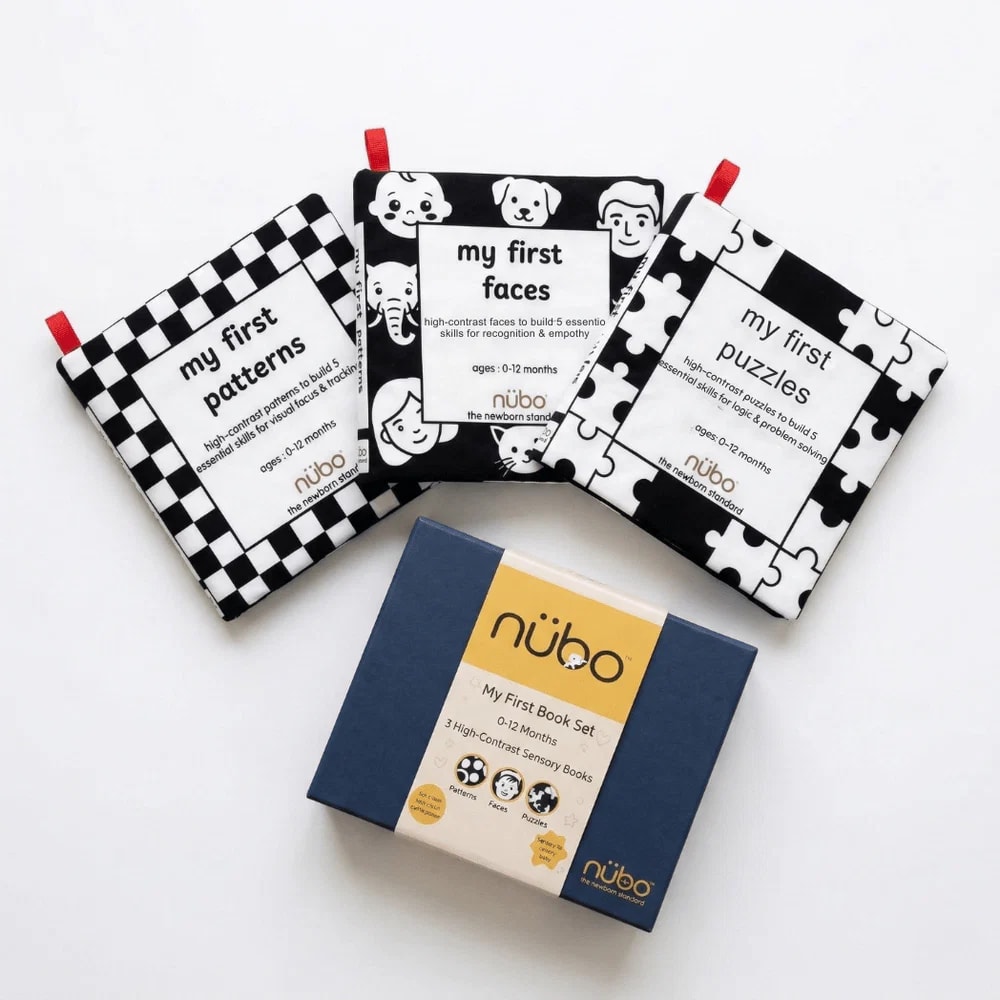
Nubokind's High Contrast Cloth Book Set (₹699) is perfect for this stage. Babies' eyes are naturally drawn to high-contrast patterns, and these cloth books are designed to hold attention while being completely safe for curious mouths and tiny hands. They're soft, washable, and built for repeated handling.
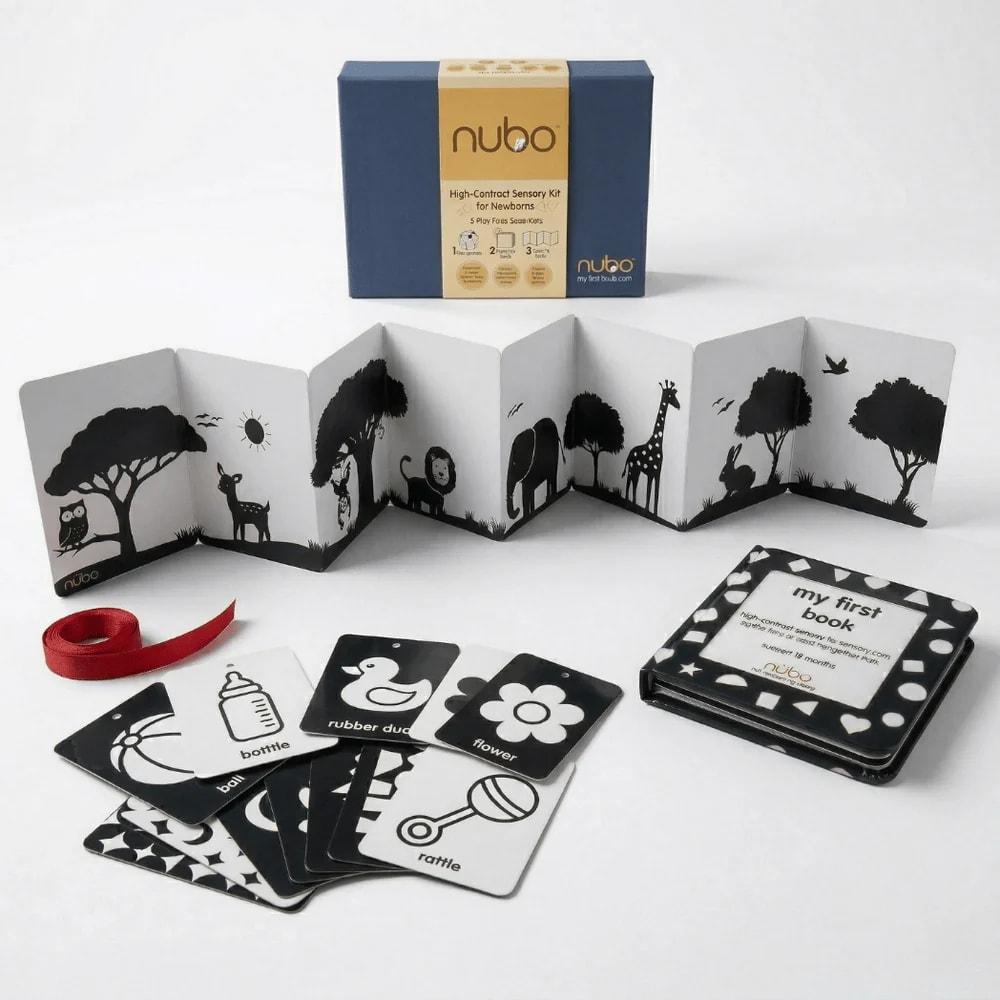
If you're not sure where to start, the High Contrast Newborn Essential Kit (₹699) bundles together the most helpful items for your baby's first months: teethers, cloth books, and more—all in one thoughtfully curated collection.
What Real Parents Are Saying
Tanya Gulla
Best baby teether
My 5 months daughter enjoys chewing this elephant teether, lovely product!
Ankit Gupta
Amazing quality
best quality and textures , Great brand! you guys are doing well keep it up.
FREQUENTLY ASKED QUESTIONS
Q: When do babies start teething, and how do I know if my baby is teething?
A: Most babies start teething between 4–6 months, though some start as early as 2 months or as late as 12 months. Signs include excessive drooling, swollen gums, chewing on hands or objects, swollen cheeks, and sometimes pulling at ears. Not all babies show all signs. If your baby shows teething signs, a quality silicone teether (like Nubokind's range) can provide real relief and a safe outlet for chewing.
Q: Are silicone teethers safe for my baby?
A: Yes, food-grade silicone teethers are completely safe. What matters is choosing one that's BIS certified (India's safety standard) and from a trusted brand. Nubokind teethers are made from food-grade silicone and BIS certified, so you can feel confident letting your baby chew freely without worrying about toxins or safety issues.
Q: My baby is only 2 months old. Can I use teethers this early?
A: While most babies don't start teething until 4+ months, some babies chew on things earlier as part of sensory exploration. The Kiko No-Drop Newborn Teether is designed for newborns and beyond, so it's perfect for curious babies who want to explore textures even before official teething begins. Early sensory play supports developmental readiness.
Q: What's the difference between a ring teether and a no-drop teether, and which should I choose?
A: Ring teethers (like the ELE Ring Teether Set) are small, easy to grasp, and great for babies developing pincer grip. No-drop teethers (like the Kiko) have a wrist strap, so they don't get lost or dropped constantly. Choose based on your baby's age and your lifestyle—ring teethers are great for older babies with better hand control; no-drop teethers are perfect for newborns and active parents who don't want to be constantly picking it up!
Q: Are Nubokind teethers and toys made in India? How do I know they're safe?
A: Yes, Nubokind products are made in India, and all teethers are BIS certified—that's India's Bureau of Indian Standards safety certification. This means every product has been independently tested for safety, non-toxicity, and durability. Being made in India also means faster shipping and fresher products for you.
Q: My baby is crying a lot, but I'm not sure if it's teething. How can I tell the difference?
A: Not all baby crying is teething! Use the table in this guide to match your baby's crying pattern to likely causes—hunger, discomfort, tiredness, or overstimulation are all more common than teething in younger babies. Once you rule out those basics, look for the specific signs of teething (swollen gums, drooling, chewing). If you're ever unsure, check with your pediatrician. And remember: even if it's not teething, a safe, age-appropriate teether or sensory toy is still a wonderful tool for calming and development.
CONCLUSION
Baby crying isn't something to "fix"—it's something to understand. When you learn what your baby is trying to tell you, everything feels less overwhelming and more like connection.
Whether your baby is hungry, teething, overstimulated, or just needing comfort, the right response combines empathy with the right tools. And when your baby reaches the teething and sensory-exploration phases, having thoughtfully designed, safe teethers and sensory toys from Nubokind transforms those moments from pure frustration into opportunities for learning and bonding.
You're doing better than you think. Trust your instincts, decode those cries, and don't hesitate to reach for tools that make both of you calmer and happier.
Explore Nubokind's full collection of teethers, cloth books, and sensory kits to find exactly what your baby needs at every stage of development.



leave a comment
This site is protected by hCaptcha and the hCaptcha Privacy Policy and Terms of Service apply.