
Your newborn's brain is developing at lightning speed. But passive screen time isn't building those crucial neural pathways—active, hands-on sensory play is. Learn why tummy time, high contrast flashcards, and tactile toys create smarter, more focused babies than any screen ever could.
WHY YOUR NEWBORN'S BRAIN NEEDS MORE THAN SCREENS
In the first six months of life, your baby's brain is forming an estimated 1 million neural connections every single second. That's staggering. But here's what matters: screens don't build those connections. Active, engaged play does.
When your baby watches a screen, they're in a passive state—their eyes move, but their body is still, their hands are inactive, and their brain isn't making the micro-decisions that build focus and attention. The opposite happens with sensory play. When your baby reaches for a high-contrast flashcard, explores a cloth book with their hands, or lifts their head during tummy time, their entire nervous system is engaged. That's real development happening.
Research indicates that early digital exposure can actually shorten attention spans in infants. The constant visual stimulation of screens trains a baby's brain to expect rapid changes—which later makes it harder for them to focus on one task. Sensory play, by contrast, teaches patience, concentration, and the joy of discovery.
THE POWER OF TUMMY TIME FOR NEWBORNS
Let's talk about one of the most underrated developmental activities: tummy time for newborns. This simple practice is where real strength, coordination, and focus begin to develop.
When you place your newborn on their tummy, you're activating their entire body. Their neck muscles strengthen as they practice lifting their head. Their core engages. Their hands explore the surface beneath them. And crucially, their eyes are tracking movement and building visual focus—without any screen in sight. A newborn on tummy time is literally training their attention span, learning to sustain focus on objects in front of them for longer and longer periods.
Aim for 2-3 sessions of 3-5 minutes daily, right from the first weeks (once your newborn's umbilical cord has fallen off). Pair tummy time with interesting, high-contrast visuals—more on that in the next section—and you've created a complete developmental experience.
HIGH CONTRAST VISUALS: THE FIRST LANGUAGE YOUR BABY'S EYES LEARN
Newborns can't see the world in full color right away. In the first weeks, their visual system is most stimulated by high contrast black and white images—bold, simple patterns and shapes that create clear visual boundaries.
This is why high contrast flashcards and high contrast books for newborns are such powerful tools. They're not just pretty; they're scientifically aligned with how a baby's developing eyes actually work. When you show your infant these images, their eyes naturally track and focus. That tracking builds visual tracking skills, which later support reading, coordination, and sustained attention.
High contrast newborn flashcards are especially effective during tummy time or floor play. Position them 8-12 inches from your baby's face—within their natural focal range—and watch as they lock in and track the shapes. This simple act builds more neurological development than 20 minutes of screen time ever could.
The best approach? Use newborn high contrast images that show simple geometric shapes, bold patterns, and faces. Change them out regularly to keep your baby engaged and prevent habituation. Many parents find that rotating through a collection of high contrast images for infants keeps play fresh and maintains that magic window of focus.
CLOTH BOOKS AND TACTILE EXPLORATION: READING STARTS WITH TOUCH
Here's something many parents don't realize: reading doesn't start when your child can recognize letters. It starts in month one, with their hands. A soft book isn't just a cute nursery decoration—it's a portal into language development and sensory learning.
Infant cloth books and soft books for infants engage multiple senses at once. Your baby sees the colors and shapes. They feel the textures—crinkles, smooth patches, raised details. They hear sounds when pages move. This multi-sensory input builds neural pathways for language, memory, and emotional connection to stories.
Black and white books for newborns are especially valuable in the first weeks, combining the visual preference for high contrast with the comfort and safety of a soft, bite-safe object. As your baby grows, you can introduce cloth books with more colors and varied textures, keeping pace with their developing visual system.
An infant cloth book is also tummy time equipment. Place it in front of your baby during floor play, and they'll work to reach, grasp, and explore it—building motor skills while getting your first "reading" moments in. It's a two-for-one developmental win.
SENSORY TOYS FOR NEWBORNS: SIMPLE > COMPLEX
The best sensory toys for newborns aren't the ones with the most buttons and sounds. They're the simple, well-designed ones that let your baby do the exploring.
In the 0-6 month window, focus on toys that encourage natural grasping reflexes and hand-mouth exploration. Lightweight rings, textured teethers, and crinkle toys are ideal. Infant learning toys should have varied textures—some smooth, some bumpy, some soft—so your baby's developing tactile system gets rich input.
The research is clear: toys that require your baby's active participation build stronger neural connections than toys that do the work for them. A toy that lights up automatically teaches passive observation. A teether or sensory ring teaches cause-and-effect ("when I touch this, it feels good"). That difference matters enormously for early brain development.
Look for toys that are safe for mouthing, appropriately sized for small hands, and made from non-toxic materials. As your baby's fine motor skills improve, introduce slightly more complex toys—but always prioritize safety and simplicity.
MONTESSORI TOYS AND PLAYFUL LEARNING: MONTESSORI PRINCIPLES FOR TINY HUMANS
Montessori teaching toys and Montessori toys for newborns align beautifully with natural infant development. The Montessori philosophy emphasizes letting children lead their own learning through self-directed play with carefully chosen materials.
For newborns, this means Montessori educational toys that are simple, uncluttered, and real. No flashy plastic or electronic bells—just well-made materials that invite exploration. A wooden ring. A cloth book with bold images. A soft toy with varied textures. These items allow your baby to discover cause-and-effect, develop fine motor skills, and build confidence in their own ability to learn.
Montessori toys also teach respect for materials. When you introduce just a few carefully chosen toys instead of overwhelming your baby with plastic bins, they learn to focus deeply on one object. That focus is the foundation for later learning and attention. It's the opposite of the rapid-fire stimulation of screens.
Many parents find that a curated collection of Montessori toys for newborns—high-contrast materials, natural textures, safe sensory items—creates a calm, focused play environment that supports healthy development far better than a toy-stuffed nursery ever could.
QUICK TIPS FOR PARENTS
Screen-Free Sensory Play Strategies
- Start tummy time early: Even newborns benefit from 2-3 short sessions daily. Pair with high-contrast visuals for maximum engagement.
- Keep a rotation of high-contrast flashcards or books: Change them out every few days to maintain your baby's interest and prevent habituation. This keeps them visually stimulated without screens.
- Choose cloth books and soft books as your first "reading" tools: They're safe, multi-sensory, and build language foundations from day one.
- Prioritize quality over quantity: A few well-chosen Montessori toys beat a room full of plastic clutter. Let your baby focus deeply rather than overstimulate.
- Engage all five senses: Include toys and books with varied textures, sounds (soft crinkles, not loud beeps), and visuals. Multi-sensory play builds stronger neural connections.
- Be present during play: Your face, voice, and interaction are the most powerful learning tools available. Talk about what your baby is exploring, narrate their actions, and respond to their cues.
SENSORY PLAY VS. SCREEN TIME: A QUICK COMPARISON
| Aspect | Screen Time (Passive) | Sensory Play (Active) |
|---|---|---|
| Baby's engagement level | Passive watching; body still | Active exploration; full body engaged |
| Neural development | Limited; focus on visual processing only | Multi-sensory; builds broader neural networks |
| Attention span impact | Can shorten span; trains brain for rapid changes | Builds focus; trains brain for sustained attention |
| Motor skill development | None; no physical action required | Strong; encourages grasping, reaching, tracking |
| Parent-child interaction | Limited or absent | High; shared exploration and bonding |
| Best examples | Videos, apps, streaming content | Tummy time, flashcards, cloth books, teethers |
PRODUCTS THAT SUPPORT EARLY SENSORY DEVELOPMENT
If you're ready to build a screen-free sensory environment for your newborn, here are some thoughtfully designed tools that align with everything we've discussed:
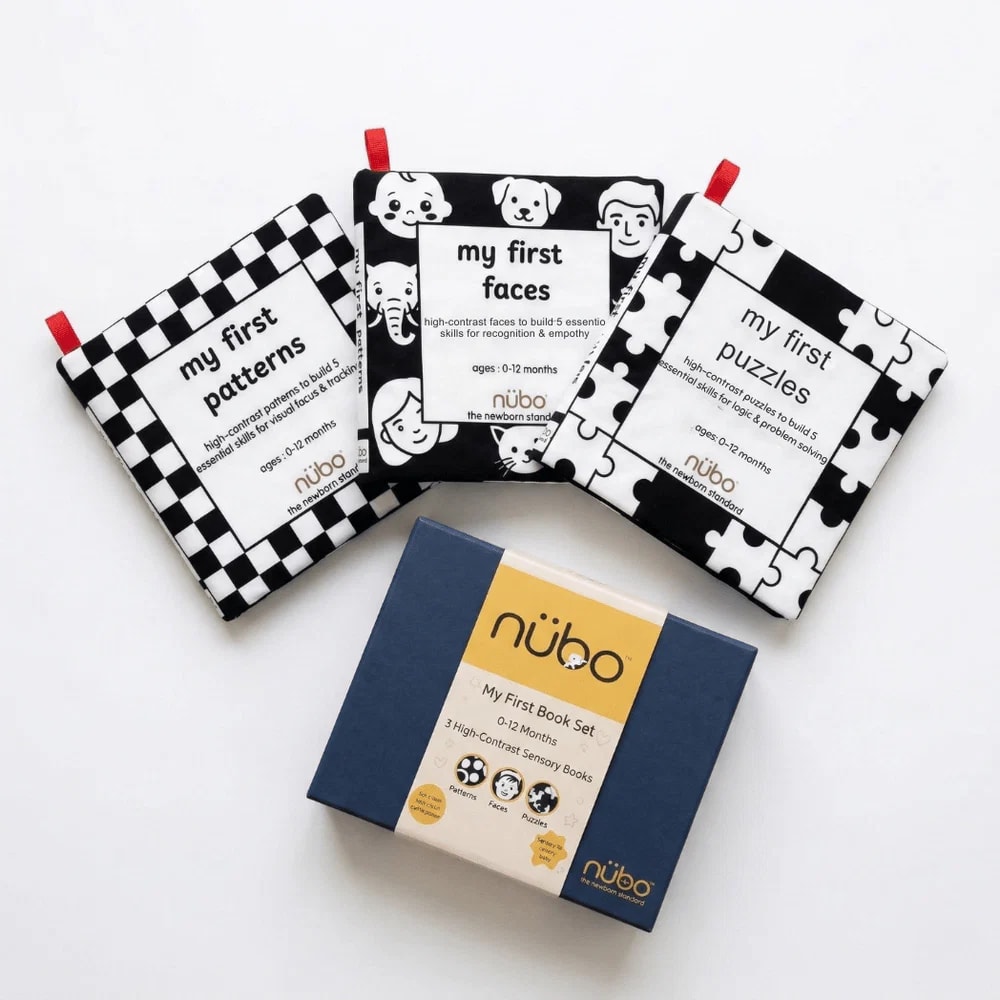
High Contrast Cloth Book Set
BIS Certified | Soft, safe for mouthing | High contrast black & white designs | 0-6 months+
₹699
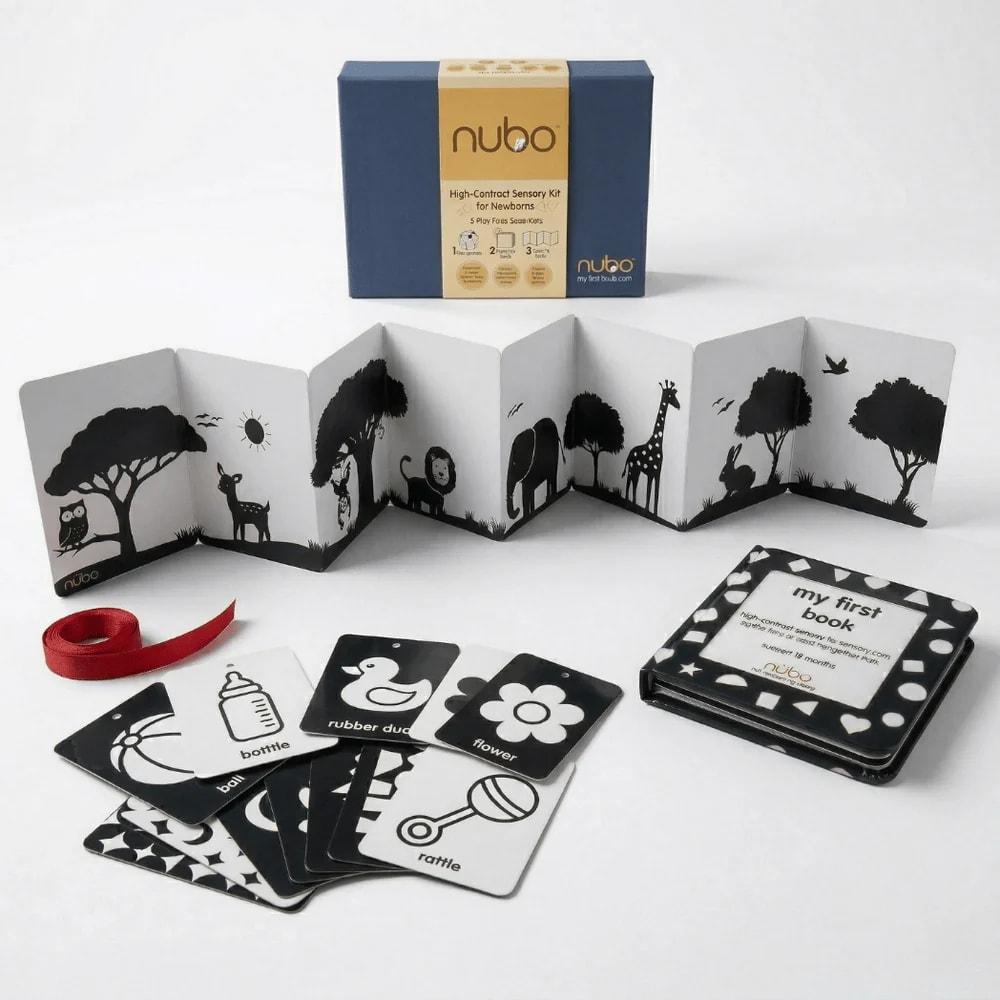
Newborn Gift Kit
Complete sensory starter pack | Includes flashcards, cloth books & teethers | Montessori-inspired | Newborn to 6 months
₹699
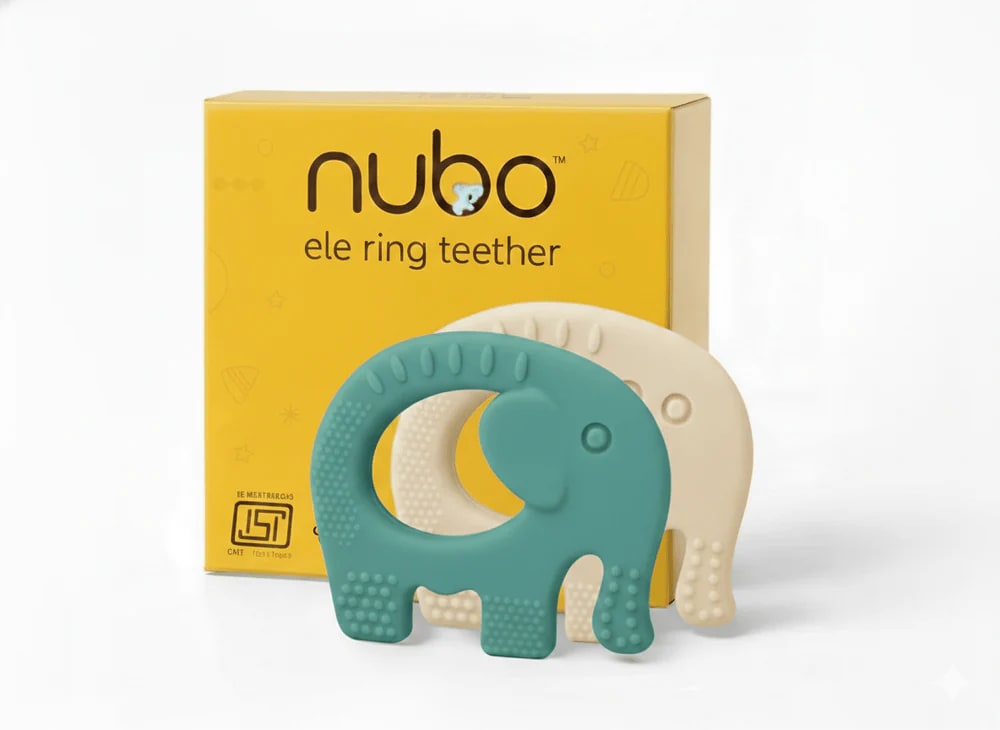
ELE Ring Teether Set
BIS Certified | Lightweight rings for early grasping | Varied textures | Safe for teething | 3 months+
₹599
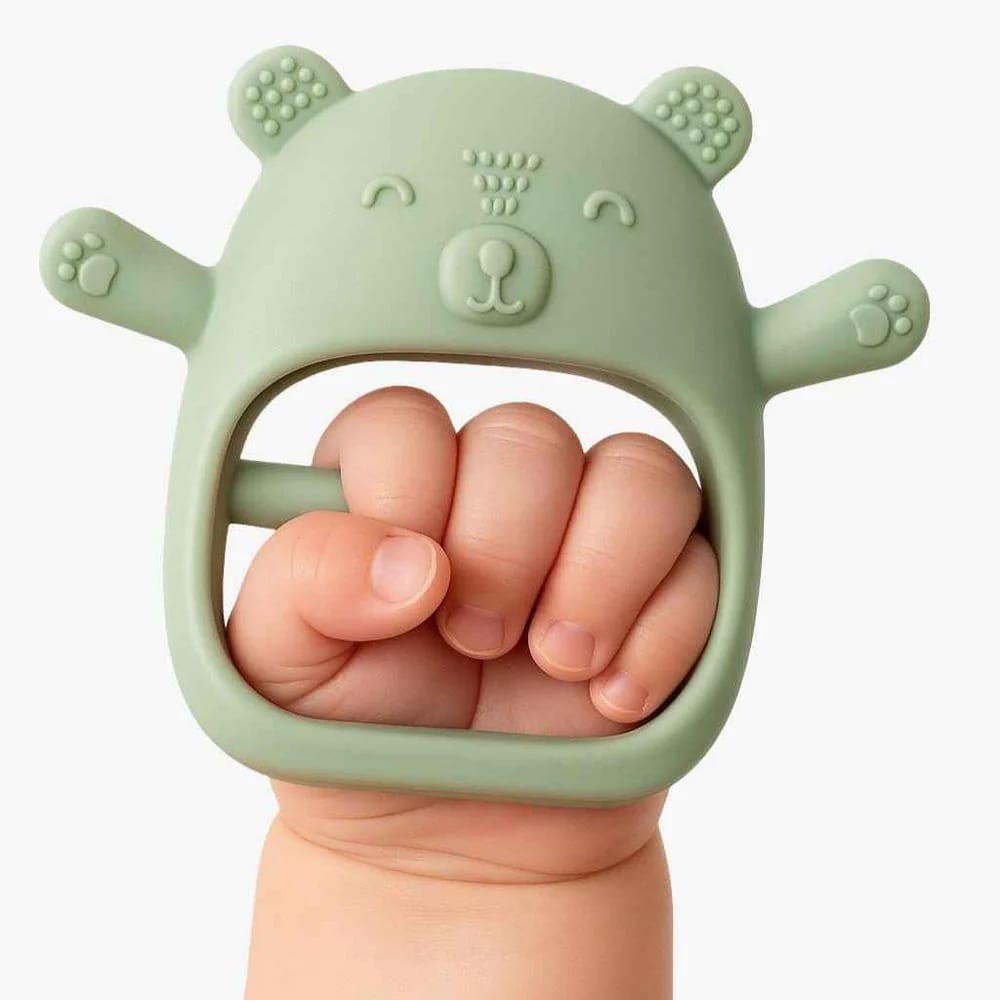
Kiko No-Drop Newborn Teether
BIS Certified | Easy-grip design | Wrist attachment prevents dropping | Teething relief | Newborn to 6 months
₹649
DEVELOPMENTAL MILESTONES: WHAT TO EXPECT AT EACH STAGE
| Age Range | Visual Development | Motor Skills | Best Sensory Play Activities |
|---|---|---|---|
| 0-2 months | Prefers high contrast; limited focus range | Reflexive grasping; limited head control | High contrast flashcards, black & white books, simple teethers |
| 2-4 months | Improved tracking; beginning to see color | Stronger neck; starting to reach | Tummy time with visual targets, cloth books, soft teethers, reaching toys |
| 4-6 months | Color vision improving; longer focus periods | Rolling; improved grasping; hand-to-mouth coordination | Textured cloth books, varied teether textures, cause-and-effect exploration (shaking, crinkling) |
FREQUENTLY ASKED QUESTIONS
Is tummy time really necessary, or is it just a trend?
Tummy time isn't a trend—it's essential. Research consistently shows that babies who get regular tummy time develop stronger neck, shoulder, and core muscles earlier, and are less prone to flat spots on their heads. More importantly for our discussion, tummy time paired with visual stimulation (like high contrast flashcards) builds focus and attention span in ways passive activities cannot. Many experts suggest starting tummy time in the first weeks and making it part of your daily routine.
When can I introduce screens safely?
Major health organizations suggest limiting screen exposure for children under 2 years, with no screens for children under 18 months if possible. When you do introduce screens later (after 6 months), do so mindfully and sparingly. The first 6 months are your golden window for building attention span and focus through sensory play—the habits you establish now create the foundation for healthy screen habits later. Babies who develop strong focus through tactile, visual, and physical play tend to have healthier relationships with screens as they grow.
How do high contrast flashcards differ from other baby toys?
High contrast flashcards are specifically designed to match your newborn's visual capabilities. In the first weeks, babies cannot see fine details or pastels—their eyes are tuned to bold, high-contrast black and white patterns. Regular toys in soft colors don't engage this visual preference. High contrast flashcards, by contrast, naturally draw your baby's attention and encourage visual tracking and focus. They're a targeted tool for visual development during the critical early weeks.
Can I use Montessori toys with a newborn, or are they only for older babies?
Montessori principles absolutely apply to newborns. The core idea—providing carefully chosen materials that invite self-directed exploration—works beautifully from day one. Newborn Montessori toys are simpler and safer than those for older children, but they follow the same philosophy: quality over quantity, natural materials when possible, and respect for the baby's own learning pace. A high-contrast cloth book is a Montessori toy. A simple wooden ring teether is a Montessori toy. They're toys designed to support the baby's natural developmental unfolding.
My baby seems overstimulated by lots of toys. Is that normal?
Absolutely normal—and actually a good sign that you're paying attention to your baby's cues. Newborns have immature nervous systems and can easily become overwhelmed by too much sensory input. This is why we recommend having just a few carefully chosen toys in rotation rather than a roomful. If your baby seems fussy or overstimulated during play, reduce the number of toys available, lower the sensory intensity, and give them more calm, one-on-one time. Respecting your baby's sensory thresholds is part of honoring their individual developmental pace.
How do I know if my baby is actually learning from sensory play, or just being entertained?
Real learning is happening when you see these signs: sustained focus (your baby looks at a flashcard for several seconds without looking away), reaching and grasping attempts (even if clumsy), hand-to-mouth exploration, tracking with their eyes as you move an object, and increased engagement over time (they don't lose interest after one session). Unlike passive screen watching, sensory play generates visible physical responses. Your baby is building muscle memory, visual pathways, and confidence in their own ability to explore. Trust what you see: focused attention, physical engagement, and repeated interest are the clearest signs that learning is taking place.
CONCLUSION
The choice between screens and sensory play isn't really a choice at all for the first six months of your baby's life. Your newborn's developing brain is built to learn through active exploration, multi-sensory engagement, and real-world interaction—not passive visual input. Tummy time, high-contrast books, simple teethers, and cloth books aren't just cute nursery staples. They're the actual building blocks of focus, attention, motor skills, and early learning.
When you choose sensory play over screens, you're not depriving your baby of stimulation—you're giving them the most powerful kind: the stimulation that builds neural networks, strengthens muscles, and creates the cognitive foundation for all future learning. You're also giving yourself something invaluable: moments of real presence and connection with your baby as they explore the world.
If you're ready to build a sensory-rich, screen-free environment for your newborn, start simple. Choose a high-quality cloth book. Introduce daily tummy time with visual targets. Rotate a collection of high-contrast flashcards. Add one or two safe teethers for tactile exploration. That's enough to support healthy development in the critical 0-6 month window.
Explore our full collection of Montessori-inspired sensory toys and books designed specifically for newborns and young infants. Your baby's best learning tool isn't a screen. It's you, present and engaged, supporting their natural curiosity and wonder. That's the magic of the first six months.


leave a comment
This site is protected by hCaptcha and the hCaptcha Privacy Policy and Terms of Service apply.