
Your baby is crying. You've checked everything—fed, diaper changed, no fever. But sometimes, what babies really need isn't less stimulation. It's the *right* kind. Discover how thoughtful sensory play with textures can transform a fussy baby into a calm, engaged learner.
The 3 AM Puzzle: Why Your Baby Won't Settle
It's 3 AM. Your newborn has been screaming for twenty minutes despite all the soothing tricks you've read about. You're exhausted, questioning every parenting choice, and wondering: Is something wrong?
Most times, nothing is. What you're witnessing is your baby's developing nervous system trying to process an overwhelming world. But here's what no one tells you: the solution isn't always less stimulation. Sometimes it's intentional, calm stimulation.
Think of it like this. A toddler in a chaotic mall is overstimulated. But that same child quietly playing with textured toys at home? Calm, focused, learning. The difference isn't the absence of input—it's the *quality* of it.
Why Textures Matter for Newborn Nervous Systems
Your baby's sense of touch is one of the first fully developed senses at birth. In fact, infants explore the entire world through their fingers and mouth before they can see clearly or reach for objects intentionally.
When you introduce safe, varied textures—soft cotton, smooth wood, gentle bumps—you're not just entertaining your baby. You're:
- Activating the parasympathetic nervous system (the "calm down" system)
- Building neural pathways for sensory processing and fine motor skills
- Providing comfort without overstimulation
- Creating predictable, soothing routines that reduce anxiety
This is where sensory play becomes different from sensory overload. Overload happens when there's too much competing input—loud sounds, bright lights, unpredictable textures all at once. Calm sensory play is curated, intentional, and matched to your baby's developmental stage.

The Science: How Tactile Input Soothes Fussy Babies
When your baby touches a soft texture, receptors in the skin send signals to the brain. In newborns and infants, this tactile feedback is deeply calming. It's similar to why swaddling works—controlled pressure and familiar sensations activate the same neural pathways as being held.
Research in infant sensory development shows that:
| Sensory Input | Effect on Baby | Best Age to Introduce |
|---|---|---|
| Soft textures (cotton, fleece) | Deep calming, reduces crying | Newborn onwards |
| Varied tactile surfaces (bumps, ridges) | Curiosity, exploration, fine motor development | 3–6 months |
| Safe teething textures | Gum relief, oral sensory development | 3–4 months onwards |
| Repetitive touch patterns | Predictability, security, routine building | Newborn onwards |
The key is intentionality and age-appropriateness. A six-month-old ready to explore textures needs something different from a newborn seeking deep pressure and calm.
High Contrast Visuals + Textures = A Calm Sensory Experience
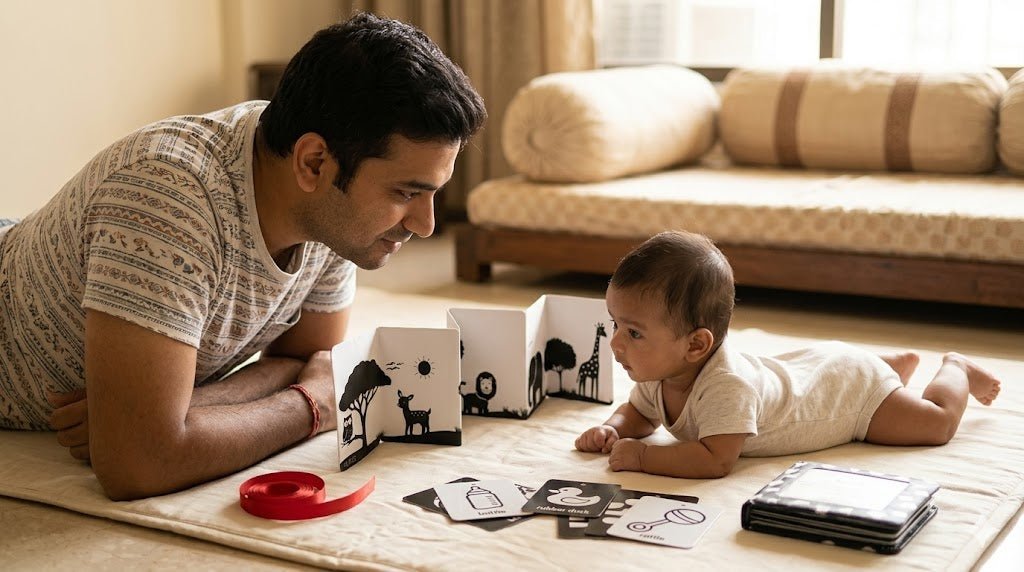
Here's something parents often miss: vision and touch work together in early development. While your baby is exploring textures with their hands and mouth, their eyes are simultaneously learning to focus and track movement.
Newborns see best in high contrast—black and white patterns—because their developing retinas are still maturing. When you combine high contrast visuals with gentle textures during tummy time or quiet play, you're creating a complete sensory experience that builds both visual and tactile neural pathways without overstimulation.
This is why high contrast cloth books paired with textured toys are so effective for newborns to 6-month-olds. They're safe, developmentally aligned, and deeply calming.
Introducing Nubokind: Montessori-Inspired Sensory Tools for Calm Development
If you've been researching sensory tools for your fussy baby, you've probably come across a lot of bright, noisy toys claiming to "boost development." Most of them do the opposite—they create the overload you're trying to avoid.
Nubokind is different. Built on Montessori principles, every Nubokind product is designed to calm while it develops. The brand focuses on what matters: safe, age-appropriate textures, high contrast visuals, and products that grow with your baby from newborn through first year and beyond.
When you choose Nubokind, you're choosing tools that:
- Support natural sensory development without overstimulation
- Are BIS-certified and made from safe, natural materials
- Align with tummy time activities and early learning routines
- Are designed by parents and educators, not just marketers
Essential Products for Calm Sensory Play
Whether you're managing a fussy newborn or introducing textures to a curious 6-month-old, Nubokind has thoughtfully designed collections:
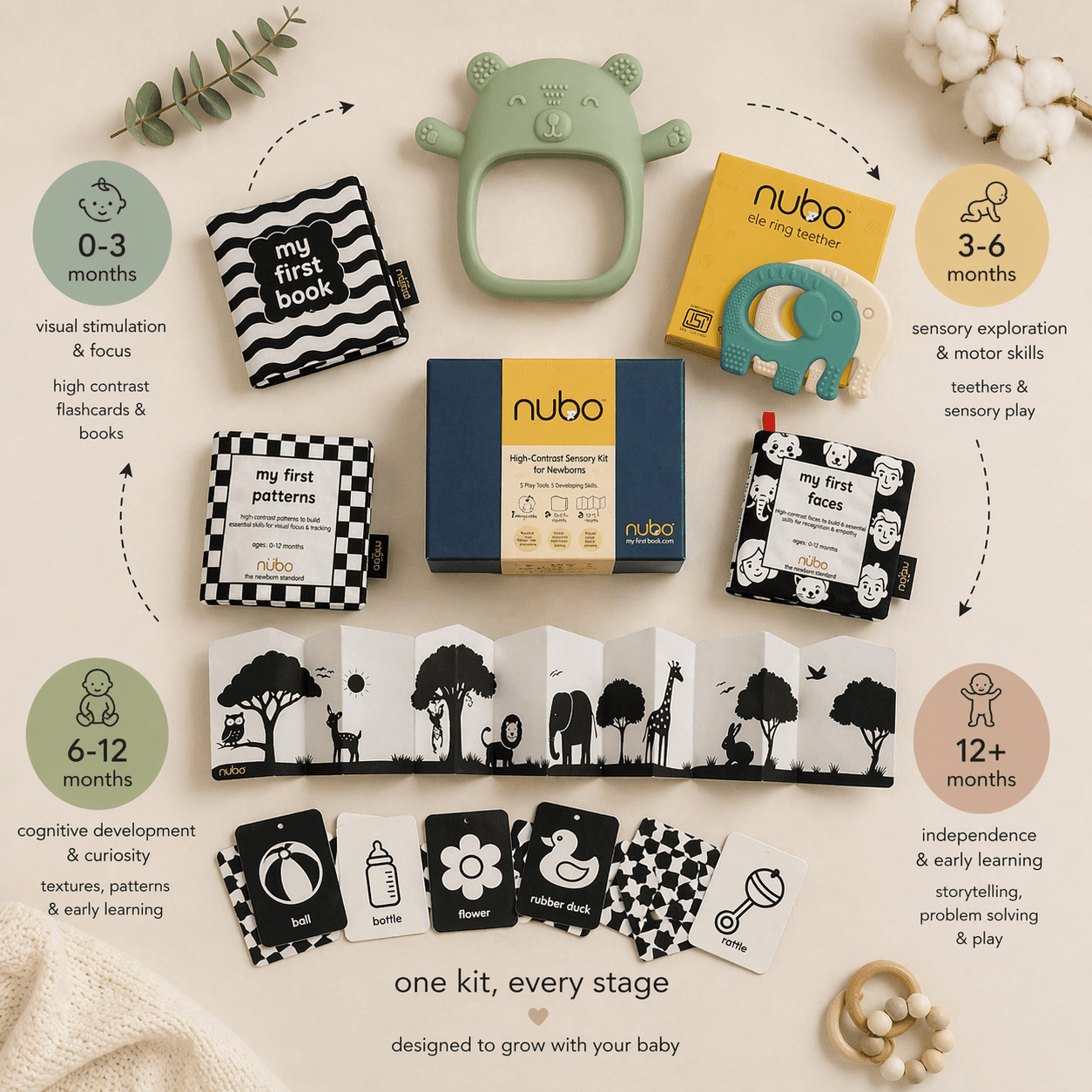
Nubokind High Contrast Cloth Book Set
BIS Certified | Soft fabric pages | Newborn to 12 months | Safe for tummy time and quiet play
₹699
Nubokind Kiko No-Drop Newborn Teether
BIS Certified | Soft silicone | 3+ months | Textured surface for gum relief and oral exploration
₹649
Nubokind ELE Ring Teether Set
BIS Certified | Multiple textures | 4+ months | Varied tactile surfaces for sensory exploration
₹599
Nubokind Newborn Gift Kit
BIS Certified | Complete sensory starter set | Newborn onwards | Includes flashcards, cloth book, and sensory toys
₹699
These aren't toys for the sake of toys. Each product is purposefully designed to support calm, focused sensory exploration during crucial developmental windows. From tummy time activities to teething relief, they work together to create a sensory-rich but never overwhelming environment.
What Parents Are Saying
FREQUENTLY ASKED QUESTIONS
Q: How do I know if my baby is overstimulated versus just fussy?
A: Overstimulation shows as excessive crying, arching away, avoiding eye contact, or refusing to be soothed—even after basic needs are met. Fussiness from tiredness or hunger is usually resolved after feeding or sleep. If your baby is consistently inconsolable, check for overstimulation by reducing environmental noise, bright lights, and multiple toys at once. Introducing calm, single-sensory tools like textured cloth books can help distinguish between the two.
Q: Are high contrast flashcards and newborn high contrast images safe for newborns?
A: Yes, when used correctly. High contrast black and white images are perfectly safe and actually recommended for newborn visual development. The key is to use them during alert, calm periods (not when your baby is already fussy) and to keep viewing time brief—2–3 minutes max for newborns. Products from reputable brands like Nubokind are designed specifically for infant visual development and are completely safe.
Q: What's the best age to start tummy time with toys and sensory tools?
A: You can begin newborn tummy time from week one (with supervision), but don't introduce toys until around 4–6 weeks when your baby's neck strength improves. For tummy time for newborns, keep it simple—just you and your baby. By 2–3 months, you can introduce soft toys and high contrast books. Tummy time activities work best when your baby is calm and alert, not already fussy.
Q: How often should I rotate sensory toys to keep my baby engaged?
A: Rotation isn't necessary for very young babies (newborn to 3 months)—consistency and repetition are actually more calming. From 3–6 months, you can gently introduce new textures alongside familiar ones. For toys for newborn to 6 months, aim for 2–3 core tools (like a cloth book and soft teether) rather than overwhelming variety. Quality over quantity keeps sensory play focused and less overstimulating.
Q: Can I use Montessori toys as a newborn gift, or should I wait?
A: Montessori educational toys and montessori toys for newborns are perfect gifts immediately, but choose age-appropriately. A newborn needs soft textures and high contrast visuals—not complex activities. The High Contrast Newborn Essential Kit from Nubokind is designed specifically as a newborn gift that grows with your baby. As your child develops, the same Montessori principles apply across cloth books, sensory kits, and teethers.
Q: Will soft books for infants and infant cloth books help with my baby's learning?
A: Absolutely. Infant cloth books support both sensory and cognitive development. They're safe for babies to mouth (unlike paper books), introduce high contrast visuals, and can be part of tummy time activities. Soft books for infants also help establish reading routines early, which research shows has long-term benefits for language development. Think of them as both a calming tool and an early learning investment.
CONCLUSION
Your fussy baby isn't broken. They're navigating a world of sensation for the first time, and they need your help to organize it. The answer isn't less input—it's thoughtful, intentional sensory experiences that calm while they develop.
By choosing high-quality, age-appropriate tools like those from Nubokind, you're not just soothing your baby in the moment. You're building neural pathways, supporting fine motor skills, and establishing calm routines that will serve your child for years to come.
Ready to explore sensory tools that are actually designed to calm (not overstimulate)? Explore Nubokind's complete collection of Montessori-inspired sensory products and discover the difference thoughtful design makes.
Your baby deserves sensory play that feels safe. You deserve solutions that actually work.

leave a comment
This site is protected by hCaptcha and the hCaptcha Privacy Policy and Terms of Service apply.