
Your baby won't stop gnawing on their fist, and you're not sure if a teether will help—or if it's even safe. Here's what every Indian parent should know about choosing a teether that's both effective and trustworthy.
It's 3 AM, and your baby is drooling, chewing on their hands, and clearly uncomfortable. You know teething is coming—or maybe it's already here. The question isn't whether your baby needs a teether; it's whether you're choosing the right one.
Here's what actually helped thousands of Indian parents:
Why Choosing the Right Teether Matters
Teething typically starts around 4–6 months (though it can be earlier), and it's one of the first sensory milestones your baby experiences. A good teether does more than soothe sore gums—it supports oral development, encourages safe exploration, and builds your baby's confidence in self-soothing.
But here's the catch: not all teethers are created equal. Some are too hard and can hurt tender gums. Others shed fibers, contain harmful chemicals, or break easily. When you pick a teether thoughtfully, you're not just managing discomfort—you're giving your baby a safe, developmentally appropriate tool that teaches them how to self-regulate through touch and texture.
For Indian parents especially, safety certifications and local trust matter. You need to know exactly what your baby is chewing on, where it's made, and whether it's been tested for safety.
What to Look For in an Infant Teether
Choosing the best teether for your baby starts with understanding five key criteria. Let's break them down:
| What to Look For | Good Quality Teethers | Poor Quality (Avoid) |
|---|---|---|
| Material Safety | Food-grade silicone, BPA-free, phthalate-free. BIS certified (India standard). | PVC, latex, or unknown plastic. No certifications. Cheap feel. |
| Texture Variety | Mix of soft bumps, ridges, and smooth sections. Engages different gum areas. | Single flat surface. No sensory feedback. |
| Design & Grip | Lightweight, easy for tiny hands. No sharp edges or small detachable parts. | Heavy, hard to grip, choking hazards, or loose components. |
| Age Appropriateness | Soft for newborns (0–3 months); firmer ring teethers for 3+ months. | One-size-fits-all; doesn't evolve with baby. |
| Cooling & Relief | Can be refrigerated (not frozen) for gentle relief. Reduces inflammation. | No cooling option, or can be frozen solid (uncomfortable). |
Pro tip: The best teethers grow with your baby. You might start with a soft newborn teether around 3 months, then transition to a ring teether set around 5–6 months as your baby's grip strengthens and they can handle more texture variation.
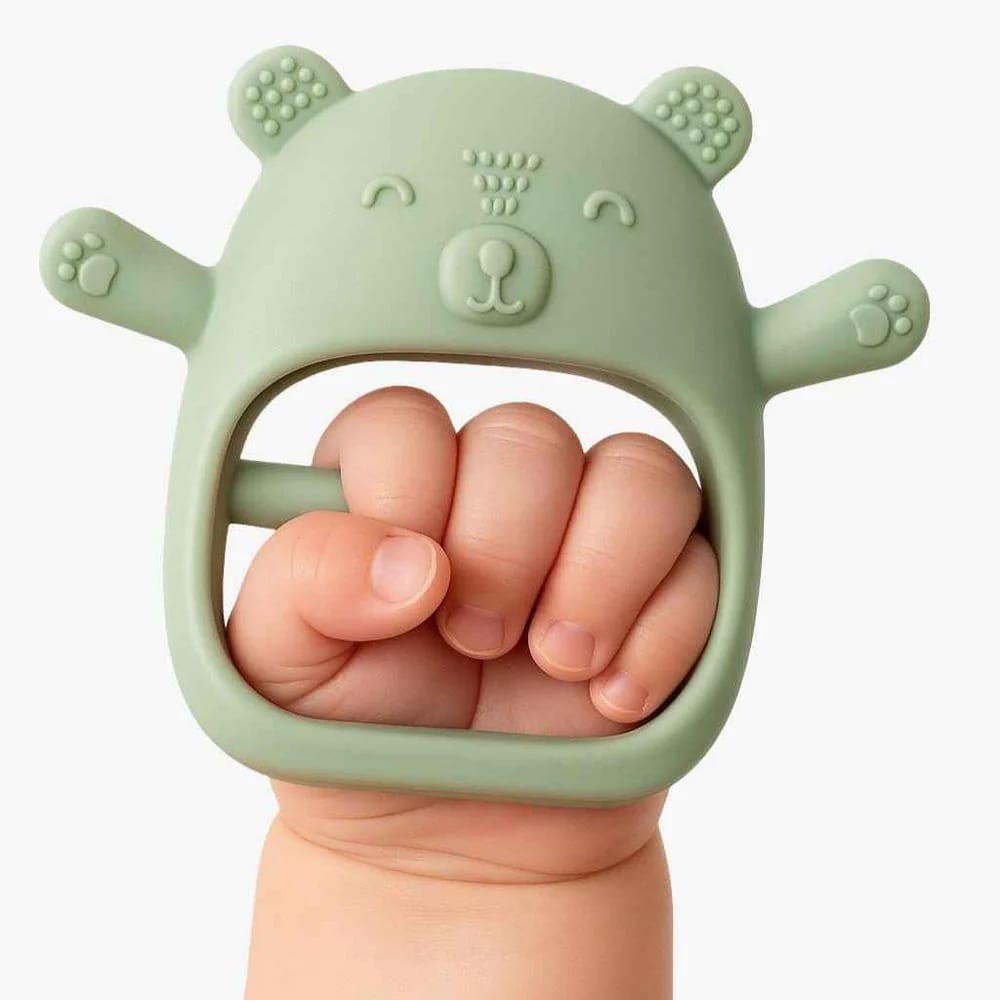
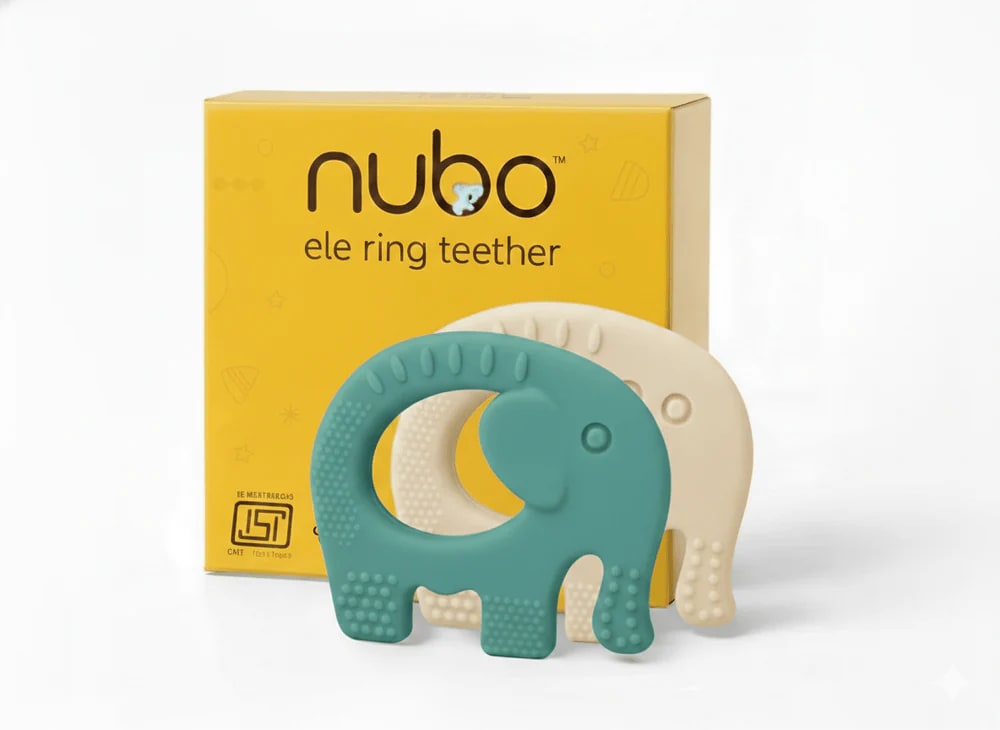
Nubokind teethers tick all these boxes. Both the Kiko No-Drop Newborn Teether and the ELE Ring Teether Set are BIS certified, made from food-grade silicone, and designed to match your baby's developmental stage. They're not just safe—they're thoughtfully crafted to grow with your little one.
Common Teether Mistakes New Parents Make
We've watched many parents navigate teething, and certain mistakes come up again and again. Here's what to avoid:
- Buying one teether for all stages: A newborn's gums are tender; they need soft, gentle teethers. By 6 months, your baby can handle firmer ring teethers. Investing in a progression of products prevents waste and ensures safety.
- Freezing teethers solid: A refrigerated teether is soothing. A frozen one can cause gum damage. Keep teethers cool, not ice-cold.
- Ignoring safety certifications: Look for BIS certification in India. It's not just a badge—it means the product has been tested for toxins, durability, and safety.
- Choosing hard plastic over silicone: Hard teethers can bruise delicate gums. Food-grade silicone is soft enough to be kind, firm enough to be effective.
- Leaving teethers unattended: Always supervise. Check regularly for wear and tear. If a teether shows cracks or loose parts, retire it immediately.
What Indian Parents Are Saying
Srishti Kohli
This is the best one can find for their child
This is the best one can find for their child. I am very satisfied with their product. It’s completely mom approved 😊
Divij Kapur
Best teether in the market!
After having spent literally 1000's on imported, useless teethers for my 5 month old...this teether has been the best by far. My daughter loves it....easy to use and clean ...highly recommended 🫡
Quick Teether Buying Guide
- Start with newborn teethers (0–3 months): Soft, lightweight, and easy for your baby to hold. The Kiko No-Drop Newborn Teether is ideal for this stage.
- Upgrade to ring teethers (3–6+ months): As your baby's grip strengthens, introduce variety with ring teether sets that offer multiple textures and shapes.
- Refrigerate, don't freeze: Keep teethers in a cool place (not the freezer) for gentle relief. Always supervise during teething sessions.
- Check for BIS certification: This Indian safety standard ensures the product has been tested for toxins and durability. It's your assurance of quality.
- Rotate teethers: Just like toys, variety keeps babies engaged and prevents over-reliance on one texture. Having 2–3 teethers in rotation is smart parenting.
- Inspect regularly: Look for cracks, discoloration, or loose parts. If your teether shows wear, it's time to retire it safely.
Frequently Asked Questions
Q: At what age should I introduce a teether?
A: Most babies show readiness for a teether around 3–4 months, though some start earlier. You'll notice signs like drooling, chewing on hands, and swollen gums. You can offer a soft newborn teether as early as this point. The best newborn teether is one that's gentle, lightweight, and designed for tiny hands—like our Kiko No-Drop model.
Q: Is silicone really safe for babies?
A: Yes, when it's food-grade and BIS certified. Food-grade silicone contains no BPA, phthalates, or harmful chemicals. It's the same material used in baby bottles and pacifiers. Always check for certification on the product label. Nubokind's teethers are both BIS certified and made from food-grade silicone—you can rest assured your baby is safe.
Q: How do I know if my baby actually needs a teether?
A: Not every baby is the same, but look for signs like excessive drooling, swollen gums, chewing on fingers or objects, and difficulty sleeping. A good teether provides sensory input and relief. Even if teething hasn't started yet, offering a soft teether early supports oral exploration and can ease the transition when teeth do arrive. Many parents find teethers helpful even before visible teething.
Q: Can I use the same teether from newborn stage to 12 months?
A: Not ideally. A newborn's gums are tender and need soft teethers, but by 3–4 months, your baby can handle firmer textures and benefits from variety. A ring teether set like the ELE allows you to progress through developmental stages, offering new sensations as your baby's mouth grows stronger. Having 2–3 teethers at different stages ensures safety and engagement.
Q: What's the difference between a ring teether and other types?
A: A ring teether is circular with a handle, designed to be easy for tiny hands to grip and manipulate. It's different from flat teethers or pacifier-style options because it allows your baby to self-direct where they chew. The ELE Ring Teether Set offers multiple rings with different textures—bumpy, smooth, and textured—so your baby explores sensory variation. This is more developmentally rich than a single-style teether.
Q: Is there a "best teether for babies in India" that suits most parents?
A: There's no one universal best, but the criteria—BIS certification, food-grade silicone, age-appropriate design, and good grip—narrow it down. For Indian parents, the Kiko No-Drop Newborn Teether is trusted for early-stage comfort, and the ELE Ring Teether Set is praised for progression and safety. Both are made in India, BIS certified, and designed with Indian parenting values in mind. Start by choosing based on your baby's age and stage.
Conclusion: Your Baby Deserves a Teether You Trust
Teething is temporary, but the choices you make now shape your baby's early sensory development and your own peace of mind. The right teether isn't just about soothing gums—it's about safety, trust, and supporting your baby's natural curiosity.
Nubokind teethers are built on the principle that every baby deserves products that are safe, thoughtfully designed, and made for Indian families. Whether you're starting with the Kiko No-Drop Newborn Teether or progressing to the ELE Ring Teether Set, you're choosing products that have been tested, certified, and loved by thousands of parents like you.
Ready to find the perfect teether for your baby? Explore Nubokind's complete teether collection and discover why Indian parents trust us for early development and sensory play.


leave a comment
This site is protected by hCaptcha and the hCaptcha Privacy Policy and Terms of Service apply.