
Your newborn stares at the black-and-white pattern on your phone while tummy time drags. It's not random—their eyes are literally wired to respond to high contrast. Here's the science and how to use it for their development.
You've probably noticed it: your newborn fixates on high contrast patterns while ignoring colorful toys nearby. That moment when you hold up a simple black-and-white card and their eyes actually *track* it? That's not luck—that's their developing brain doing exactly what it's supposed to do.
If you're looking for the right tools to support this critical phase of visual and cognitive growth, here's what has worked for thousands of Indian parents:
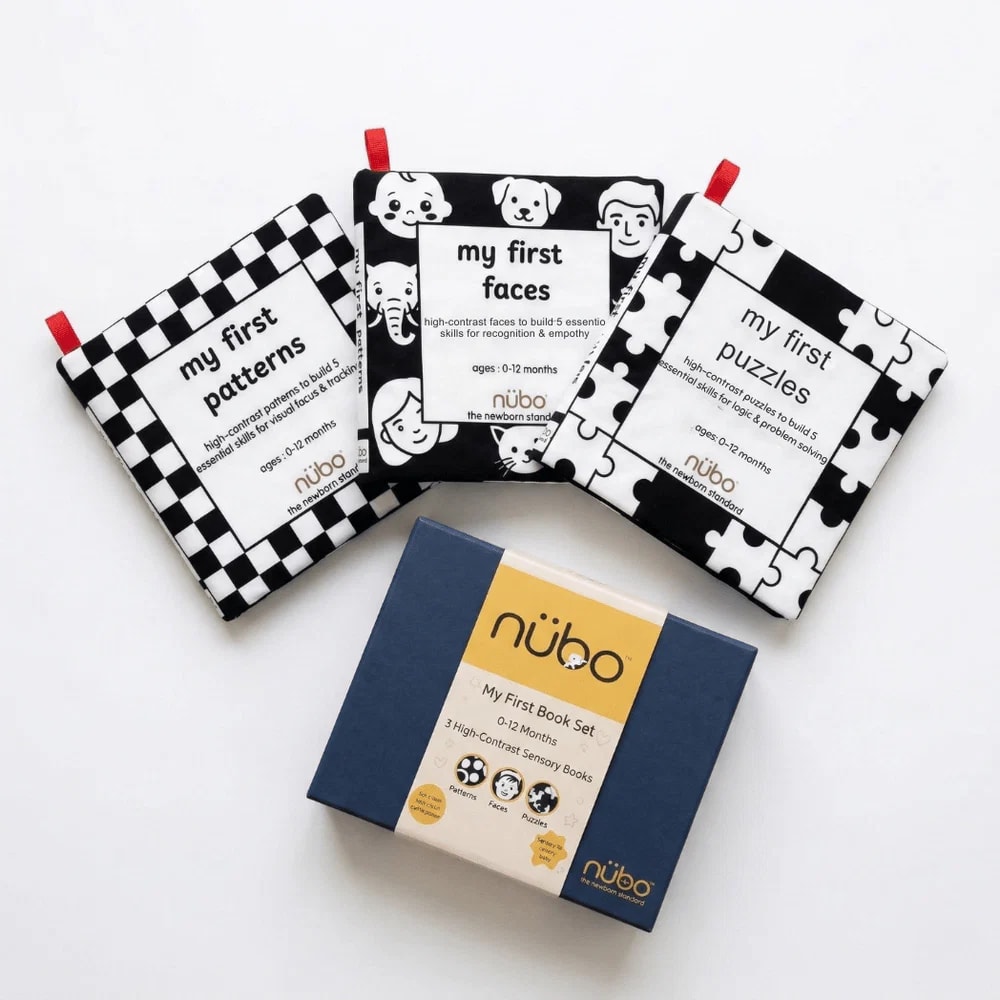
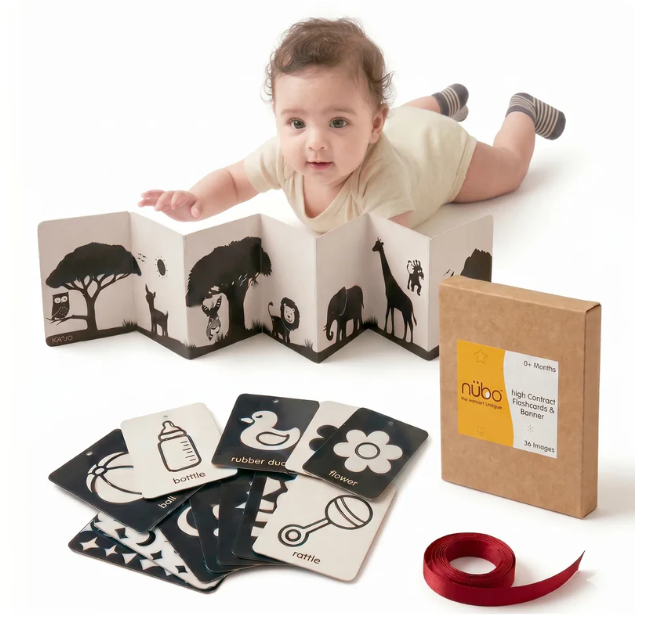
High Contrast Flashcards & Tummy Time Banner
Portable | Perfect for tummy time activities | 0–6 months
₹299
Here's what actually helped us—and thousands of Indian parents: tools designed specifically around how newborn eyes develop, paired with expert guidance on when and how to use them.
Why High Contrast Images Matter for Your Newborn
A newborn's vision is still developing. In the first weeks and months, they can't see fine details or distinguish subtle color differences the way you do. What they *can* see are sharp, bold contrasts—especially black and white patterns. This isn't random; it's neuroscience.
Here's why: your baby's visual cortex is rapidly building connections during the first 6 months. High contrast images create the perfect stimulus for this growth. When your newborn focuses on a black-and-white card during tummy time, their eyes are working harder, their visual tracking improves, and neural pathways are literally strengthening. This isn't just about sight—it's about building the brain architecture that supports learning, focus, and cognitive development.
Beyond vision, there's an emotional angle too. Newborns on tummy time can feel vulnerable or bored. A high contrast image gives them something to engage with, something to *reach toward*. This turns tummy time from a chore into a developmental opportunity—and every parent knows how important those moments are for building neck strength, shoulder mobility, and confidence.
What to Look For in High Contrast Products
Not all high contrast tools are created equal. When you're choosing flashcards, cloth books, or tummy time aids, a few things matter:
| Quality Indicator | What to Avoid | What Nubokind Delivers |
|---|---|---|
| Contrast Clarity | Faded or muddy black-and-white patterns; colors that blur together | Crisp, true black and white; no gradients that dilute the contrast |
| Material Safety | Glossy cards that reflect light; cheap plastic; dyes that can rub off | Non-toxic, washable fabric; BIS-certified; soft enough for tiny hands |
| Design Purpose | Generic patterns with no developmental logic; overstimulation | Montessori-aligned shapes; paced progression; designed for tummy time |
| Longevity | Tears easily; fades after a few weeks; one-use items | Durable cloth that survives multiple washes; multi-child usage |
Why does this matter? A poorly made flashcard might look like it has contrast, but if it's printed on shiny cardstock or uses dull inks, your baby's eyes actually have to work harder—and not in a good way. They get frustrated instead of engaged. With washable, durable cloth books and cards designed for newborn visual development, every moment of tummy time becomes intentional and effective.
Tummy Time + High Contrast: A Winning Combination
Tummy time for newborn development is non-negotiable—but let's be honest, not every baby loves it. High contrast images are a game-changer for tummy time activities. Here's how to use them:
- Start small: During the first 2–3 weeks, show one flashcard for 10–15 seconds at a time, about 6–12 inches from your baby's face. Watch their eyes track it.
- Use during tummy time: Place a high contrast cloth book or banner at eye level in front of your baby. They'll naturally want to lift their head to look at it, strengthening neck muscles without you forcing anything.
- Rotate patterns: Introduce 2–3 different cards or pages every few days. Newborns need variety as their visual cortex develops. By 3–4 months, they're ready for slightly more complex patterns.
- Watch for overstimulation: If your baby looks away or gets fussy, they're done. Respect that boundary. The goal is engagement, not exhaustion.
- Make it routine: Use high contrast tools during the same tummy time window each day. Consistency helps their developing brain predict and prepare for learning.
The combination of tummy time and visual stimulation creates what Montessori educators call "purposeful engagement"—your baby isn't just moving their body, they're actively learning with their eyes and brain working together.
What Indian Parents Are Saying
Palak Sharma
Beautiful gift
I bought this for a cousin's baby shower and it was the highlight of gifts. The packaging is beautiful and it feels like a very thoughtful, high-end product. It’s a unique alternative to the standard plastic toys you see everywhere.
Anamika Agarwal
Baby's Favourite
These cloth books have become my baby's favourite toy. The colorful pages keep my little one engaged.
Quick Buying & Usage Guide
- For newborns 0–8 weeks: Start with simple, bold patterns (pure black and white). Cloth books and flashcards are ideal because they're safe if baby grabs them.
- For 2–4 months: Introduce slightly more complex shapes and patterns. Your baby's visual cortex is ready for more stimulation. Tummy time banners work beautifully here.
- For 4–6 months: You can gradually add subtle variations or introduce other Montessori sensory toys alongside high contrast tools.
- Washability is non-negotiable: Babies drool, spit up, and grab everything. Cloth books and fabric flashcards can be wiped clean or gently washed—plastic-only options will show wear quickly.
- Pair with other senses: High contrast images work even better when combined with soft textures (teethers, cloth), creating a multi-sensory learning environment aligned with Montessori principles.
- Skip the guilt: If your baby isn't interested in a particular pattern, that's okay. Some days they prefer tactile play. Rotate tools and trust your baby's lead.
Frequently Asked Questions
Q: At what age should I introduce high contrast images for newborn development?
A: You can start from birth, but newborns 2–8 weeks old show the strongest response. Their eyes are developing rapidly, and high contrast stimulation supports this growth. By 3 months, they'll be tracking more deliberately. Continue using these tools through 6 months as part of their sensory and developmental toolkit.
Q: Can high contrast flashcards replace tummy time?
A: No—but they can make tummy time *much* more effective. Tummy time itself is crucial for neck, shoulder, and core strength. High contrast images just give your baby a reason to lift their head and stay engaged longer. Think of them as complementary tools, not replacements.
Q: Are Montessori toys really better for newborn visual development?
A: Montessori principles are rooted in child development research. Products designed with these principles—like our high contrast cloth books—are intentionally paced and purposeful. They introduce concepts in a sequence that matches how babies' brains actually develop, rather than overstimulating with random colors or patterns.
Q: What's the difference between high contrast flashcards and a cloth book?
A: Flashcards are portable and great for quick engagement sessions (useful during tummy time or whenever you have 2–5 minutes). Cloth books invite longer exploration and are gentler for grabbing/chewing. Ideally, use both—flashcards for targeted stimulation, cloth books for relaxed sensory play.
Q: Will high contrast images overstimulate my newborn?
A: Only if you overdo it. Newborns regulate themselves—when they're overstimulated, they look away or cry. Start with 10–15 second sessions and watch your baby's cues. If they seem engaged and happy, continue. If they turn away, they're done. Respect their pace; that's a core Montessori principle too.
Q: Are high contrast newborn products worth the investment?
A: If your goal is supporting early visual, cognitive, and motor development during a critical window (0–6 months), yes. High contrast tools are inexpensive compared to other baby gear, they last through multiple children, and they directly support what research tells us about how infant brains develop. Think of it as investing in foundational learning.
Conclusion
High contrast images aren't a trend—they're backed by decades of developmental psychology and neuroscience. Your newborn's eyes and brain are wired to respond to bold, simple contrasts, especially during tummy time. When you pair this understanding with thoughtfully designed, safe products, you're not just keeping your baby entertained—you're actively supporting their visual development, cognitive growth, and confidence.
The right tools make all the difference. Explore Nubokind's high contrast collection—from durable cloth books to portable flashcards—all designed with your baby's developmental journey in mind. Every product is BIS-certified, washable, and aligned with Montessori principles that respect how your baby actually learns.
Your tummy time sessions don't have to be a struggle. Let your baby's natural curiosity do the work.


leave a comment
This site is protected by hCaptcha and the hCaptcha Privacy Policy and Terms of Service apply.