
Quick Answer
Introduce high contrast flashcards from birth, especially during tummy time between 2–6 months. Hold them 20–30 cm away, show for 10–30 seconds, and pair with sensory play to build infant visual development and focus skills.
You're on the floor during tummy time, and your newborn is doing that thing—flailing a bit, getting slightly frustrated. You wish you had something to *hold* their attention, something that actually makes sense for their eyes right now. That's when most parents wonder: what exactly should I be showing my baby?
Here's what actually helped us—and thousands of Indian parents:
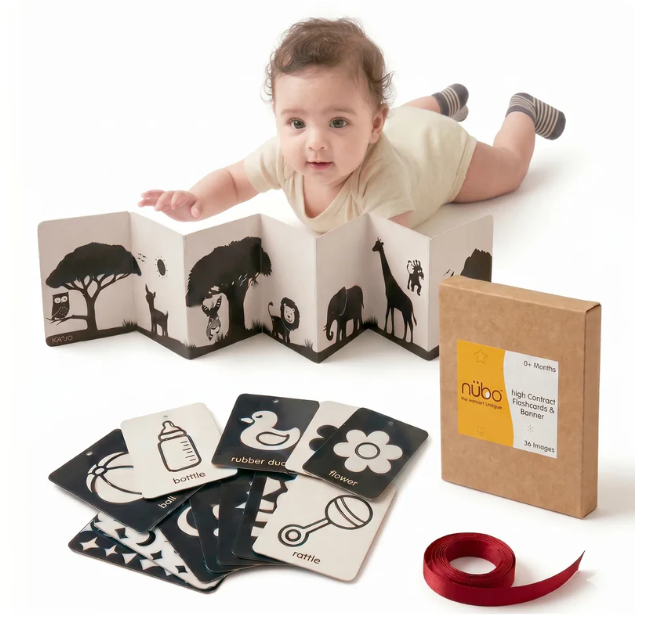
High Contrast Flashcards & Tummy Time Banner
Montessori-inspired | Birth to 6 months | Includes positioning guide
₹299
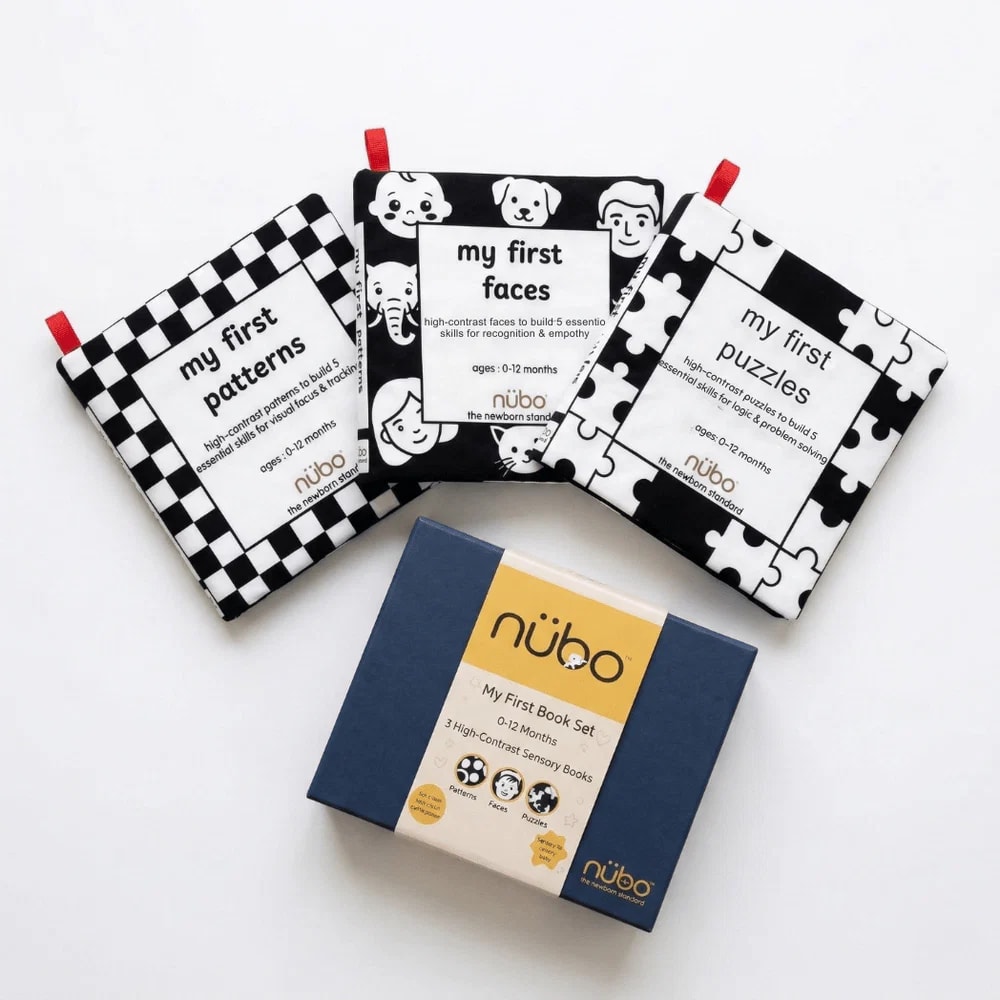
Why High Contrast Images Matter for Newborns
When your baby is born, their eyes are still learning to focus. They can't see fine details or subtle colors—but they can see bold, high-contrast patterns. Black and white images, simple geometric shapes, and strong color pairs are like a perfect first "language" for their developing vision.
Research into infant visual development shows that newborns naturally track and fixate on high contrast. This isn't just entertainment—it's active brain building. When you use high contrast flashcards or books during tummy time, your baby isn't just looking; they're strengthening eye muscles, building focus, and developing the neural pathways for tracking and depth perception. By 3–6 months, these visual skills become the foundation for everything from hand-eye coordination to future reading readiness.
Most Indian parents don't realize that tummy time is the *ideal* moment for this kind of visual play. Tummy time for newborn is already a developmental sweet spot—your baby's neck is getting stronger, core muscles are building—and adding high contrast flashcards turns those minutes into focused learning time. It's gentle, aligned with Montessori principles (which emphasize self-directed sensory exploration), and backed by child development research.
What to Look For in High Contrast Flashcards & Books
Not all black and white cards or books are created equal. The best high contrast flashcards for babies should be simple, safe, and specifically designed for infant eye tracking. Here's what separates good products from the rest:
| Criteria | What to Look For | What to Avoid |
|---|---|---|
| Image Complexity | Bold, simple shapes—dots, lines, geometric patterns. One or two elements per card. | Cluttered scenes, tiny details, or complex gradients that strain newborn eyes. |
| Contrast Quality | True black on white, or high-saturation color pairs (red & white, blue & white). | Gray tones, soft pastels, or low-contrast combinations that are hard to distinguish. |
| Material (Flashcards) | Laminated cardboard, washable, BIS Certified, safe for curious hands. | Paper-thin cards, non-baby-safe inks, or materials that tear easily. |
| Material (Cloth Books) | Soft, washable fabric; crinkly or tactile textures. Non-toxic dyes. Infant cloth book certified safe. | Stiff cardboard books, loose buttons, or materials with small parts. |
| Age Appropriateness | Marketed for newborn to 6 months or infant learning toys category. Includes usage guide. | Generic "baby books" not specifically designed for visual development. |
| Montessori Alignment | Encourages unstructured exploration, open-ended play, self-paced learning. | Products with flashing lights, loud sounds, or forced interaction patterns. |
Nubokind's High Contrast Cloth Book Set and High Contrast Flashcards & Tummy Time Banner meet all these criteria. They're Montessori-inspired, safe for newborns, and designed by parents who understand Indian baby routines. The cloth books double as tummy time toys, and the flashcard set comes with a positioning guide so you know exactly how far to hold them and for how long.
How and When to Use High Contrast Flashcards
Best Age to Start: You can start with newborn flashcards from birth, but the real "magic window" is 2–3 months onward, when your baby's eyes are more focused and tracking improves. By 4–6 months, babies actively track moving objects and show clear preference for patterns.
Positioning & Distance: Hold flashcards about 20–30 cm (roughly 8–10 inches) from your baby's face. This is the distance at which newborn eyes focus best. If you're doing this during tummy time, position the card at your baby's eye level or slightly above.
Duration: Show each card for 10–30 seconds. Don't force it. If your baby looks away, that's fine—it means they've processed it. Respect their pace. A typical tummy time session might include 3–5 different cards, rotated slowly so your baby can track movement.
Pairing with Tummy Time: Use high contrast flashcards during the first 5–10 minutes of tummy time, when your baby is most alert. After that, introduce other tummy time toys for sensory play. This combination—visual focus followed by tactile exploration—mimics how Montessori educators structure learning. Babies learn best when they can move between different types of stimulation.
Rotating Visuals: Change cards every 3–4 days to maintain novelty. Babies habituate quickly, so variety keeps their brains engaged. Once your baby is 6+ months, transition gradually to colored high contrast books and infant learning toys that include multiple sensory elements (texture, sound, crinkle).
Combining High Contrast Flashcards With Sensory Play & Tummy Time Toys
The most effective infant visual development happens when you layer sensory experiences. Here's a simple tummy time routine that thousands of Indian parents have used:
- Minute 1–3: Visual Focus — Show one or two high contrast flashcards. Let your baby track and fixate.
- Minute 4–6: Tactile Exploration — Introduce a soft teether, cloth book, or sensory toy. Let them touch, mouth, and explore.
- Minute 7–10: Active Play — Use tummy time toys, rattles, or a sensory kit. Encourage reaching and head-lifting (great for neck strength).
- Minute 11+: Free Play — Just watch and support. Your baby might roll, rest, or self-soothe.
This structure keeps your baby engaged without overstimulation. High contrast flashcards are the opening act—they prepare the brain for learning, and then sensory toys for newborns take over. If you pair this with a soft teether (like the Kiko No-Drop Newborn Teether) or a Newborn Gift Kit that includes both visual and tactile elements, you're covering all the developmental bases in one 10–15 minute session.
What Indian Parents Are Saying
Lina Dedhia
Wonderful flashcards and banner!
As a mother, I am extremely happy with this product for my newborn baby. The tummy time banner is colorful, soft, and very engaging.
Ayan
Premium Baby Tummy Set
This product is perfect for newborns! The tummy time banner and flashcards are made with excellent quality materials.
Quick Tips for Buying & Using High Contrast Products
- Start with a bundle: High contrast flashcards paired with a cloth book give you flexibility. Use cards for focused tummy time, books for sensory exploration and teething.
- Check the age range: Most infant high contrast products are designed for birth to 6 months. After 6 months, you can gradually introduce colored and more complex images.
- Prioritize safety certifications: Look for BIS Certified or equivalent marks, especially for cloth books. Babies will mouth and chew these, so non-toxic materials matter.
- Buy washable: Babies drool, and products get dirty. Laminated or machine-washable options save money and stress in the long run.
- Rotate regularly: One set of flashcards won't bore your baby if you show them 3–4 days at a time and rotate back. This keeps visual engagement high without buying constantly.
- Combine with other Montessori toys: Teethers, sensory kits, and cloth books work together. A Newborn Gift Kit that includes multiple elements gives you a complete first-6-months learning toolkit.
Frequently Asked Questions
Q: When should I start using high contrast flashcards?
A: You can show high contrast images to newborns from birth, but true tracking and visual engagement really begins around 2–3 months. Start whenever feels right for your baby; there's no "too early" for gentle visual exploration. Most parents find the sweet spot is 2–4 months when paired with tummy time routines.
Q: How long should I show each flashcard to my newborn?
A: Show each card for 10–30 seconds, then pause and observe. If your baby looks away, that's a sign they've processed it—which is perfect. Forcing longer exposure can lead to overstimulation. Keep sessions short and sweet, never more than 5–10 minutes total during one tummy time.
Q: Can high contrast flashcards replace tummy time toys?
A: No—they're a complement, not a replacement. Flashcards support visual development and focus, but your baby also needs tactile, auditory, and movement-based play. Combine high contrast images with cloth books, sensory teethers, and open tummy time to give your baby a well-rounded experience. A balanced approach supports all developmental domains.
Q: Are high contrast flashcards part of Montessori education?
A: Yes. Montessori methods emphasize sensory materials that respond to a child's natural interests. High contrast flashcards and cloth books align with this philosophy—they're self-directed, beautiful (not overly stimulating), and developmentally appropriate. Many Montessori-inspired infant kits and toys for newborn to 6 months include high contrast elements for this reason.
Q: What's the difference between high contrast flashcards and colored flashcards?
A: High contrast (black & white) flashcards are best for newborns and infants birth to 3–4 months because their visual system is still developing and can't process subtle colors well. Around 4–6 months, babies can begin to distinguish bold colors like red, blue, and yellow. After 6 months, you can transition to full-color cards. Start with high contrast, then layer in color as your baby's vision matures.
Q: Will high contrast images help with my baby's reading skills later?
A: Indirectly, yes. Early visual tracking, focus, and pattern recognition form the foundation for letter recognition and pre-reading skills. While flashcards alone won't teach reading, they support the visual processing and attention span that reading requires. Combined with cloth books and other infant learning toys, high contrast play is part of a healthy developmental pathway.
Conclusion
High contrast flashcards and cloth books are one of the simplest, most evidence-backed ways to support your newborn's visual development and tummy time engagement. They're affordable, safe, and aligned with how babies' brains actually learn. Whether you're starting at birth or 3 months, there's never a wrong time to introduce high contrast images during this critical developmental window.
The best approach? Start with a focused set of flashcards during tummy time, pair them with soft cloth books for tactile play, and rotate regularly to keep your baby's curiosity alive. Most importantly, enjoy the moments—these early sensory experiences are bonding time, not performance time.
Ready to support your baby's visual development? Explore Nubokind's High Contrast Flashcards & Tummy Time Banner or start with the High Contrast Cloth Book Set if you prefer tactile play. Every set is BIS Certified, designed for Indian parents, and backed by the research that shows high contrast play matters. Visit Nubokind.com to discover our full collection of Montessori-inspired infant toys and sensory play kits.


leave a comment
This site is protected by hCaptcha and the hCaptcha Privacy Policy and Terms of Service apply.