
Quick Answer
Yes, high-contrast toys are excellent for babies. Newborn vision develops rapidly from birth to 6 months, and babies' eyes are naturally drawn to bold black-and-white patterns. High-contrast toys support this visual development by stimulating neural pathways in the brain and making tummy time more engaging.
The Perfect Start: High-Contrast Toys Your Baby Will Love
You place your newborn on their tummy for a few minutes, and they seem to stare at nothing. Then you show them a black-and-white pattern, and suddenly their little eyes track it. That moment? That's visual development happening in real time.
High-contrast toys aren't just eye-catching—they're developmental tools designed to match how your baby's eyes actually work. Here's what parents are choosing to support early vision:
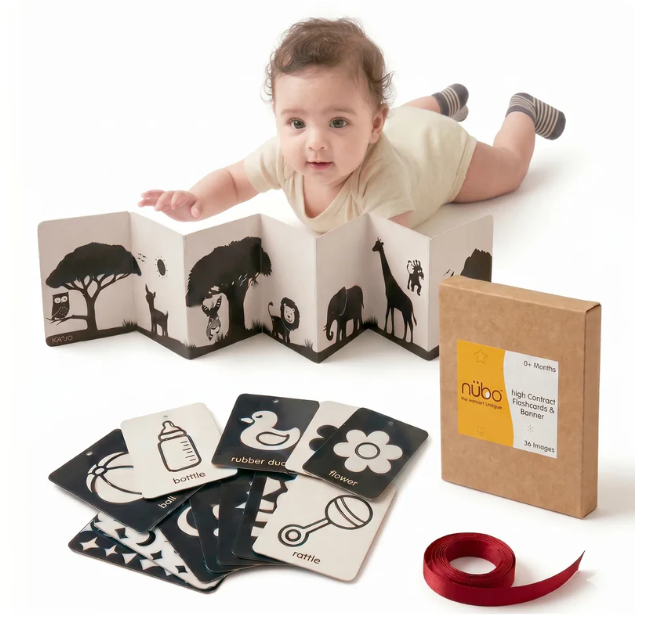
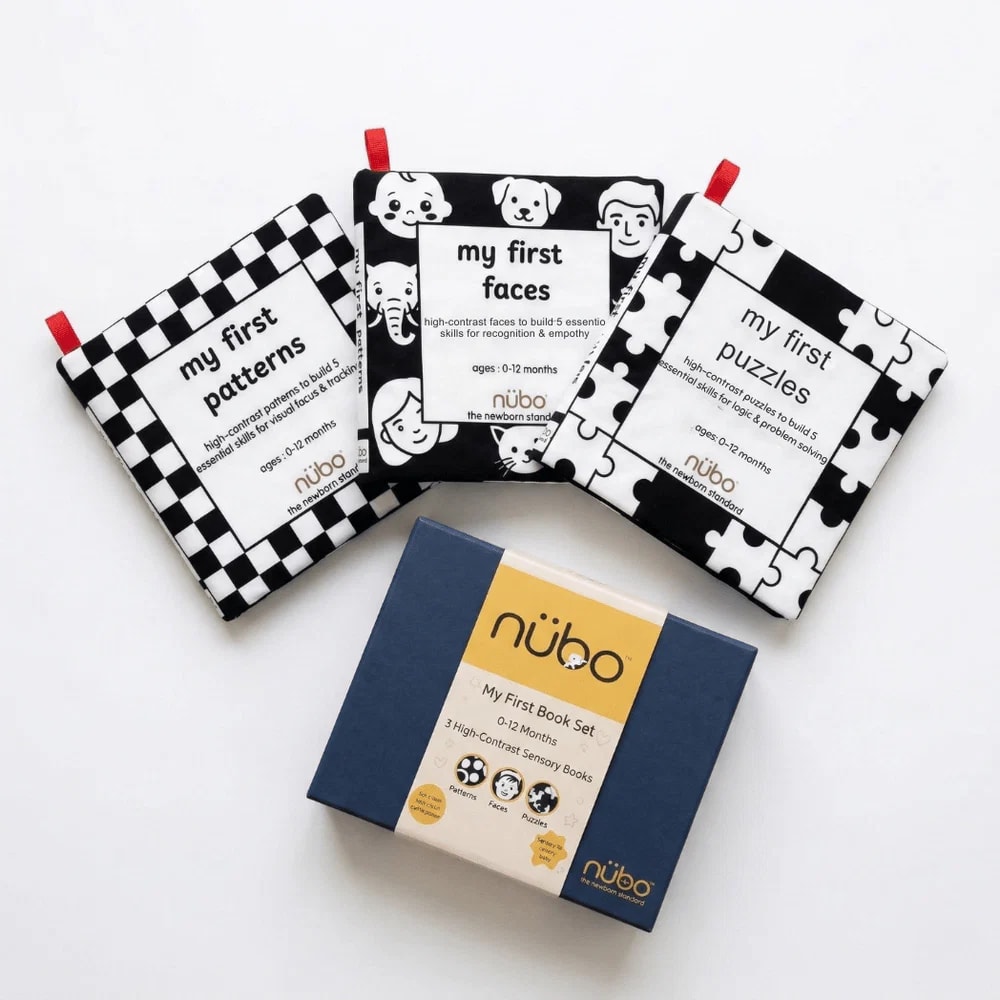
Here's what actually helped thousands of Indian parents—and why it works.
Why Your Baby's Eyes Need High-Contrast Stimulation
When your baby is born, their vision isn't fully developed. In fact, newborns can only see about 20–30 centimeters away, and the world looks pretty blurry to them. But here's the exciting part: their visual system is primed to learn.
Between birth and 6 months, babies' eyes begin to distinguish shapes, follow movement, and develop color perception. During this critical window, high-contrast images—especially black-and-white patterns—create the strongest visual stimulation. Why? Because contrast is literally the easiest thing for developing eyes to detect. Bold patterns trigger focus, encourage eye tracking, and stimulate the visual cortex in ways soft colors simply can't.
When you use high-contrast toys during tummy time for newborns and beyond, you're not just keeping them entertained—you're actively supporting their neurological development. Babies who engage with these toys show better eye-tracking ability and visual focus compared to those without this early stimulation. For first-time parents, this means every moment of tummy time becomes a developmental opportunity.
What to Look for in High-Contrast Toys: A Parent's Guide
Not all high-contrast toys are created equal. Here's what separates the ones that truly support development from ones that just look interesting:
| Quality Criterion | What's Good | What to Avoid |
|---|---|---|
| Contrast Clarity | Deep black & pure white with sharp edges; no gray gradients | Faded or muddy colors; poorly printed patterns |
| Pattern Design | Geometric shapes, stripes, dots; inspired by Montessori principles | Complex, cluttered, or overstimulating visuals |
| Material Safety | BIS certified, non-toxic, soft fabric (for cloth books & banners) | Unregulated plastics, flaking paint, rough edges |
| Age Appropriateness | 0–6 months for newborn flashcards; 0–12+ months for cloth books | Toys designed for older babies applied to newborns |
| Durability & Washability | Machine-washable fabric, tear-resistant, fade-resistant printing | Single-use, flimsy material, inks that wear off quickly |
Nubokind's high-contrast products check every box. Our cloth book sets are printed with archival-quality inks on soft, BIS-certified fabric. Our flashcards and tummy time banners use true black-and-white contrast (no filters or fading) and are designed by child development experts following Montessori principles—so every pattern is intentional.
The best part? These aren't one-off toys. A high-contrast cloth book grows with your baby. Use it as a visual stimulus at 2 months, a teething companion at 4 months, and a sensory exploration tool at 8 months. One investment, multiple developmental phases.
How to Incorporate High-Contrast Toys Into Daily Routines
- Tummy Time Master Move: Place a tummy time banner or flashcard at eye level during your newborn's tummy time sessions. Position it about 20–30 cm away so they can focus on it. This encourages neck strengthening and visual tracking at the same time.
- Bedtime Wind-Down: A soft cloth book becomes a calming sensory object before sleep. The texture soothes, and the patterns provide just enough visual interest without overstimulation.
- Portable Development: Keep high-contrast flashcards handy during diaper changes, feeding time, or when you're out. Quick visual engagement sessions (30 seconds to 1 minute) add up over a week.
- Rotate Patterns: Babies learn through repetition but also benefit from novelty. Rotate different high-contrast patterns every few weeks to maintain engagement and support ongoing neural development.
- Multi-Sensory Play: Let your baby touch and mouth safe cloth books. The combination of visual + tactile + oral exploration accelerates learning and makes the experience more meaningful.
- Parent-Baby Bonding: Make it interactive. Show your baby the patterns, make gentle sounds, and observe their reactions. This shared attention strengthens your bond while supporting their development.
Real Parents, Real Results
Palak Sharma
Beautiful gift
I bought this for a cousin's baby shower and it was the highlight of gifts. The packaging is beautiful and it feels like a very thoughtful, high-end product. It’s a unique alternative to the standard plastic toys you see everywhere.
Rahul Deshmukh
Soft & Perfect
The fabric is soft and feels perfect for little hands. The books are beautifully made and easy for my baby to explore.
Frequently Asked Questions
Q: At what age can babies see high-contrast images?
A: Newborns can perceive high-contrast patterns from birth, though their vision is clearer from 2–3 weeks onward. At 6–8 weeks, babies can focus more deliberately on patterns and begin to track them with their eyes. This is why toys for newborn to 6 months are so effective—you're working within their natural visual development window. That said, introducing patterns early (even in the first few weeks) provides foundational visual stimulation.
Q: Will high-contrast toys hurt my baby's eyes?
A: No, when used appropriately. High-contrast toys don't emit light or strain the eyes—they simply provide clear visual information. In fact, they're gentler on developing vision than overstimulating, multi-colored, or flickering toys. Always ensure the patterns are at a safe distance (20–30 cm for newborns) and don't force your baby to look. They'll naturally focus when ready. Our cloth book sets use BIS-certified materials and fade-resistant inks for safety.
Q: How long should I use high-contrast toys?
A: Newborn high-contrast images are most beneficial from birth to 6 months, when visual development is most rapid. However, many babies continue to enjoy them well into their first year. You'll notice your baby loses interest naturally as color perception develops and they become drawn to more complex visuals. High contrast flashcards and cloth books can be introduced early and phased out gradually as your baby's vision matures.
Q: Are high-contrast toys better than colorful toys?
A: Not "better"—different. High-contrast toys are specifically designed for infant visual development and are most effective from birth to 6 months. Colorful toys become more engaging as your baby's color perception develops (around 3–4 months). The ideal approach is to use high-contrast toys early and transition to colorful ones as they grow. Nubokind's products pair both approaches, so you're supporting every stage of visual learning.
Q: What if my baby doesn't seem interested in high-contrast patterns?
A: That's completely normal. Every baby develops at their own pace. Some newborns respond immediately to patterns, while others take a few weeks. The key is exposure without pressure—simply having high contrast images for infants available during tummy time and playtime allows your baby to engage when ready. Avoid forcing eye contact. If your baby shows no interest after several weeks, consult your pediatrician to rule out vision concerns, but in most cases, patience is key.
Q: Are Montessori educational toys worth the investment?
A: Absolutely, especially for visual development in the first 6 months. Montessori teaching toys like Nubokind's are designed by child development experts with specific developmental goals in mind. They're not toys with bells and whistles—they're precise tools. Our products are durable, washable, and often become family heirlooms passed down to younger siblings. When you invest in quality early, you're supporting foundation-building that affects learning capacity for years.
Conclusion
Your baby's vision is developing right now, in this very moment. High-contrast toys aren't a luxury—they're a scientifically-backed way to support that development while making tummy time more engaging and meaningful. Newborn high-contrast images work because they match how your baby's eyes actually function, not because of marketing.
Whether you choose flashcards for quick visual play or cloth books for sensory exploration, the goal is the same: create moments of focused attention that strengthen your baby's visual pathways and bond with you.
Ready to support your baby's visual development? Explore Nubokind's High Contrast Cloth Book Set or discover our Flashcards & Tummy Time Banner. Both are designed by parents and child development experts who believe early learning should be simple, beautiful, and effective.


leave a comment
This site is protected by hCaptcha and the hCaptcha Privacy Policy and Terms of Service apply.