
Quick Answer
BIS IS 9873 is India's safety standard, EN71 is Europe's, FDA-grade is US regulation. All three ensure silicone baby products are non-toxic and free from harmful chemicals. BIS IS 9873 applies to products sold in India and sets limits on heavy metals and chemical leaching under CML-7600198513.
Why Silicone Standards Matter for Your Baby's Brain
When your newborn grabs a teether, they're not just playing—they're sending sensory signals directly to developing neural pathways. The first 1,000 days of life involve explosive synapse formation (the connections between brain cells that create learning, memory, and motor skills). During this window, your baby's nervous system is exquisitely sensitive to external input, including the materials they mouth, taste, and hold.
Here's the counterintuitive part: babies actually learn through mouthing and texture exploration more than through looking. This oral sensory feedback fires neural pathways in the brain's sensorimotor cortex—the region that builds fine motor control, object recognition, and proprioception (body awareness in space). A teether isn't just for sore gums; it's a developmental tool. And that means the material matters profoundly.
When silicone is contaminated with heavy metals, phthalates, or other leachable chemicals, those toxins can cross the blood-brain barrier and interfere with synaptic pruning—the brain's natural process of refining neural connections. This is why certification standards exist: they're not bureaucratic padding. They're guardrails designed to protect the architecture of your baby's developing mind.
Understanding the Three Certification Standards
Not all silicone is created equal, and not all certifications are equally relevant to you depending on where you live and shop. Let's decode what each standard actually protects against.
BIS IS 9873: India's Baby Toy Safety Standard
BIS (Bureau of Indian Standards) IS 9873 is the mandatory requirement for all baby products sold in India. This standard specifies safety requirements for toys and articles intended for children under 14 years. For silicone teethers and sensory toys, BIS IS 9873 requires:
- Maximum limits on lead, cadmium, and other heavy metals in the material itself
- Testing for chemical migration (leaching) under simulated use conditions, governed by reference CML-7600198513
- Durability and non-flammability testing
- Absence of sharp edges, small parts that pose choking hazards, and toxic adhesives
The chemical migration test is the key differentiator. It simulates how silicone behaves when your baby gums it—does it release harmful substances into their saliva? BIS IS 9873 uses specific test fluids and time periods to measure this.
EN71: Europe's Toy Safety Directive
EN71 is the European standard, more stringent in some ways than BIS IS 9873. If a product carries EN71 certification, it meets EU regulations on chemical safety, migration limits, and flammability. EN71 Part 3 specifically addresses migration of certain elements—cadmium, lead, chromium, and others—and is often considered the gold standard globally.
The key difference: EN71 typically sets lower thresholds for certain heavy metals and uses different test protocols than BIS IS 9873. Some formulations that pass BIS may not pass EN71, and vice versa. If you see both certifications on a product, it's often a sign of higher quality control.
FDA-Grade Silicone: US Food and Drug Administration Standards
FDA-grade silicone is not a certification in the traditional sense—it's a material grade. The FDA doesn't "certify" baby toys the way BIS or EN71 do. Instead, FDA regulations (CFR 177.2600) define acceptable silicone polymers for food contact and indirect contact with infants and children.
When manufacturers say "FDA-grade silicone," they mean the raw silicone material meets FDA purity standards—no prohibited plasticizers, no heavy metal catalysts above allowable limits. However, this doesn't automatically mean the final product (a teether, for example) has been tested for safety. A product can use FDA-grade silicone but still require third-party toy safety testing like BIS IS 9873 to be legally sold for babies.
What the Research Says About Material Safety and Child Development
Developmental psychology and toxicology research published in pediatric journals consistently shows that chemical exposure during critical periods (0–3 years) can disrupt neural development at the cellular level. Heavy metals like lead are known neurotoxins; even trace amounts can impair working memory, attention, and executive function years later.
One key finding: babies absorb chemicals through oral mucous membranes (gums and mouth lining) more efficiently than adults absorb through skin or digestion. The mouth's membrane is highly vascularized (full of blood vessels), making it a direct highway to the bloodstream. This is why a toy standard's migration test is so critical—it measures exactly what seeps into the mouth during teething.
Research in developmental neuroscience also confirms that sensory exploration (mouthing, grasping, texture discrimination) is essential for building neural maps of the body and environment. This process, called sensorimotor development, requires safe, stimulating materials. A high-contrast cloth book or sensory teether isn't a luxury; it's foundational to healthy brain architecture.
How to Read Certifications and Material Claims on Baby Products
When you're shopping for newborn toys, silicone teethers, or cloth books—whether it's a teether set or high-contrast cloth book—you'll see marketing claims like "BIS certified," "100% food-grade silicone," or "non-toxic." Here's how to parse them like a parent-researcher:
| Claim on Package | What It Means | What to Check For |
|---|---|---|
| "BIS Certified" or "BIS IS 9873" | Product has passed India's mandatory safety testing for toys. Heavy metals and chemical leaching have been tested. | Ask the brand for the BIS certificate or test report. Legitimate brands share this openly. |
| "EN71 Certified" | Product meets European toy safety standards. Stricter than BIS in some parameters. | Check if it's EN71-1 (mechanical/physical), EN71-3 (migration), or both. EN71-3 is most relevant for silicone. |
| "FDA-Grade Silicone" | Raw material meets FDA purity standards. Does NOT guarantee the final product is toy-safe without additional testing. | FDA-grade + BIS IS 9873 = stronger guarantee. FDA-grade alone is not sufficient for baby toys in India. |
| "Non-Toxic" or "100% Safe" | Vague marketing. Could mean anything. | Ignore unless backed by specific certification (BIS, EN71). Ask the brand what testing they've done. |
| "No Phthalates, No BPA, No PVC" | Specific chemical exclusions. Good sign, but incomplete without full certification. | Combined with BIS or EN71, this is credible. Alone, it's a partial claim. |
Pro tip: Brands that are transparent about certifications will link to their test reports or provide them on request. If a brand is evasive or says "we don't disclose testing," consider that a red flag.
What Parents Can Do: A Practical Checklist
You don't need a chemistry degree to make smart choices for your baby. Here's a straightforward approach:
- Check for BIS IS 9873 certification: Since you're in India, this is non-negotiable. It's the legal safety standard. Ask the brand or look for it on the product label or website.
- Look for dual certifications (BIS + EN71): If a teether or sensory toy carries both BIS and EN71, the manufacturer has invested in higher standards. This signals quality.
- Ask about raw material sourcing: FDA-grade silicone is a good baseline, but it's not the whole story. The real question is: has the finished product been tested for migration under simulated baby use?
- Inspect the product in hand: Before giving it to your baby, check for seams, loose pieces, sharp edges, or off-putting odors. A strong chemical smell can indicate residual solvents or incomplete curing.
- Rotate toys mindfully: Teethers and sensory toys get worn down. If a silicone teether becomes cracked, flaked, or discolored, retire it. Damaged material can shed particles.
- Choose sensory tools designed for development: Toys like high-contrast flashcards and cloth books support visual acuity and attention during critical periods—and they should meet the same safety standards as teethers.
Nubokind's Approach to Silicone Safety and Sensory Development
When choosing teethers and sensory products for your newborn, understanding both the certification and the developmental intent matters. Nubokind's teethers, such as the Orbi Ball Silicone Sensory Teether, are designed with Montessori principles in mind: they prioritize safe, stimulating oral exploration during the critical sensorimotor stage.
Products like these combine BIS IS 9873 certification with thoughtful texture design—different surface zones (bumps, ridges, smooth areas) give babies varied sensory input. This variation helps build more robust neural maps of oral sensation, which later supports speech development and fine motor control. The material safety standard ensures that all this sensory learning happens without chemical interference.
Whether it's a teether or a newborn sensory kit, the principle is the same: certified safety + intentional design = developmental support.
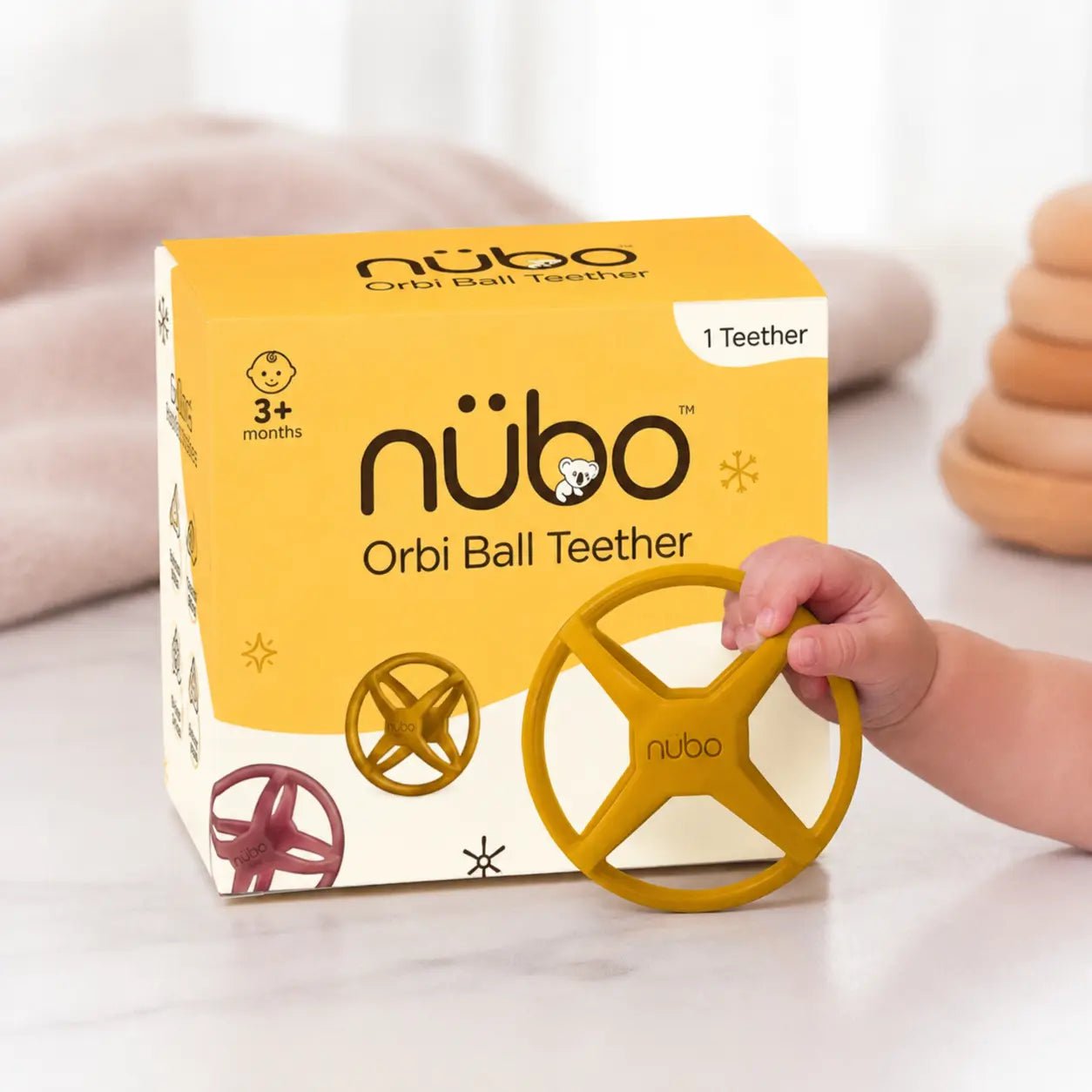
Orbi Ball Silicone Sensory Teether
BIS IS 9873 Certified | Multi-textured sensory zones | 3+ months
₹599
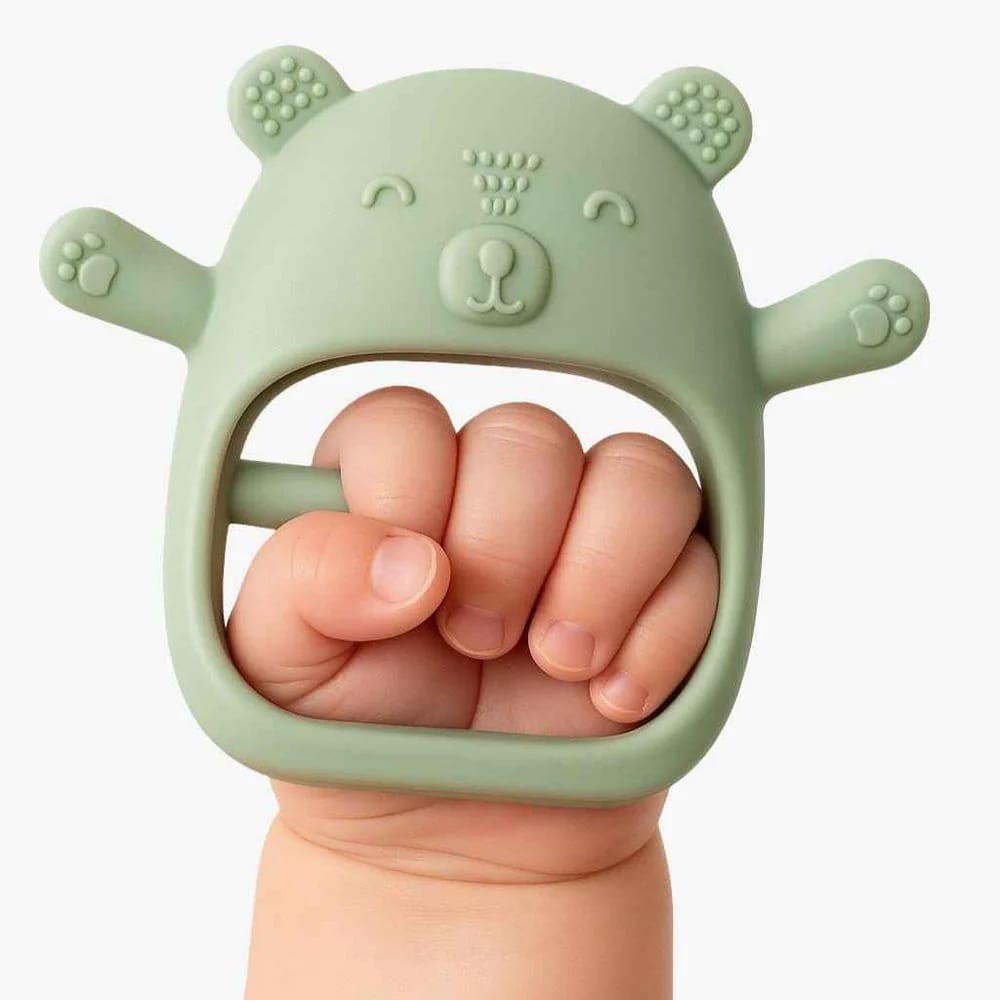
Similarly, sensory tools like the Kiko No-Drop Newborn Teether combine ease-of-use (the no-drop design reduces frustration during teething) with safe, textured surfaces that support proprioceptive feedback to the developing brain.
FREQUENTLY ASKED QUESTIONS
Q: Is BIS IS 9873 certification mandatory for toys sold in India?
A: Yes. BIS IS 9873 is India's legally mandated safety standard for toys and articles intended for children under 14 years. Any toy or baby product sold in India should carry BIS certification. If a product doesn't claim BIS certification, ask the seller for proof or reconsider buying it.
Q: What's the difference between "FDA-grade silicone" and a "BIS-certified silicone teether"?
A: FDA-grade refers to the raw material's purity standard; it doesn't mean the finished product has been tested as a baby toy. BIS IS 9873 certification means the complete product—teether, packaging, adhesives, everything—has been tested for safety, chemical leaching, and durability. In India, BIS certification is the legal requirement. Both labels on one product is ideal but not always necessary if BIS is present.
Q: Can a product be "non-toxic" without certification?
A: Not reliably. "Non-toxic" is marketing language without legal definition. Any brand can claim it. Certification (BIS, EN71) involves independent third-party testing and measurable limits on specific chemicals. If a product says "non-toxic" but has no certification, it hasn't been independently verified. Look for BIS or EN71 badges, not just claims.
Q: Why do some silicone teethers smell chemical, and is that a safety concern?
A: A slight smell may come from residual solvents or uncrosslinked silicone oligomers. This is common in newly manufactured items and often fades. However, a strong, persistent chemical odor can indicate poor curing or low-quality material. If the smell doesn't fade after a few days of airing out, or if your baby develops any rash or irritation, discontinue use and contact the brand. Certified products are less likely to have this issue.
Q: What age can babies safely use silicone teethers, and does age matter for certification?
A: Most silicone teethers are safe from birth or 2+ months onward, depending on design. The safety standard (BIS IS 9873) applies to all ages under 14 years. However, younger babies (under 3 months) need teethers designed for their grip strength and mouth size. Certification doesn't change by age, but product design does. Check the age label for the specific teether.
Q: If a product is certified in Europe (EN71), is it automatically safe to buy in India?
A: EN71 is a strong certification and indicates high safety standards. However, in India, BIS IS 9873 is the legal requirement. A product with EN71 alone is not legally compliant for sale in India. Look for BIS certification specifically. Some international brands carry both; that's the gold standard. If considering an imported product, confirm it has BIS or check with the seller about compliance status.
CONCLUSION
Safety standards for baby products aren't bureaucratic overhead—they're the scaffolding that protects your child's developing brain during its most plastic, most vulnerable period. When you choose a silicone teether, cloth book, or sensory toy with proper BIS IS 9873 certification (or better yet, dual BIS + EN71 certification), you're doing more than avoiding toxins. You're creating the conditions for healthy neural development, robust sensorimotor learning, and safe exploration.
The good news: understanding these standards is straightforward once you know what to look for. Demand BIS certification, ask for test reports if you're uncertain, and choose brands (like Nubokind) that are transparent about their testing and materials. Your baby deserves both safety and stimulation—and with the right certified products, you can confidently provide both.
When you're building your baby's early sensory toolkit, let certification be your compass. Then layer in intentional design—varied textures for teethers, high-contrast visuals for newborn books—and you've created an environment where your baby's brain can truly thrive.


leave a comment
This site is protected by hCaptcha and the hCaptcha Privacy Policy and Terms of Service apply.