
Quick Answer
At 3 months, choose soft silicone or ring teethers with safe, BIS-certified materials. Early teething signs may appear around this age. Focus on teethers that support grasping and oral motor development while remaining safe for your baby's sensitive gums.
DO 3-MONTH-OLDS ACTUALLY TEETHE?
Many parents are surprised to learn that teething can begin as early as 3 months old, even though the first teeth typically don't emerge until around 6 months. At 3 months, your baby's body may already be preparing for the teething journey ahead.
Early signs of teething at 3 months include increased drooling, chewing on fingers or objects, slight gum swelling, and sometimes mild fussiness. Not every baby shows all these signs, and some may show none at all—and that's completely normal too.
Having an age-appropriate teether on hand gives your baby a safe outlet for these natural impulses. This is especially important during this sensitive developmental window when babies are refining their hand-to-mouth coordination.
WHAT MAKES A SAFE TEETHER FOR 3-MONTH-OLDS?
Safety is the foundation of choosing any infant teether. Look for teethers that meet Indian safety standards, particularly BIS certification, which ensures the product has been tested for harmful chemicals, choking hazards, and durability.
Key safety features for a 3-month-old teether include:
- Soft, flexible silicone material that won't harm developing gums
- No small parts that could pose a choking risk
- Easy to grip for tiny hands still developing hand coordination
- Easy to clean — teethers go in mouths frequently and must be hygienic
- Non-toxic, BPA-free construction from reputable manufacturers
Teethers made in India with transparent sourcing information give you extra peace of mind. Research indicates that silicone teethers are particularly popular among experts for newborns and infants because of their safety profile and flexibility.
TYPES OF TEETHERS IDEAL FOR 3-MONTH-OLDS
Different teether designs serve different developmental needs. Here's what works well at 3 months:
| Teether Type | Best For | Why It Suits 3-Month-Olds |
|---|---|---|
| Ring Teether | Grasping, oral motor development | Lightweight, easy to hold, stimulates palm grasp reflex |
| Silicone Teether | Sensory exploration, teething relief | Soft texture, varied surfaces for safe mouthing |
| No-Drop Teether | Hand-to-mouth skills, floor play | Attached clasp prevents constant floor drops, hygienic |
| Textured Teether | Sensory development, gum comfort | Different textures engage curiosity and provide varied relief |
Ring teethers are particularly popular for 3-month-olds because they're sized perfectly for small hands and encourage the natural grasping reflex at this age. Silicone teethers with varied textures add sensory interest beyond just teething relief, supporting your baby's overall sensory development.
If you're concerned about teethers constantly falling to the floor—a real parenting frustration—no-drop teethers with attached clasps can be a game-changer for maintaining hygiene and reducing the need for constant washing.
RECOMMENDED TEETHER OPTIONS FOR YOUR 3-MONTH-OLD
Choosing between options can feel overwhelming, so here are some thoughtfully designed teethers that support your baby's developmental stage:
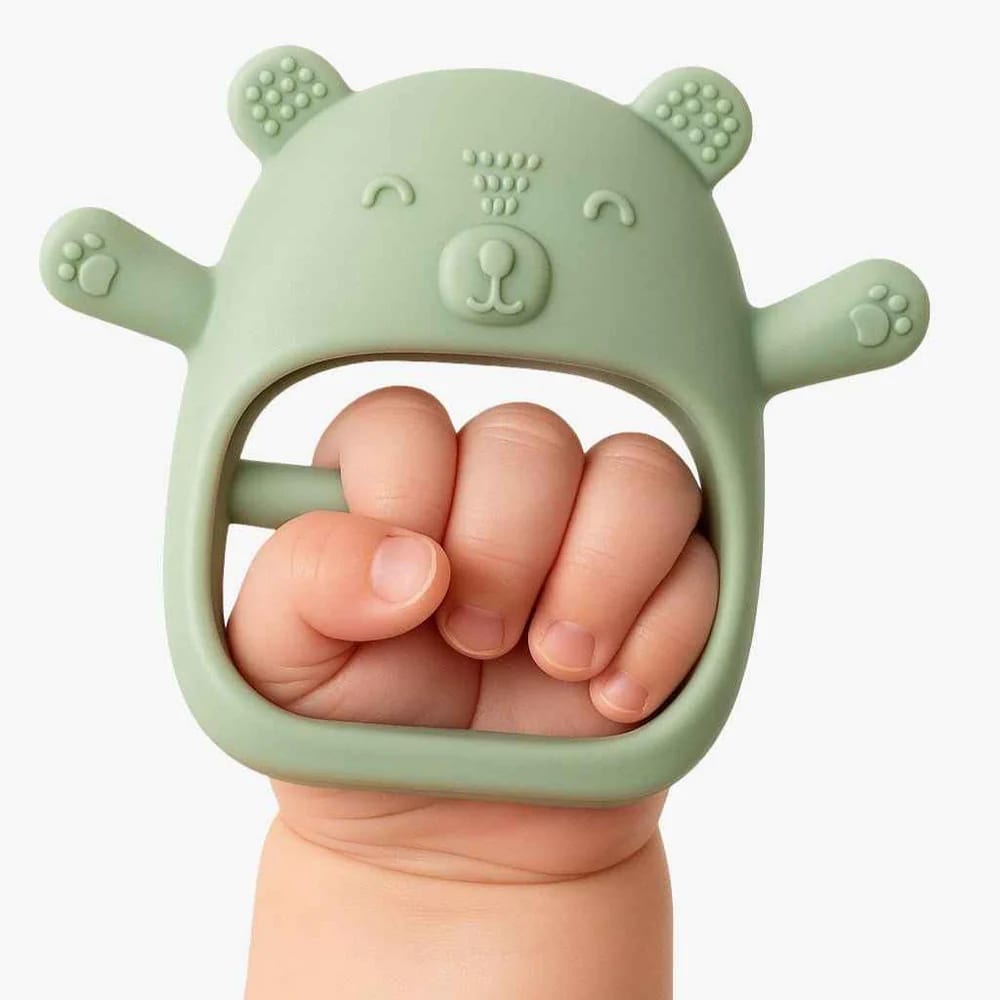
Perfect for 3-month-olds still mastering their grip, the Kiko No-Drop Newborn Teether combines ease of holding with the security of a no-drop clasp. This means less time chasing teethers off the floor and more time supporting your baby's hand-to-mouth coordination.
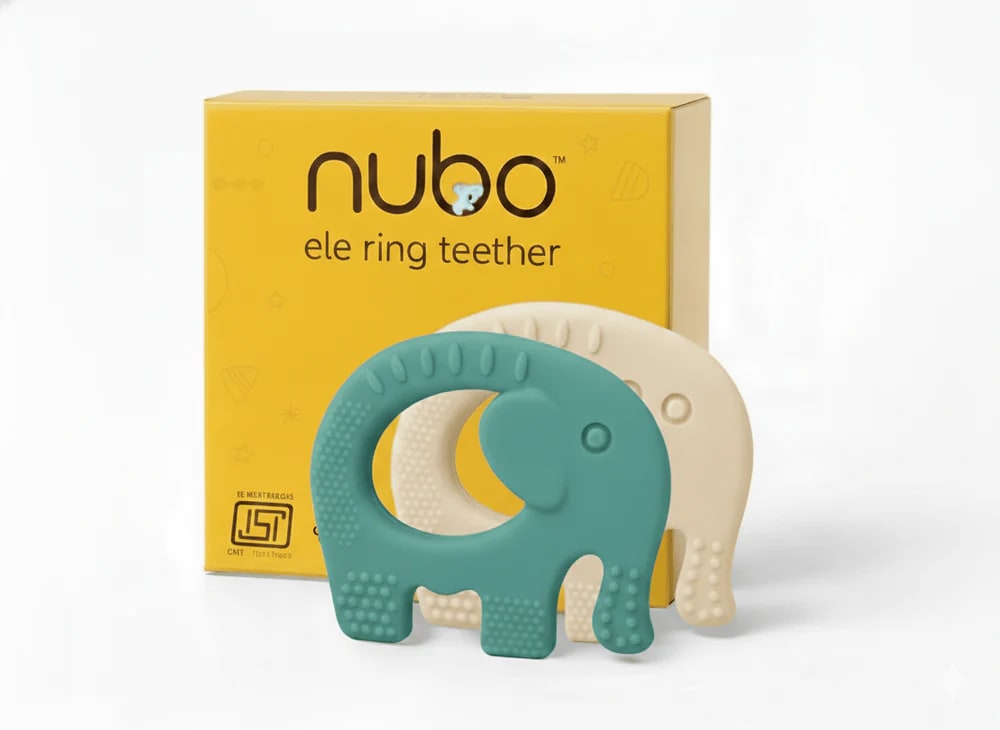
The ELE Ring Teether Set offers variety with multiple textures in one set. The ergonomic ring design is ideal for tiny hands to grip, and the different textures on each teether support sensory exploration—a key developmental milestone at 3 months.
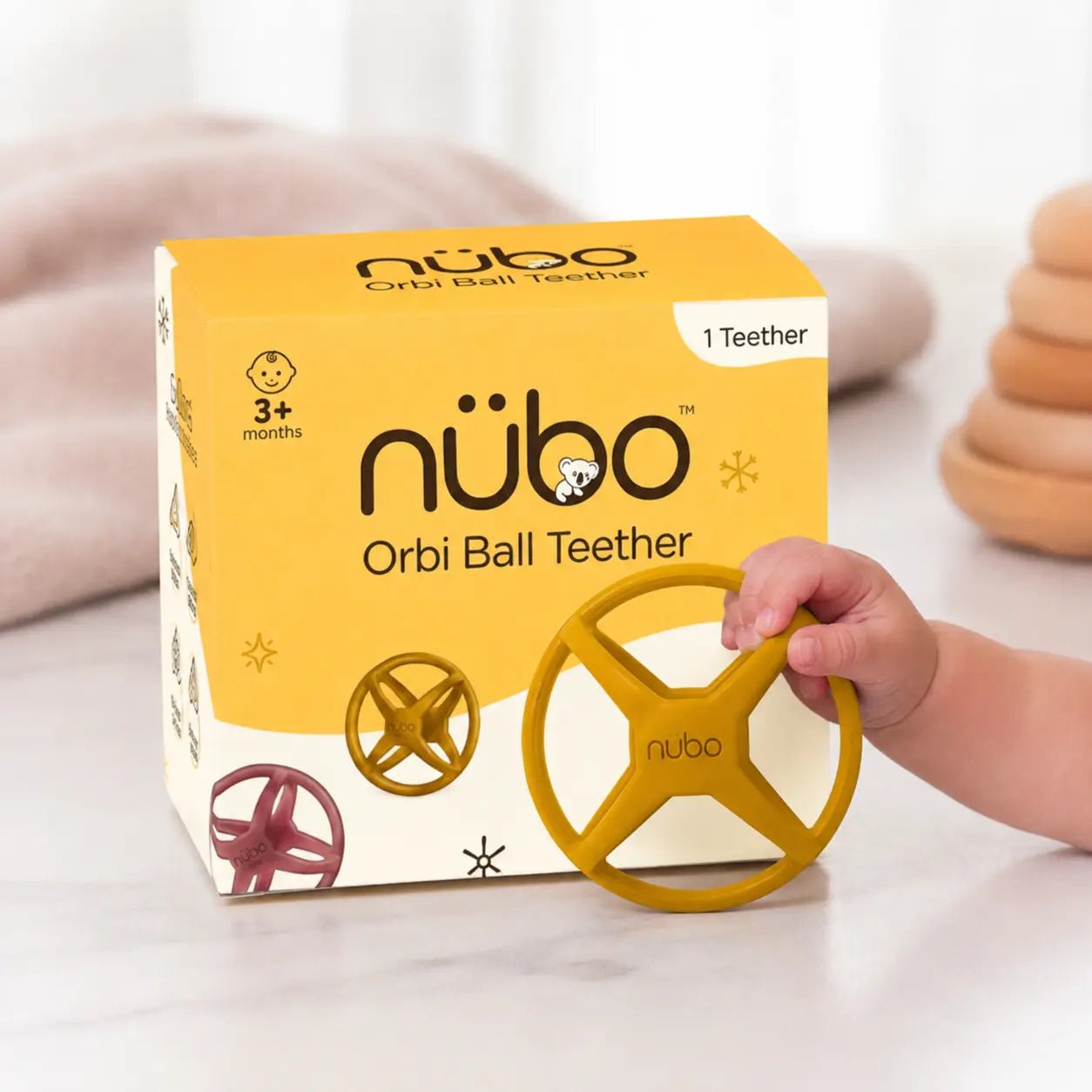
As your baby becomes more curious about their world, the Orbi Ball Silicone Sensory Teether delivers varied texture exploration in one palm-sized shape. The soft bumps and ridges provide gentle gum comfort while engaging your baby's emerging sensory awareness.
All of these teethers are designed with Montessori principles in mind—supporting natural development without overstimulation. They're also made in India and backed by BIS certification, giving you confidence in their safety and quality.
HOW TO USE AND CARE FOR YOUR BABY'S TEETHER
Once you've chosen a teether, using it safely maximizes its benefits for your 3-month-old:
Cleaning & Hygiene
Teethers should be washed regularly since they spend so much time in your baby's mouth. Wash with warm, soapy water daily and air dry. Some silicone teethers can be sterilized in boiling water—always check the manufacturer's instructions. This practice prevents bacterial buildup and keeps your baby healthy.
Temperature & Storage
At 3 months, your baby's teething discomfort is usually mild, so room-temperature teethers are typically sufficient. Some parents refrigerate teethers for a cooling effect, but never freeze them solid—this can harm sensitive gums. Store in a clean, dry place away from direct sunlight.
Supervision & Safety
Always supervise teether use at this age. While modern teethers are designed without choking hazards, keeping an eye on your baby ensures she's using it correctly and comfortably. Remove the teether if your baby seems uninterested or uncomfortable.
Rotation & Variety
Having 2–3 different teethers allows you to rotate them, keeping your baby's interest fresh and providing varied sensory experiences. This variety supports developmental curiosity at 3 months.
- Look for BIS certification: This Indian safety standard ensures your teether has been tested for harmful chemicals, phthalates, and choking hazards. It's your easiest guarantee of safety.
- Choose soft silicone over hard plastic: At 3 months, your baby's gums are sensitive. Soft, flexible materials are gentler and more comfortable for emerging teeth.
- Keep it clean: Wash teethers daily with warm, soapy water. Since babies mouth everything at this age, hygiene is non-negotiable.
- Avoid liquid-filled or teethers with small attachments: These can pose safety risks. Stick to solid, one-piece designs without detachable parts.
- Have a backup: Two or three teethers let you rotate them, keep one clean while using another, and prevent meltdowns when one goes missing.
- Trust your baby's cues: Not every baby is ready for teethers at exactly 3 months. Some show signs earlier, others later. Offer one when you notice chewing or drooling, and don't worry if she's not interested yet.
TEETHERS VS. OTHER ORAL MOTOR TOYS AT 3 MONTHS
You might wonder if teethers are truly necessary at 3 months, or if other toys can fill the same role. The answer lies in understanding what makes teethers unique for this developmental stage.
While soft rattles and cloth toys are great for sensory play, teethers are specifically designed for oral motor development and gum comfort. Their shapes, textures, and materials are engineered to be safe for mouthing—something babies naturally do regardless of whether teeth are emerging.
That said, your 3-month-old can absolutely benefit from a mix of toys. High-contrast visual toys like our guide on choosing teethers by age support cognitive development alongside physical play. A well-rounded play environment includes teethers, rattles, cloth books, and tummy-time toys working together.
WHEN TO UPGRADE TO LARGER TEETHERS
As your 3-month-old grows, her grip strength and hand coordination will improve. By around 5–6 months, you might notice she can hold larger teethers more confidently and show more intense interest in teething relief.
Ring teethers remain suitable for many months, but you may eventually introduce larger or more textured options as your baby's motor skills advance. For a comprehensive age-based guide, our detailed teether guide by age covers every stage from newborn to 12 months, helping you understand when and how to evolve your teether selection.
There's no rush to upgrade if what you have is working well. The best teether is the one your baby uses comfortably and safely at their current developmental stage.
FREQUENTLY ASKED QUESTIONS
Q: Can a 3-month-old baby actually teethe?
A: Yes, some babies show early teething signs as early as 3 months, though teeth typically don't erupt until 6+ months. Early signs include drooling, chewing, and gum sensitivity. Even if your baby isn't actively teething, having a teether supports natural oral motor development at this age.
Q: What's the difference between a teether and a regular toy?
A: Teethers are specifically designed with safe, mouth-friendly materials and shapes to support gum comfort and oral motor development. Regular toys may have small parts or harder textures that aren't ideal for constant mouthing. Teethers meet safety standards like BIS certification for use in babies' mouths.
Q: Is silicone safe for my 3-month-old?
A: Yes, food-grade silicone is considered one of the safest materials for infant teethers. It's BPA-free, non-toxic, and soft enough for sensitive gums. Always choose teethers from reputable manufacturers with BIS certification to ensure the silicone meets safety standards.
Q: Should I refrigerate my teether?
A: Many parents find that cool teethers provide soothing relief. You can refrigerate (not freeze) teethers for a brief chilling effect. Never freeze solid, as this can damage sensitive gums. Room-temperature teethers work fine and are safest.
Q: How often should I replace my baby's teether?
A: With proper care, a quality silicone teether lasts many months. Inspect regularly for cracks, discoloration, or damage. If you notice any signs of wear or contamination you can't clean, it's time for a replacement. Otherwise, a well-maintained teether can be used throughout the first year.
Q: What if my baby isn't interested in a teether at 3 months?
A: Not all babies show teething interest at 3 months, and that's completely normal. Keep the teether available, but don't force it. Some babies are more interested in hands, fingers, or other objects at this age. As teething progresses (around 6+ months), she may become more interested.
CONCLUSION
Choosing a safe, age-appropriate teether for your 3-month-old is one of the simplest yet most supportive decisions you can make for her early development. Whether your baby is showing early teething signs or simply exploring her world through mouthing, a quality teether backed by BIS certification provides both comfort and peace of mind.
Look for soft silicone options with thoughtful designs—ring teethers, no-drop styles, and textured varieties all serve different needs at this stage. Prioritize safety through certification, keep it clean, and trust your baby's cues about when and how much she wants to use it.
As you continue on this parenting journey, remember that teethers are just one part of your baby's sensory and developmental toolkit. For more detailed guidance on safe teething practices and materials, we have resources designed to support you at every stage.
Your 3-month-old is growing and changing every day. By equipping yourself with the right tools and knowledge, you're giving her the foundation she needs to explore safely, develop her motor skills, and move toward the teething months ahead with comfort and confidence.


leave a comment
This site is protected by hCaptcha and the hCaptcha Privacy Policy and Terms of Service apply.