
Tummy time isn't just playtime—it's a critical window for your baby's brain and body to develop strength, coordination, and spatial awareness. Here's what the science says and how to do it right from day one.
THE SURPRISING NEUROSCIENCE BEHIND TUMMY TIME
Here's what might surprise you: babies who skip tummy time experience slower development of the neural pathways responsible for movement, balance, and even fine motor control—the very skills they'll need to crawl, sit, write, and play sports years later.
Tummy time isn't a trend or a parenting fad. It's a window into how your baby's brain physically rewires itself through movement. When your baby lifts their head, pushes against the floor, or reaches for a toy during tummy time, their brain is forming new connections—a process called neural plasticity—that strengthens the neural circuits controlling strength and coordination.
This is particularly important in the first six months, when your baby's brain is growing at its fastest rate and is most responsive to sensory input and movement-based learning.
WHAT THE RESEARCH SAYS ABOUT MOTOR DEVELOPMENT
Research published in developmental journals has consistently shown that infants who engage in regular tummy time reach critical motor milestones—including head control, rolling, sitting, and crawling—on more predictable timelines than those with limited floor time. The reason is grounded in how the vestibular system (your baby's inner ear balance and spatial awareness center) develops.
During tummy time, gravity works against your baby's body, forcing the anti-gravity muscles—those in the neck, shoulders, back, and core—to activate and strengthen. This isn't about "getting stronger" in the traditional sense; it's about your baby's proprioceptive system (their sense of where their body is in space) building a map of their physical capabilities.
| Developmental Milestone | Typical Age (with consistent tummy time) | What It Shows |
|---|---|---|
| Lifts head briefly | 4–6 weeks | Neck muscle strength |
| Lifts head and chest | 8–12 weeks | Upper back engagement |
| Rolls from tummy to back | 4–6 months | Core and limb coordination |
| Begins crawling prep | 5–8 months | Full-body motor integration |
What this means for your baby: Tummy time isn't optional if you want to support healthy motor development. Even 10–15 minutes a day (broken into smaller sessions) makes a measurable difference.
WHEN CAN YOU START TUMMY TIME WITH A NEWBORN?
You can begin tummy time within days of birth—even during the newborn phase when your baby still has the umbilical cord stump. Yes, really. Start small: just 1–2 minutes on your own chest or a firm, flat surface while you supervise closely.
The key is supervised, intentional placement. Your newborn doesn't need a formal "tummy time session" at first; they just need opportunities to be on their belly during natural moments—skin-to-skin on your chest, on a play mat while you're beside them, or on your lap.
By 4–6 weeks, you can gradually increase to 3–5 minute sessions, several times a day. By 3 months, aim for 15–20 minutes total per day (spread across multiple sessions). This doesn't have to happen all at once; even two 10-minute sessions count.
What this means for your baby: Start small, stay consistent, and build gradually. Your newborn will naturally build tolerance, and their neck muscles will strengthen week by week.
FIVE CRITICAL BENEFITS OF TUMMY TIME FOR YOUR BABY
1. Strengthens Head, Neck, and Core Muscles
The anti-gravity muscles that control your baby's head, neck, shoulders, and back are activated during tummy time. Over weeks, this builds the strength needed for head control—a foundation for all later movement milestones.
2. Prevents Flat Head Syndrome (Plagiocephaly)
Babies who spend too much time on their backs can develop a flat spot on the back of their skull. Tummy time redistributes pressure and allows normal skull development. The American Academy of Pediatrics recommends tummy time as a key prevention strategy.
3. Supports Healthy Hip and Shoulder Development
Tummy time allows your baby's hips and shoulders to develop naturally, free from the pressure of their own body weight in one direction. This supports balanced joint development and sets up good posture patterns early.
4. Builds Proprioceptive Awareness
As your baby pushes against the floor or reaches for a toy, their sensory system registers where their limbs are and how their body moves. This proprioceptive mapping is crucial for later skills like sitting, standing, and walking.
5. Encourages Visual Exploration and Cognitive Engagement
When on their tummy, your baby naturally lifts their head to look around. This new visual perspective—looking up at faces, reaching for toys at a different angle—engages their visual cortex and encourages reaching, grasping, and early problem-solving behaviors.
What this means for your baby: Tummy time is an investment in motor, sensory, and cognitive development—not a optional activity.
HOW TO PRACTICE TUMMY TIME: A PARENT'S STEP-BY-STEP GUIDE
Choose a Safe Surface
Use a firm, flat surface: a playmat on the floor, a firm couch cushion, or a play gym. Avoid soft surfaces like pillows, quilts, or couches where your baby could sink or overheat. The surface should be clean and free of small objects.
Start on Your Chest
For tiny newborns (first 4–6 weeks), skin-to-skin tummy time on your chest while you're reclined or sitting upright is perfect. You're bonding, your baby gets the proprioceptive input, and you're right there supervising. No fancy setup needed.
Use Toys for Engagement
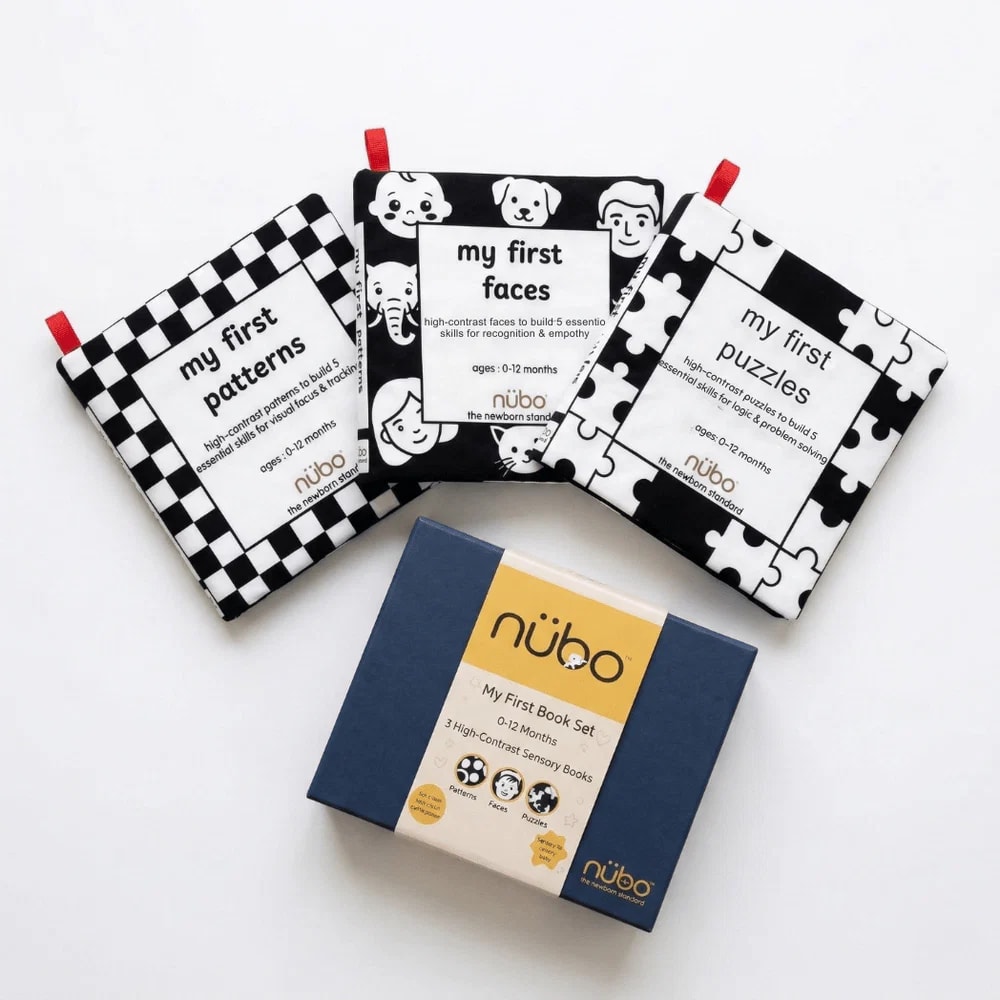
Place a toy—like a high-contrast cloth book or sensory item—a few inches in front of your baby's face. This motivates them to lift their head and focus, naturally engaging the muscles you want to strengthen. High-contrast black and white images are especially effective for newborn vision, which is still developing. Your baby's eyes at 0–3 months are drawn to bold patterns and faces.
Make It Social
Get down on the floor with your baby. Make faces, talk, sing. Tummy time is social time, not just exercise time. Your presence makes it enjoyable and rewarding.
Watch for Readiness Cues
If your baby is fussy, hungry, or overstimulated, tummy time won't go well. Choose a time when they're alert, fed, and calm—usually 20–30 minutes after feeding, when they're in a content, playful mood.
Gradually Extend Duration
Start with 1–2 minutes. By 4 weeks, aim for 3–5 minutes per session. By 12 weeks, work toward 15–20 minutes total (in multiple sessions). Don't force it; let your baby's tolerance guide the pace.
What this means for your baby: Tummy time works best when it's frequent, short, supervised, and fun—not a chore.
CRITICAL SAFETY GUIDELINES FOR TUMMY TIME
- Always supervise directly. Never leave your baby unattended during tummy time, even for a few seconds. Stay within arm's reach.
- Use a firm, flat surface. Avoid soft pillows, couches, or bedding where baby could sink or face suffocation risk.
- Check room temperature. Your baby on their tummy can overheat more easily than on their back. Keep the room comfortable and avoid bundling.
- Avoid right after feeding. Wait 20–30 minutes after feeding to reduce the risk of spit-up or discomfort.
- Stop if baby shows distress. If your baby is crying inconsolably, very fussy, or showing signs of discomfort, pick them up and try again later. Tummy time should feel positive.
- Remove hazards. No loose blankets, pillows, bumpers, or small objects within reach. Keep the space clear and minimal.
- Back sleeping for naps and bedtime. Tummy time is for supervised playtime only. Always place your baby on their back for sleep to reduce the risk of sudden infant death syndrome (SIDS).
What this means for your baby: Tummy time is safe when supervised, intentional, and done on a firm, clear surface. These guidelines aren't restrictions—they're the foundation of confident, worry-free playtime.
TOYS AND ACTIVITIES THAT SUPPORT TUMMY TIME DEVELOPMENT
The best tummy time toys are those that engage your baby's developing senses and motivate movement—reaching, lifting the head, and exploring visually.
High-Contrast Visuals
Your newborn's vision is still developing. At birth, babies can see roughly 8–12 inches away and are drawn to high-contrast images—especially black and white patterns and bold faces. Placing a high-contrast cloth book set in front of your baby during tummy time harnesses this innate visual preference and encourages head lifting and focus.
Soft, Reachable Toys
Place soft toys or teethers within reaching distance. As your baby's coordination develops, reaching for these toys builds arm and hand strength. Textured teethers like the ELE Ring Teether Set offer tactile feedback and can be brought to the mouth once your baby begins grasping (around 3–4 months).
Sensory and Cloth Books
Infant cloth books designed with high-contrast images and varied textures support visual development, tactile exploration, and early language development when you read or describe the images aloud.
Simple Sensory Kits
A curated newborn sensory kit—combining high-contrast flashcards, cloth books, and safe sensory toys—takes the guesswork out of what to use. These are designed with developmental milestones in mind.
What this means for your baby: The best toys are those that match your baby's developmental stage and encourage active looking, reaching, and touching—not passive watching.
TROUBLESHOOTING: WHEN TUMMY TIME ISN'T GOING SMOOTHLY
My Baby Cries Every Time I Put Them on Their Tummy
This is normal, especially in the first few weeks. Your baby's proprioceptive system is still adjusting to gravity. Start with 30 seconds on your own chest and gradually build. Pair tummy time with singing, talking, or a gentle hand on their back. Make it feel safe and connected, not isolated.
My Baby Falls Asleep During Tummy Time
Falling asleep during tummy time is actually a positive sign—it means your baby feels safe. However, once they're asleep, gently roll them onto their back for sleeping. Use tummy time sessions when your baby is alert and playful to get maximum engagement and muscle activation.
My Baby Seems Frustrated and Won't Lift Their Head
Frustration is sometimes part of the process, but don't force it. If your baby is genuinely distressed, pick them up and try again later. As your baby's strength increases (usually by 6–8 weeks), head lifting becomes easier and less frustrating.
I'm Worried My Baby Is Behind Because They Aren't Rolling Yet
Rolling typically happens around 4–6 months, not earlier. Every baby develops at their own pace. Consistent tummy time supports the development of the motor skills needed for rolling, but genetics, temperament, and individual neural wiring all play a role. If you have concerns about development, talk to your pediatrician—not because you're doing something wrong, but to rule out any underlying issues.
What this means for your baby: Challenges during tummy time are normal. Stay patient, keep sessions short and positive, and trust that consistent, gentle practice pays off.
TUMMY TIME SCHEDULE: NEWBORN TO 6 MONTHS
| Age | Duration per Session | Frequency | Total per Day | Focus |
|---|---|---|---|---|
| 0–4 weeks | 1–2 minutes | 2–3 sessions | 3–5 minutes | On your chest; skin-to-skin bonding |
| 4–8 weeks | 3–5 minutes | 3–4 sessions | 10–15 minutes | On a playmat; introduce toys |
| 8–12 weeks | 5–10 minutes | 2–3 sessions | 15–25 minutes | Active engagement; reaching practice |
| 3–6 months | 10–20 minutes | 2–3 sessions | 30–45 minutes | Rolling, crawling prep; varied surfaces |
Note: These are guidelines, not strict rules. Some days your baby might do more, some days less. Consistency matters more than exact duration. Even 10 minutes of daily tummy time is significantly better than none.
What this means for your baby: Follow your baby's cues and gradually increase time as they grow stronger and more comfortable.
FREQUENTLY ASKED QUESTIONS
Q: Is Tummy Time Necessary if My Baby Dislikes It?
A: Yes, tummy time is important for motor development even if your baby protests. However, "necessary" doesn't mean forced. Start small, keep sessions positive, and gradually build tolerance. If your baby has a medical condition (like reflux), talk to your pediatrician about modifications. Most babies learn to enjoy tummy time with consistent, gentle practice.
Q: Can Tummy Time Cause Flat Head Syndrome?
A: No—tummy time actually prevents flat head syndrome. Babies who spend too much time on their backs develop flat spots. Tummy time redistributes pressure and supports healthy skull development. Aim for a balance: back sleeping for safety, tummy time for development.
Q: What's the Difference Between Tummy Time and Supervised Floor Play?
A: Tummy time is intentional, supervised time on your baby's belly to build specific motor skills. Floor play is broader and can include any age-appropriate activity on a safe surface. Both are valuable. Tummy time is the foundational practice; floor play includes rolling, crawling, and exploration as your baby grows.
Q: Can I Do Tummy Time Right After Feeding?
A: Wait 20–30 minutes after feeding. Tummy time on a full stomach can increase the risk of spit-up or discomfort. Choose a time when your baby is fed, calm, and alert for the best experience.
Q: Does My Newborn Really Need Special Tummy Time Toys?
A: No special toys are required, but strategically placed items make tummy time more engaging. A high-contrast cloth book or even a crumpled piece of paper can motivate your baby to lift their head and reach. Simple is often best; the goal is engagement and movement, not having a toy collection.
Q: When Can I Stop Doing Tummy Time?
A: You don't need to "stop" per se—tummy time naturally evolves into floor play, crawling, and independent movement as your baby grows. By 6 months, if your baby is rolling and beginning to move independently, traditional tummy time sessions become less critical. But letting your older baby spend time on their belly during play is always developmentally supportive.
CONCLUSION
Tummy time is one of the most evidence-backed practices for supporting your newborn's motor, sensory, and cognitive development. It's not complicated or expensive—it's simply intentional time on your baby's belly, supervised, with engagement and support from you.
Start small (even 1–2 minutes on your chest counts), keep it positive and consistent, and watch as your baby's strength, coordination, and confidence build week by week. By 6 months, with regular tummy time, your baby will have the motor foundation they need to roll, sit, crawl, and play with curiosity and confidence.
If you want to make tummy time more engaging, consider pairing it with sensory tools designed for early development—high-contrast books, toys, and flashcards that align with how newborn vision and motor skills develop. But remember: your presence, your voice, and your engagement matter far more than any toy.
Your baby doesn't need perfection—they need consistency, safety, and your face nearby. That's tummy time at its best.


leave a comment
This site is protected by hCaptcha and the hCaptcha Privacy Policy and Terms of Service apply.