
Your baby's first year is when their brain develops faster than any other time in their life. Learn which sensory toys, teethers, and cloth books naturally support visual tracking, motor skills, and cognitive growth—without a single screen.
WHY SCREEN-FREE PLAY MATTERS IN THE FIRST YEAR
You've probably heard the buzz about digital detox. But here's the real story: the first 12 months are when your baby's visual cortex, motor neurons, and sensory pathways are literally being wired. Every touch, sound, and sight creates connections that shape how they learn for years to come.
Research indicates that hands-on, tactile play during this window supports brain development far more effectively than passive screen time. When your baby grabs a teether, explores a high-contrast book, or reaches for a sensory toy, their brain is busy mapping cause-and-effect, building hand-eye coordination, and learning about textures, shapes, and colors.
The good news? You don't need expensive gadgets or complicated systems. Simple, purposeful toys inspired by Montessori principles do the heavy lifting. And many Indian parents are discovering that this approach feels more intuitive, more connected, and honestly, more rewarding.
NEWBORN TO 3 MONTHS: CONTRAST, TEXTURE, AND GRIP
Newborns are born with limited vision. They see best in high-contrast black, white, and red patterns at a distance of about 8–10 inches. This is not a coincidence—it's nature's way of helping them track faces and bond with caregivers.
High-contrast cloth books are perfect for this stage. Soft, tactile, and safe to chew on, they give your baby visual stimulation while developing their grip reflex. Pair these with simple silicone teethers designed for tiny hands. A good newborn teether should be:
- Soft enough to be gentle on delicate gums
- Easy for small fingers to grasp
- Designed with no small parts or choking hazards
- Made from food-grade, BIS-certified materials
At this stage, your baby is also learning to track movement with their eyes. When you show them a cloth book and slowly move it side to side, you're building their visual tracking skills. This is foundational for reading and learning later on.
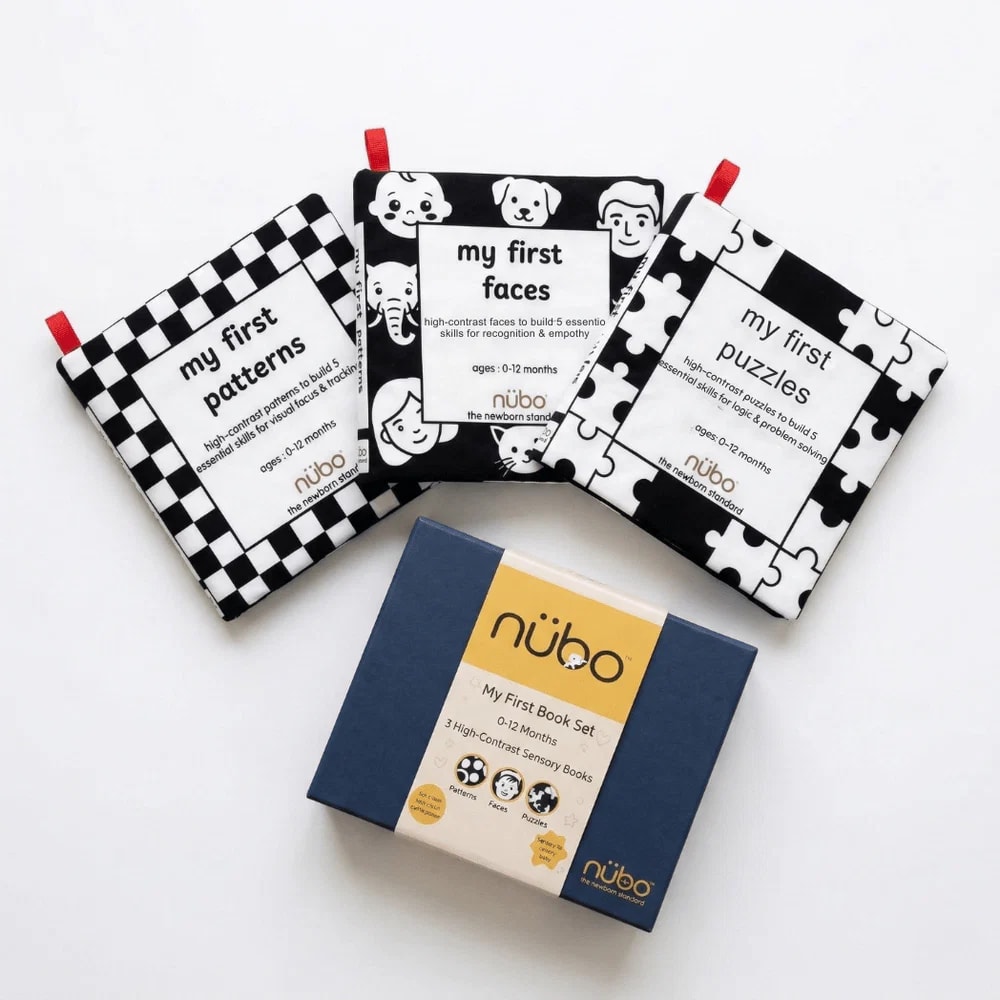
High Contrast Cloth Book Set
BIS Certified | Soft fabric | High-contrast patterns | Newborn to 6 months
₹549
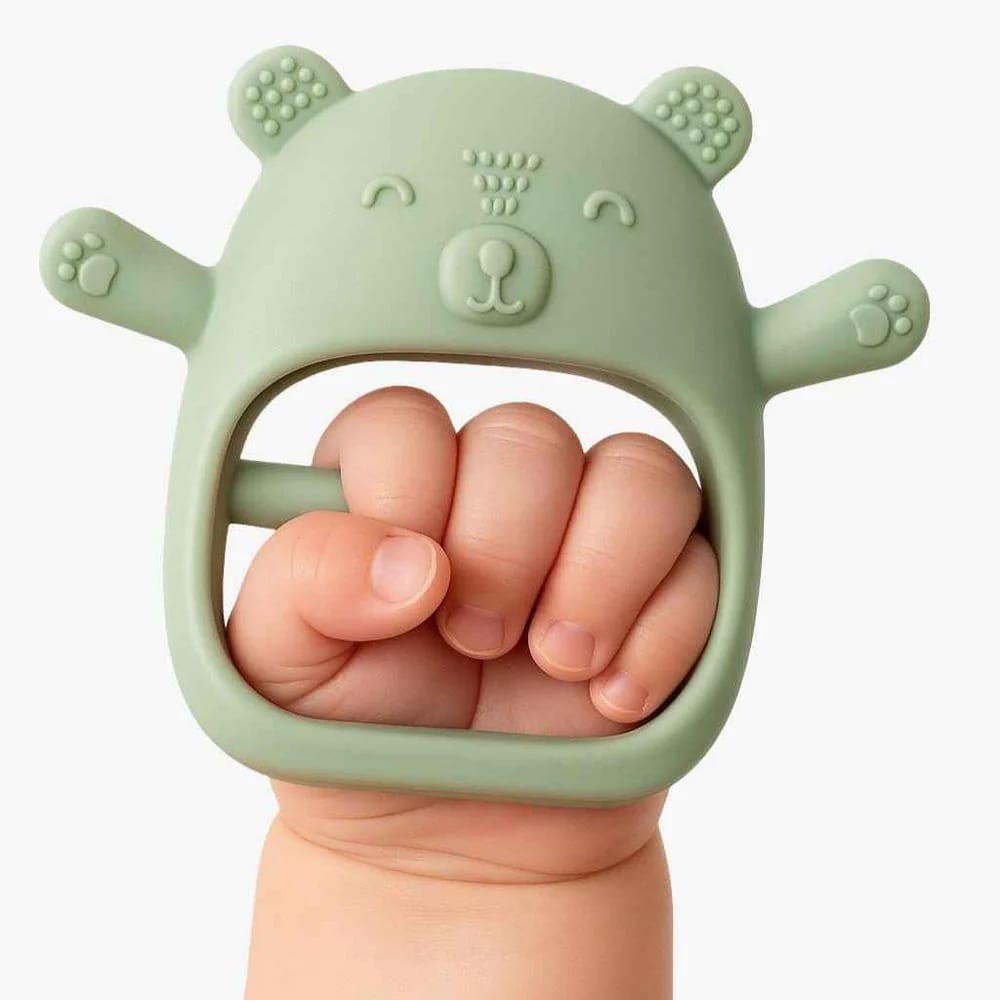
3 TO 6 MONTHS: GRASPING, SHAKING, AND CAUSE-AND-EFFECT
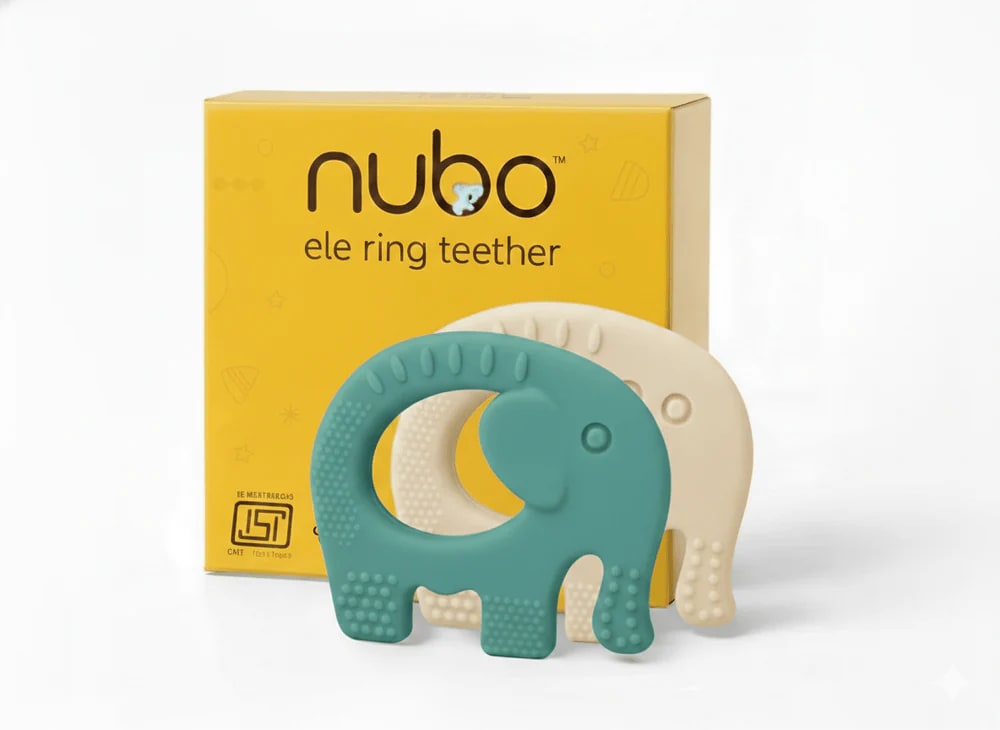
By three months, your baby's world is expanding. Their hands are getting stronger, their coordination is improving, and they're starting to understand that their actions cause reactions. This is when simple ring teethers and sensory toys with varied textures become absolute superstars.
Look for toys that are lightweight enough for little hands to lift and manipulate. Ring teethers are ideal because they're easy to grab, fun to shake, and provide gentle relief when teething begins (around 4–6 months for many babies). The variety of textures—smooth, bumpy, ridged—helps your baby's brain build a library of tactile sensations.
At this age, your baby is also developing their ability to transfer objects from hand to hand. Simple cloth books with different textures (crinkly, silky, bumpy) encourage this cross-body coordination and keep them engaged longer. Every time they grab and explore, they're building motor skills and neural pathways.
| Age Range | Key Developmental Milestones | Best Toy Types |
|---|---|---|
| 0–3 months | Visual tracking, grip reflex, visual stimulation | High-contrast books, soft newborn teethers |
| 3–6 months | Hand-eye coordination, grasping, cause-and-effect | Ring teethers, textured cloth toys, sensory kits |
| 6–9 months | Transferring objects, raking grasp, independent exploration | Wooden rings, stacking toys, crinkle toys, teethers |
| 9–12 months | Pincer grasp, object permanence, intentional movement | Stacking rings, sensory toys, cloth books, multi-texture toys |
6 TO 12 MONTHS: INDEPENDENCE, STACKING, AND PROBLEM-SOLVING
The second half of the first year is when babies become little explorers. They're learning object permanence (understanding that things exist even when hidden), developing their pincer grasp (thumb and finger), and starting to solve simple problems. This is the sweet spot for toys that encourage independent play.
Wooden stacking rings, cloth books with more complex patterns, and multi-sensory kits become invaluable. Your baby may start to understand that stacking one ring on top of another creates a tower—and that knocking it down is hilarious. They're not just playing; they're learning physics, cause-and-effect, and building concentration.
Teethers remain essential during this stage. Many babies are actively teething between 6 and 12 months, and a variety of textures—soft silicone, firmer rings, bumpy surfaces—provides relief and stimulation. The key is having options so your baby can self-direct their play and learning.
Consider introducing a sensory kit at this stage—a curated collection of toys with different textures, sounds, and colors. This approach, inspired by Montessori principles, lets your baby choose what to explore, building confidence and independence naturally.
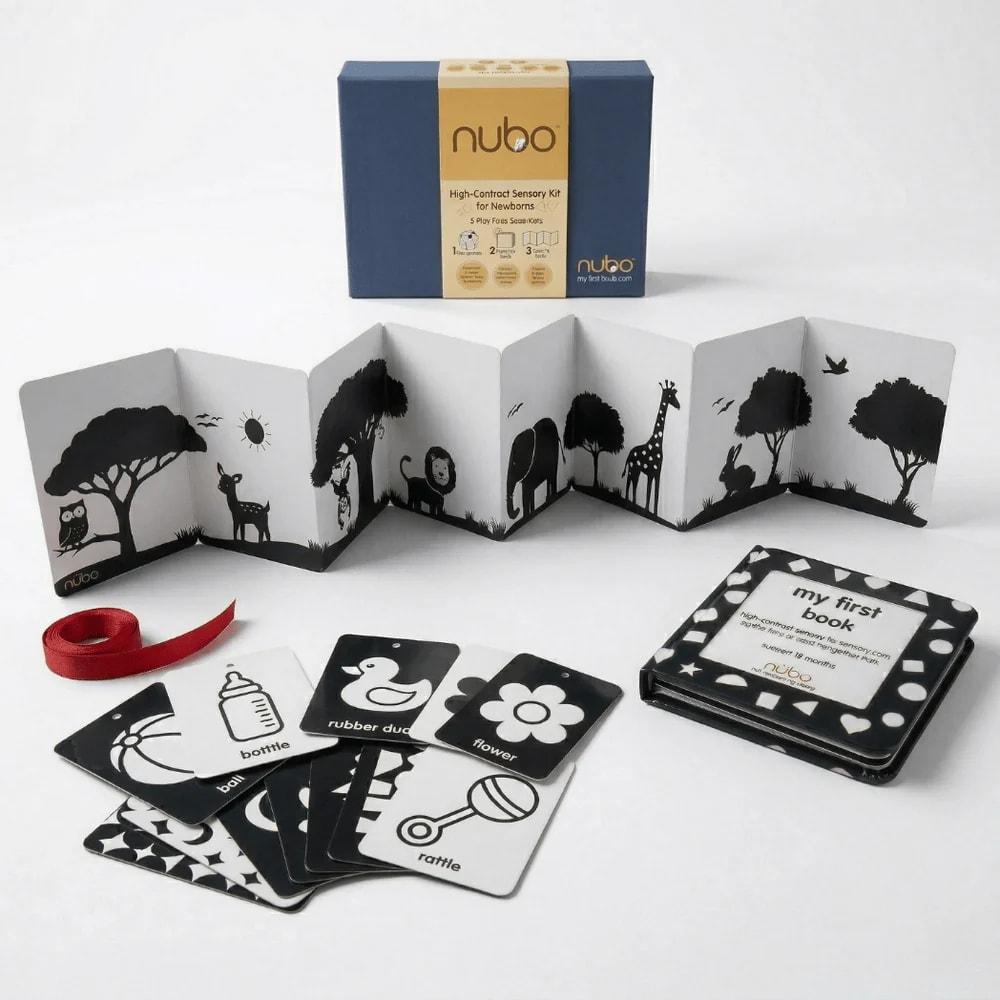
Newborn Gift Kit
BIS Certified | Multi-sensory collection | High-contrast books, teethers, sensory toys | Birth to 12 months
₹449
QUICK TIPS FOR PARENTS
- Rotate toys regularly. Keep 4–5 toys accessible and swap them every week or two. This keeps play fresh and prevents overstimulation.
- Clean teethers safely. Wash silicone teethers with warm soapy water. Many can go in the refrigerator (not freezer) for soothing relief. Always check the manufacturer's guidelines.
- Choose BIS-certified toys. When shopping for silicone toys or teethers, verify that they meet Indian safety standards. Nubokind products are BIS certified, ensuring they're free from harmful chemicals.
- Mix textures and types. Soft cloth books, textured teethers, and wooden stacking toys together provide a richer sensory diet than any single toy type.
- Play alongside your baby. You don't need structured "learning time." Simply sitting with your baby while they explore, narrating what you see ("You're shaking the teether!"), builds connection and language skills simultaneously.
- Trust your baby's lead. If they're losing interest in a toy, it's okay. Move on. Your baby is wired to explore what fascinates them—that's how real learning happens.
HOW TO CHOOSE SAFE, HIGH-QUALITY NEWBORN TOYS
Not all toys are created equal. When you're shopping for your baby, here's what to look for:
Material matters. Food-grade silicone is softer and safer for young babies than hard plastic. Cloth toys should be soft, washable, and made from non-toxic dyes. Wooden toys should be smooth, splinter-free, and finished with non-toxic sealers.
Size and safety. Any toy small enough to fit entirely in your baby's mouth during the teething stage is a choking hazard. Ring teethers, for example, should be larger than a toilet paper tube. Check that there are no small parts that could come loose.
Certifications are your friend. Look for BIS (Bureau of Indian Standards) certification. This label means the product has been tested for safety and meets strict guidelines for infants and young children.
Simplicity is smart. Toys with fewer moving parts are easier to clean and less likely to break. A well-designed cloth book or silicone teether does more for your baby's development than a battery-operated toy with flashing lights and sounds.
| Toy Type | Safety Checklist | Age Range |
|---|---|---|
| Teethers (silicone) | Food-grade silicone, BIS certified, no small parts, easy to clean | 0–12 months |
| Cloth Books | Non-toxic dyes, soft fabric, washable, no loose threads or buttons | 0–12 months |
| Ring Teethers | Larger than 4cm diameter, smooth edges, BIS certified, varied textures | 3–12 months |
| Sensory Kits | All components BIS certified, no choking hazards, mixed textures and sounds | 3–12 months |
THE MONTESSORI APPROACH: WHAT IT MEANS FOR YOUR BABY
You might have heard the term "Montessori" thrown around a lot lately. At its core, Montessori philosophy trusts that babies and children are naturally curious learners. Your job isn't to force learning onto them—it's to create an environment where they can explore safely and independently.
In practice, this means offering a small, carefully chosen selection of toys rather than an overwhelming pile. It means rotating toys so your baby stays engaged without getting overstimulated. It means letting your baby choose what to play with and giving them time to explore without constantly redirecting.
High-contrast cloth books, sensory kits with varied textures, and simple ring teethers all fit this approach beautifully. They're open-ended (your baby decides what to do with them), safe, and designed to support natural developmental milestones.
You don't need special training or expensive classes to use these principles. You're already doing it when you observe what your baby loves, respect their pace, and give them room to explore.
FREQUENTLY ASKED QUESTIONS
Q: When should I introduce teethers to my newborn?
A: You can offer a soft newborn teether from birth, even before teeth appear. It helps soothe gums, encourages grasping, and provides sensory input. Firmer ring teethers are more effective once teething actually begins, usually around 4–6 months. Always choose age-appropriate teethers based on your baby's development, not just their age.
Q: Are cloth books as good as plastic or board books?
A: For babies under 12 months, cloth books are actually superior. They're soft and safe for grasping and chewing, they often include varied textures (crinkly, smooth, bumpy), and they're easy to wash. High-contrast cloth books are especially valuable for visual development in the first 3–4 months. Board books work well once your baby is older and less likely to chew aggressively.
Q: How do I know if a silicone toy is truly food-grade and safe?
A: Look for BIS certification on the product packaging or product description. Food-grade silicone is marked as such and should have no odor. If you're unsure, ask the seller directly. Reputable brands like Nubokind provide transparent information about materials and certifications. Never assume; always verify before buying toys your baby will chew on.
Q: How many toys does my baby actually need in the first year?
A: Quality beats quantity. A well-curated collection of 8–12 toys across different types (teethers, cloth books, sensory items, stacking toys) is more than enough. Rotating toys every 1–2 weeks keeps play fresh without overwhelming your baby. Too many toys at once can actually reduce engagement and make cleanup harder. Choose intentionally and refresh strategically.
Q: Can screen-free play really support all the developmental milestones my baby needs?
A: Yes. Hands-on play with toys supports visual tracking, motor skills, cognitive development, and sensory processing—all the critical milestones for the first year. Screens are passive; they don't build the neural connections that physical play does. Research consistently shows that tactile, exploratory play is far more beneficial for infant brain development than any digital input.
Q: What's the difference between ring teethers and other teether shapes?
A: Ring teethers are ideal because they're easy for small hands to grasp and hold independently. Other shapes (like fruit-shaped or animal-shaped teethers) can be fun visually, but ring teethers are more functional for actual teething relief and motor skill development. Offer both types if you like variety, but don't feel pressured to buy every shape available.
CONCLUSION
Your baby's first year is extraordinary—and it doesn't require screens, apps, or complicated systems. Simple, purposeful toys designed with your baby's development in mind do the heavy lifting. High-contrast cloth books build visual skills. Silicone teethers support grasping and soothe tender gums. Ring teethers and sensory kits encourage cause-and-effect learning and independent exploration.
When you choose screen-free play, you're not depriving your baby—you're giving them exactly what they need to thrive. You're building a foundation of tactile intelligence, motor coordination, and confidence that will serve them far beyond the first year.
Start simple. Choose a few high-quality toys, keep them accessible, and let your baby lead. Rotate toys regularly to maintain engagement. Clean and inspect everything regularly for safety. And trust your instincts—you already know your baby better than anyone.
If you're looking to build a thoughtful collection of toys that support all these milestones in one go, explore Nubokind's range of newborn toys and sensory kits. Every product is designed with these developmental principles in mind and backed by BIS certification.
Your baby's brain is building itself every single day. Make it count—and enjoy the journey.


leave a comment
This site is protected by hCaptcha and the hCaptcha Privacy Policy and Terms of Service apply.