
Choosing the right cloth book can feel overwhelming when there are so many options. In this guide, we break down the features that matter most, age-wise recommendations, and how cloth books actually help your baby's brain development—without the jargon.
WHY CLOTH BOOKS ARE MORE THAN JUST CUTE ACCESSORIES
If you're wondering whether a cloth book is worth the investment, here's the reassuring truth: cloth books are one of the smartest early learning tools you can offer your newborn. They're not just a toy—they're a developmental partner.
During the first months of life, your baby is learning through all five senses. Cloth books engage multiple senses at once: sight (high-contrast patterns and bright colors), touch (different textures and fabrics), and sound (crinkly pages, squeakers, or rattles). Research indicates that multisensory play strengthens neural pathways and supports cognitive development. When your baby touches, sees, and hears a cloth book simultaneously, they're building connections in the brain that support language, memory, and fine motor skills.
Unlike paper books, cloth books are also safe for teething and mouthing—something every parent of a newborn or infant understands well. They're washable, durable, and designed to survive the chaos of real parenting.
KEY FEATURES TO LOOK FOR IN AN INFANT CLOTH BOOK
Not all cloth books are created equal. When you're evaluating options, these features matter most:
| Feature | Why It Matters | What to Look For |
|---|---|---|
| High Contrast Patterns | Newborns see in black and white first. High contrast supports visual development and keeps their attention. | Black, white, and bold primary colors. Patterns like stripes, dots, and geometric shapes. |
| Varied Textures | Different fabrics (crinkly, smooth, bumpy) engage tactile learning and encourage exploration. | Mix of cotton, felt, satin, crinkle material, and embroidered details. |
| Sensory Elements | Sounds and movement hold attention longer and develop auditory skills. | Crinkly pages, squeakers, rattles, or teething-friendly tags. |
| Safe, Non-Toxic Materials | Babies mouth everything. Materials must be safe for contact with gums and teeth. | Look for BIS certification or similar standards. Avoid small parts or loose buttons. |
| Easy to Clean | Cloth books get drooled on, dropped, and touched constantly. | Machine washable or wipeable materials. Check care instructions before buying. |
Each of these features serves a developmental purpose. A good cloth book isn't just pretty—it's purposefully designed to support your baby's growth through play.
AGE-WISE CLOTH BOOK RECOMMENDATIONS
Your baby's interests and abilities change rapidly. Here's what works best at each stage:
Newborn to 3 Months: Black and White Contrast Books
At this stage, your baby's vision is still developing. They can focus best on high-contrast black and white patterns at a distance of 20–30 cm. Books with bold geometric designs, checkerboards, and simple shapes are perfect. Newborns also respond well to books with crinkly pages (which they can't yet control, but can hear and feel).
Look for books that are lightweight and easy for you to hold near their face. Sensory elements like crinkles are wonderful, but simplicity is key—they don't need complex stories yet.
3 to 6 Months: Textured and Colorful Books
By 3 months, your baby's color vision is improving, and they're developing hand-eye coordination. This is when varied textures and primary colors become exciting. They'll start to reach toward the book, grab at pages (gently!), and may begin to mouth the corners—which is completely normal.
Choose books with crinkly sections, soft tags for grasping, and teething-friendly edges. Include some higher-contrast images alongside colors to keep them engaged.
6 to 12 Months: Interactive and Playful Books
Older babies want to participate. Books with squeakers, peek-a-boo flaps, or different button textures become favorites. Your baby is developing cause-and-effect understanding—they'll love discovering that pressing a page makes a sound.
At this stage, books can have simple objects (animals, faces) with varied textures. Books that encourage reaching, grasping, and exploration are ideal. Your baby might also enjoy books with mirrors (safe, unbreakable ones) because they're fascinated by their own reflection.
HOW CLOTH BOOKS SUPPORT LANGUAGE AND COGNITIVE DEVELOPMENT
You might wonder: How does a book without words help language development? The answer is beautiful and direct.
When you read a cloth book with your baby—whether narrating what they're touching, naming colors, or simply talking about textures—you're building language pathways. Many experts suggest that the sensory experience combined with your voice creates powerful memory and learning associations. Your baby learns that the bumpy texture is called "bumpy," the crinkly sound is "crinkle," and that interaction with you is joyful.
Cloth books also develop fine motor skills. Reaching for textures, grasping at tags, and turning pages (with help) strengthen the muscles and coordination needed for future writing and self-feeding. The visual stimulation supports focus and attention—skills that underpin all future learning.
Reading cloth books together is also bonding time. That quiet moment of exploration builds attachment and creates positive associations with books that will serve your child for life.
QUICK TIPS FOR CHOOSING AND USING CLOTH BOOKS
Parent Essentials
- Start with high-contrast patterns for newborns (0–3 months), then introduce colors and textures as they grow.
- Check safety certifications before buying. Look for BIS or similar standards to ensure materials are safe for mouthing.
- Choose machine-washable books to handle the inevitable drool, spit-up, and sticky fingers without stress.
- Rotate books regularly to keep your baby interested. New books feel exciting even if you've seen them before.
- Read together daily, even if just for 2–3 minutes. Consistency matters more than duration at this age.
- Follow your baby's cues. If they're not interested, try again later. Developmental readiness varies from baby to baby.
RECOMMENDED CLOTH BOOKS AND SENSORY PRODUCTS
If you're ready to invest in quality cloth books and complementary sensory toys, here are thoughtfully designed options that align with early development principles:
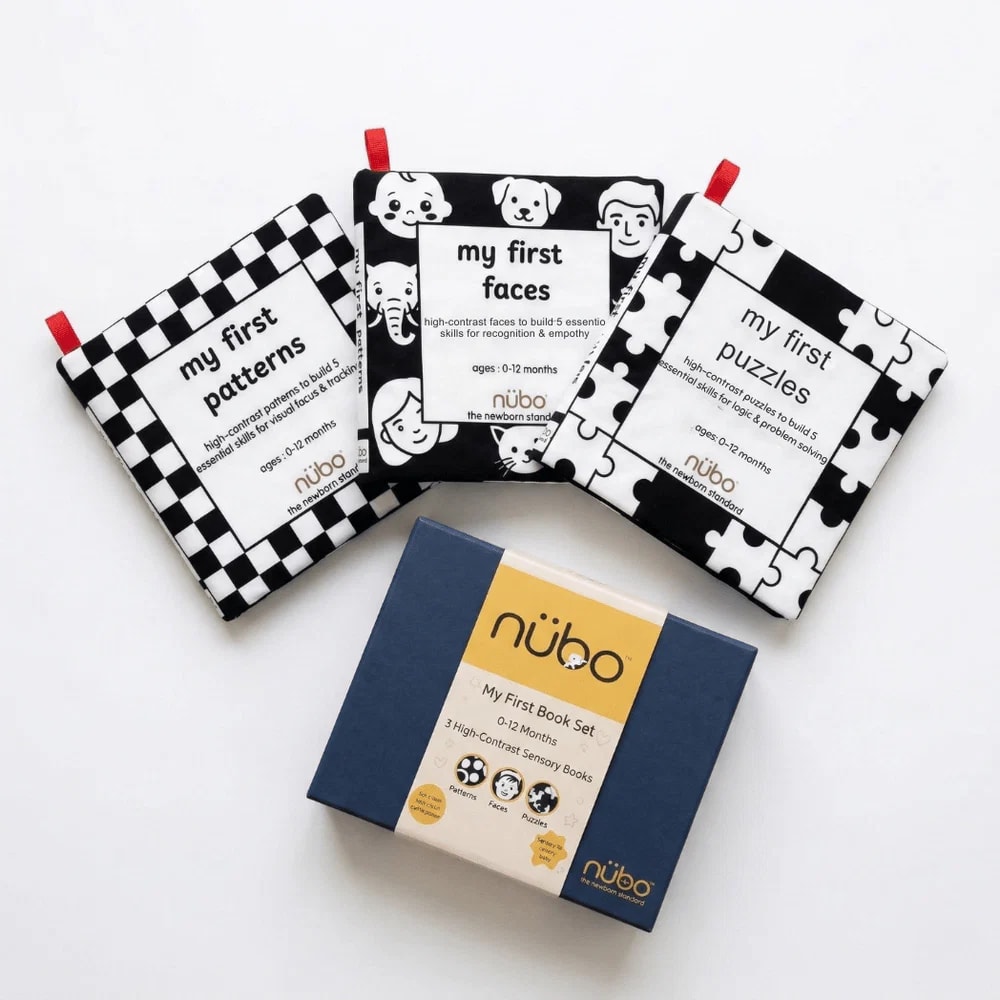
The High Contrast Cloth Book Set is designed specifically for the developmental needs of newborns and young infants. The bold patterns support visual development, while varied textures (crinkly, smooth, bumpy) engage tactile exploration. Safe for mouthing and machine washable.
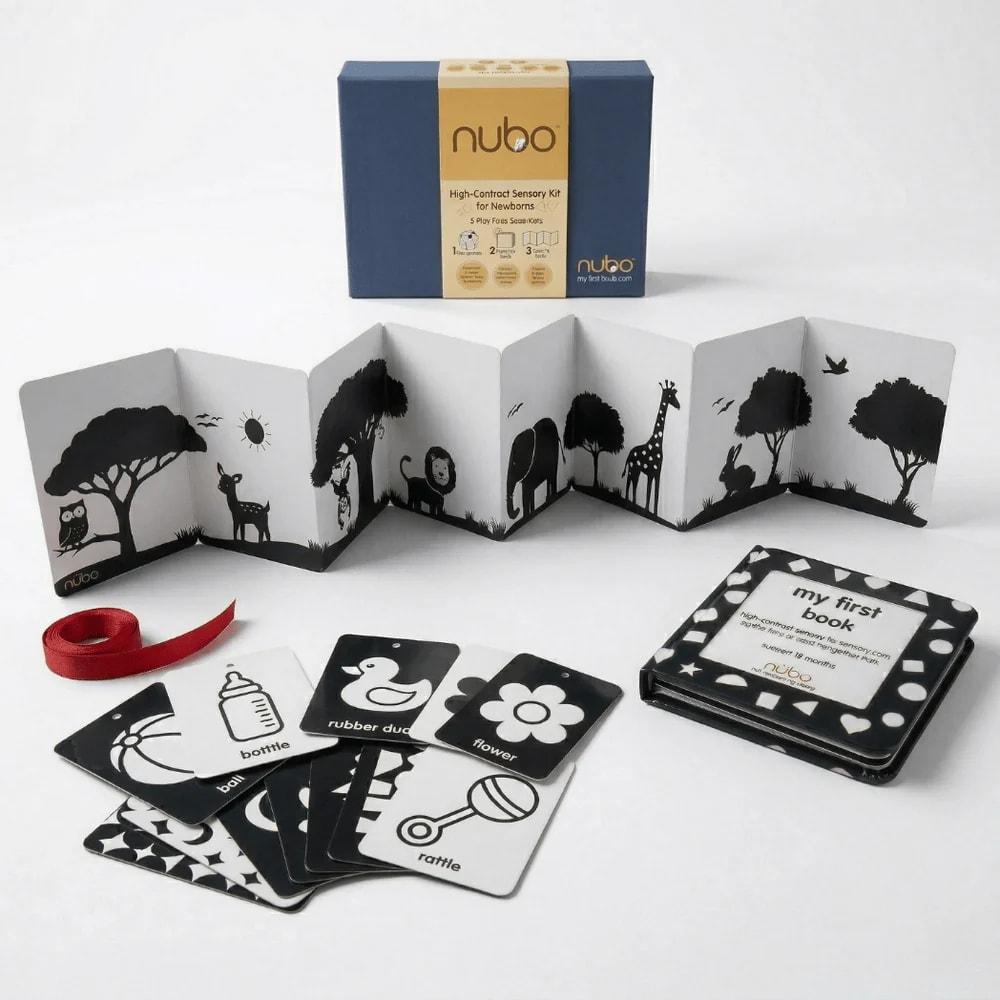
If you want a complete sensory toolkit, the Newborn Gift Kit combines high-contrast cloth books with complementary toys. It's thoughtfully curated to support early development through multiple touchpoints—sight, sound, and touch—all in one set.
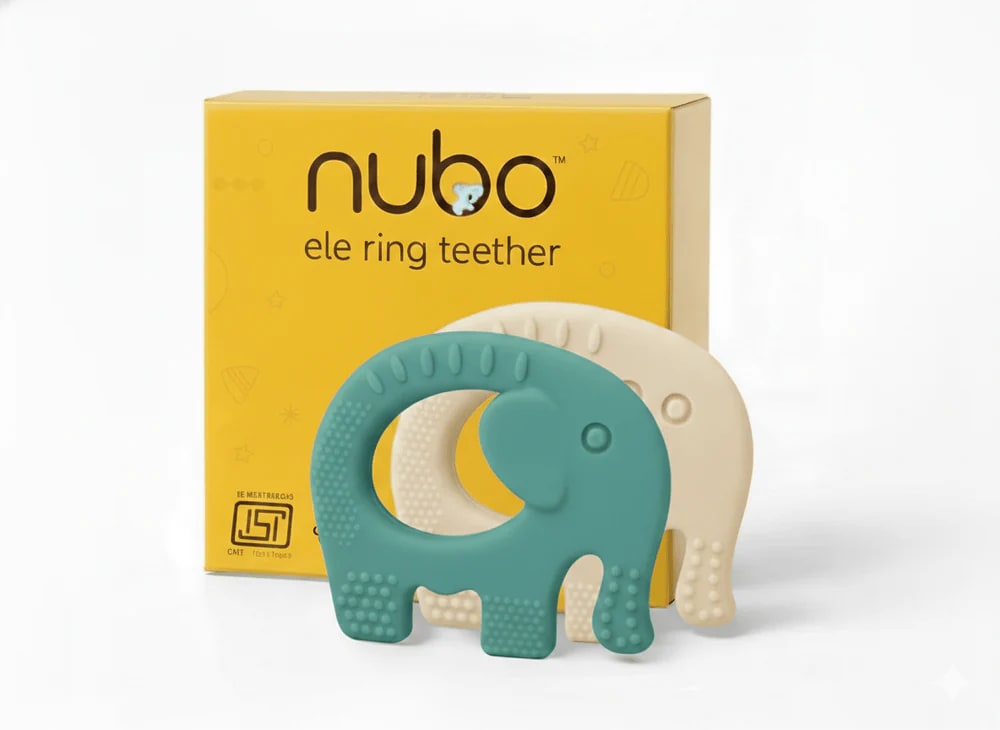
As your baby grows and teething begins (typically around 4–6 months), best toys newborn like the ELE Ring Teether Set become essential. These safe silicone toys complement cloth books by offering relief during teething while supporting oral sensory development.
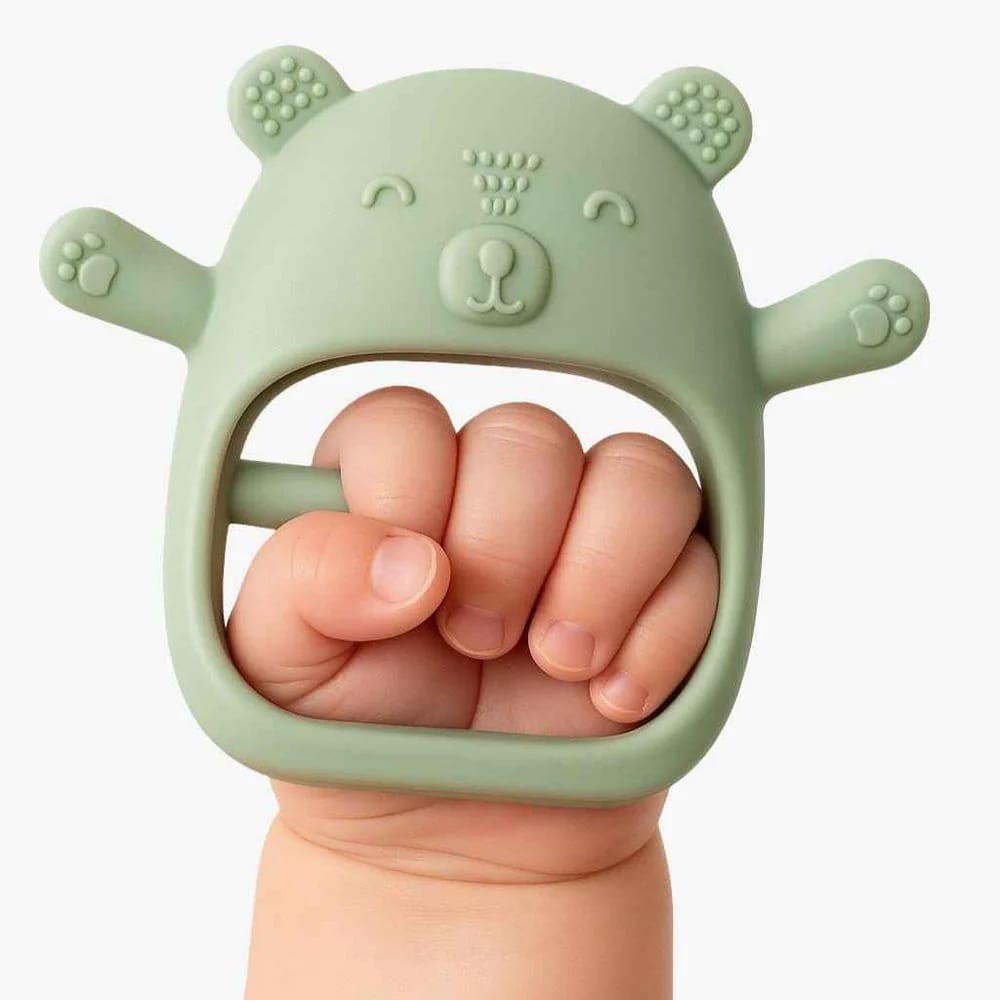
The Kiko No-Drop Newborn Teether is designed with a convenient loop handle that makes it easy for your baby to hold and explore independently—a key milestone in hand-eye coordination and self-directed play.
FREQUENTLY ASKED QUESTIONS
Q: At what age can I introduce a cloth book?
A: You can introduce a cloth book from birth! Newborns benefit from high-contrast black and white patterns. Even if they can't grasp or interact much, being near the book while you talk and hold it near their face provides valuable visual stimulation. As they grow (around 3 months), they'll start reaching and grasping, making interaction more active.
Q: How many cloth books does my baby need?
A: There's no magic number, but 3–5 quality books are plenty to start. Babies benefit more from rotating a few books regularly than from having too many at once. Rotation keeps novelty high and prevents overwhelm. As your child grows, you can gradually add more, but quality and intentional use matter far more than quantity.
Q: Is it safe for my baby to mouth cloth books?
A: Yes, mouthing is a completely normal and healthy part of infant development. However, ensure the cloth book is made from safe, non-toxic materials (look for BIS certification or similar). Avoid books with small, loose buttons or parts that could be choking hazards. Check that all seams are secure and no filling is exposed. Machine-washable books make cleaning simple and hygienic.
Q: What's the difference between cloth books and traditional paper books for infants?
A: Cloth books are softer, safer for mouthing and teething, and more durable for frequent handling. They offer tactile variety (crinkle, texture) that paper books can't match. Paper books are delicate and unsuitable for young infants who explore by mouthing. Save paper books for when your child is older and can understand the concept of careful handling. For infants, cloth is the way to go.
Q: How do high-contrast cloth books help my baby's vision?
A: Newborns' eyes are still developing. They initially see in shades of gray and can't distinguish colors clearly. High-contrast patterns (black, white, bold primary colors) provide the visual stimulation needed for healthy eye development. These patterns help strengthen the neural connections in the visual cortex, supporting focus, tracking, and the foundation for color vision that develops over the first months of life.
Q: Can cloth books support language development without words?
A: Absolutely. While wordless cloth books don't contain text, they invite you to narrate and engage with your baby. You describe the textures, name the colors, and make sounds together. This conversational interaction—paired with the multisensory experience—builds vocabulary and language pathways. Language development happens through dialogue and shared experience, not just reading words on a page.
CONCLUSION
Choosing the best cloth book for your baby doesn't require complicated criteria. Focus on high-contrast patterns for newborns, varied textures across all ages, and safe, washable materials. Remember that the book itself is only part of the magic—your involvement and narration are what truly drive development.
Cloth books are affordable, durable, and effective tools that align beautifully with how babies actually learn. By following age-wise recommendations and looking for key features like safety certifications and sensory variety, you're giving your baby a gift that supports vision, touch, language, and bonding—all at once.
The investment in a quality cloth book (or set) pays dividends in developmental milestones and cherished quiet moments with your little one. Start early, rotate regularly, and trust that you're building a lifelong love of learning through play.


leave a comment
This site is protected by hCaptcha and the hCaptcha Privacy Policy and Terms of Service apply.