
How to Choose the Right Teether by Age (0–12 Months)
Understanding Teething Stages
Teething usually begins around 3 to 4 months, but signs can start earlier. Babies experience a mix of gum sensitivity, drooling, and chewing before their first tooth even appears. Knowing what’s happening inside your baby’s mouth helps you pick the best type of teether for comfort and safety.
| Age | Stage | Common Signs | Teether Type |
|---|---|---|---|
| 0–3 months | Pre-teething | Drooling, hand-sucking | Ultra-soft, smooth surface teethers |
| 3–6 months | Early teething | Mild pain, chewing on fingers | Soft-textured silicone teethers |
| 6–9 months | Active teething | Teeth erupting, sore gums | Firm but flexible, multi-texture teethers |
| 9–12 months | Advanced teething | Stronger bites, improved grip | Firmer, larger designs for safe chewing |
0–3 Months: Comfort Without Pressure
At this stage, your baby isn’t teething yet, but they’re discovering their mouth. They’ll start drooling and putting fingers or toys in their mouth to explore.
What to look for:
-
Very soft and flexible material — gentle on gums.
-
Lightweight design — easy to hold and safe to mouth.
-
No small parts or detachable pieces.
Best teether type: Smooth, one-piece silicone teethers. These let babies safely explore texture without putting pressure on the gums.
👉 For example, a design like the Kiko No-Drop Newborn Teether works well because it’s small, soft, and can’t easily fall from tiny hands.
3–6 Months: Relief for Sore Gums
This is when teething officially begins for most babies. Gums may swell, drooling increases, and your baby may seem more irritable.
What to look for:
-
Soft-textured silicone teethers — gentle ridges or raised patterns massage sore gums.
-
Easy-to-grip handles — as your baby’s motor control develops.
-
Chillable (not freezable) — a cool teether helps reduce inflammation.
Best teether type: Soft, textured infant teethers made of food-grade silicone. Avoid liquid-filled ones that can leak or break.
Parent tip: Offer two teethers — one cooled, one at room temperature — and let your baby choose what feels best.
6–9 Months: Multi-Texture for Active Chewing
Your baby’s teeth are pushing through the gums now. Chewing gives pressure relief and helps teeth break through more comfortably.
What to look for:
-
Multiple textures or surfaces — help massage gums at different stages.
-
Firm but flexible silicone — strong enough for active chewing, gentle enough for comfort.
-
Shapes that reach back gums — circular or looped designs help target different areas.
Best teether type: Teethers for kids that combine firm silicone with sensory variety — small ridges, bumps, or beads for stimulation.
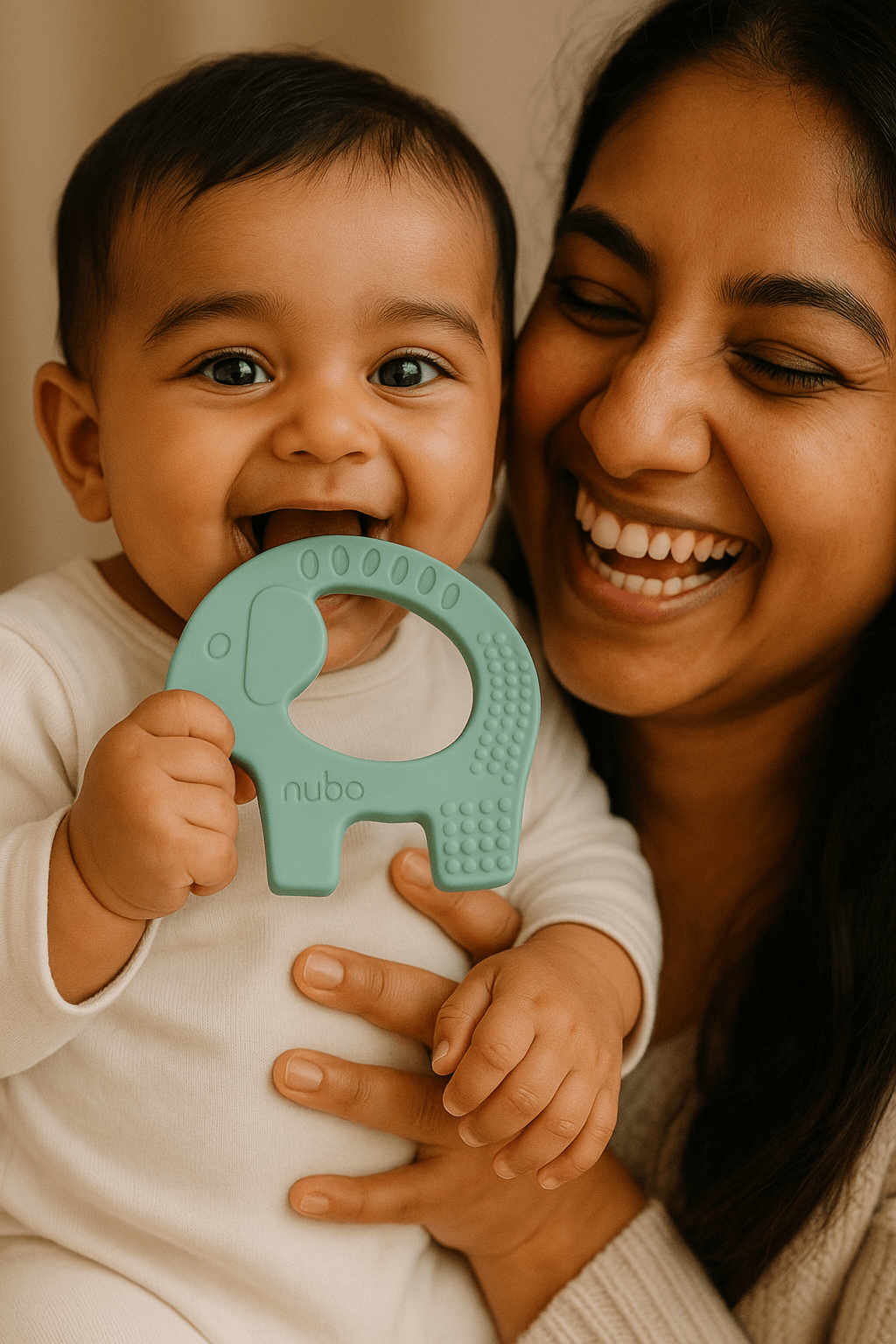
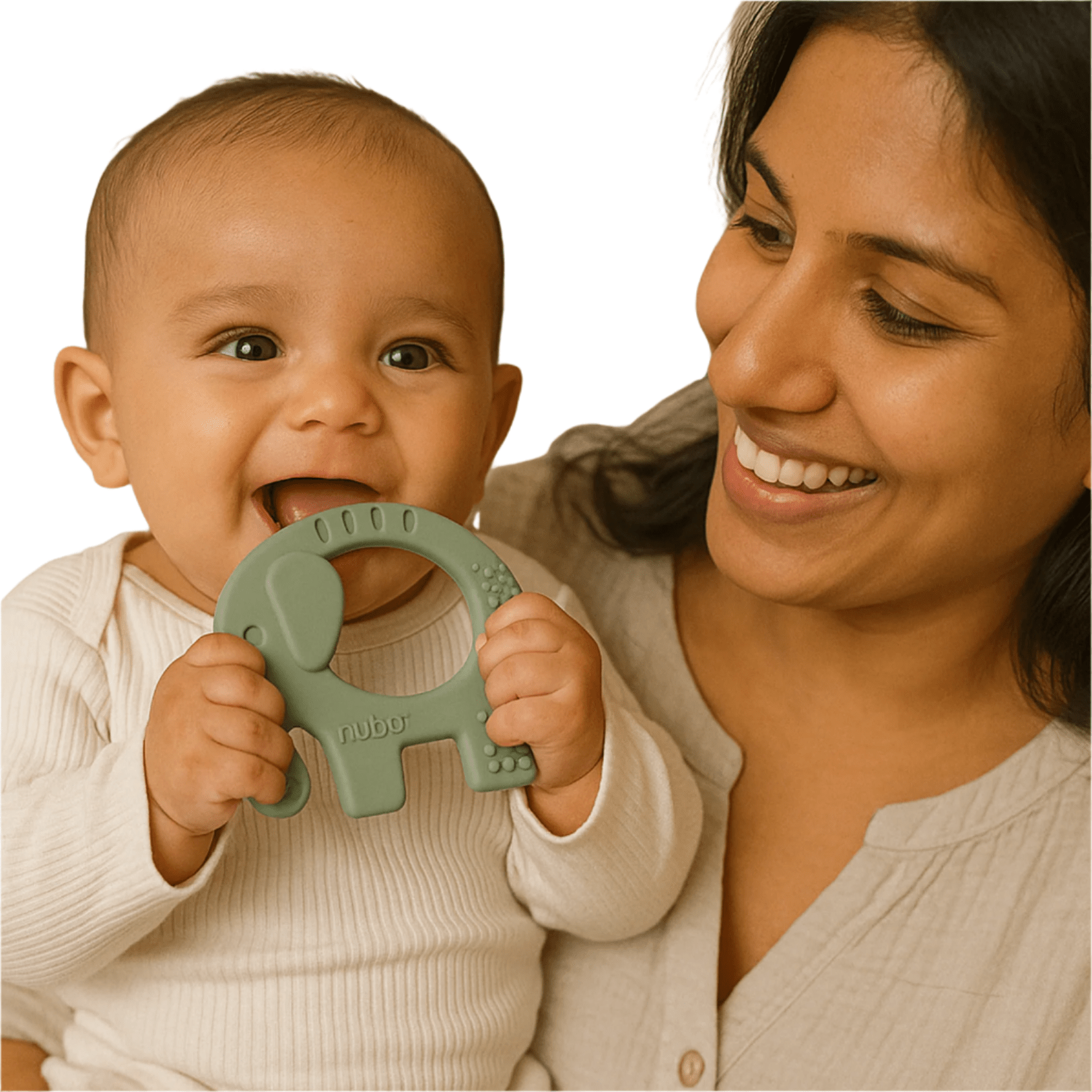
👉 A model like the ELE Ring Teether Set fits this category — light, durable, and easy for older babies to rotate and chew independently.
9–12 Months: Grip, Independence & Exploration
By now, your baby’s first teeth have likely erupted, and they’re chewing harder. This stage is about independence — they’ll want to hold and chew teethers on their own.
What to look for:
-
Larger, firmer silicone teethers — withstand stronger bites.
-
Ergonomic shape — easy for tiny hands to hold.
-
Varied thickness — helps reach molar areas forming under the gums.
Best teether type: Slightly firmer silicone or combination-texture teethers that encourage safe self-soothing.
Parent tip: Rotate 2–3 teethers throughout the week. This keeps things hygienic and helps your baby experience different textures.
Safety Checklist for Every Stage
No matter the age or design, always check that your teether meets key safety standards:
-
✅ BIS-certified or international safety certified (e.g., EN71, ASTM).
-
✅ 100% food-grade silicone or natural rubber — free from BPA, PVC, and phthalates.
-
✅ One-piece design — no risk of choking or trapped moisture.
-
✅ Easy to sterilize — dishwasher-safe or boilable.
-
✅ Rounded edges — no sharp seams or joints.
Avoid:
-
Gel or liquid-filled teethers (can leak).
-
Plastic or hard resin (too rough on gums).
-
Teethers with detachable beads or cords.
Teether Materials: What Matters Most
Not all teethers are made equal. Here’s how to decide based on safety and durability:
-
Silicone teethers: The safest and most hygienic choice. Durable, flexible, and resistant to bacterial buildup.
-
Natural rubber teethers: Eco-friendly and soft, but require more cleaning care.
-
Wood teethers: Safe when untreated, but not suitable for very young babies who drool excessively.
If in doubt, choose BIS-certified silicone teethers — they combine safety, softness, and longevity in one product.
FAQs
1. When should my baby start using a teether?
You can introduce a soft teether around 2–3 months when drooling starts — even before the first tooth erupts.
2. How do I clean baby teethers safely?
Wash daily with warm soapy water or sterilize in boiling water for a few minutes. Always dry thoroughly.
3. Are silicone teethers safe for newborns?
Yes, if they’re made of 100% food-grade, BPA-free silicone and certified safe.
Conclusion
Every month of your baby’s teething journey is different — from soft exploration to confident chewing. By choosing the right teether for their age, you’re not only soothing sore gums but also supporting sensory development and motor skills.
At Nubokind, all teethers are BIS-certified, designed with safety in mind, and perfect for every stage of teething — from newborn to 12 months.
Explore thoughtful designs like the Kiko No-Drop Newborn Teether and ELE Ring Teether Set to keep your little one smiling comfortably through every milestone.

leave a comment
This site is protected by hCaptcha and the hCaptcha Privacy Policy and Terms of Service apply.