
Why the “No-Drop” Teether Is a Game-Changer for Indian Parents
Solving the Most Frustrating Teething Problem
Every parent knows this routine:
Baby drops teether → You pick it up → Clean it → Baby drops it again.
It’s not just annoying. It’s unhygienic.
Between 3–6 months, babies are still developing grip strength. So constant dropping isn’t misbehavior — it’s motor development in action. But smart product design can drastically reduce the problem.
That’s where the idea of a no-drop silicone teether comes in.
Why Babies Keep Dropping Teethers
Before solving the issue, let’s understand it.
1️⃣ Immature Grip Strength
At 3 months, babies rely on a reflexive grasp. They cannot sustain controlled holding for long.
2️⃣ Wrist Instability
Rotational control is still developing, causing accidental release.
3️⃣ Heavy or Slippery Teethers
Many baby chew toys and teething rings for babies are:
-
Too bulky
-
Made from slippery plastic
-
Poorly balanced
This makes even the best baby teethers ineffective.
The Hygiene Risk Parents Overlook
Floor contact increases exposure to:
-
Dust
-
Germs
-
Chemical residues
-
Outdoor contaminants
In India, where hygiene standards vary across public spaces, this becomes more concerning.
This is why many parents search for:
-
best teether for baby india
-
safe baby teether
-
silicone teether safe for baby
The problem isn’t just comfort — it’s safety.
What Is a No-Drop Teether?
A no-drop teether is designed to:
-
Stay secured to the baby’s hand
-
Reduce floor contact
-
Improve grip training
-
Provide consistent gum access
Instead of relying only on grip strength, it supports early-stage development.
This makes it ideal for:
-
3–6 months babies
-
Early teething stages
-
Babies learning hand-to-mouth coordination
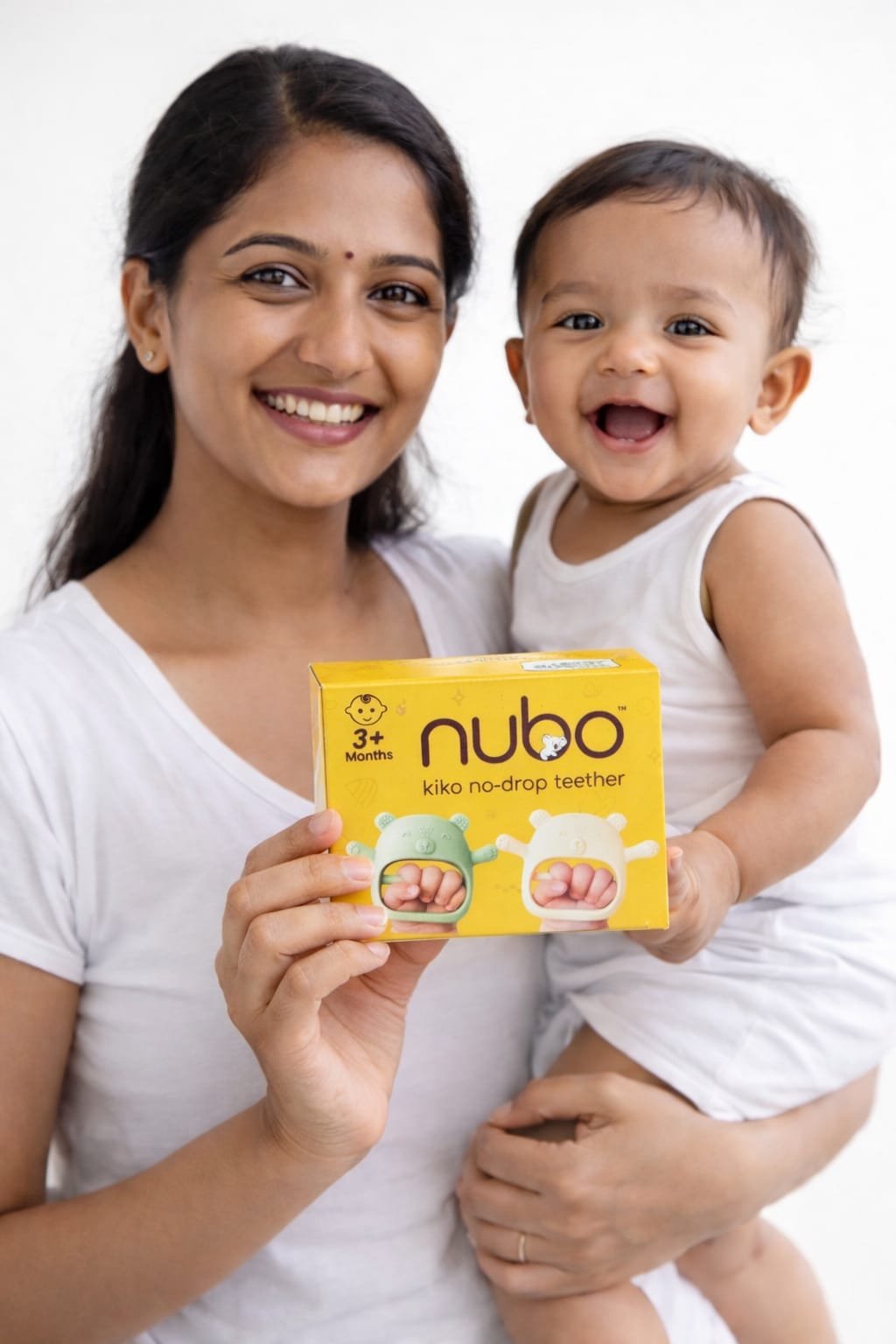
How Nubokind Approaches the No-Drop Design
Instead of treating dropping as “normal,” nubokind addressed it through intentional design.
Their Kiko wrist newborn teether:
-
Uses a wearable hand-fit structure
-
Is molded from a single seamless piece
-
Made from food grade silicone
-
BIS certified under IS 9873
-
Lightweight for early motor stages
The design supports grip training while reducing contamination from constant floor drops.
Rather than being just a teether toy, it becomes a developmental tool.
Is a No-Drop Teether Right for Your Baby?
A no-drop design is especially helpful if:
-
Your baby is 3–6 months
-
You’re constantly sanitizing fallen teethers
-
You want better hygiene
-
You want motor skill support
As babies grow stronger (6+ months), ring-style teethers like multi-loop designs can further enhance grip training.
FAQs
Why do babies drop teethers so often?
Because grip strength and coordination are still developing between 3–6 months.
Is a no-drop teether safe?
Yes, if it is made from food grade silicone and is BIS certified under IS 9873.
When to use teether for baby?
Around 4 months when mouthing begins.
What is the best teether for baby in India?
One that is:
-
BIS certified
-
Made from silicone
-
Lightweight
-
Seamless (no small parts)
-
Ergonomically designed
Final Thought
Dropping teethers is developmental.
But constant contamination doesn’t have to be.
A thoughtfully designed silicone teether safe for baby, especially a no-drop model, reduces stress for parents and supports safer teething.


leave a comment
This site is protected by hCaptcha and the hCaptcha Privacy Policy and Terms of Service apply.