
Your newborn's brain is developing at lightning speed, and the right tools matter more than you think. Discover why child development experts recommend infant cloth books from the earliest months, and how high contrast designs support visual development, sensory exploration, and the bond between you and your baby.
It's 2 AM, and your newborn is finally awake with you during tummy time. You're searching for something—anything—that will gently engage their eyes. Most toys feel too hard, too loud, too much. What you really need is something soft, safe, and actually designed for how babies learn.
Here's what actually helped us — and thousands of Indian parents:
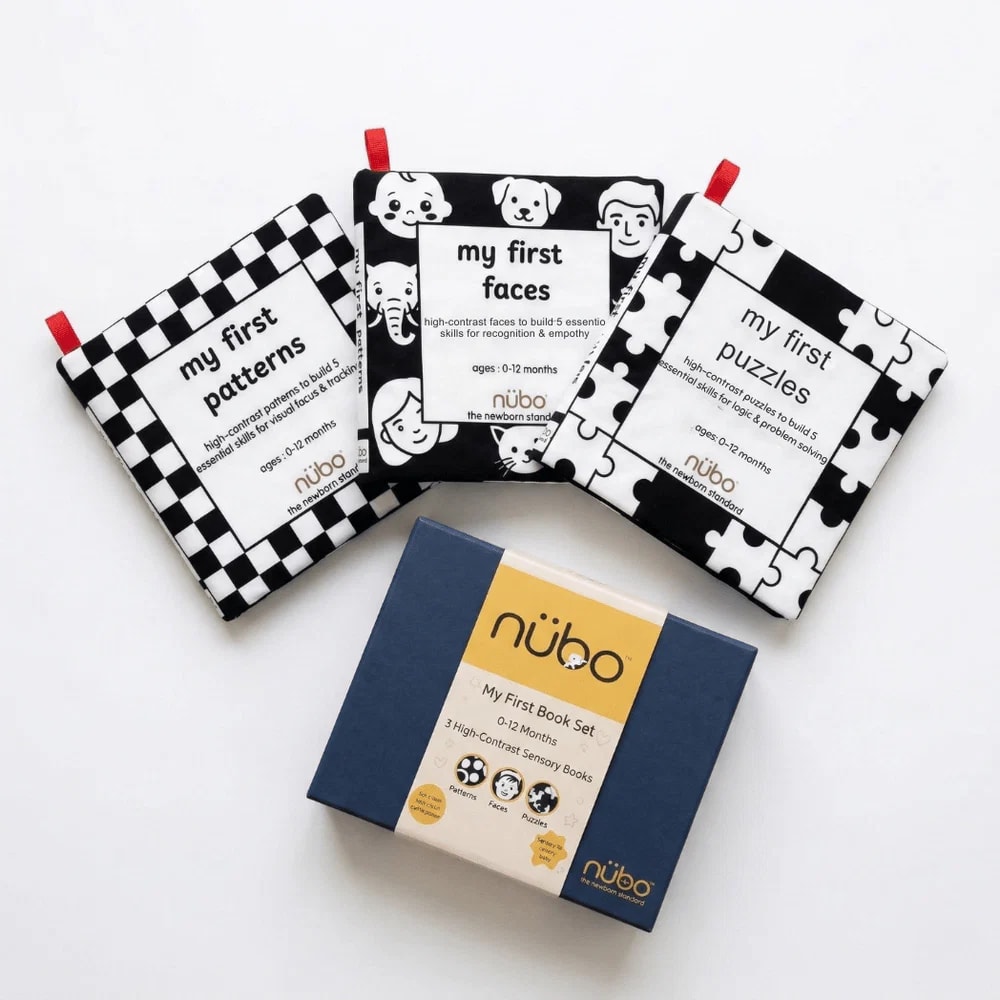
High Contrast Cloth Book Set
Montessori-inspired | Sensory & visual development | Birth to 12 months
₹549
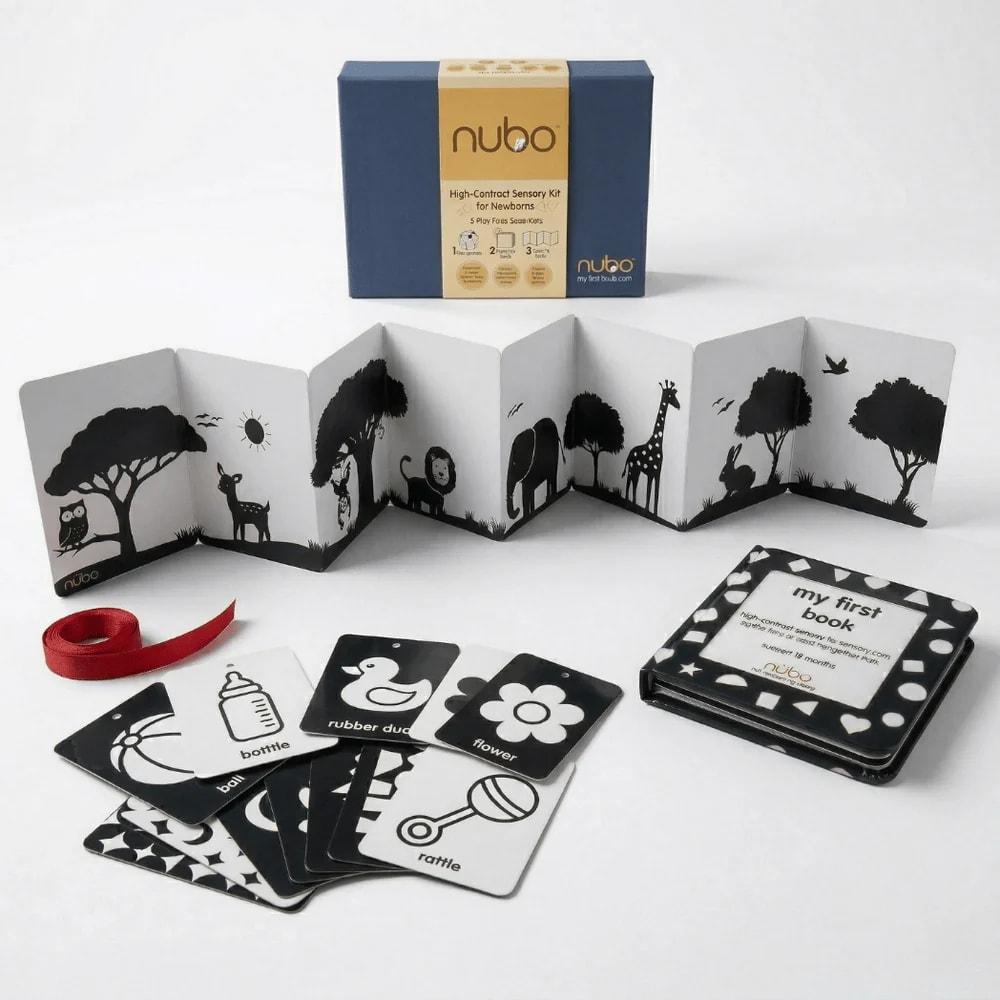
Why Infant Cloth Books Matter for Development
During the first year of life, your baby's visual system is still developing. Newborns can't see color or detail the way you do—they see mostly in shades of gray, and they're drawn to high contrast because it's the easiest for their developing eyes to process. This is exactly why newborn high contrast images aren't just a trend; they're grounded in infant vision science.
A quality infant cloth book does something remarkable. It combines soft textures (perfect for sensory exploration), visual stimulation (through high contrast black and white designs), and tactile feedback—all while being completely safe for a curious baby who explores the world through touch and mouth. When you introduce cloth books for infants early, you're supporting three critical areas at once: visual development, fine motor skills, and early language exposure.
And here's the thing many parents don't realize: tummy time activities that are engaging make tummy time easier. Most babies resist tummy time, but when you place a tummy time book in front of them, you've given their developing eyes something to focus on. It turns a frustrating activity into a bonding moment and a developmental win.
What to Look For in an Infant Cloth Book
Not all cloth books for newborns are created equal. Here's what separates a developmental tool from a cute novelty:
| Quality to Look For | Why It Matters | How Nubokind Delivers |
|---|---|---|
| True High Contrast Images | Pure black & white or bold colors stimulate visual development in newborns (0–3 months) | Nubokind's High Contrast Cloth Book Set uses research-backed black & white patterns and bold shapes |
| Soft, BIS-Certified Fabric | Safe for teething, washable, free from harmful chemicals | All Nubokind cloth books are BIS Certified, baby-safe, and machine washable |
| Crinkle Sounds & Textures | Multi-sensory engagement supports auditory and tactile development | Nubokind books include varied textures and sound elements for complete sensory play |
| Montessori-Inspired Design | Encourages independent exploration and self-directed learning | All Nubokind products follow Montessori principles—simple, purposeful, and uncluttered |
| Portable & Lightweight | Easy to use during tummy time, car rides, and outings | Nubokind cloth books are compact enough for any parent's diaper bag |
The best newborn toys to 6 months share a common thread: they respect your baby's developmental stage. An infant cloth book isn't meant to be flashy or electronic. It's meant to be a gentle, enriching introduction to learning through play.
What Indian Parents Are Saying
Ritu Dhanda, Delhi
"The high contrast black and white images grab my baby's attention and keep engaged."
Ruchika, Mumbai
"Bought for a baby shower — highlight of gifts. Beautiful packaging, feels high-end. Unique alternative to plastic toys."
How to Choose & Use Infant Cloth Books
- Start early, not late: Introduce high contrast books for newborns from birth (or 2–3 weeks). Even if your baby can't focus yet, their eyes are developing their preference for contrast.
- Use during tummy time: Place the book at eye level during tummy time for newborns. It gives them a reason to lift their head and engage their neck muscles.
- Rotate books: Newborns and young infants benefit from novelty. Having 2–3 different cloth books keeps sensory play fresh and engaging.
- Make it tactile: Encourage your baby to touch, squeeze, and crinkle the book. This is sensory development in action, not just visual learning.
- Read aloud softly: Even at 1–2 months, hearing your voice paired with visual stimulation creates early neural pathways for language. This is the foundation of infant learning toys that actually work.
- Clean regularly: Babies put everything in their mouths. Choose cloth books for infants that are washable and BIS Certified—like Nubokind's range.
Frequently Asked Questions
Q: At what age should I introduce an infant cloth book?
A: You can start as early as birth or 2–3 weeks old. Newborns don't need to "understand" the book—their visual system is benefiting from the high contrast stimulation. By 2–3 months, they'll start to follow the images. By 6 months, they'll be grabbing and exploring cloth books with purpose. An infant cloth book grows with your baby throughout the first year.
Q: How is a cloth book different from a regular board book?
A: Board books are great for older babies (6+ months), but infant cloth books are specifically designed for newborns and younger infants. Cloth is softer, safer for teething, and the high contrast images are optimized for developing eyesight. Cloth books are also lightweight, making them perfect for tummy time and portable play.
Q: Do high contrast cloth books really support visual development?
A: Yes. Research in infant vision shows that newborns are drawn to high contrast because their visual systems process light and dark more easily than color. Newborn high contrast images are designed to optimize this natural preference, supporting healthy visual development. Pediatricians often recommend montessori toys for newborns like high contrast cloth books for this reason.
Q: Can my baby put the cloth book in their mouth safely?
A: Absolutely. That's one of the key advantages of quality cloth books for infants. Unlike hard toys, soft cloth is safe for teething babies. Make sure you choose BIS-Certified products like Nubokind's collection, which are free from harmful chemicals and designed specifically for babies who explore through touch and mouth.
Q: How often should I use an infant cloth book?
A: There's no limit. Many parents incorporate cloth books into daily tummy time activities, and some babies enjoy them during quiet play or before sleep. The beauty of infant learning toys like cloth books is that they're non-intrusive and can be used as often as feels right for your baby.
Q: Is the Nubokind cloth book set worth the investment for a first-time parent?
A: Yes. A quality high contrast cloth book set is one of the smartest investments in early development. It supports visual development, sensory play, fine motor skills, and bonding—all in one product. At ₹699, it's affordable, and it lasts through multiple children. Many parents also give it as a newborn gift because it's both thoughtful and developmentally sound.
Conclusion
Your baby's first year is a window of extraordinary development. Simple tools like infant cloth books designed with high contrast and sensory elements aren't just toys—they're developmental partners that support visual growth, tactile exploration, and early learning. Cloth books for newborns are gentle, safe, and proven to engage babies from birth through their first year.
If you're looking for a thoughtful way to support your baby's development from day one, start with a trusted source. Explore Nubokind's High Contrast Cloth Book Set or our Newborn Gift Kit—both are designed by parents who understand what babies actually need, and backed by Montessori principles and BIS certification.
Your baby's learning journey starts now. Make it count.


leave a comment
This site is protected by hCaptcha and the hCaptcha Privacy Policy and Terms of Service apply.