
Quick Answer
Start around 2–3 months old. Newborns can enjoy cloth books from birth, but they become most engaged with high-contrast images and textures between 2–3 months when visual tracking improves. Cloth books are perfect for tummy time, sensory exploration, and early bonding.
Why Cloth Books Matter in Early Infancy
The first few months of life are a time of rapid brain development. Your baby is constantly absorbing information through their senses—sight, touch, and sound. Cloth books offer a safe, soft way to stimulate all three at once. Unlike board books, cloth books are lightweight, washable, and built for a baby's delicate hands and mouth.
Research indicates that early visual stimulation supports the development of focus, tracking, and recognition skills. When you introduce soft books during this developmental window, you're not just entertaining your baby—you're actively supporting their cognitive growth. Combined with regular tummy time and sensory play, cloth books become part of a rich learning environment.
For many parents, cloth books also mark the beginning of a beautiful bonding ritual: sitting together, exploring textures, and building a love of reading before your baby even says their first word.
The Right Age to Introduce Cloth Books
Birth to 2 months: Newborns can hold and mouth cloth books, but their visual focus is still developing. Books with simple, high-contrast patterns (black and white) work best because they match your baby's emerging visual capabilities. At this stage, the texture and the act of exploration matter more than the images themselves.
2 to 6 months: This is when cloth books truly shine. By 3 months, most babies can track movement and focus on shapes and patterns more deliberately. Their grip strengthens, and they become curious about cause-and-effect (crinkling sounds, soft textures). This is the ideal window to introduce a variety of cloth books during tummy time and floor play. High-contrast cloth books paired with tummy time activities create an engaging sensory experience.
6+ months: Older babies enjoy cloth books for their textures, crinkles, and sometimes built-in teethers. By this stage, they may also begin to turn pages (with help) and show preferences for certain images.
How High-Contrast Images Support Visual Development
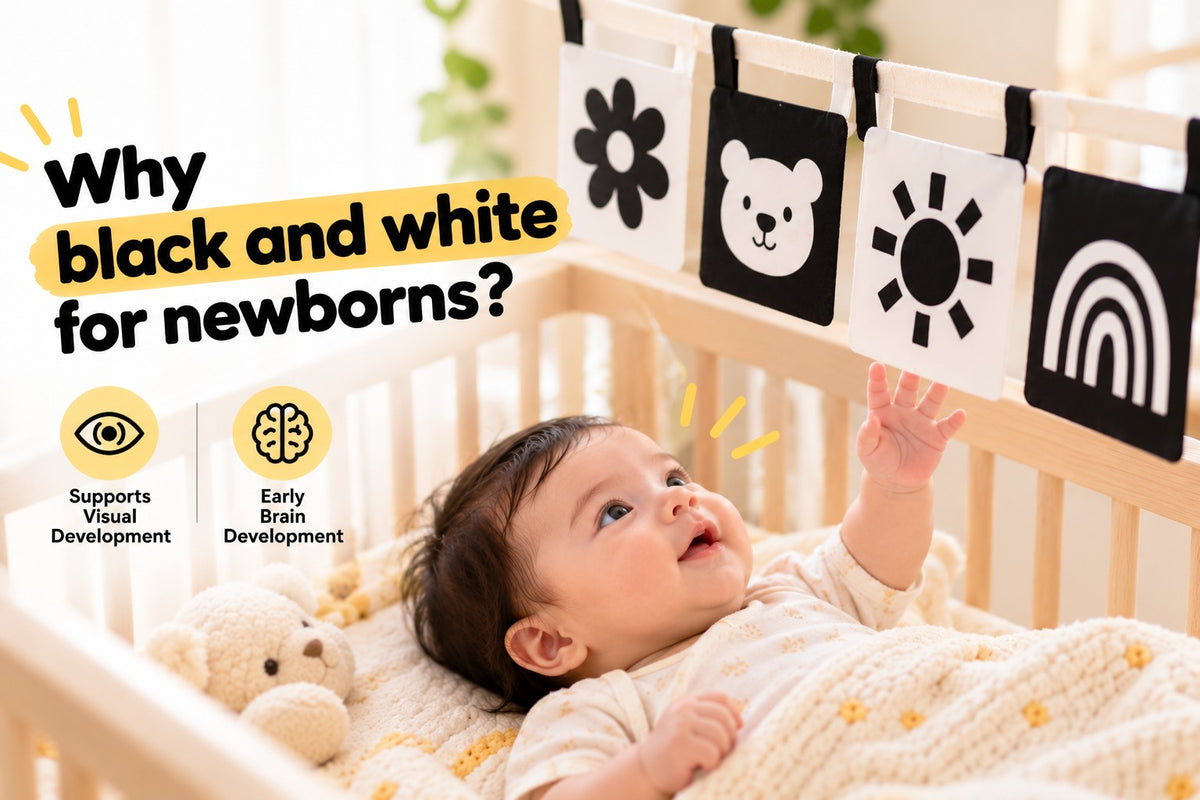
Newborn eyes are still maturing. Research shows that babies see high-contrast images (especially black and white) much more clearly than soft pastels in the first few months. This isn't a limitation—it's an opportunity. By using high-contrast cloth books during early tummy time, you're meeting your baby where they are developmentally.
High-contrast patterns help babies practice focus and eye tracking. When they look at bold shapes or lines, their eyes are working, their brain is processing visual information, and neural pathways are forming. Over time, as their vision develops (around 4–6 months), they'll naturally transition to enjoying more colors and details.
Many experts suggest pairing high-contrast flashcards with tummy time to maximize visual engagement. This combination—soft books on the play mat, flashcards during active play—creates a comprehensive sensory experience that supports infant visual development without requiring any special equipment.
Sensory Play and Cloth Books: A Natural Pair
Sensory development is the foundation of all learning. Cloth books engage multiple senses at once: sight (high-contrast images), touch (soft, crinkly, textured materials), and sometimes sound. When combined with tummy time on a sensory play mat, cloth books become tools for motor development too—reaching, grasping, and lifting strengthen muscles needed for rolling and crawling.
During tummy time, position a cloth book or high-contrast banner at eye level. Your baby will naturally work to lift their head and track the images—exactly the kind of gentle movement that builds neck and shoulder strength. This isn't forced learning; it's play that supports development. Keep sessions short (even 2–3 minutes for newborns), and always supervise.
As your baby grows, cloth books become props for exploring cause-and-effect. Crinkle the pages and watch your baby's face light up. Turn the book and notice their eyes follow. These moments of interaction—you and your baby together—are where real learning happens.
| Age Range | Book Type | Best Use | Key Skills Supported |
|---|---|---|---|
| 0–2 months | High-contrast, simple cloth books | Held by parent, during alert times | Visual focus, color perception |
| 2–4 months | High-contrast cloth books, textured pages | Tummy time, floor play, bonding | Tracking, reaching, grasping, sensory exploration |
| 4–6 months | Varied cloth books with crinkles, tags, textures | Independent exploration, tummy time | Fine motor skills, cause-and-effect, oral exploration |
| 6+ months | All types of cloth books, including interactive elements | Supported page-turning, floor play | Language exposure, fine motor control, sustained attention |
Cloth Books vs. Other Book Types
So why cloth over board books or digital screens in these early months? Cloth books are specifically designed for a baby's developmental needs. They're soft enough to mouth without risk, light enough for small hands to hold, and safe if accidentally thrown or dropped. Board books are durable and great for slightly older babies (6+ months), but they can be heavy for newborns and don't offer the same tactile variety.
Digital screens, while sometimes tempting, aren't recommended for babies under 18 months by major pediatric organizations. Cloth books offer genuine interaction—texture, movement, parent engagement—without the blue light or passive scrolling.
The beauty of cloth books is that they encourage active exploration. Your baby isn't receiving information; they're discovering it. They're touching, mouthing, crumpling, and listening to crinkles—all vital sensory inputs that support healthy brain development in ways screens simply cannot replicate.
Quick Tips for Parents
- Start with high-contrast designs. Black and white or bold color combinations are clearest to newborn eyes and most visually engaging during the first 4–6 months.
- Incorporate cloth books into tummy time routines. Position a book at eye level during tummy time to encourage head lifting and visual tracking—two milestones that support motor development.
- Vary textures and materials. Crinkly pages, soft tags, and different fabric weights keep sensory exploration interesting and support fine motor development.
- Keep it short and parent-led in early months. Read or explore cloth books together for just a few minutes. Interaction and narration matter more than duration.
- Wash regularly. Cloth books go in tiny mouths. Machine-wash them according to care instructions to keep them hygienic and fresh.
- Combine with other sensory tools. Pair cloth books with a sensory play mat, high-contrast flashcards, or soft teethers to create a rich, multi-sensory learning environment.
Building a Bonding Routine Around Books
Reading together is one of the most powerful bonding activities you can do with your baby. Even though your newborn can't understand words, they're absorbing your voice, your presence, and your warmth. Holding a soft cloth book while narrating what you see—"Look at the soft black shapes," "Can you hear the crinkle?"—builds language foundations and emotional connection simultaneously.
Consider making book time part of your daily rhythm: after morning feeds, during a calm moment before bed, or during tummy time. Consistency helps your baby know what to expect and deepens the ritual. Over time, this simple habit becomes a cherished memory and a cornerstone of your baby's love of learning.
Parents often worry that if their baby isn't "behaving" perfectly during reading time, they're doing it wrong. The truth is, there's no wrong way. Whether your baby is fixated on the texture, making sounds, or gazing at the images for just 30 seconds, they're learning and bonding with you. That's what matters.
Recommended Nubokind Products for Early Cloth Book Play
When you're ready to introduce cloth books to your baby's routine, look for options designed with early sensory development in mind. Nubokind's High Contrast Cloth Book Set features bold black and white patterns specifically chosen to match your baby's visual development stage. The soft, washable pages are perfect for tiny hands and curious mouths.
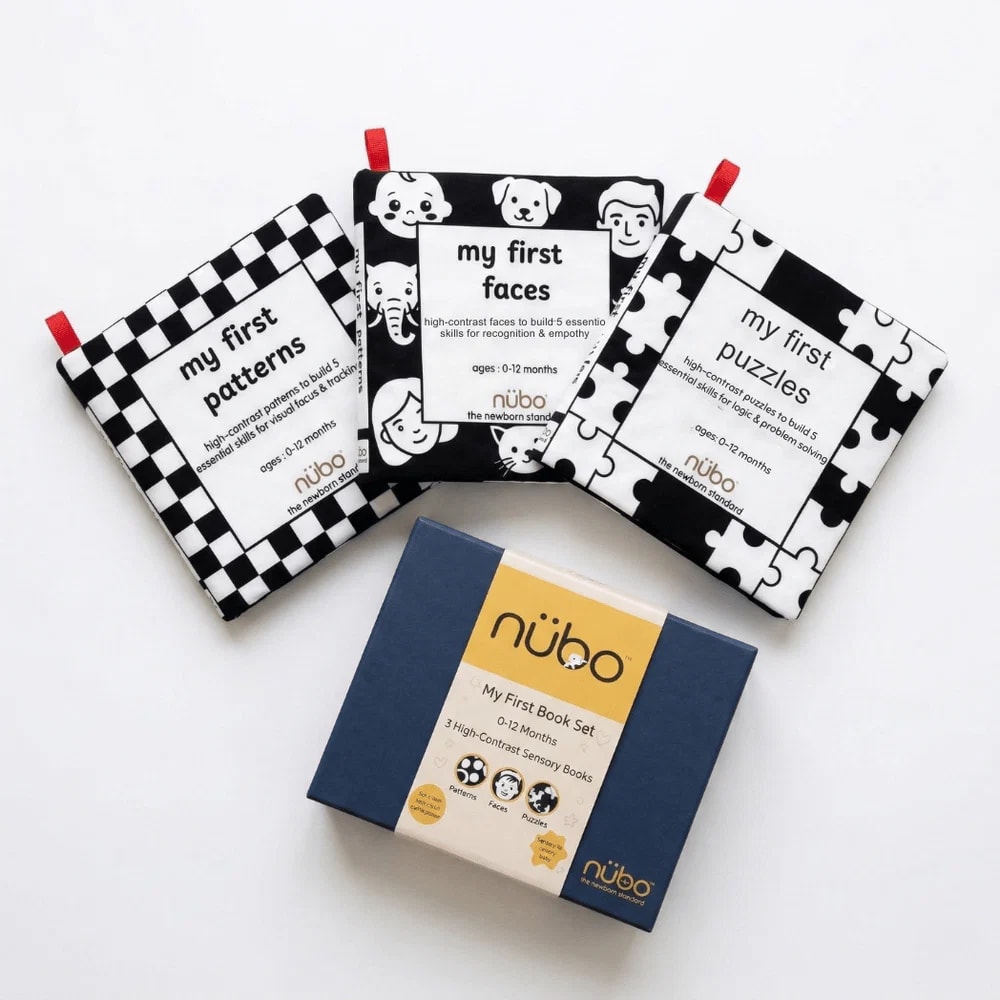
High Contrast Cloth Book Set
Newborn visual development | High-contrast images | Soft books for tummy time | 0–6 months
₹549
To complement your cloth book routine, consider pairing books with tummy time support. The High Contrast Flashcards & Tummy Time Banner is designed to be positioned at eye level during floor play, encouraging head lifting and visual tracking while your baby explores soft books.
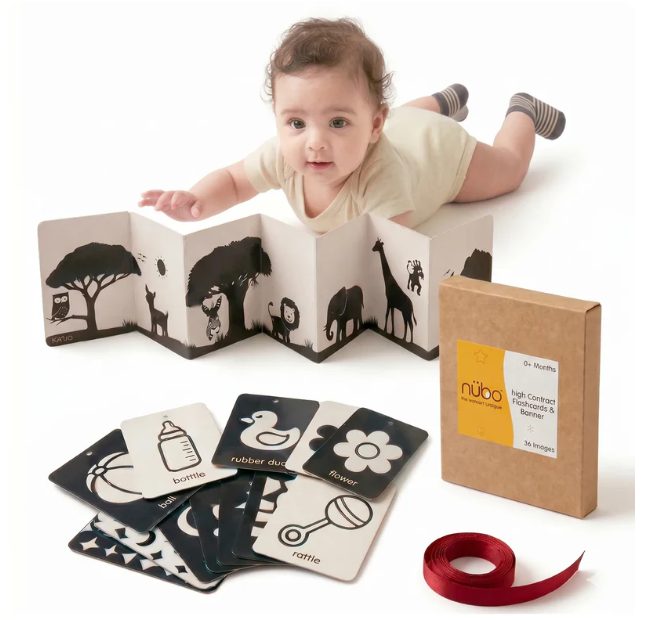
High Contrast Flashcards & Tummy Time Banner
Tummy time activities | Newborn visual development | High-contrast focus tools | 0–6 months
₹299
If you're starting your sensory journey and want a complete introduction to Montessori-inspired tools, the Newborn Gift Kit brings together high-contrast visual stimulation with soft, touchable elements—everything you need to support early development through play.
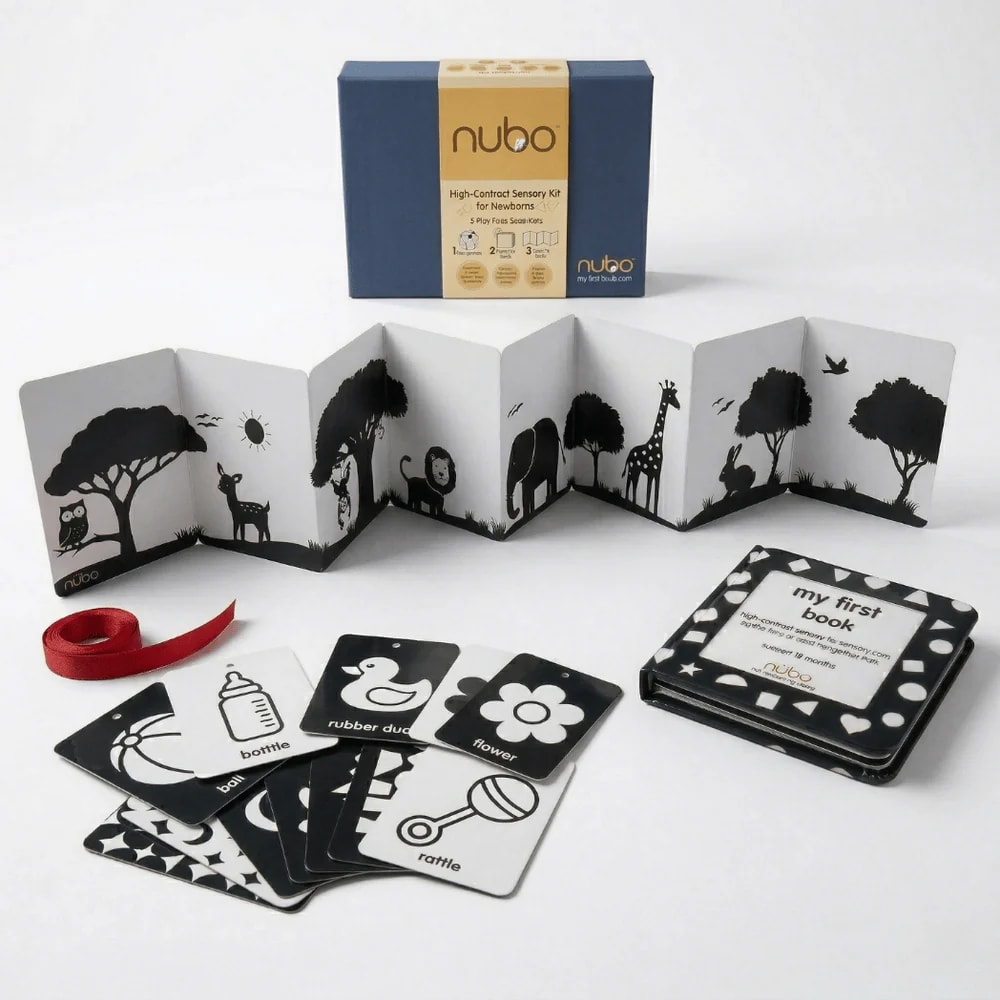
High Contrast Newborn Essential Kit
Newborn gifts | Montessori-inspired starter kit | Visual stimulation | Perfect for baby showers
₹449
For dedicated tummy time sessions, the Sensory Baby Play Mat provides a soft, supportive surface where cloth books come alive. Babies aged 0–18 months can explore books, build motor skills, and engage in sensory play all in one safe, washable space.
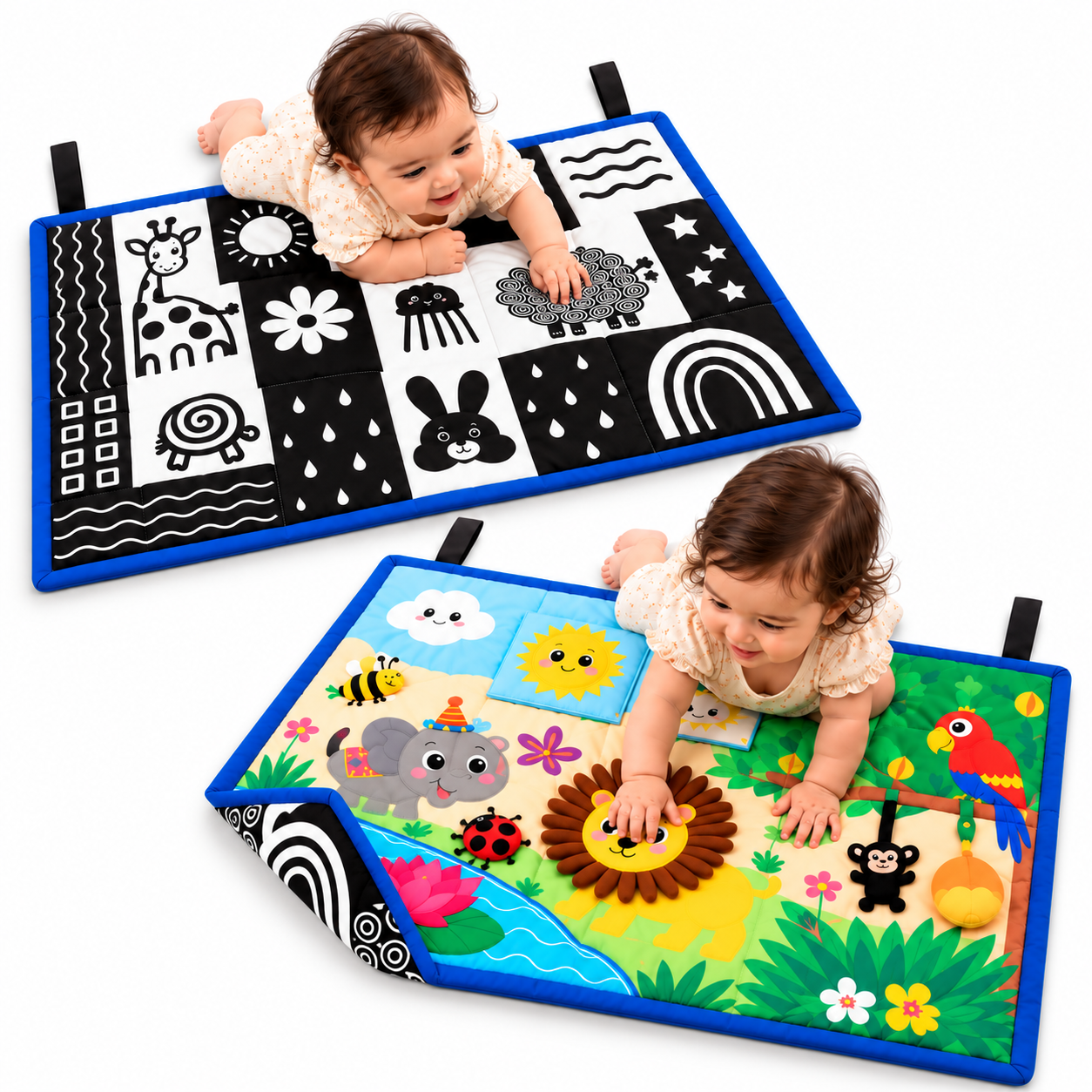
Sensory Baby Play Mat
Tummy time | Floor play | Sensory development | Motor development | 0–18 months
₹999
FREQUENTLY ASKED QUESTIONS
Q: Can I introduce cloth books to my newborn from birth?
A: Yes, absolutely. From birth, cloth books can be part of your baby's sensory world. Hold them during alert times, let your baby mouth them, and explore textures together. However, your baby will show more active interest and engagement once their visual focus improves, around 2–3 months. Don't worry if newborns seem indifferent at first—it's normal and expected.
Q: How do cloth books support tummy time?
A: High-contrast cloth books encourage your baby to lift their head and track visually during tummy time, which strengthens neck and shoulder muscles. Position a book or high-contrast banner at eye level to motivate your baby to engage. Even brief tummy time with a cloth book provides dual benefits: motor development and sensory stimulation.
Q: What makes high-contrast images important for infants?
A: Newborn vision is still developing. High-contrast images (like black and white or bold color combinations) are clearest to young eyes and are most visually stimulating. As your baby's vision improves (4–6 months), they'll naturally become interested in more colors and details. High-contrast cloth books meet your baby's developmental stage.
Q: Can my baby mouth cloth books safely?
A: Yes. Cloth books are specifically designed to be safe for mouthing. Ensure the book is made from baby-safe, non-toxic materials and that there are no loose parts, buttons, or small pieces that could be a choking hazard. Always supervise play, and wash cloth books regularly to maintain hygiene as your baby explores with their mouth.
Q: How often should I introduce new cloth books?
A: There's no strict rule. Some parents introduce 1–2 books and rotate them to keep interest fresh. Others build a small collection. The key is variety—different textures, colors, and sounds keep sensory play engaging. Quality matters more than quantity; even one good high-contrast cloth book used regularly will support development.
Q: How do I know if my baby is ready for more advanced books?
A: By 4–6 months, many babies show growing interest in interactive elements like crinkles, tags, or soft attachments. If your baby reaches for books, tries to turn pages (with help), or shows sustained interest for longer periods, they're ready for more variety. Watch your baby's cues—they'll tell you what engages them most.
CONCLUSION
Introducing cloth books to your newborn isn't about hitting a specific milestone—it's about creating moments of connection and supporting early sensory and cognitive development. Starting around 2–3 months with high-contrast cloth books is ideal, though there's no harm in offering them from birth as part of your growing baby's tactile exploration.
When you place a soft cloth book in your baby's hands during tummy time, read aloud while pointing at shapes, or simply watch as they mouth and crumple the pages, you're doing far more than entertaining them for five minutes. You're building neural pathways, teaching them that learning is joy, and creating the foundation for a lifelong love of reading.
Trust your instincts, follow your baby's cues, and remember that there's no "perfect" way to do this. The moments you share with a cloth book in hand—however brief, however messy—are the ones that matter most. Your presence, your voice, and your engagement are what truly support your baby's development. The cloth book is just the beautiful prop that brings you closer together.


leave a comment
This site is protected by hCaptcha and the hCaptcha Privacy Policy and Terms of Service apply.