
Quick Answer
Black-and-white patterns help newborns see. In the first three months, babies' eyes are still developing, and high contrast images are easier to focus on than colours. High contrast cloth books support this natural visual development during tummy time and bonding moments.
WHY YOUR NEWBORN SEES IN BLACK AND WHITE
During the first three months of life, your baby's eyes and brain are undergoing rapid changes. Newborns are born with vision that is roughly 20/200 — they see the world as blurry and without much detail. Their eyes are still developing the ability to focus, track movement, and distinguish between colours.
High contrast patterns are nature's way of catching a newborn's attention. Research indicates that babies between 0 and 3 months are drawn to sharp differences between light and dark — think bold black-and-white stripes or simple geometric shapes. These patterns don't tire their developing eyes the way softer colours might; instead, they provide the ideal visual stimulus for learning to focus and follow.
This is not a coincidence. Newborns' colour vision (especially reds and greens) doesn't fully mature until around 4 to 6 months. By offering high contrast cloth books and flashcards during the first trimester, you're meeting your baby where they are developmentally — and giving their eyes the visual workout they need to grow stronger.
HOW HIGH CONTRAST CLOTH BOOKS SUPPORT INFANT VISUAL DEVELOPMENT
Cloth books with black-and-white patterns do more than look striking — they build neural pathways. When your baby focuses on a high contrast image, their brain is working to process shape, light, and movement. This repeated visual work strengthens the muscles in their eyes and helps their brain learn to interpret what they're seeing.
Many experts suggest that this type of visual engagement also supports early tracking — the ability to follow an object with their eyes. When you hold a high contrast cloth book in front of your baby or place it on a tummy time mat, you're encouraging them to move their gaze from left to right, up and down. This builds eye coordination and prepares the foundation for later skills like reading and hand-eye coordination.
Beyond the eyes, visual development is deeply connected to brain development. Infants who are exposed to varied visual patterns in the first months show stronger cognitive engagement and are better prepared for learning. High contrast images are mentally stimulating without being overwhelming — they hold a baby's attention in a way that supports focus, rather than creating sensory overload.
TUMMY TIME AND HIGH CONTRAST BOOKS: THE PERFECT PAIRING
Tummy time is one of the most important activities for your newborn's development — it builds neck and shoulder strength, prevents flat spots, and lays the groundwork for rolling, crawling, and reaching. But keeping a newborn engaged during tummy time can be challenging, especially in the first few weeks when they tire easily.
High contrast cloth books and flashcards make ideal tummy time companions. When placed at eye level in front of your baby during tummy time, these materials give your little one a reason to lift their head, focus their eyes, and hold their attention. Instead of tummy time feeling like a chore, it becomes an interactive learning moment.
Place a high contrast cloth book or high contrast flashcard banner at arm's length during tummy time sessions. Start with just 30 seconds to 1 minute if your baby is very young, and gradually increase as they grow. You'll notice them working harder to lift their head and sustain their gaze — that's exactly what you want to see.
A sensory baby play mat designed for tummy time can include or be paired with high contrast elements, creating a complete sensory environment that supports both physical and visual development at once.
SENSORY PLAY AND BONDING THROUGH HIGH CONTRAST CLOTH BOOKS
While high contrast images are primarily visual tools, they're also powerful bonding instruments. When you sit with your baby and show them a cloth book, you're not just offering visual stimulation — you're creating a moment of connection, warmth, and undivided attention.
Infants learn and develop through interaction with caregivers. Reading or exploring a high contrast cloth book together gives your baby the message that they are safe, valued, and worthy of your time. These moments also support language development (even though your baby can't yet understand words, hearing your voice is crucial) and emotional security.
High contrast cloth books are also sensory-friendly in ways many other books aren't. They're soft, safe to chew on, lightweight, and easy for little hands to hold or grasp. As your baby grows into the 2-3 month range and begins to develop hand-eye coordination, they can start to hold and explore the book themselves — building grasping strength and fine motor skills at the same time.
The combination of visual learning, tactile exploration, and emotional bonding makes high contrast cloth books one of the most efficient tools for early development. You're not adding complexity to your routine; you're enhancing moments you're already having with your baby.
QUICK TIPS FOR PARENTS: HOW TO USE HIGH CONTRAST BOOKS EFFECTIVELY
- Start early. You can introduce high contrast books from birth, but they're especially impactful from 4-6 weeks onward, when your baby's eyes begin to focus more reliably. There's no "too early" with visual exploration.
- Keep sessions short and frequent. Newborns have short attention spans. Two or three 1-minute sessions with a high contrast cloth book throughout the day is more effective (and less frustrating) than one long session.
- Hold the book at eye level. Position the cloth book about 8-12 inches from your baby's face — this is the distance newborns can focus on best. Adjust as your baby's vision improves.
- Vary the patterns. Offer different high contrast designs — stripes, circles, checkerboards, simple shapes. Variety keeps your baby's brain engaged and prevents boredom.
- Use during tummy time. Place high contrast visuals in front of your baby during tummy time to give them motivation to lift their head and engage their neck muscles.
- Follow your baby's lead. If your baby looks away or seems disinterested, that's okay. Babies will let you know when they've had enough stimulation. Never force engagement.
MONTESSORI PRINCIPLES AND HIGH CONTRAST MATERIALS
The use of high contrast materials aligns beautifully with Montessori philosophy, which emphasizes following the child's developmental readiness and providing purposeful, beautiful materials that invite exploration. Dr. Maria Montessori understood that infants learn through their senses and that the environment plays a key role in development.
Montessori-inspired toys and books for newborns are intentionally designed to be simple, elegant, and developmentally appropriate. High contrast cloth books fit this philosophy perfectly. They are not overstimulating (no flashing lights or loud sounds), they are aesthetically pleasing, and they serve a clear developmental purpose — supporting visual growth during a critical window.
Many modern Montessori practitioners recommend introducing high contrast materials from birth, gradually transitioning to colour-rich books and toys as the baby's visual system matures (around month 4-6). This staged approach respects the baby's developing abilities and prevents overwhelming their senses with too much too soon.
| Age Range | Visual Readiness | Ideal Materials |
|---|---|---|
| 0-4 weeks | Eyes focusing; prefers high contrast | Simple black-and-white patterns, high contrast flashcards |
| 4-8 weeks | Beginning to track; colour sensitivity developing | High contrast cloth books, geometric patterns, bold designs |
| 8-12 weeks | Improved focus and tracking; some colour perception | High contrast books with simple objects, gradual introduction of colour |
| 3+ months | Colour vision improving; ready for richer images | Transition to colourful books, varied textures, more complex patterns |
CHOOSING THE RIGHT HIGH CONTRAST CLOTH BOOKS FOR YOUR BABY
Not all high contrast books are created equal. When shopping for cloth books or flashcards, look for designs that feature true high contrast — deep black paired with pure white, rather than dark greys or off-whites. The sharper the contrast, the more visually stimulating and developmentally supportive the material.
Consider these factors when selecting high contrast materials for your newborn:
- Contrast quality: Pure black and white designs are most effective for newborns 0-3 months.
- Simplicity: Geometric shapes, stripes, and bold patterns are easier for babies to process than cluttered or detailed images.
- Safety: Ensure materials are soft, non-toxic, and free from small parts. Look for products that meet BIS (Bureau of Indian Standards) certification.
- Durability: Cloth books designed for newborns should withstand chewing, drooling, and washing.
- Size and weight: Choose books that are lightweight and appropriately sized for your baby to hold or for you to position during tummy time.
The High Contrast Cloth Book Set from Nubokind is designed with these principles in mind — featuring bold black-and-white patterns specifically developed to support newborn visual development during the first three months. Paired with activities like tummy time, these cloth books become part of a comprehensive early learning environment.
THE CONNECTION BETWEEN VISUAL DEVELOPMENT AND OVERALL GROWTH
Strong visual development in infancy sets the foundation for learning, confidence, and independence. Babies who develop robust visual tracking and focusing skills early on are better equipped to explore their world, develop hand-eye coordination, and prepare for reading later.
Beyond the eyes, supporting visual development supports whole-body development. When your baby works to focus on and track a high contrast image during tummy time, they're simultaneously building neck and shoulder strength, developing body awareness, and strengthening their vestibular system (balance and spatial orientation). These systems all work together.
Many developmental experts note that visual stimulation in the first months is as important as nutrition and sleep. Your baby's brain is growing at an astonishing rate — roughly 1% per day in the first year. Providing developmentally appropriate visual materials like high contrast cloth books is an easy, joyful way to support that growth.
FREQUENTLY ASKED QUESTIONS
Q: At what age can I start using high contrast cloth books with my newborn?
A: You can introduce high contrast materials from birth, but many parents find that their baby engages most meaningfully starting around 4-6 weeks of age, when their focusing ability improves. That said, even newborns will respond to high contrast patterns placed at eye level. Start whenever you feel ready — there's no harm in offering these materials from day one.
Q: Can high contrast images overstimulate my newborn?
A: High contrast cloth books and flashcards are designed to be engaging without being overwhelming. Unlike flashing lights or loud toys, simple high contrast patterns are calm and focused. If your baby looks away or seems fussy, that's their signal they've had enough — simply take a break. Quality over quantity is the key.
Q: How long should tummy time with high contrast books last?
A: For newborns, start with just 30 seconds to 1 minute, a few times a day. As your baby grows (by 2-3 months), you can gradually extend to 2-5 minutes. The goal is not duration but consistency. Frequent, short sessions are more beneficial than longer, infrequent ones. Follow your baby's cues — if they seem tired or fussy, it's time to stop.
Q: Are high contrast cloth books safe for babies to chew on?
A: Yes, if they're specifically designed for infants and meet safety standards. Quality cloth books are made from non-toxic materials and are designed to withstand drooling and teething. Always check that the product is BIS certified and free from small parts or loose seams. When your baby reaches the teething stage (around 4-6 months), teethers like the Kiko No-Drop Newborn Teether are a safer choice for chewing than cloth books.
Q: Do high contrast books really make a difference in my baby's development?
A: Research indicates that visual stimulation, particularly high contrast patterns, does support infant visual and cognitive development. High contrast materials help babies practice focusing, tracking, and neural processing — all foundational skills. While your baby will develop these skills naturally over time, providing intentional visual materials accelerates and enriches the process. Think of it as giving your baby's developing brain the tools it needs to work optimally.
Q: When should I transition away from high contrast materials to colourful books?
A: Most experts suggest transitioning around 3-4 months, when your baby's colour vision begins to mature. By this age, they can perceive reds and greens more clearly. You don't need to discard high contrast materials — many babies continue to enjoy them alongside colourful books. The transition is gradual, not abrupt. A Newborn Gift Kit that includes high contrast materials is perfect for starting your collection, and you can add colour-rich books as your baby grows.
CONCLUSION
High contrast cloth books are far more than pretty objects — they're carefully designed tools that support your baby's visual development during one of the most critical windows of their life. In the first three months, when your newborn's eyes and brain are rapidly developing, high contrast black-and-white patterns provide the ideal visual stimulus to build focus, tracking ability, and neural connections.
By incorporating high contrast materials into tummy time, bonding moments, and daily routines, you're not just engaging your baby's eyes — you're supporting their entire developmental trajectory. These simple, beautiful tools align with Montessori principles and modern developmental science, making them a thoughtful choice for any parent who wants to nurture their baby's natural curiosity and growth.
The good news? Supporting your baby's visual development doesn't require expensive gadgets or complicated systems. A high contrast cloth book, a few minutes of tummy time, and your presence are enough. Start today, follow your baby's lead, and trust that you're giving them exactly what they need to thrive.
EXPLORE NUBOKIND'S SENSORY SOLUTIONS
Ready to support your newborn's visual and sensory development? Nubokind offers a thoughtfully curated range of high contrast and sensory materials designed for the first months of life.
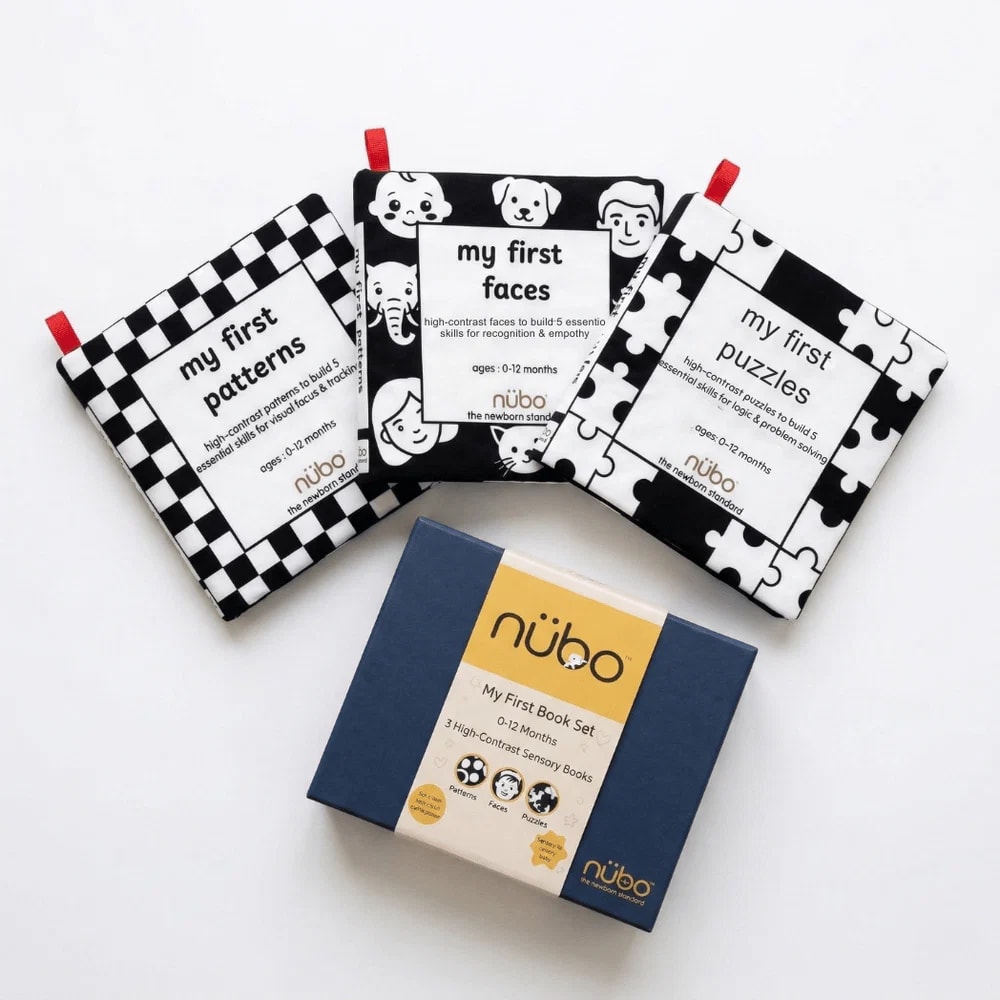
High Contrast Cloth Book Set
Perfect for newborn visual development, tummy time & bonding. Soft, safe, washable.
₹549
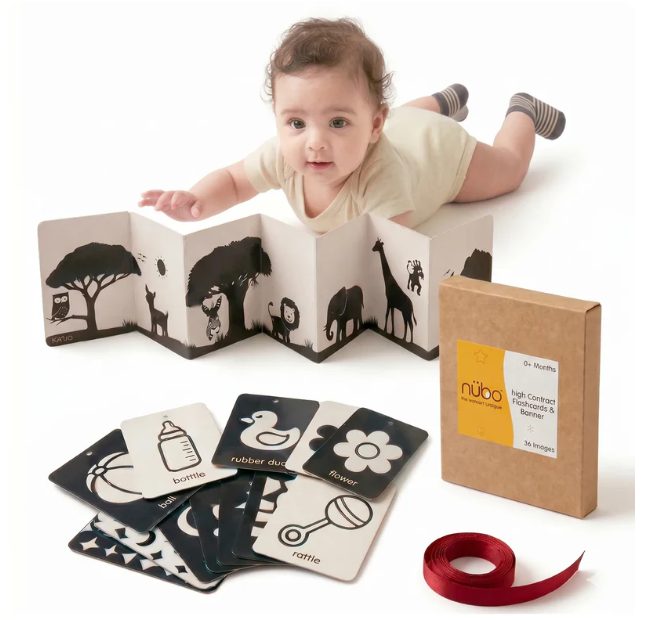
High Contrast Flashcards & Tummy Time Banner
Bold black-and-white designs to support focus and tracking during tummy time.
₹299
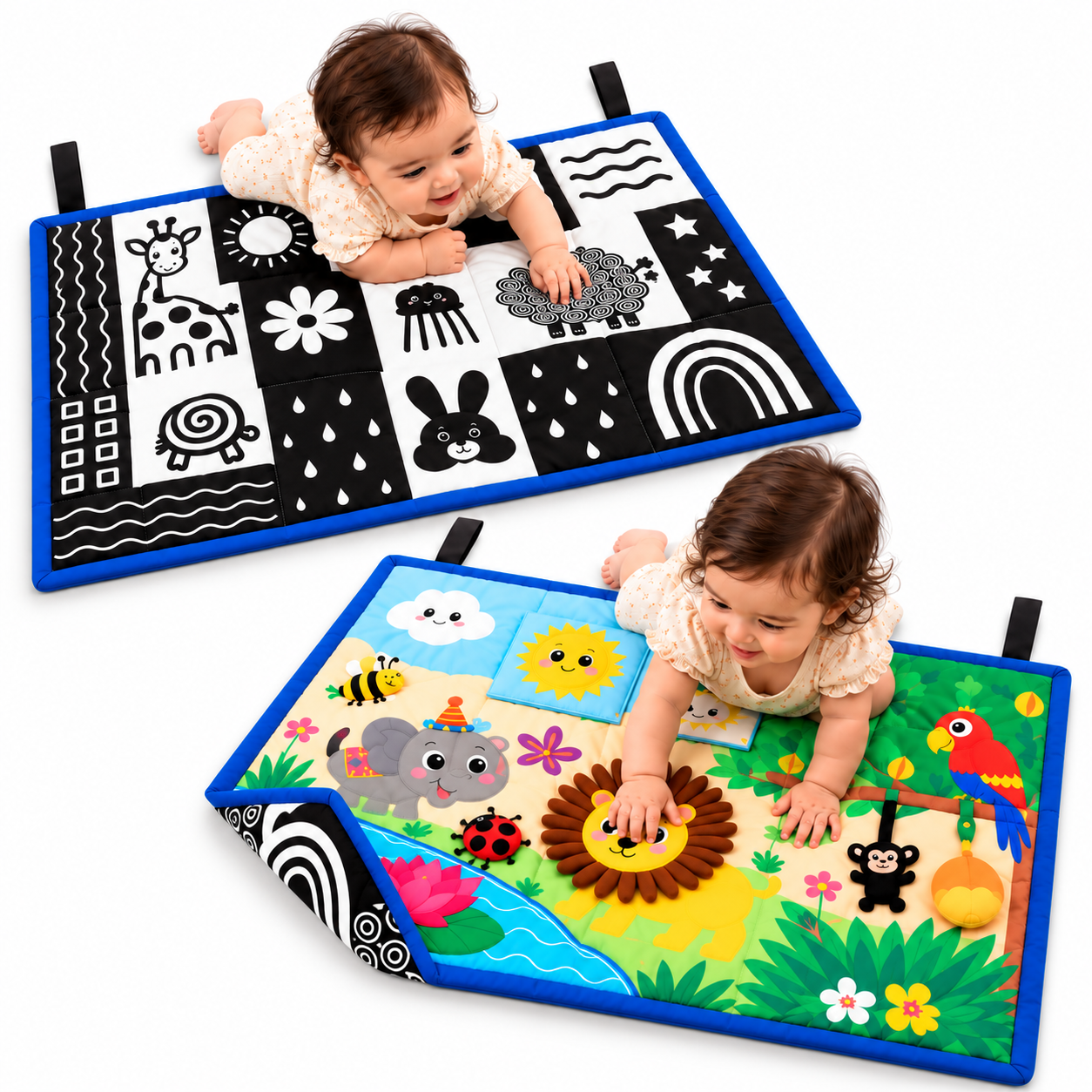
Sensory Baby Play Mat
Complete tummy time and floor play environment. 0–18 months. Supports motor development.
₹999
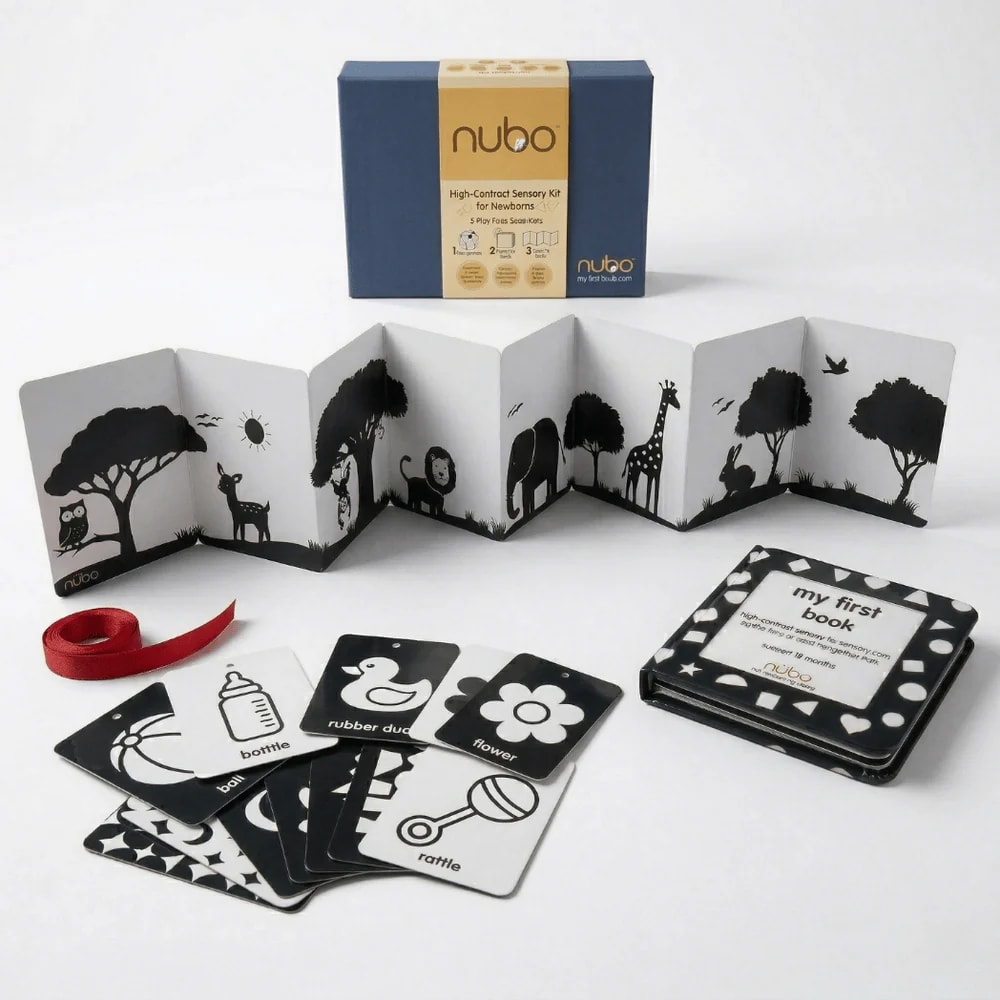
High Contrast Newborn Essential Kit
Montessori-inspired starter kit with high contrast visuals. Perfect baby shower gift.
₹449


leave a comment
This site is protected by hCaptcha and the hCaptcha Privacy Policy and Terms of Service apply.