
What Pediatricians Recommend for Teething Pain
When a baby starts drooling, chewing everything in reach and waking more than usual, most parents reach for whatever is nearest. It is worth knowing what paediatric bodies actually recommend, because some of the most widely sold teething products are the ones they specifically warn against.
This guide sets out what the American Academy of Pediatrics (AAP) publishes on teething relief, what it says to avoid, and why construction matters more than the material argument most comparisons get stuck on.
What pediatricians recommend for teething pain
The published advice is simpler than most product marketing suggests. Three things, in order.
1. Massage the gums with a clean finger. The AAP puts this first: “A light, gentle rub will soothe your baby’s gums. Wash your hands first, then simply massage the sore spots in your child’s mouth with your fingertip or knuckle.” It costs nothing and needs no product at all.
2. Offer something cold, not something frozen. A teether chilled in the refrigerator dulls the pain. A damp washcloth twisted and cooled works the same way.
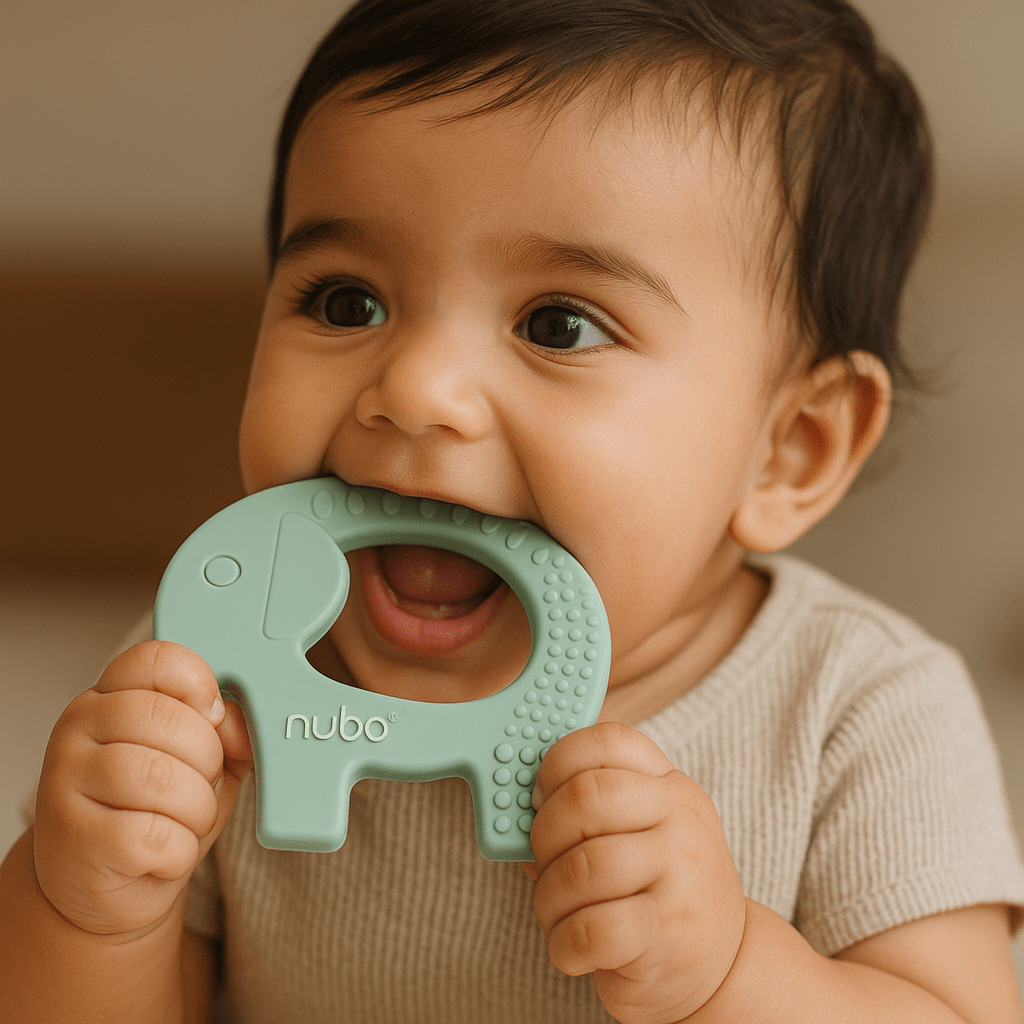
3. Give a teething ring the baby can hold. The AAP recommends teething rings that have been chilled rather than frozen. It is worth being precise here: the AAP does not endorse any one material. What it addresses is temperature, construction and the specific products to avoid.
Chilled, never frozen, and why
This is the single most common mistake, and the AAP is explicit about it:
“Don’t let your baby chew directly on anything that’s frozen solid, since hard objects might hurt tender gums.”
The instinct is understandable. Colder feels like more relief. But gum tissue during eruption is already inflamed and thin, and a rock-hard frozen object bruises it rather than soothing it. Twenty minutes in the refrigerator is the target, not the freezer.
What the AAP says to avoid, and why each one
Four categories are named explicitly.
- Benzocaine and lidocaine teething gels. The AAP does not recommend prescription or over-the-counter gels containing these. The stated reason is practical as well as safety related: they wash out of a baby’s mouth within minutes, so they do very little while carrying real risk.
- Homeopathic teething tablets containing belladonna or coffea cruda.
- Teething necklaces and bracelets, in any material. Amber, wood, marble and silicone are all named. The FDA and the AAP both warn of choking and strangulation risk, and the AAP position is that infants should not wear jewellery at all.
- Liquid-filled teething toys. A toy that can be punctured can release its contents into a baby’s mouth.
That last one is worth sitting with, because water-filled teethers are still sold widely in India and are often marketed as a cooling feature.
Source: Teething Pain Relief: How to Soothe Your Baby’s Discomfort, HealthyChildren.org, American Academy of Pediatrics.
Why one-piece construction matters more than the material debate
Most teether comparisons argue about material: silicone against wood against rubber. The more useful question is how the thing is built.
A teether moulded from a single piece has nothing to separate, nothing to leak, and no join where moisture can collect. Read the AAP’s warning about liquid-filled toys again and notice what kind of warning it is. It is not about the material. It is about construction, and a solid one-piece teether sidesteps it entirely.
The same logic applies to cleaning. A one-piece teether can be boiled or steam sterilised without water entering a cavity that never fully dries.
This is the standard our own teethers are built to, and it is why we treat one-piece construction as non-negotiable rather than a feature.
When do the first teeth come through?
According to the AAP, a child’s first baby teeth typically appear between 6 and 10 months, and the first to emerge are the lower central incisors, the front two teeth on the bottom.
Teething symptoms usually start before anything is visible. Drooling and constant chewing can begin weeks ahead of a tooth breaking through, which is why a baby can seem to be teething long before you can see or feel anything.
Supporting oral motor development
Beyond pain relief, chewing on a well-designed teether is a developmental activity. It prepares the mouth, jaw and tongue for feeding and speech.
| Developmental focus | What the teether needs to do | Why it matters |
| Jaw strengthening | Firm but flexible resistance | Builds strength in the chewing muscles, which underpin later feeding and speech |
| Sensory awareness | Varied textures: smooth, bumpy, ridged | Teaches the tongue and lips to tell sensations apart, supporting the move to solid food |
| Fine motor skills | An easy-to-grip, ergonomic shape | Encourages hand-to-mouth coordination and grasp |
The practical takeaway: a teether a baby cannot hold does none of this. Weight and shape matter as much as texture.

Emotional regulation and self-soothing
Teething discomfort is not only physical. Many babies find the repetitive, rhythmic motion of chewing calming in itself, which is why a teether often settles a fussy baby even when a tooth is not actively coming through.
A familiar object also helps. Having one consistent, trusted teether gives a baby something predictable during a phase where very little else is, and that predictability is doing real work.
When to call your pediatrician
Teething gets blamed for a great deal it does not cause. A high fever, persistent diarrhoea, a rash, or a baby who cannot be consoled are not teething symptoms and should not be waved away as one.
If any of those appear, call your paediatrician rather than assuming a tooth is responsible. Missing something else because it looked like teething is the real risk here.
Frequently asked questions
What do pediatricians recommend for teething pain?
Gentle gum massage with a clean finger, and a teething ring or damp cloth chilled in the refrigerator. The AAP recommends against frozen-solid objects, teething gels containing benzocaine or lidocaine, homeopathic teething tablets, teething necklaces and liquid-filled teething toys.
Should a teether be frozen or chilled?
Chilled. The AAP advises against letting a baby chew on anything frozen solid, because hard objects can hurt already tender gums. Refrigerate a teether for about twenty minutes instead of freezing it.
Are teething gels safe for babies?
The AAP does not recommend teething gels containing benzocaine or lidocaine, and notes they wash out of a baby’s mouth within minutes. Homeopathic teething tablets containing belladonna or coffea cruda are also on its avoid list.
Are teething necklaces safe?
No. The FDA and the AAP warn that teething necklaces and bracelets carry choking and strangulation risks. This applies to every material, including amber, wood, marble and silicone. The AAP position is that infants should not wear jewellery.
At what age do the first teeth come through?
Typically between 6 and 10 months, according to the AAP, starting with the lower central incisors. Symptoms such as drooling and chewing often begin weeks earlier.
What should I look for when buying a teether in India?
One-piece construction with no detachable parts, no liquid filling, a shape a baby can actually grip, and material that can be sterilised. In India, BIS certification under IS 9873 is the domestic safety standard for teethers and is the most locally relevant mark to check for.
The bottom line
Paediatric guidance on teething is narrower than the product aisle suggests. Massage the gums. Chill, do not freeze. Skip the gels, the tablets, the necklaces and anything filled with liquid. Choose something one-piece that your baby can hold and that you can sterilise.
Most of what is sold for teething is answering a question the evidence does not ask.
Further reading:
- Teething Pain Relief, HealthyChildren.org (AAP)
- FDA: Teething necklaces can lead to choking, strangulation, AAP News
- Baby teething gels not recommended, AAP News
- Teething: Facts and Fiction, Pediatrics in Review (AAP)
This article is general information, not medical advice. Speak to your paediatrician about your own child.


leave a comment
This site is protected by hCaptcha and the hCaptcha Privacy Policy and Terms of Service apply.