
You've probably seen them in nurseries and wondered: are cloth books actually useful, or just another baby gadget? Here's the truth—they're one of the smartest early learning tools you can introduce, and pediatricians consistently recommend them for sensory development and bonding.
It's 2 AM, and your three-week-old won't settle. You've tried everything—feeding, burping, white noise. Then you place a soft, high-contrast cloth book in their line of sight, and something shifts. Their eyes track the bold black-and-white patterns, their tiny hands reach out, and for the first time, you see genuine curiosity. That moment—that's when you realize you've found something truly useful.
Here's what actually helps—and thousands of Indian parents trust:
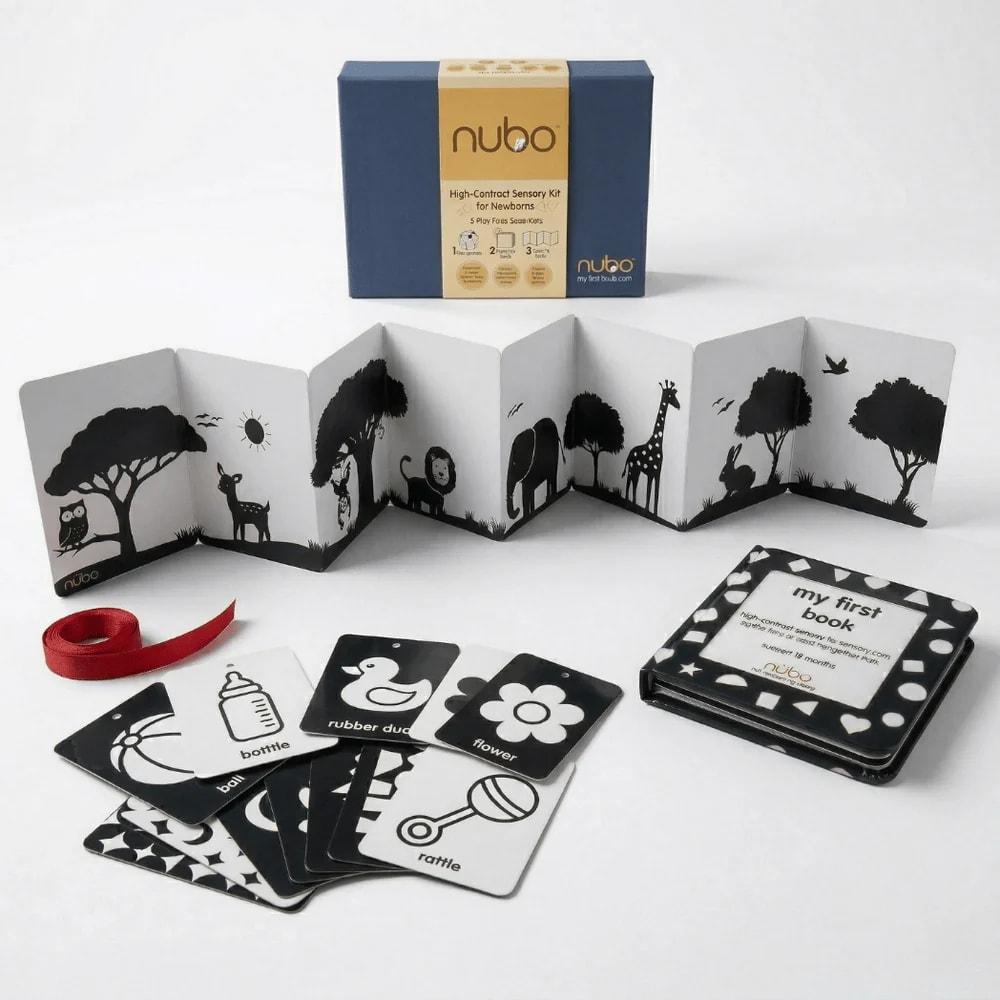
Newborn Gift Kit
Complete early learning bundle | Birth to 6 months | Includes flashcards & cloth book
₹449
Why Infant Cloth Books Matter for Early Development
Let's start with what you need to know: an infant cloth book is a soft, washable board book designed specifically for newborns and babies under 6 months. Unlike paper books, they're made from cotton or fabric, often featuring high-contrast images, textures, and sometimes crinkly or squeaky sounds.
Pediatricians recommend them early because newborns' vision develops rapidly. At birth, babies see mostly in black and white and can only focus on objects 8–10 inches away. High-contrast cloth books meet them exactly where they are developmentally. The bold patterns stimulate the visual cortex, encouraging neural connections. Simultaneously, the soft textures engage touch, and sounds (if present) activate auditory development. It's not just about looking—it's about building brain architecture through sensory experience.
This aligns perfectly with Montessori principles, which emphasize real, tactile, age-appropriate materials. Cloth books respect a baby's natural curiosity without overstimulation, making them ideal companions for tummy time for newborns, when babies need visual anchors to motivate head lift and neck strength.
What to Look For: Quality Matters
Not all cloth books are created equal. Here's what separates genuinely developmental tools from pretty decorations:
| Quality Marker | What to Look For | Red Flags |
|---|---|---|
| Contrast & Colors | True black-and-white patterns, high saturation for newborn vision | Pastels, muted colors, low contrast. Visually confusing for newborns |
| Fabric Safety | BIS Certified, GOTS organic cotton, soft edges, secure stitching | Loose threads, dyes that might bleed, rough seams |
| Texture Variety | Mix of smooth, bumpy, and crinkly fabrics for sensory input | Uniform texture throughout—misses sensory development window |
| Design Philosophy | Age-appropriate, uncluttered layouts (Montessori-inspired) | Overcrowded designs, dangling toys, overstimulation risk |
| Washability | Machine washable, colorfast, quick-drying | Dry clean only, colors fade, takes forever to dry |
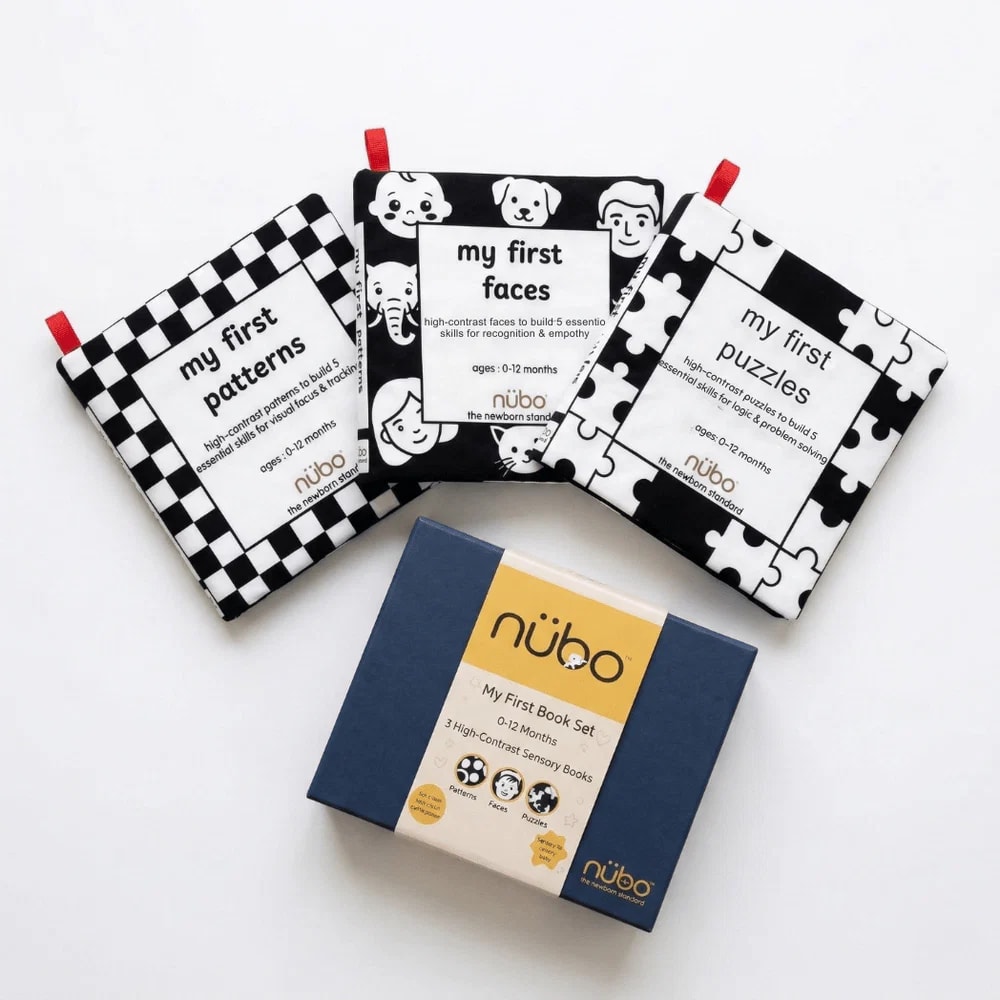
At Nubokind, we design cloth books with this checklist in mind. Our High Contrast Cloth Book Set uses true black-and-white patterns, organic cotton, and varied textures to support visual and tactile learning from day one. They're BIS Certified for safety and designed specifically for the newborn-to-6-month window, which is when infant visual development happens fastest.
When Can Babies Start Using Cloth Books?
You can introduce cloth books from birth. Yes, even a two-week-old. In the early days, your baby might not reach for them or interact actively—they're still learning to focus. But placing a high-contrast cloth book within their line of sight during alert periods (usually after feeding or in early morning) gives their visual system something meaningful to track.
By 6–8 weeks, babies begin reaching and grasping. This is when cloth books become interactive. The tactile exploration phase happens around 3–4 months, when your baby can hold objects for longer and explore textures with their hands and mouth. For tummy time, cloth books become particularly valuable around 2–3 months, when babies are motivated by interesting visuals to practice head lifts and neck strength.
By 6 months, your baby is ready for more complex books, but cloth books remain wonderful companions through the first year. Many parents rotate through several as part of their infant learning toys collection.
The Sensory and Developmental Benefits
Visual Development & High Contrast
Newborn eyes are still developing the ability to distinguish shapes, lines, and movement. High contrast images for infants—especially black and white patterns—activate the visual cortex more effectively than colors. This stimulates the neural pathways responsible for vision, supporting what's called "preferential looking," where babies naturally look at patterns they find interesting. Over time, this builds visual acuity and focus.
Tactile Learning Through Touch
Sensory toys for newborns work best when they offer variety. A cloth book with different textures (smooth cotton, crinkly layers, bumpy appliqués) teaches babies about cause and effect and builds fine motor skills. By 4–6 months, babies mouth everything—cloth books are safe, washable alternatives to hard teethers.
Language Development & Bonding
Reading cloth books with your baby—even silently—creates shared attention moments. This "serve and return" interaction is foundational for language and emotional development. Narrating what you see ("Look at the circles!") adds a language layer, supporting vocabulary growth even in the earliest weeks.
Motor Development Support
For tummy time activities, cloth books placed just beyond arm's reach motivate babies to reach, practice head lifts, and strengthen their neck and shoulders. This naturally supports the progression toward rolling, crawling, and sitting.
Real Parents, Real Results
Palak Sharma
Beautiful gift
I bought this for a cousin's baby shower and it was the highlight of gifts. The packaging is beautiful and it feels like a very thoughtful, high-end product. It’s a unique alternative to the standard plastic toys you see everywhere.
Sandeep
Cloth books are perfect
The cloth books have crinkling sounds and a baby-safe mirror that are wonderful for sensory development. My baby absolutely loves the My First Faces book the most and enjoys exploring it every day.
How to Use Cloth Books: Quick Tips for Maximum Impact
- Start with alert windows. Introduce cloth books when your baby is fed, changed, and awake but calm—not during feeding or crying spells.
- Use during tummy time. Place the book 8–10 inches from your baby's face to encourage head lifts and visual tracking. This builds neck strength naturally.
- Rotate regularly. Babies benefit from novelty. Swap books every few weeks to keep engagement fresh and support cognitive development.
- Narrate as you go. Even with a newborn, describe what you see: "Look at the circles!" or "Feel the bumpy texture." This builds language pathways.
- Keep them accessible. Place cloth books in your diaper bag, car, and near your nursing/feeding spot. They're lightweight and perfect for on-the-go sensory engagement.
- Wash regularly. Babies explore with their mouths. Machine-washable cloth books should be cleaned weekly or as needed. Choose BIS Certified products to ensure colors stay true and fabric stays soft.
Safety: What Parents Need to Know
Cloth books are among the safest infant learning toys available—if you choose the right ones. Here's what matters:
- BIS Certification. Look for products that meet Indian safety standards. This ensures dyes are non-toxic, stitching is secure, and no small parts can detach.
- No loose threads or buttons. Inspect books regularly. Tighten any loose seams before giving to baby.
- Organic or high-quality cotton. Babies mouth everything. Avoid cheap fabrics that shed or have chemical finishes.
- Age-appropriate design. A well-designed cloth book for newborns won't have dangling cords, bells, or small attachments that pose choking risks.
- Supervision. Always supervise book exploration. By 6 months, babies are teething—they'll chew. That's normal and safe with quality cloth books.
Frequently Asked Questions
Q: Are high-contrast cloth books actually necessary, or just marketing?
A: They're not marketing—they're neuroscience. Newborn eyes are still developing the ability to process color and detail. Black-and-white high-contrast images activate the visual cortex more effectively than pastels or colors. Studies show babies prefer high-contrast patterns from day one. That said, not every baby product labeled "high contrast" is effective. Look for true black-and-white designs with clean geometry, not murky grays or confusing patterns.
Q: Can I make my own cloth book instead of buying one?
A: You absolutely can—many parents do! But consider: commercial cloth books like ours are designed with developmental milestones in mind, tested for safety (BIS Certified), and made with fabric that won't bleed or wear out after a few washes. If you're crafty and have time, DIY is rewarding. If you want something reliable, ready-made infant cloth books save time and ensure quality consistency.
Q: When should I transition from cloth books to board books or paper books?
A: Cloth books remain useful through 12 months and beyond, but around 8–10 months, you can introduce sturdy board books. By 18 months+, most toddlers can handle paper books with supervision. The transition happens naturally as your child's motor skills and understanding of how to handle books develop. Keep cloth books in rotation—they're washable, durable, and perfect for travel.
Q: How often should I wash cloth books?
A: Weekly, or whenever they look soiled or sticky. Since babies explore with their mouths, regular washing is important for hygiene. Choose cloth books that are machine washable and colorfast—like the Nubokind High Contrast Cloth Book Set—so washing doesn't fade patterns or damage fabric.
Q: Can cloth books help with tummy time motivation?
A: Absolutely. Placing a high-contrast cloth book 8–10 inches from your baby's face during tummy time gives them a visual anchor and motivation to lift their head. This strengthens neck and shoulder muscles naturally. By 3–4 months, babies using tummy time with engaging visuals (like cloth books) typically develop stronger upper body strength, which supports rolling and crawling milestones.
Q: Is the High Contrast Cloth Book Set suitable as a newborn gift?
A: Yes—it's one of the best newborn gifts you can give. Unlike many toys, cloth books are immediately useful from day one, safe, washable, and aligned with modern developmental research. The Nubokind High Contrast Cloth Book Set is specifically designed for the newborn-to-6-month window, making it thoughtful and practical for first-time parents.
The Bottom Line: Simple, Smart, Developmental
Infant cloth books aren't a luxury—they're a foundational tool for early learning. They support visual development, encourage sensory exploration, and create bonding moments with your baby. When you choose a well-designed, safe option like Nubokind's cloth book collection, you're investing in tools that meet your baby where they are developmentally.
Whether you're setting up a nursery, planning tummy time, or looking for the perfect newborn gift, high-contrast cloth books deserve a place in your baby's early learning toolkit.
Ready to get started? Explore Nubokind's High Contrast Cloth Book Set or discover our complete Newborn Gift Kit—everything you need for early sensory development, designed with your baby's growth in mind.


leave a comment
This site is protected by hCaptcha and the hCaptcha Privacy Policy and Terms of Service apply.