
You've brought your baby home. Within days, you've heard the phrase "tummy time" from every parent and pediatrician. But when do you actually start? And how do you make it something your baby (and you) enjoy instead of endure? Here's what you need to know.
It's 3 AM. Your baby is awake (again), and you're frantically scrolling through parenting forums wondering if you're doing enough for their development. Someone mentions tummy time with such conviction that you feel like you're already falling behind. The truth? You're not—and we've got the tools to make it actually enjoyable for both of you.
Here's what actually helped us—and thousands of Indian parents.
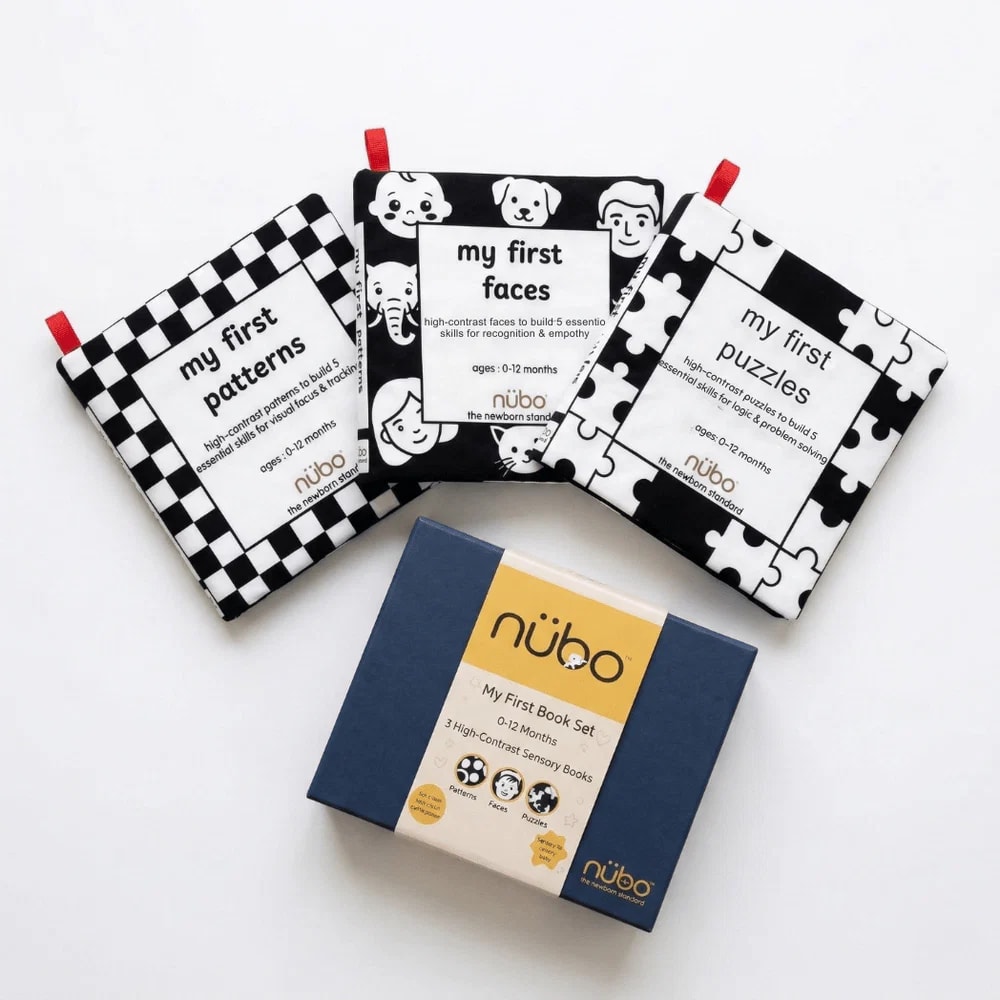
High Contrast Cloth Book Set
Montessori-inspired | Perfect for tummy time engagement | 0–6 months
₹549
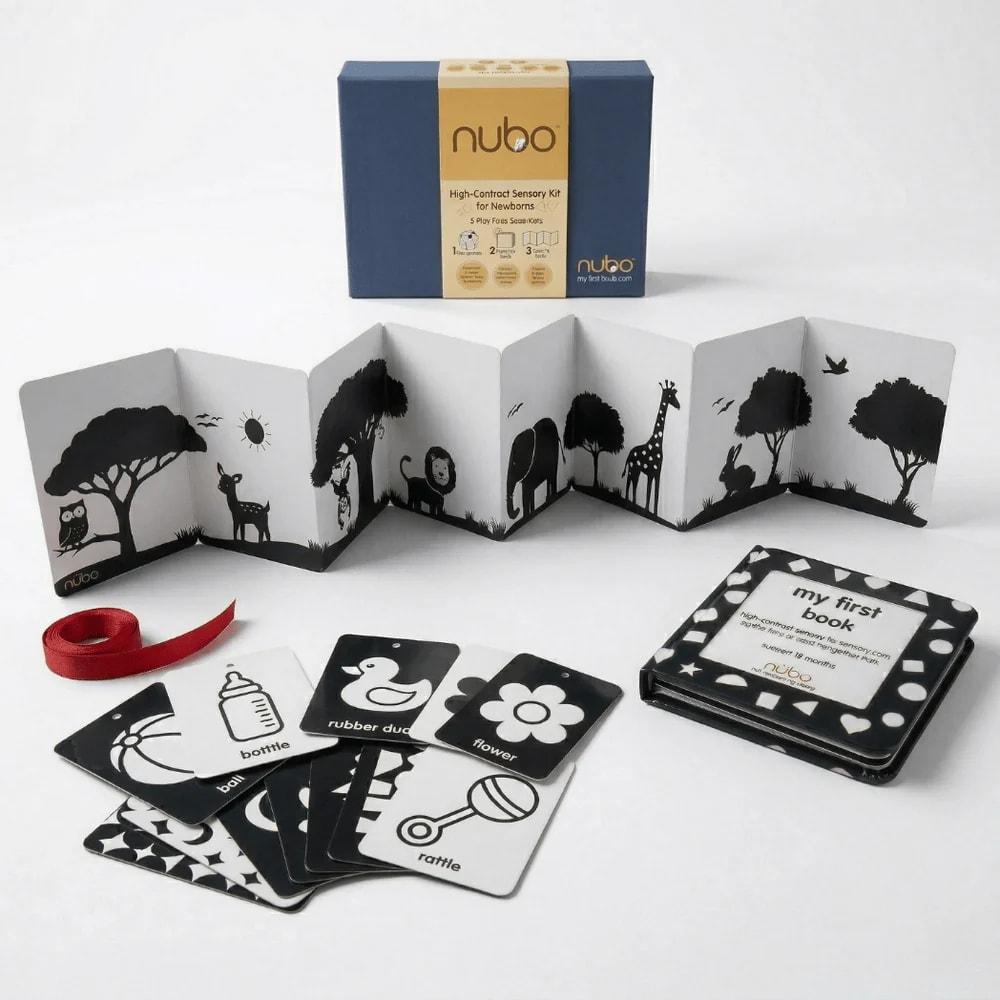
Newborn Gift Kit
Complete tummy time starter set | Includes high contrast cards & cloth books | 0–6 months
₹449
Why Tummy Time Matters for Your Baby
Tummy time isn't just another parenting buzzword—it's one of the simplest ways to support your baby's physical and cognitive development. When babies spend time on their stomachs, they're building neck strength, developing their core muscles, and learning to coordinate their movements. These aren't fancy Montessori concepts; they're foundational skills your baby needs.
Beyond muscle development, tummy time is sensory learning. Your baby sees the world from a different angle, engages their vestibular system (balance and spatial awareness), and begins to understand cause and effect. A high-contrast object catches their eye, they move toward it, and suddenly their brain is making connections.
For parents in India—especially those raising children with limited outdoor time or in smaller spaces—tummy time is a gift. It's free, it's accessible, and it's one of the most effective ways to give your baby a developmental head start without fancy equipment or expensive classes.
When Should You Start Tummy Time?
The simple answer: you can start tummy time from day one, but it doesn't look the way you might think. Newborns don't need long stretches on their stomachs—in fact, they shouldn't have them. Your goal in the first few weeks is gentle, supervised exposure.
In the first week to two weeks, place your baby on their tummy for just 30 seconds to 1 minute while you're holding them, during a diaper change, or on your chest. This isn't "tummy time" in the traditional sense—it's familiarization. Your baby is learning that their stomach touching a surface is normal and safe.
By week 3 to 4, you can begin placing your baby on a clean, firm surface (a play mat, a folded blanket) for 2–3 minutes at a time, once or twice a day. By 3 months old, most babies can handle 10–15 minutes of supervised tummy time. By 6 months, aim for cumulative tummy time totaling 20–30 minutes daily (spread across multiple sessions).
| Age | Duration & Frequency | What to Expect |
|---|---|---|
| 0–2 weeks | 30 sec–1 min, 1× daily | Gentle introduction; baby may cry—this is normal |
| 2–4 weeks | 1–3 min, 1–2× daily | Baby begins to hold head briefly; watch for comfort cues |
| 1–3 months | 3–10 min, 2–3× daily | Head lifting improves; baby shows interest in surroundings |
| 3–6 months | 10–20 min, 3–4× daily or cumulative 20–30 min | Rolling begins; stronger neck control; active engagement |
What Makes a Good Tummy Time Experience?
Not all tummy time is created equal. Your baby needs an environment that's safe, engaging, and developmentally appropriate. Here's what separates products and spaces that work from those that don't:
| What Works | What Doesn't |
|---|---|
| High-contrast visuals (black & white, bold colors) that capture newborn attention | Bright, multicolored toys that overstimulate; pastels that newborns can't see clearly |
| Safe, soft materials (organic cotton, BIS-certified) your baby can safely mouth | Plastic toys with sharp edges, loose parts, or synthetic materials near mouth |
| Montessori-inspired design: minimal, purposeful, focused on one concept per toy | Overstimulating toys with multiple textures, sounds, and features competing for attention |
| Washable, durable cloth books and cards for hands-on sensory engagement | Glossy paper books that are fragile and impossible to clean |
| Positioned at eye level during tummy time (about 20–25 cm from baby's face) | Toys placed too far away or too high—baby can't engage |
Nubokind's tummy time collection is built around these principles. Our high-contrast cloth books and Montessori-inspired kits are designed to capture your newborn's attention without overstimulation. Each product is BIS-certified, made from organic materials, and tested by Indian parents like you. When your baby is on their tummy, they should be seeing shapes and patterns that develop their visual tracking—not just colors.
Setting Up Safe Tummy Time at Home
Safety comes first. Here's how to create an environment where your baby can thrive during tummy time:
- Use a firm, flat surface. A play mat, yoga mat, or folded blanket on the floor—not a bed or couch where your baby could roll or sink.
- Always supervise. Never leave your baby alone during tummy time, even for a moment. Your presence is part of the experience.
- Place toys at eye level. Position high-contrast cards or cloth books about 20–25 cm from your baby's face—close enough to engage, far enough to encourage head lifting.
- Choose a calm time of day. Avoid tummy time when your baby is hungry, tired, or overstimulated. Post-feed is often ideal.
- Keep the environment warm. Your baby should be dressed appropriately for tummy time; avoid overheating.
- Start short and build gradually. If your baby cries, it doesn't mean tummy time is "bad"—it means you're building tolerance. Stay present, keep it light, and try again tomorrow.
Engaging Tummy Time Activities to Try Now
Tummy time doesn't require apps, expensive toys, or complex setups. Here are activities that work—and why they matter:
- High-contrast card play. Show your newborn a black-and-white card at eye level. Slowly move it left to right. Your baby's eyes will follow, strengthening visual tracking and encouraging head turns. Rotate cards every 30–45 seconds to maintain interest.
- Cloth book exploration. Lay a soft, high-contrast cloth book in front of your baby during tummy time. As they grow, they'll begin to reach for it, mouth it, and explore textures. These aren't just books—they're sensory tools.
- Mirror play. Place a safe baby mirror (unbreakable, BIS-certified) at eye level during tummy time. Your baby sees their own face and begins to understand reflection. This supports cognitive development and self-awareness.
- Texture exploration. Offer different textures—a soft cotton cloth, a crinkly cloth, a smooth cloth. Let your baby's hands and mouth explore. This builds sensory pathways in the brain.
- Your face and voice. The most engaging "toy" during tummy time is you. Lie down in front of your baby, make eye contact, talk softly, and smile. This deepens attachment and gives your baby motivation to lift their head.
- Rolling practice (3+ months). As your baby approaches 3–4 months, gently encourage rolling by placing a toy just out of reach to one side. Let your baby work toward it. This is active learning at its finest.
What Indian Parents Are Saying
Palak Sharma
Beautiful gift
I bought this for a cousin's baby shower and it was the highlight of gifts. The packaging is beautiful and it feels like a very thoughtful, high-end product. It’s a unique alternative to the standard plastic toys you see everywhere.
Twinkle Jain
Great Tummy Time Option
This cloth book set is a great option for tummy time. Three of the books are well-made, and my baby especially loves the "My First Faces" book. The quality is good, and it keeps my little one engaged.
Frequently Asked Questions About Tummy Time
Q: My newborn hates tummy time and cries immediately. Is this normal?
A: Yes, this is completely normal—even healthy. Your newborn is building frustration tolerance, which is developmentally crucial. The key is to keep sessions short (30 seconds to 2 minutes initially), stay calm and encouraging, and try again tomorrow. If your baby associates tummy time with your presence and voice, they'll gradually accept it. Within 3–4 weeks, most babies settle into tummy time. If crying is extreme or your baby seems in pain, consult your pediatrician.
Q: What's the difference between tummy time and playtime on their back?
A: They're complementary. Back time (and side-lying) is safe for sleep and allows your baby to see their hands and explore them. Tummy time specifically builds neck, shoulder, and core strength—muscles needed for rolling, sitting, and eventually crawling. Back time won't develop these muscles the same way. You need both. Aim for supervised tummy time during waking hours and back sleeping for naps and nighttime.
Q: How do high-contrast cards and cloth books help during tummy time?
A: Newborns' eyes aren't fully developed yet. They can't see soft pastels, but they can clearly see stark black-and-white contrasts. High-contrast visuals at eye level during tummy time give your baby something engaging to focus on, encouraging head lifting and visual tracking. As their vision develops (around 3 months), they'll see and track more colors. Cloth books add texture, which builds sensory pathways. Together, they make tummy time a learning experience, not just a physical exercise.
Q: Is tummy time safe if my baby has reflux or colic?
A: Short, gentle tummy time can actually help with gas and digestion—but timing matters. Avoid tummy time immediately after feeding. If your baby has reflux or colic, start with just 1–2 minutes at a time and do tummy time during calm periods. Consult your pediatrician before starting if your baby has diagnosed reflux. Many Indian parents find that gentle tummy time, combined with infant massage, actually eases colic symptoms over time.
Q: When should I worry that my baby isn't progressing with tummy time milestones?
A: Every baby develops at their own pace. However, if your baby at 3 months cannot lift their head briefly or show interest in objects during tummy time, mention it to your pediatrician. Similarly, if your baby still cannot roll by 5–6 months, ask for guidance. Most developmental variations are fine, but your pediatrician can rule out any concerns. Nubokind's products are designed to encourage engagement, but they're not a substitute for medical advice.
Q: How do I choose between Montessori toys and other tummy time toys?
A: Montessori-inspired toys are deliberately minimal and focused. Instead of a toy with 10 textures, sounds, and lights (which overstimulates), a Montessori approach means one high-contrast card, one texture, one concept per item. This allows your baby's developing brain to focus, learn, and move on—not get overwhelmed. For tummy time specifically, Montessori toys like high-contrast cloth books and cards are ideal because they encourage active engagement without sensory overload. Nubokind's collection follows these principles, tested by Indian parents in real homes.
Quick Guide: Choosing Your Tummy Time Essentials
- For newborns 0–2 months: Start with a high-contrast cloth book set or newborn kit. These are safe, engaging, and designed for early visual development.
- For 2–4 months: Combine cloth books with teethers (like the ELE Ring Teether Set). As your baby's motor skills improve, they'll want to reach for and mouth objects.
- For 4–6 months: Add softer, safer teethers like the Kiko No-Drop Newborn Teether. By now, your baby is rolling and reaching—they need toys that won't hurt if grabbed suddenly.
- Prioritize safety first: BIS-certified, washable, no loose parts, and soft enough for mouthing.
- Don't overbuy: Two or three high-quality items beat ten cheap toys. Rotation keeps interest alive.
- Watch for engagement: Your baby's interest tells you what works. If a toy holds their attention, you've found a winner.
Conclusion: Tummy Time Is a Journey, Not a Race
Tummy time isn't about hitting perfect milestones or making your baby a genius. It's about creating small moments where your baby learns, grows, and connects with you. Every time your baby lifts their head an inch higher, tracks an object with their eyes, or reaches for a cloth book, their brain is rewiring itself for strength, coordination, and curiosity.
As an Indian parent, you don't need expensive equipment or classes. You need products designed with your baby in mind—safe, sensory-rich, and honest. Nubokind's tummy time collection is built by parents who've been exactly where you are: overwhelmed, curious, and wanting to do right by their babies without the noise.
Ready to make tummy time enjoyable for both of you? Explore Nubokind's High Contrast Cloth Book Set, or start with our Newborn Gift Kit—a complete tummy time starter designed for Indian families. Every product is tested, certified, and backed by real parent reviews. Your baby's development starts here.


leave a comment
This site is protected by hCaptcha and the hCaptcha Privacy Policy and Terms of Service apply.