
Quick Answer
Start with 30 seconds to 1 minute. At one month old, your baby only needs short bursts of supervised tummy time. Gradually build up to 3–5 minutes several times a day as they grow stronger over the coming months.
WHY TUMMY TIME MATTERS AT ONE MONTH
Tummy time isn't just an old parenting ritual—it's a crucial part of your newborn's physical development. When your baby lies on their stomach, they naturally work against gravity, strengthening the muscles in their neck, shoulders, and back. These are the exact muscles they'll eventually use to lift their head, roll over, and crawl.
At one month old, your baby's neck control is still developing. They can't hold their head up for long, which is why tummy time at this stage is gentle and brief. The goal isn't to tire them out—it's to introduce the sensation of being on their tummy in a safe, comfortable way.
Many experts suggest that babies who get regular tummy time reach developmental milestones like rolling and sitting up on a more typical timeline. Plus, tummy time can reduce the risk of positional flatness (plagiocephaly) that sometimes develops from babies spending too much time on their backs.
HOW LONG SHOULD TUMMY TIME BE FOR A 1-MONTH-OLD?
At one month old, your baby needs short, frequent sessions rather than long stretches. Think of it as introducing the concept, not building endurance. Most pediatricians and child development specialists recommend starting with just 30 seconds to 1 minute of tummy time, several times a day.
If your baby gets fussy or restless after a minute or two, that's completely normal. Their little neck and shoulders are working hard, and fatigue sets in quickly. The key is consistency, not duration. A few short sessions spread throughout the day will do far more than one longer session that stresses your baby out.
As your baby grows over the next few weeks and months, you can gradually increase the time. By 2–3 months, many babies can comfortably handle 5–10 minutes. By 4–6 months, 10–15 minutes becomes more typical. But at one month, less is definitely more.
HOW OFTEN TO PRACTICE TUMMY TIME WITH YOUR NEWBORN
Frequency trumps duration at this stage. Aim for 2–4 short tummy time sessions daily with your one-month-old. You might do one in the morning after a diaper change, one after lunch, one in the afternoon, and perhaps one before bedtime—whatever fits naturally into your day.
The beauty of multiple short sessions is that they feel less overwhelming for both baby and parent. If your baby fusses during one session, you know another opportunity is coming in a few hours. This takes the pressure off perfecting every single session.
Some parents find it helpful to link tummy time to a routine activity. For example, you might do a quick session right after each diaper change or after a feed (though give baby 15–20 minutes to settle after eating first—you don't want them spitting up on the mat). Creating this natural rhythm helps tummy time feel like a normal part of your day rather than a separate task.
BUILDING TUMMY TIME INTO YOUR DAILY ROUTINE
Tummy time works best when it's woven into what you already do. You don't need to set a timer or create a formal "tummy time hour." Instead, think of it as an everyday opportunity.
Try these simple moments:
- After morning nappy changes: Before dressing your baby, place them on a play mat for 30 seconds to 1 minute.
- During playtime on the floor: When you're spending time on the mat with your baby anyway, let them spend part of that time on their tummy.
- During supervised floor play: If you're on the floor doing tummy time, you can interact with your baby using toys or high-contrast images to keep them engaged.
- Before a nap or bedtime routine: A gentle 1-minute session can be part of winding down, though not immediately before sleep.
The main thing is always supervise. Never leave your one-month-old alone on their tummy. Position yourself close by so you can watch their face and ensure their airway stays clear. If you're using a play mat or book with high-contrast images, place it in front of your baby at eye level to encourage them to lift their head slightly.
MAKING TUMMY TIME COMFORTABLE AND ENGAGING
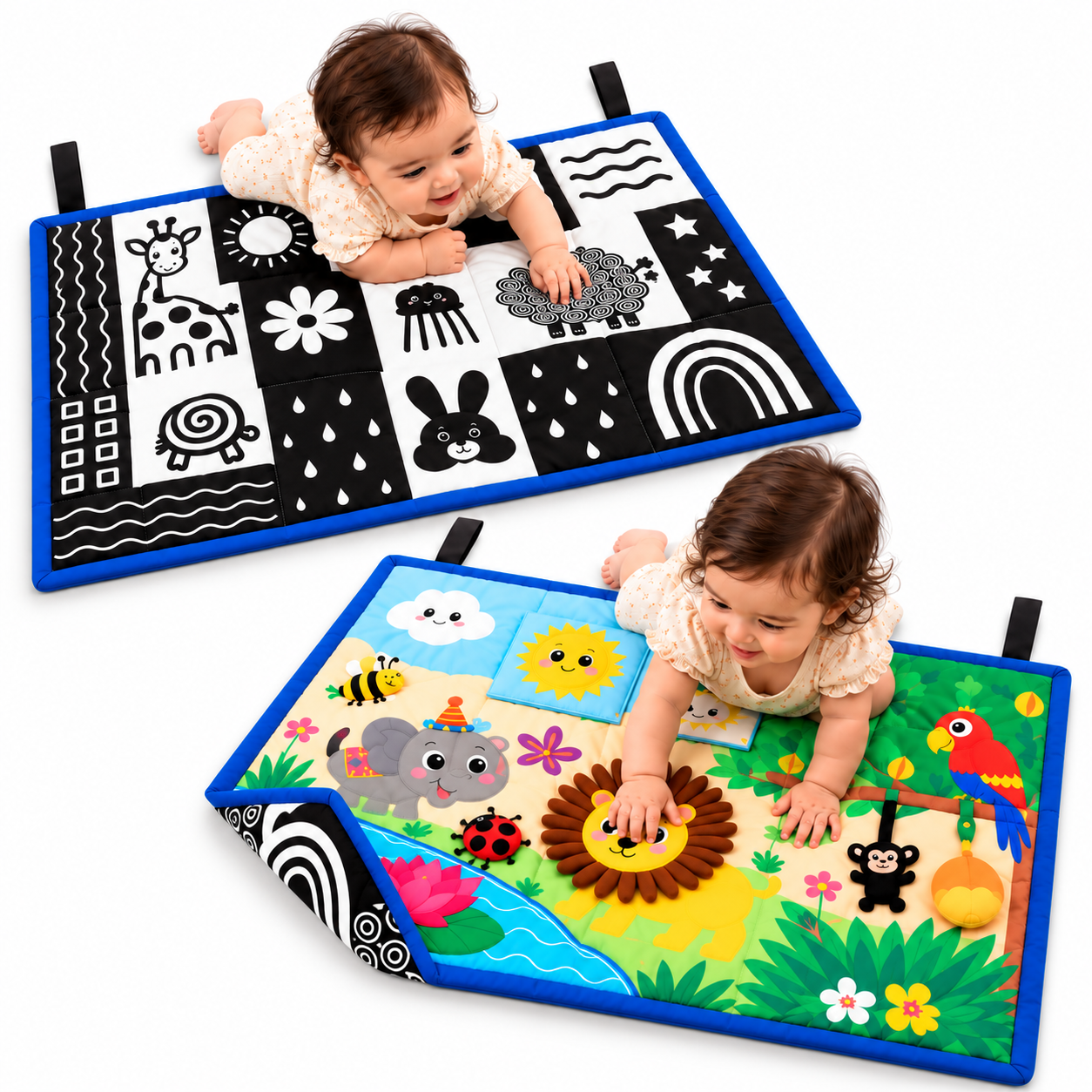
Your one-month-old is still adjusting to life outside the womb. Being on their tummy is a new sensation, and comfort matters. Use a soft, padded play mat as your base—this provides cushioning and a defined space where tummy time happens.
Here's what research indicates helps babies stay calm during tummy time:
| What Helps | Why It Works |
|---|---|
| Soft, padded surface | Reduces discomfort and feels secure for newborn skin |
| Warm room temperature | Babies regulate heat poorly; cold discourages tummy time |
| Calm, quiet environment | Loud noise or activity overstimulates young babies |
| Parent nearby talking softly | Your voice is soothing and familiar; builds bonding |
| High-contrast visual stimuli | One-month-olds see high contrast best; keeps them focused |
| Minimal pressure on tummy | A very full stomach makes tummy time uncomfortable |
Many parents find that high-contrast images or flashcards positioned at eye level keep their baby's attention during tummy time. At one month, your baby's vision is still developing, and they respond best to bold black-and-white patterns or simple shapes. This gives them something to focus on, which naturally encourages them to lift their head slightly—exactly the muscle work you want.
QUICK TIPS FOR PARENTS
- Start small: 30 seconds to 1 minute is enough for a one-month-old. Short, frequent sessions beat long ones.
- Supervise always: Never leave your baby alone on their tummy. Stay close and watch their face.
- Link to routines: Tie tummy time to diaper changes or floor playtime so it happens naturally throughout your day.
- Use visual stimulation: Position high-contrast images or black-and-white books in front of your baby to keep them engaged and encourage head lifting.
- Watch for fussiness: If your baby cries, that's normal—pick them up, comfort them, and try again later. There's no "failure" in tummy time.
- Keep it warm and comfortable: Ensure the room is cozy, the surface is soft, and your baby has fed a little while before (not immediately after) starting.
PRODUCTS THAT SUPPORT TUMMY TIME
The right tools can make tummy time easier and more enjoyable for both you and your baby. A dedicated play mat gives your baby a safe, soft space, while high-contrast visuals keep them engaged. Here are products designed with newborn development in mind:
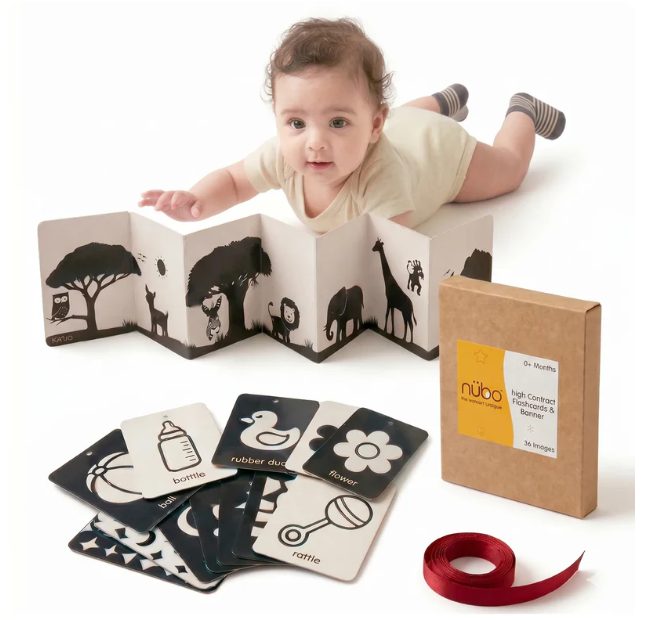
High Contrast Flashcards & Tummy Time Banner
High contrast images | Visual focus & tracking | Newborn visual development
₹299
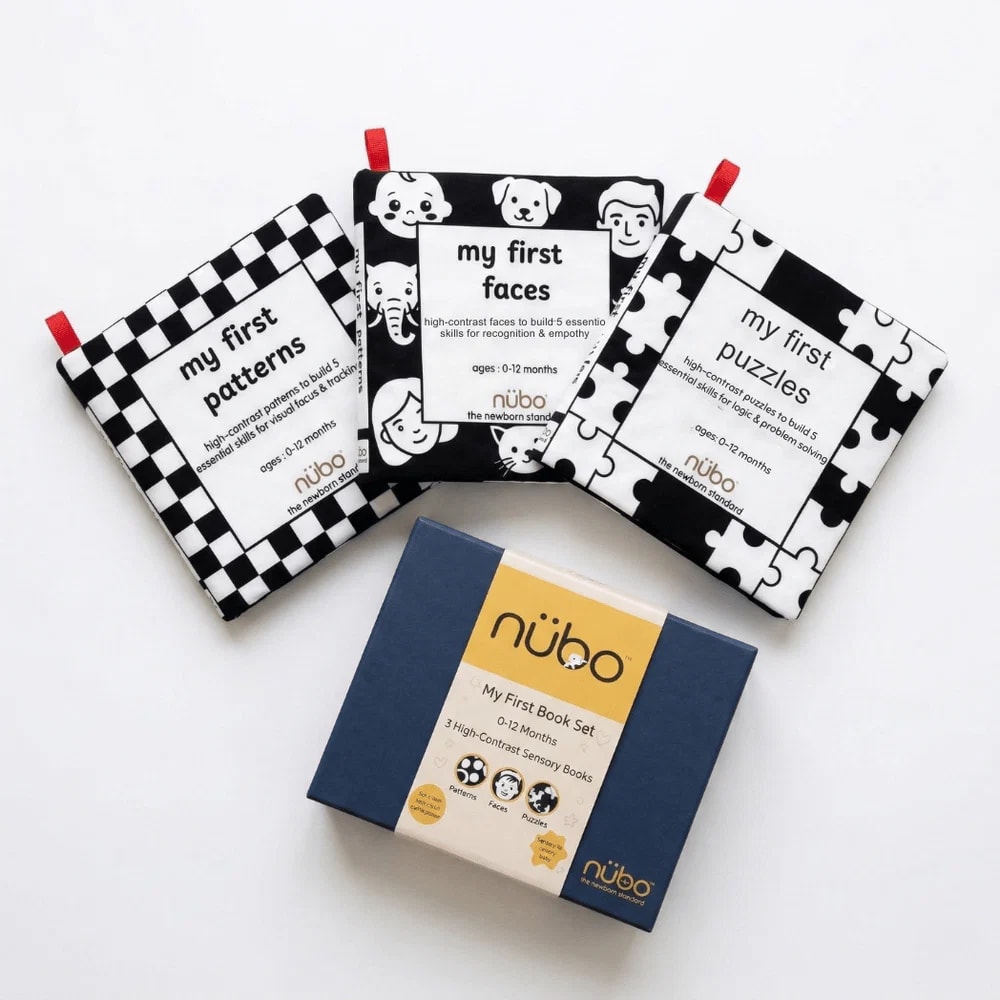
High Contrast Cloth Book Set
Soft, washable cloth | Black & white patterns | Tummy time engagement
₹549
These tools align with Montessori principles of sensory exploration and visual development—supporting the developmental work your baby does during tummy time.
FREQUENTLY ASKED QUESTIONS
Q: Can I do tummy time with my 1-month-old right after feeding?
A: It's best to wait 15–20 minutes after feeding before starting tummy time. A full stomach plus pressure on the belly can make your baby uncomfortable or cause them to spit up. If you want to link tummy time to feeding, do it before a feed rather than after.
Q: What if my 1-month-old cries during tummy time?
A: Crying during tummy time is very common and doesn't mean you're doing anything wrong. Your baby's neck and shoulders are working hard, and the sensation is new. If crying happens, comfort your baby, let them rest, and try again in a few hours. You're building a habit, not forcing compliance. Gradually, they'll become more comfortable with it.
Q: How do I know if my 1-month-old is getting enough tummy time?
A: There's no strict minimum, but 2–4 short sessions daily (even just 1–2 minutes total per day) is plenty for a one-month-old. As long as you're offering tummy time regularly and your baby's development seems on track, you're doing great. Talk to your pediatrician if you have concerns about developmental progress.
Q: Is a play mat necessary for newborn tummy time?
A: A dedicated play mat isn't essential, but it's helpful. It provides a soft, cushioned surface and creates a "tummy time zone" your baby begins to recognize. You can use a folded blanket or towel in a pinch, but a padded mat is gentler and easier to keep clean.
Q: Can tummy time help prevent flat head syndrome?
A: Yes. Babies who spend extended time on their backs (as recommended for safe sleep) can develop positional flatness. Regular tummy time, combined with varying your baby's head position during sleep, helps reduce this risk. Talk to your pediatrician if you notice any unusual head shape.
Q: When should I increase tummy time duration for my baby?
A: Most babies are ready for slightly longer sessions by 2–3 months old. You can gradually increase from 1–2 minutes to 5–10 minutes as your baby gets stronger. By 4–6 months, 10–15 minutes is more typical. Always watch your baby's cues and increase at their pace, not a fixed schedule.
CONCLUSION
Tummy time for your one-month-old doesn't need to be complicated or stressful. Short, frequent sessions of 30 seconds to 1 minute, repeated 2–4 times a day, are exactly what your baby needs right now. The goal is to gently introduce the sensation and build strength gradually over weeks and months ahead.
Focus on consistency rather than duration. Link tummy time to your existing routines—after diaper changes, during floor playtime, or any quiet moment you're already spending time with your baby. Use a soft play mat for comfort and high-contrast visuals to keep your baby engaged and encourage head lifting.
Remember, every baby is different. Some take to tummy time right away; others need more time to adjust. Be patient with both your baby and yourself. If you have specific concerns about your baby's development or comfort during tummy time, your pediatrician is always the best resource. And as your little one grows, you'll be amazed at how quickly tummy time transforms from a 30-second activity into a springboard for rolling, reaching, and eventually crawling.



leave a comment
This site is protected by hCaptcha and the hCaptcha Privacy Policy and Terms of Service apply.