
Silicone vs. Wooden Teethers: Which is Safer and Better for Your Baby’s Gums?
Key Takeaways: The Short Answer
-
Safety First: Silicone is non-porous and bacteria-resistant, whereas wood is porous and can harbor germs if not cleaned perfectly.
-
Texture: Silicone mimics the softness of skin, making it gentler on bruised gums. Wood is hard and can hurt a baby if they accidentally hit themselves with it.
-
Maintenance: You can boil or sterilize silicone (like Nubokind’s Kiko & Ele collections) to ensure 100% hygiene. Wood cannot be sterilized.
-
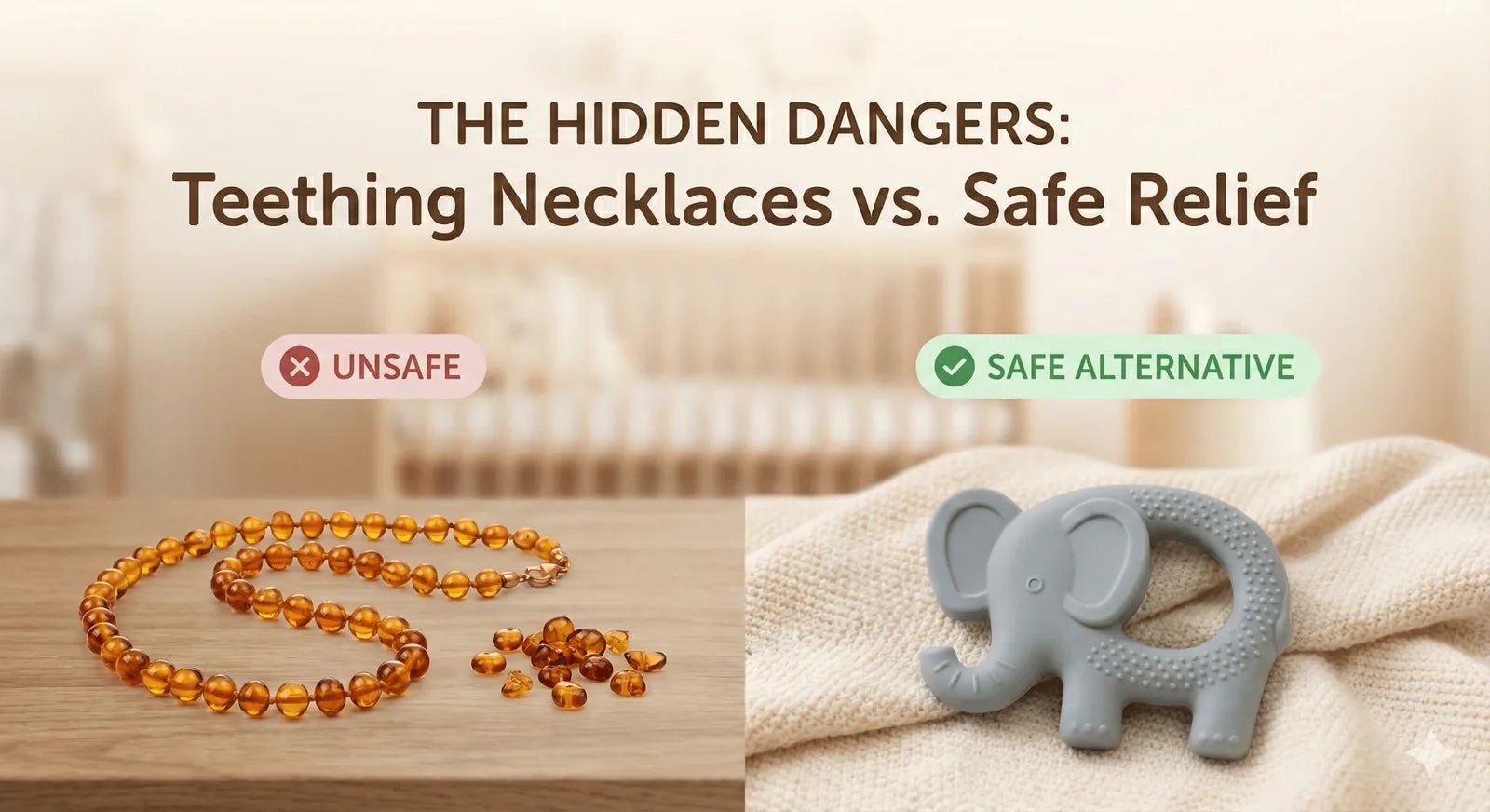
Verdict: For newborns and infants with sensitive gums, BIS-certified silicone is the safer, more hygienic choice.
The Great Teether Debate: Wood or Silicone?
If you have a teething baby, you know the drill: everything goes into the mouth. As a parent, you’re often stuck between two popular choices. On one side, there’s the rustic, aesthetic appeal of wooden teethers. On the other, the modern, colorful utility of silicone.
But when it comes to your baby’s delicate, developing gums, which material is actually safer?
At Nubokind, we believe in making choices backed by safety standards and real-world parenting needs. Here is an honest breakdown of the debate.
3 Critical Differences Every Parent Should Know
1. Softness and Comfort: The "Ouch" Factor
The primary purpose of a teether is to soothe sore gums, not bruise them.
-
Wooden Teethers: Wood is naturally hard. While some older babies might enjoy the resistance, a heavy wooden ring can be unforgiving if a baby accidentally hits themselves in the face (which happens often with newborns learning motor control!).
-
Silicone Teethers: High-quality food-grade silicone has a "chewy" give. It offers resistance to help teeth cut through but is soft enough to massage swollen gums without causing pain.
-
The Nubokind Difference: Our Ele Ring and Kiko No-Drop collections are crafted from soft, pliable silicone that mimics the texture of skin, offering comfort rather than impact.
-
2. Hygiene: The Hidden Germ Trap
How easy is it to clean? This is arguably the most critical factor for infant health.
-
Wooden Teethers: Wood is porous. Even with sealants, it can absorb drool, which creates a breeding ground for bacteria over time. You also cannot boil or steam-sterilize wood, as it will warp or splinter.
-
Silicone Teethers: Silicone is non-porous. It repels bacteria and mold. You can toss a silicone teether into boiling water, a UV sterilizer, or a dishwasher without worrying about it degrading.
3. Safety Certification (BIS Standards)
Safety isn't just about the material; it's about the certification.
-
Wooden Teethers: While natural, wood can splinter if it dries out or is chewed aggressively. It is harder to standardize the density of wood across batches.
-
Silicone Teethers: Medical and food-grade silicone is chemically inert—meaning it won't react with anything. It is free from BPA, PVC, and Phthalates.
-
Note: Always look for BIS Certification (Bureau of Indian Standards). Nubokind teethers are strictly BIS certified, ensuring they meet the highest safety benchmarks in India.
-
Quick Comparison: Silicone vs. Wood at a Glance
| Feature | Food-Grade Silicone (Nubokind) | Wooden Teethers |
| Gum Feel | Soft, massaging, skin-like texture | Hard, rigid, unyielding |
| Sterilization | Can be boiled, steamed, or UV sterilized | Surface wipe only (cannot be boiled) |
| Durability | Unbreakable, does not chip | Can splinter or crack over time |
| Porousness | Non-porous (repels bacteria) | Porous (absorbs saliva/bacteria) |
| Weight | Lightweight (easy for newborns to lift) | Often heavier and bulkier |
Why Nubokind Chooses Silicone
We explicitly chose 100% Food-Grade Silicone for our signature collections because we prioritize safety and softness above aesthetics.
The Kiko Collection
We designed the Kiko No-Drop Teether specifically for newborns who haven't developed a strong grip yet. The soft silicone strap ensures it stays on the wrist and off the dirty floor—something a heavy wooden ring simply can't do.
The Ele Series
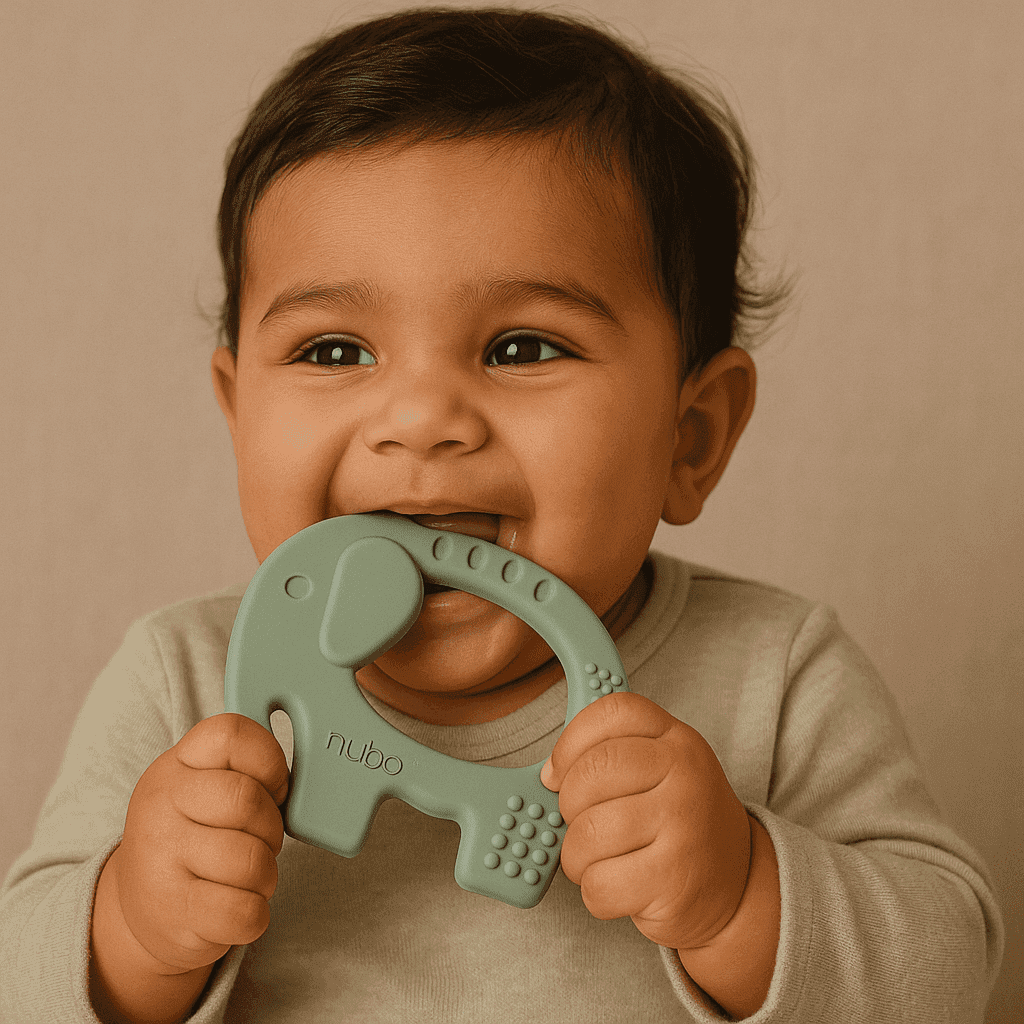
Our Ele Ring Teethers feature textured ears and a classic grip that allow babies to gnaw safely from any angle, reaching molars without the risk of hard edges poking the back of the mouth.
We don't just sell teethers; we engineer relief. By sticking to silicone, we ensure every product in our shop is sterilisable, durable, and gentle enough for the first day of teething.
Frequently Asked Questions (FAQ)
Q: Are wooden teethers safe for 3-month-olds? A: Wooden teethers can be heavy and too hard for a 3-month-old who is still developing motor control. If they lose their grip, a heavy wooden toy can hurt their face. Lightweight silicone teethers are generally recommended for this age group.
Q: Can silicone teethers be sterilized? A: Yes! Unlike wood or plastic, high-quality silicone (like the ones used at Nubokind) can be boiled or put in a steam sterilizer to ensure they are 100% germ-free.
Q: Do silicone teethers contain BPA? A: Not if you buy from a reputable brand. Nubokind teethers are made from 100% food-grade silicone, which is naturally free from BPA, PVC, and Phthalates.
Q: Which teether is best for molars? A: Flexible silicone teethers are often better for molars because they can bend to reach the back of the gums without causing a gag reflex, which rigid wooden teethers might do.
Ready to find the safest relief for your little one? Explore the Kiko and Ele collections at our Collections Page to see why parents trust silicone for those precious first smiles.

leave a comment
This site is protected by hCaptcha and the hCaptcha Privacy Policy and Terms of Service apply.