
Your newborn can see high contrast better than anything else in those first weeks. An infant cloth book isn't just a toy—it's a tool for visual development, tummy time confidence, and early learning, all in one safe, washable package.
Start With Smart Products
Here's what actually helps first-time parents support their baby's early learning—and what thousands of Indian parents rely on:
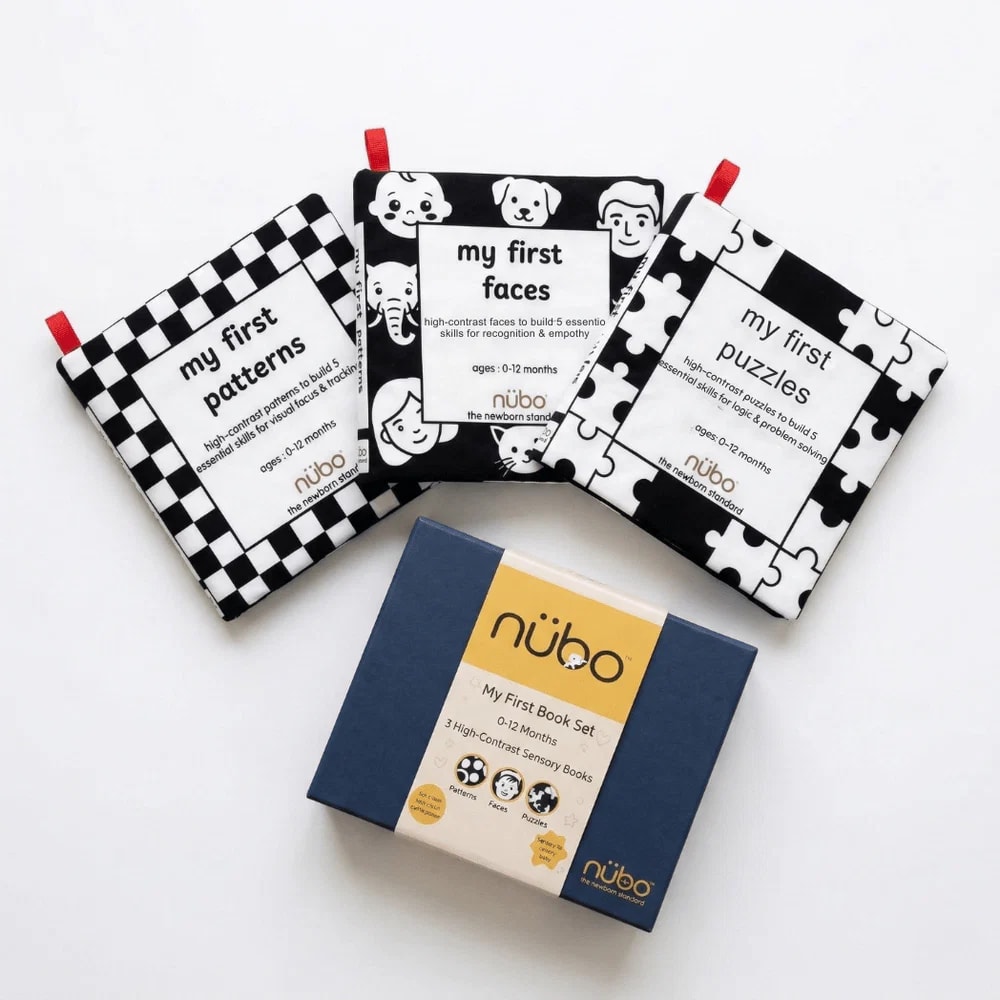
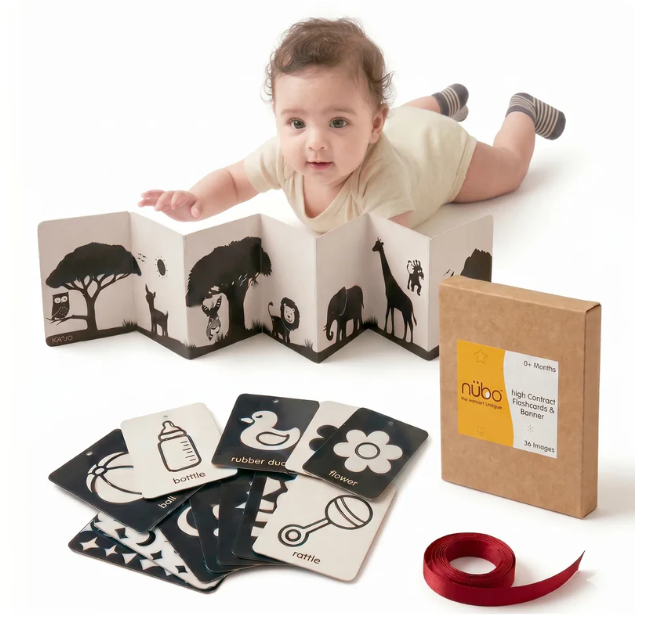
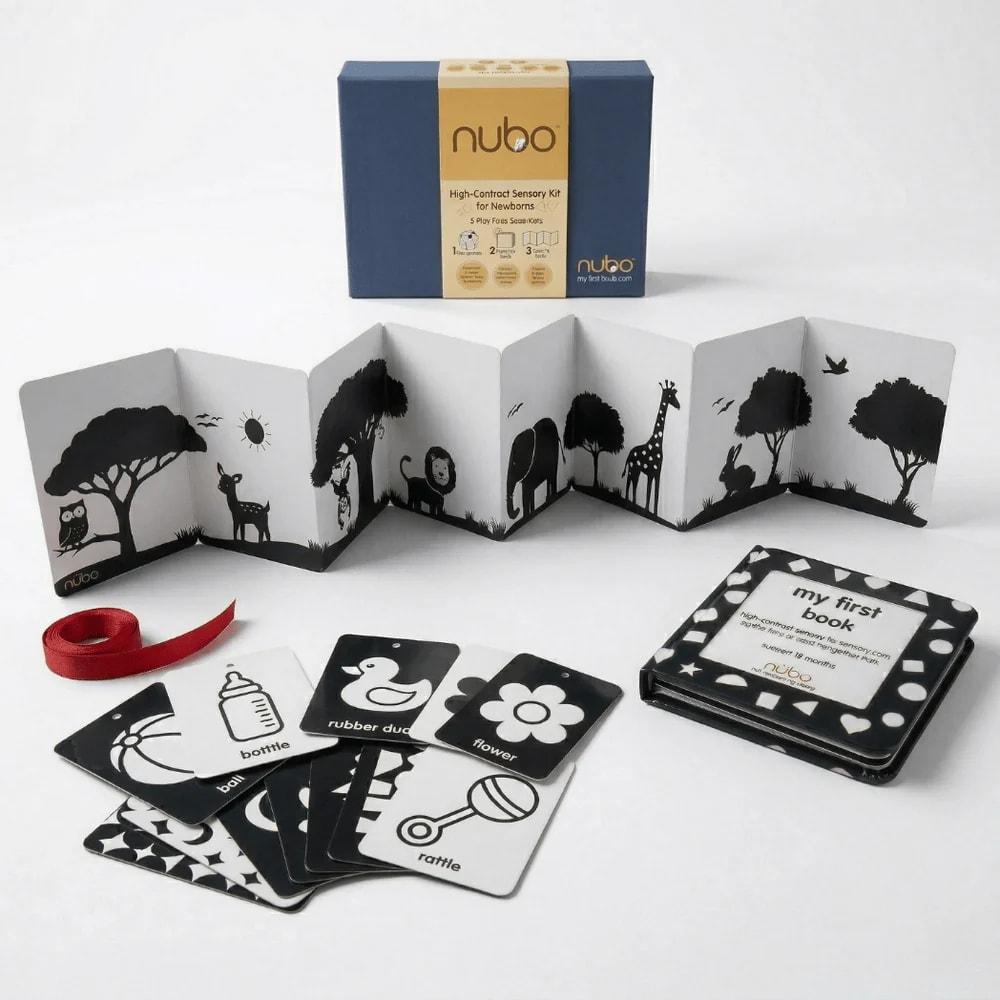
High Contrast Flashcards & Tummy Time Banner
Newborn visual development | Tummy time support | 0–6 months
₹299
Why Infant Cloth Books Matter for Your Newborn
Those first few weeks with a newborn can feel overwhelming. You're trying to figure out what your baby actually needs, what's safe, and what's actually worth the money. Here's the truth: a good infant cloth book is one of the highest-return investments you can make in early development.
Newborns can't see the world the way we do. Their vision is still developing, and high contrast images—especially black and white patterns—are what they see most clearly in the first 8–12 weeks. A simple cloth book with these patterns isn't just entertainment; it's actively supporting their visual development during a critical window.
Beyond that, tummy time for newborn is one of the most important things you'll do for physical development, but many babies find it uncomfortable or boring at first. An infant cloth book right at eye level during tummy time gives your baby something to focus on, makes the experience feel less isolating, and turns a developmental exercise into a moment of genuine engagement. That changes everything.
What to Look for in a Quality Infant Cloth Book
Not all cloth books are the same. Here's what separates a truly helpful tool from just another thing taking up space in the nursery:
| Feature | High-Quality Cloth Book | Lower-Quality Alternatives |
|---|---|---|
| Visual Design | True high contrast black & white, or bold primary colors with clear shapes | Pastel colors, unclear images, low contrast patterns |
| Materials | Soft, washable cotton; no loose buttons or choking hazards | Synthetic feel; plastic elements; hard to clean |
| Texture Variety | Crinkle, corduroy, smooth patches—sensory play | Single flat material; no tactile variety |
| Age Appropriateness | Designed for 0–6 months and beyond; safe for grasping | Generic design; not optimized for newborn vision or grip strength |
| Learning Value | Based on Montessori principles; supports early learning milestones | Just decorative; no developmental purpose |
The best tummy time book is one your baby will actually engage with—and that you feel confident putting in their mouth (yes, they will put it in their mouth). It should feel like a small investment in their visual system, sensory development, and confidence during those early weeks.
How High Contrast Images Support Early Development
You've probably heard about newborn high contrast images before, but do you know why they matter so much? When your baby is born, their eye muscles are still developing, and they can't focus the way older babies and children do. High contrast black and white photos and patterns create the strongest visual stimulus for a newborn's developing brain.
Research on infant visual development shows that babies aged 0–8 weeks can track and engage with high contrast images far more effectively than colored ones. This isn't just about being cute—it's about supporting brain development during a critical window. The more visual stimulation a newborn receives, the faster their neural pathways strengthen.
This is where montessori toys for newborns like cloth books and flashcards shine. Montessori principles focus on letting babies lead their own learning through sensory exploration. A high contrast cloth book does exactly that—it invites your newborn to look, grasp, feel, and explore at their own pace, without forcing anything.
Sensory Play Builds Confidence During Tummy Time
Let's be honest: tummy time activities can feel awkward when your baby is tiny. They're not strong enough to lift their head yet, the floor feels big and uncomfortable, and they don't understand why you're asking them to work so hard.
This is where a tummy time toy becomes your secret weapon. When you place a cloth book at your baby's eye level during tummy time, you're giving them a reason to engage. They'll lift their head a little higher trying to see the patterns. They'll reach out and try to touch the textures. These small movements build neck strength, shoulder stability, and the confidence they need for future milestones like rolling and crawling.
Soft books for infants are safe for this exact reason—there's nothing sharp, nothing small to choke on, nothing that will hurt if your baby's head bonks it (which it will). The softness itself is part of the sensory experience.
Why Washable Materials Matter (More Than You Think)
Every parent knows: babies put everything in their mouths. A cloth book will get drooled on, gnawed on, possibly spit up on. If it can't go in the wash, it becomes a stress point instead of a joy.
Washable infant cloth books are non-negotiable. They're practical, yes, but they're also a sign that the product was designed by someone who actually has a baby. Quality cloth books use natural, washable fabrics that soften with each wash instead of degrading. They're something you can actually use without fear—which means you'll actually use them, which means your baby gets more of the developmental benefit you're paying for.
Social Proof: Real Parents, Real Results
Palak Sharma
Beautiful gift
I bought this for a cousin's baby shower and it was the highlight of gifts. The packaging is beautiful and it feels like a very thoughtful, high-end product. It’s a unique alternative to the standard plastic toys you see everywhere.
Gaurav Kumar
Excellent Purchase
The cloth books are durable and easy to clean. Perfect for everyday use. My baby loves my first faces book the most.
Quick Tips for Getting the Most Out of Your Cloth Book
- Start during tummy time: Place the cloth book at eye level when your baby is on their belly. This gives them motivation to lift their head and engage their neck muscles.
- Use as a visual anchor: During alert periods (usually early morning or late afternoon), let your baby track the patterns. You don't need to do anything fancy—just hold it where they can see it.
- Rotate textures: If you have more than one cloth book, switch them every few days to keep sensory stimulation fresh and prevent boredom.
- Wash regularly: Cloth books are designed to be washed. Make it part of your routine—they dry fast and come back soft every time.
- Layer with other tools: A cloth book pairs beautifully with high contrast flashcards and sensory kits. Together, they create a well-rounded early learning environment.
- Let your baby lead: If they're not interested on day one, that's okay. Keep offering it during tummy time and alert periods. Interest grows as their vision develops.
FREQUENTLY ASKED QUESTIONS
Q: When should I start using an infant cloth book with my newborn?
A: You can start from day one. Newborns don't need fancy toys, but they do benefit from visual stimulation, and a cloth book with high contrast patterns is one of the safest ways to provide it. Even if your baby can't focus perfectly in the first week, their eyes are still developing, and exposure to good visual design matters. Start during tummy time once your baby is a few days old—this builds the habit and supports development simultaneously.
Q: How is a cloth book different from other toys for newborns?
A: A quality cloth book is designed specifically for a newborn's developmental needs—especially visual and sensory development. Unlike stuffed animals or plastic toys, a good infant cloth book combines high contrast imagery (which newborns can actually see), soft textures (which are safe for them to mouth), and learning-friendly design (based on Montessori principles). It's functional, safe, and genuinely supports development rather than just being cute.
Q: Is my baby too young for a cloth book?
A: No. Even a 2-week-old can benefit from looking at high contrast patterns. Their vision is developing rapidly, and newborn and tummy time activities are perfect moments to introduce a cloth book. A newborn won't "read" it in the traditional sense, but they'll engage with the visual patterns, which is exactly the point at this stage. As they grow, they'll start touching it, bringing it to their mouth, and exploring the textures—all part of sensory development.
Q: Are cloth books safe for babies who put everything in their mouths?
A: Yes. That's actually the whole point of a quality cloth book. They're designed to be soft, have no loose buttons or small parts, and are completely safe for mouthing. Plus, they're washable, so you can keep them clean without worry. Babies will drool, chew, and explore with their mouths—a cloth book expects that and is built to handle it. Just make sure you're choosing a soft book for infants from a brand that prioritizes safety standards.
Q: How do I choose between a cloth book and flashcards?
A: Both are valuable, and honestly, they work better together. Newborn flashcards are great for focused visual stimulation during alert periods—you show them one at a time and let your baby track. A cloth book is something your baby can hold, mouth, and explore independently during tummy time. If you're starting out, a cloth book is the more versatile choice because it serves multiple purposes. If you want to do both, a bundle like our High Contrast Flashcards & Tummy Time Banner gives you both tools at once.
Q: Can I use a cloth book for gifting, or does it feel too practical?
A: A quality cloth book is one of the best newborn gifts you can give. It's thoughtful (showing you understand early development), practical (parents actually need this), safe, and long-lasting. Unlike toys that get outgrown in weeks, a cloth book grows with the baby—newborns engage with the visual patterns, then older babies explore the textures, then toddlers "read" the stories. First-time parents especially love receiving something that feels educational rather than just decorative. If you want to make it extra special, pair it with a newborn sensory kit.
CONCLUSION
An infant cloth book isn't a luxury—it's a tool for supporting your baby's earliest developmental windows. From visual development to sensory exploration to confidence-building during tummy time, a quality cloth book earns its place in your nursery from day one.
The key is choosing one designed with newborns in mind: high contrast, soft, washable, and inspired by learning principles like Montessori. When you invest in the right product, you're not just buying a toy—you're supporting your baby's brain development during a time when it matters most.
Explore Nubokind's High Contrast Cloth Book Set and discover how thoughtful design can make tummy time easier, development richer, and your job as a parent a little less stressful.


leave a comment
This site is protected by hCaptcha and the hCaptcha Privacy Policy and Terms of Service apply.