
3 Auditory Rewards: How Sound Teaches Cause and Effect
The Parent's Quick Answer: An auditory reward is the immediate sound feedback a baby receives after performing a physical action during play. This instant response loop is one of the earliest ways newborns and infants learn cause and effect. Whether during newborn tummy time or quiet play, this interaction transforms random movements into intentional, goal-oriented actions — teaching the foundational idea: “I did this, and that happened.”
The Neuroscience of Intentional Agency in Infants
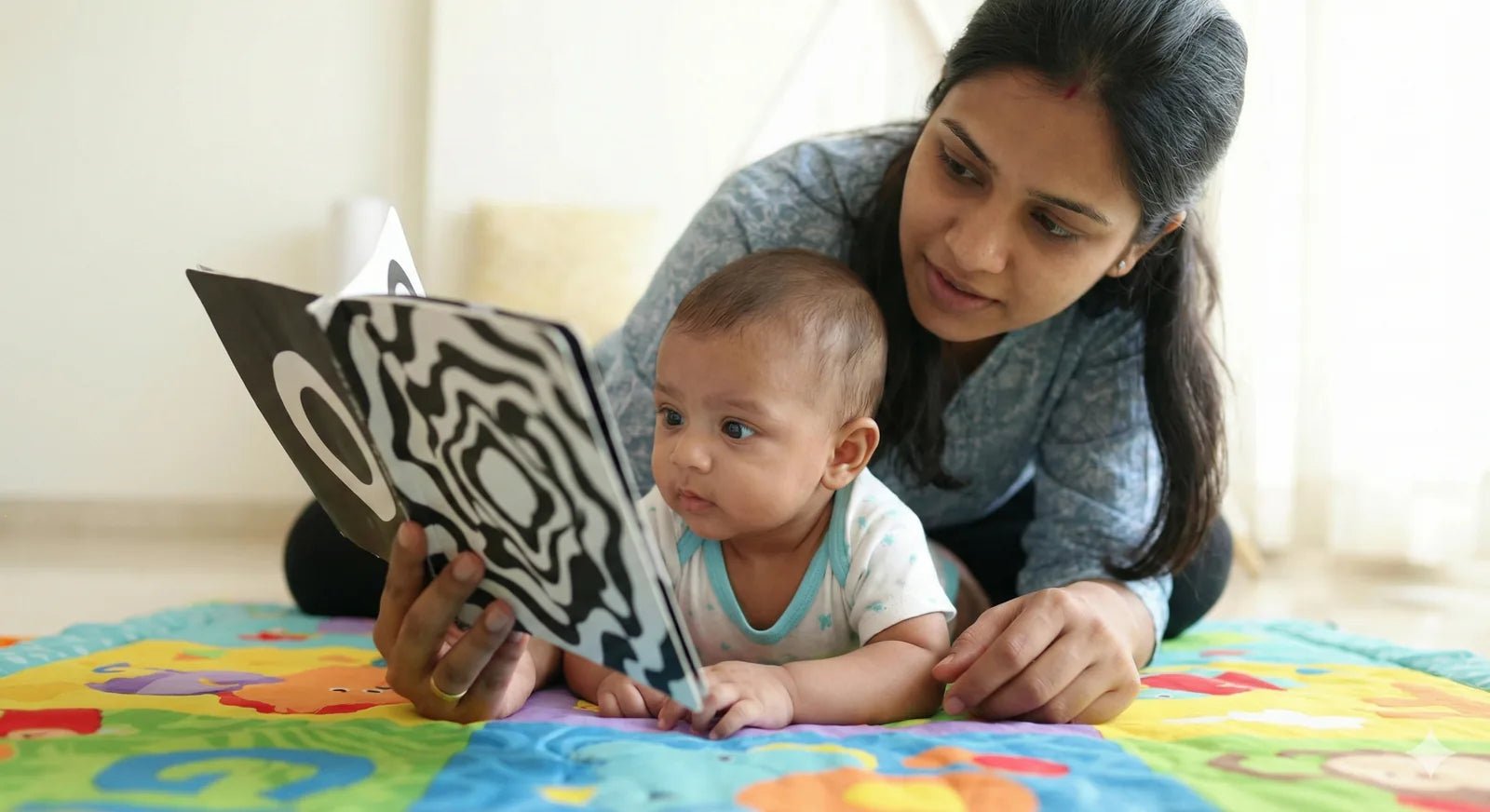
Before babies can engage with puzzles or problem-solving toys, they must first understand their own agency — the ability to affect their environment. This is a critical milestone supported by thoughtfully designed tools such as a sensory cloth book, tummy time fold-out book, or black and white flash cards.
In the first year of life, an infant’s auditory system develops faster than their visual clarity. While vision is still maturing, babies can clearly process sound. When a baby presses, squeezes, or scrunches a page in a cloth book and hears a response, their brain receives immediate confirmation that their movement worked.
Table 1: Comparing Auditory Inputs in Infant Play
| Sound Type | Action Required | Brain Development Focus |
| Crinkle | Palmar Grasp (Scrunching) | Fine Motor Skills & Tactile Feedback |
| Squeaker | Intentional Squeeze (Pressure) | Cause & Effect, Strength, Logical Planning |
| Caregiver Voice | Vocalizing or Flap Lifting | Language Development & Social Interaction |
3 Auditory Rewards That Support Infant Cognitive Development
For newborns and infants, the most effective sounds are analog, mechanical, and immediate. These features are commonly found in black and white books for newborns, infant contrast cards, and screen-free toys.
1. The “Crinkle” – First Cause & Effect Discovery
The crinkle sound is often a baby’s first introduction to cause and effect, especially during infant tummy time.
- The Action: Grasping or scrunching fabric pages.
- The Reward: A crisp, high-frequency rustling sound.
- The Neurology: Continuous sound feedback encourages sustained grip, strengthening the palmar grasp and preparing babies for later motor milestones.
2. The “Squeaker” – Intentional Agency
Unlike crinkles, squeakers require deliberate force, making them powerful tools for teaching intentionality.
- The Action: A purposeful squeeze using the palm or fingers.
- The Reward: An immediate squeak.
- The Neurology: Babies learn the difference between light touch and applied pressure — a major step in logical thinking and planning.
3. The “Interactive Voice” – Social Cause & Effect
Caregiver interaction completes the learning loop. When a baby lifts a flap or makes a sound and receives a response, social logic is formed.
- The Action: Vocalizing or interacting with a page.
- The Reward: A spoken word, animal sound, or smile.
- The Neurology: Builds the foundation for communication, language, and emotional understanding.
Designed for Newborn Tummy Time & Early Learning
Overstimulating electronic toys often disconnect sound from movement, weakening cause-and-effect learning. In contrast, high contrast flash cards, black and white infant cards, and sensory cloth books keep learning simple, intentional, and effective.
- Direct Interaction: High-contrast pages with crinkles and squeakers ensure sound only happens when the baby moves.
- Safe & Non-Toxic: BPA-free materials and baby-safe inks support safe mouthing and exploration.
- Visual Development: Bold black and white images for newborns support early visual tracking and focus.
Common Questions About Sound, Logic & Infant Play
Q: Why do babies love crinkle sounds?
A: High-frequency sounds are easier for newborns to hear and act as a reward that encourages repeated fine-motor practice.
Q: Can a 4-month-old use squeaker toys?
A: Yes — accidental squeezes often start around 4 months, with intentional use developing between 6–9 months.
Q: What toys best support auditory cause-and-effect learning?
A: Pediatric experts recommend screen-free toys such as black and white books for infants, newborn flashcards, and tummy time fold-out books that respond only to baby-initiated movement.

leave a comment
This site is protected by hCaptcha and the hCaptcha Privacy Policy and Terms of Service apply.