
Quick Answer
Start tummy time from day one. Begin with short sessions (2–3 minutes) and gradually increase to 15–20 minutes daily by 3 months. Use high-contrast visuals, soft toys, and an engaging environment to keep your baby interested while building neck, shoulder, and core strength.
Why Tummy Time Matters for Newborn Development
Tummy time is one of the simplest yet most important activities you can do with your newborn. When your baby spends time on their stomach, they're building essential muscle strength in their neck, shoulders, and core—the foundation for rolling, sitting, and eventually crawling.
Research indicates that babies who have regular tummy time reach developmental milestones earlier and are less likely to develop flat spots on their heads (a condition called positional plagiocephaly). It also gives their eyes a chance to explore the world from a different angle, which supports visual development.
Many parents worry that starting tummy time too early might be risky, but experts agree that even newborns benefit from short, supervised sessions. The key is keeping your expectations realistic—your newborn won't "do" much at first, and that's completely normal. You're simply planting the seeds for healthy movement patterns.
When and How to Start Tummy Time With Your Newborn
You can introduce tummy time with your newborn right from the hospital or home, even in the first week of life. Start small: just 2–3 minutes at a time, once or twice a day is enough for a newborn. Your baby doesn't need to be on a hard floor—in fact, a soft playmat, your chest, or your lap work beautifully for the first few weeks.
The best times for tummy time are when your baby is awake and alert, but not hungry or fussy. After a feed is not ideal—wait at least 30 minutes. Early morning or mid-morning often works well for many families.
As your baby grows, aim to gradually increase tummy time. By 3 months, you're looking at 15–20 minutes total per day, spread across a few sessions. But don't stress about hitting these numbers exactly—even 10 minutes is valuable. Consistency matters far more than duration.
| Age | Duration Per Session | Frequency | Best Setup |
|---|---|---|---|
| Newborn (0–6 weeks) | 2–3 minutes | 1–2 times daily | Your chest, lap, or soft mat |
| 6 weeks – 3 months | 5–10 minutes | 2–3 times daily | Playmat with props and toys |
| 3–6 months | 10–20 minutes | 2–3 times daily | Playmat with varied sensory toys |
Making Tummy Time Engaging: Activities and Toys
The secret to successful tummy time isn't forcing it—it's making it interesting for your baby. A bored baby will fuss, but an engaged baby will naturally want to lift their head, reach, and explore. This is where sensory toys and activities come in.
For newborns (0–8 weeks), focus on high-contrast visuals. Babies' eyes aren't fully developed yet, and they see the world in blacks, whites, and grays much more clearly than in color. Placing high-contrast flashcards or books at eye level during tummy time gives your baby something compelling to look at while they build neck strength.
By 2–3 months, you can introduce soft cloth books and sensory toys. Look for toys with different textures—crinkly fabrics, soft surfaces, and things they can safely mouth. A gentle rattle placed just out of reach can encourage your baby to lift their head and reach toward it.
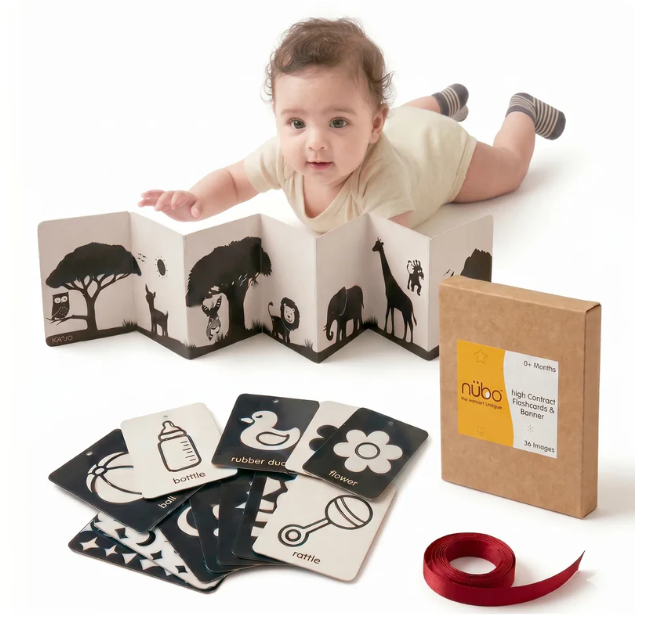
High Contrast Flashcards & Tummy Time Banner
BIS Certified | Newborn to 6 months | Montessori-inspired
₹299
Cloth books designed for infants are another game-changer. Unlike paper books, they're safe to mouth, easy to clean, and their different textures provide sensory stimulation. Many feature high-contrast patterns that hold a newborn's attention while encouraging visual development and early learning.
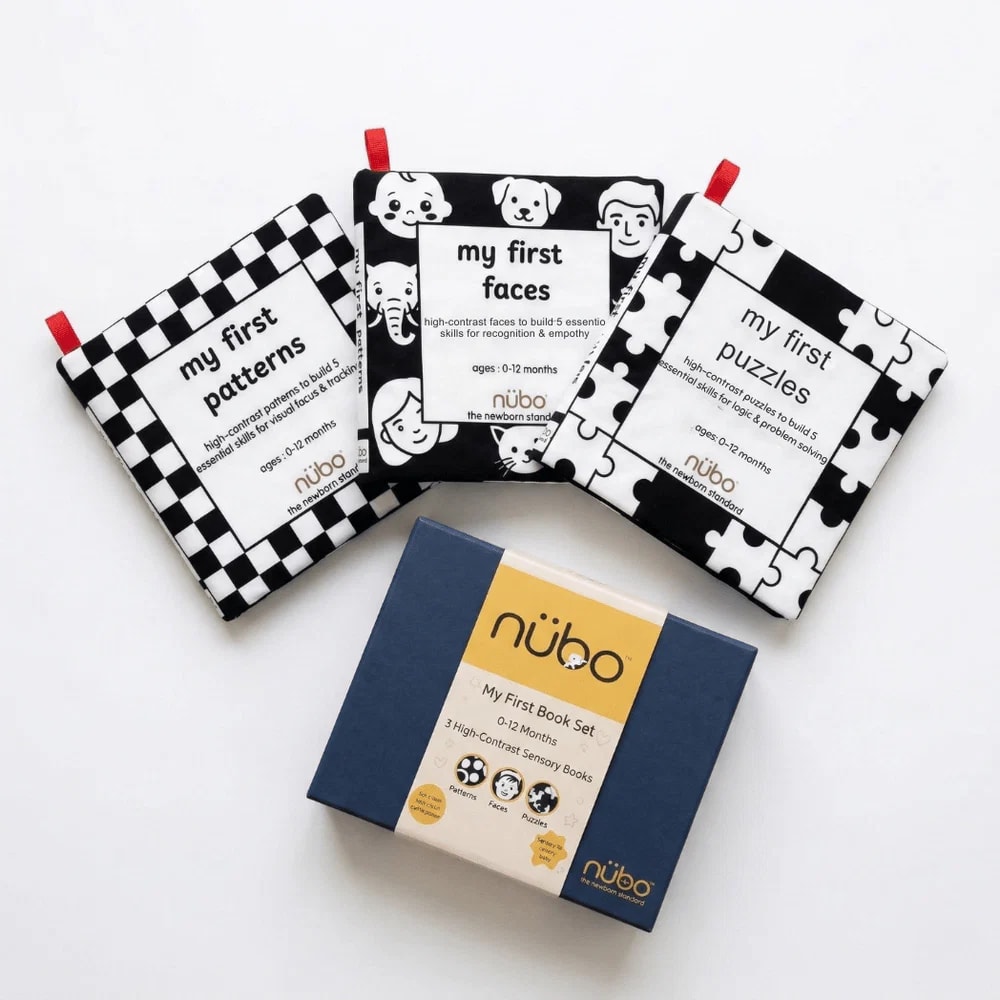
High Contrast Cloth Book Set
BIS Certified | Newborn to 12 months | Soft, safe, and machine washable
₹549
Age-Appropriate Tummy Time Activities by Month
Every baby develops at their own pace, but here's what many parents find works well as a general guide:
Weeks 0–4: Just Being Together
At this stage, your baby's vision is still blurry beyond 8–12 inches. Focus on chest-to-chest tummy time (baby on your chest while you're reclined) and short sessions on a soft mat. Talking to your baby, singing softly, and making eye contact are just as important as any prop. Your presence and voice are the most engaging "toy."
Weeks 5–8: Introducing High-Contrast Visuals
Now that your baby can focus a bit better, place high-contrast cards or images at eye level during tummy time on a mat. A simple black-and-white striped pattern or bold geometric shape will hold their attention. Move the cards slightly to encourage your baby to follow with their eyes.
Months 2–3: Textures and Soft Toys
Your baby is becoming more aware of their surroundings. Introduce soft cloth books, crinkly fabrics, and gentle rattles. Place a toy just out of reach to encourage your baby to shift weight and reach forward—this builds upper-body strength naturally.
Months 4–6: Exploration and Reaching
By now, your baby may be rolling or attempting to crawl. Offer a variety of safe, textured toys during tummy time. Soft sensory balls, teethers with different surfaces, and toys that make gentle sounds keep this age group engaged while they work on more complex movements.
| Age | Activity Focus | Suggested Materials |
|---|---|---|
| 0–4 weeks | Bonding and comfort | Your presence, voice, soft mat |
| 5–8 weeks | Visual tracking | High-contrast cards, black & white images |
| 2–3 months | Texture exploration | Cloth books, crinkly toys, soft rattles |
| 4–6 months | Reaching and rolling | Sensory balls, varied toys, interactive items |
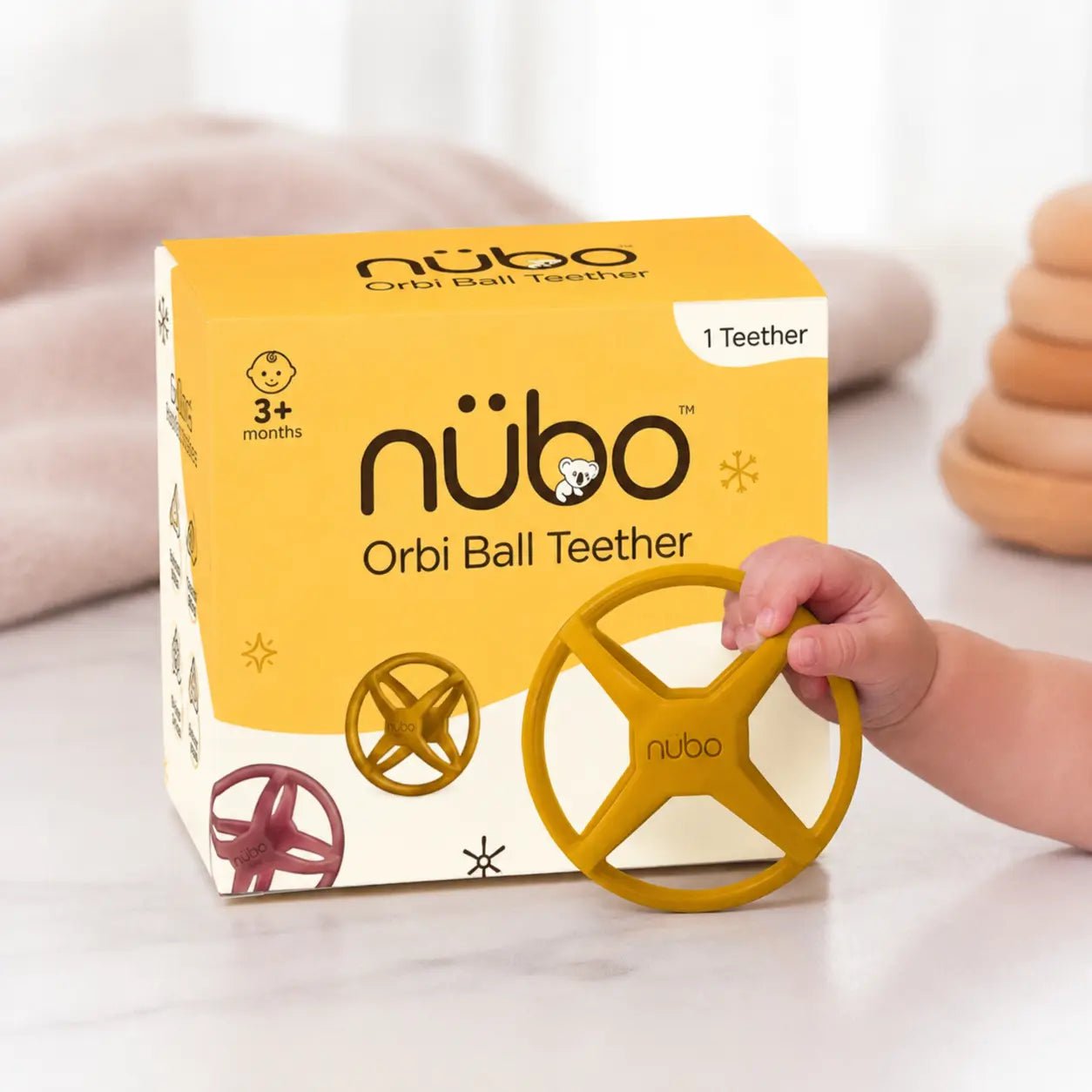
Orbi Ball Silicone Sensory Teether
BIS Certified | 3 months+ | Multiple textures and safe to mouth
₹599
Quick Tips for Parents
- Start early and start small. Even 2–3 minutes in the first week counts. Your baby doesn't need to be a "pro" at tummy time—consistency builds strength over time.
- Choose a safe, supervised space. Always stay close to your baby during tummy time. A firm playmat or folded blanket on a carpeted floor is ideal for newborns; avoid soft surfaces like pillows or couches.
- Use high-contrast visuals for younger babies. Black, white, and gray patterns are far more visually stimulating to newborns than colors. This supports early visual development while keeping them engaged.
- Watch for tiredness, not just fussiness. Tummy time is hard work for a young baby. If your baby's eyes start closing or they seem very drowsy, it's time to rest—not a sign of failure.
- Rotate activities and positions. Don't just place a toy in the same spot each day. Move things around, introduce new sensory items weekly, and vary where you do tummy time to keep it fresh.
- Stay calm and present. Your relaxed energy matters. Babies pick up on parental stress. If tummy time feels like a chore to you, your baby will sense it. Keep it playful and pressure-free.
Frequently Asked Questions
Q: Can I do tummy time on my chest instead of the floor?
A: Absolutely. In fact, chest-to-chest tummy time is perfect for newborns and can count toward your daily tummy time. Many parents find it the easiest and most bonding way to start. Just make sure you're awake and alert so you can keep an eye on your baby. By 4–6 weeks, gradually introduce floor-based tummy time on a safe playmat as well, so your baby gets used to different surfaces.
Q: What if my baby hates tummy time and cries?
A: This is very common, especially with newborns. A few things to try: start with even shorter sessions (60–90 seconds), try tummy time on your chest first, place a high-contrast visual at eye level to distract them, or try at a different time of day. If your baby consistently cries within seconds, they may be hungry or tired—adjust the timing. Never force tummy time; if your baby is genuinely distressed, pause and try again in a few hours. The goal is to build positive associations, not create stress.
Q: Is tummy time necessary if my baby sleeps on their back?
A: Yes. While back sleeping is crucial for safe sleep and reducing the risk of SIDS, it doesn't provide the muscle-building benefits of tummy time. Many experts suggest that supervised tummy time during waking hours complements safe back sleeping and helps prevent flat head syndrome while developing the muscles your baby needs for rolling, sitting, and crawling.
Q: What's the best type of toy for newborn tummy time?
A: For newborns (0–8 weeks), high-contrast black-and-white cards and images are most effective because their vision is still developing. For 2–3 months and older, introduce soft cloth books, crinkly textures, and safe teethers with different surfaces. Avoid anything with small parts, hard edges, or loud noises that might startle your baby. Toys should be washable and safe to mouth.
Q: Can I use tummy time as a way to prevent or reduce flat head?
A: Yes. Regular supervised tummy time is one of the most effective ways to prevent positional plagiocephaly (flat head). Since babies spend much of their day on their backs for safe sleep, tummy time provides relief from that constant pressure on the back of the head. Combined with regular position changes during sleep (rotating which end of the crib your baby sleeps at), tummy time significantly reduces flat head risk.
Q: Should I use special tummy time pillows or props?
A: For newborns, simple is best. A soft playmat or folded blanket on a safe surface is all you need. Avoid pillows, bumpers, or specialty tummy time cushions—they can pose suffocation risks. As your baby grows (4–6 months), you can introduce safe, lightweight props like rolled blankets to slightly elevate their chest and make it easier to lift their head, but these should never be used with newborns.
Conclusion
Tummy time doesn't have to be complicated or stressful. Start small, stay consistent, and keep it joyful. Whether you're doing chest-to-chest sessions with your newborn or placing your 3-month-old on a playmat with high-contrast books, you're building a foundation for healthy movement and development.
Remember: every baby develops differently, and what works for one family might look different for another. The goal isn't to hit specific milestones on a calendar—it's to give your baby regular, supervised opportunities to strengthen their body and explore the world from a new perspective.
As you introduce tummy time, consider pairing it with age-appropriate sensory toys and books. A thoughtfully curated newborn essential kit can simplify your setup and ensure you have the right tools—like high-contrast visuals and soft cloth books—to make tummy time engaging from day one. Happy tummy time, and trust yourself—you're doing great.


%20and%20gradually%20increase%20to%2015%E2%80%9320%20minutes%20daily%20by%203%20months.%20Use%20high-contrast%20visuals,%20soft%20toys,%20and%20an%20engagi...)
leave a comment
This site is protected by hCaptcha and the hCaptcha Privacy Policy and Terms of Service apply.